

TL;DR:
- Automotive warranty services Inc sells extended vehicle service contracts that cover mechanical breakdowns after factory warranties expire. These contracts typically cost $1,000 to $3,000, depending on vehicle type, age, and coverage level, with monthly options starting near $59. Vehicle owners should carefully review coverage exclusions, understand claim processes, and consider state-specific consumer protections before purchasing.
Automotive warranty services Inc is the industry term for companies that sell extended vehicle service contracts, which pick up where your factory warranty leaves off. Once your manufacturer's coverage expires, a single transmission failure on a BMW 5 Series or a Range Rover Sport can cost $3,000 to $5,000 out of pocket. Vehicle service contracts are insurance-like agreements that cover mechanical breakdowns caused by defects, not routine maintenance. Rpmwarranty offers tiered plans built around your vehicle's year, make, and mileage so you pay only for the protection you actually need. Understanding how these contracts work before you sign is the fastest way to avoid expensive surprises.
What costs and coverage levels can vehicle owners expect from automotive warranty services Inc plans?
Extended vehicle service contracts typically cost $1,000 to $3,000 depending on coverage tier, vehicle age, and mileage. Monthly payment options start near $59, which makes protection accessible without a large upfront payment. That price range reflects real variation, not padding.
Three factors drive your specific price the most. First, the vehicle itself matters enormously. A Porsche Cayenne or Mercedes-Benz GLE carries higher repair costs than a Honda Civic, so its contract costs more. Second, mileage and age push prices up because older, higher-mileage vehicles carry more mechanical risk. Third, the coverage tier you choose sets the floor.
Coverage tiers explained
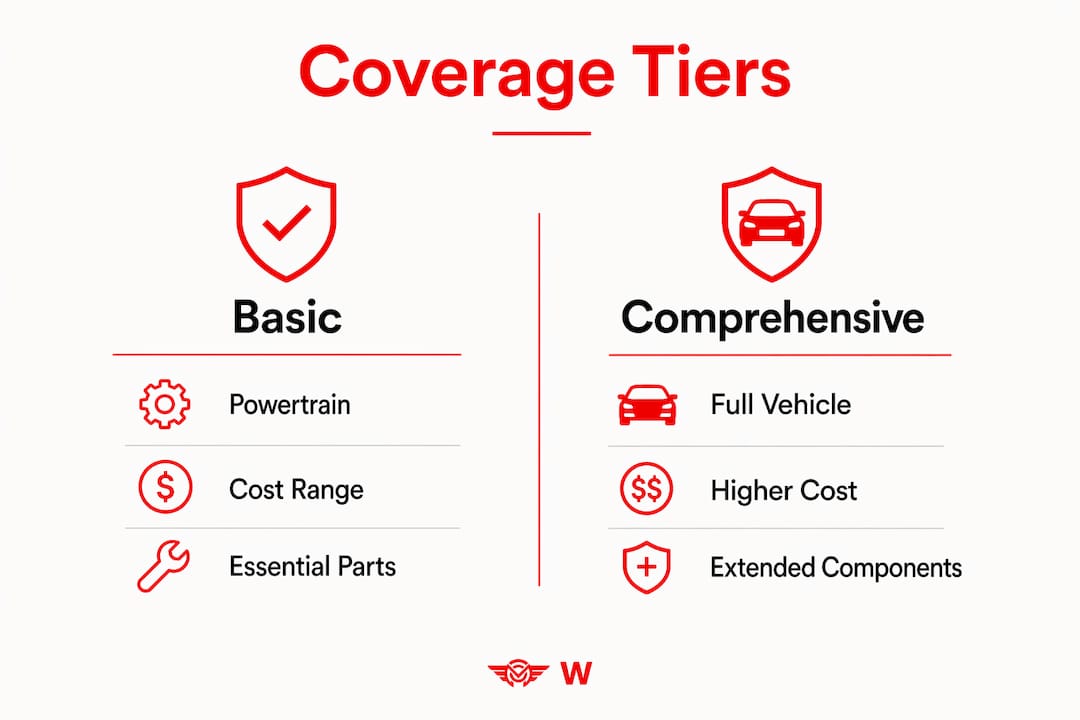
Most auto warranty plans fall into two broad categories: powertrain and bumper-to-bumper style coverage.
- Powertrain coverage protects the engine, transmission, and drivetrain. It is the most affordable tier and suits owners of older vehicles who want protection against the most expensive failures.
- Mid-level coverage adds cooling systems, electrical components, and steering. This tier fits vehicles like a Ford F-150 or Honda Accord that are out of factory warranty but still have moderate mileage.
- Bumper-to-bumper style coverage covers nearly all mechanical and electrical systems, including high-tech parts. Rpmwarranty's Elite plan falls into this category and works well for luxury vehicles like a BMW 7 Series or a Range Rover where electronics failures are common and costly.
Routine maintenance, collision damage, and normal wear are excluded from all tiers. That means oil changes, brake pads, and tire replacements stay your responsibility. This exclusion catches many car owners off guard, so read the contract's exclusion list before you commit.
| Coverage tier | What it covers | Estimated cost range |
|---|---|---|
| Powertrain | Engine, transmission, drivetrain | $1,000–$1,500 |
| Mid-level | Powertrain plus cooling, electrical, steering | $1,500–$2,200 |
| Bumper-to-bumper style | Nearly all mechanical and electrical systems | $2,200–$3,000 |
| Add-on perks | Roadside assistance, towing, trip interruption | Varies by plan |
Pro Tip: Get quotes for at least two coverage tiers on your specific vehicle. The price gap between mid-level and bumper-to-bumper is often smaller than owners expect, especially for vehicles like a BMW or Porsche where electrical repairs alone can exceed $1,500.
How do automotive warranty services Inc contracts work for claims?
Filing a claim under a vehicle service contract follows a defined process. Skipping any step is the most common reason claims get denied. Here is how the process works from breakdown to repair.
- Diagnose the problem. Take your vehicle to a licensed repair shop. Most car warranty providers require the shop to be ASE-certified. A Porsche or Mercedes owner should confirm the shop holds the right certifications before authorizing any diagnostic work.
- Submit the claim. The repair shop contacts the contract administrator to report the failure and its cause. You or the shop provide the contract number and vehicle details.
- Get pre-authorization. Prior authorization is required before repairs begin. Shops that start work without approval almost always face claim denial. This step protects both you and the administrator.
- Repair is completed. Once approved, the shop completes the covered repair. The administrator pays the shop directly or reimburses you, depending on your plan's payment method.
- Confirm final payment. Review the repair invoice and confirm the administrator paid the correct amount. Keep all paperwork.
Direct-pay vs. reimbursement: which method protects your cash flow?
Direct-pay plans pay the repair shop directly after claim approval. You pay nothing out of pocket beyond your deductible. Reimbursement plans require you to pay the shop first, then submit receipts to get repaid. For a Range Rover owner facing a $4,000 air suspension repair, the difference between these two methods is significant. Direct-pay is the better option for most car owners because it removes the cash-flow risk entirely.

Direct-pay also reduces service delays when the administrator approves claims promptly. Slow approval is the main friction point in direct-pay arrangements, so ask your provider how long approvals typically take before you sign.
Pro Tip: Before signing any service contract, ask the provider in writing whether they use direct-pay or reimbursement. If the answer is reimbursement, ask how long repayment takes. A provider that cannot answer clearly is a red flag.
What state laws and consumer protections apply to extended warranties?
State law governs extended vehicle service contracts, not federal law. No uniform federal standard exists for cancellation rights, licensing, or disclosure requirements. That means your protections depend entirely on where you live.
The Service Contract Model Act provides a framework that many states have adopted in some form. It sets baseline rules for contract disclosures, cancellation rights, and insurer requirements. States that follow this model give consumers a clearer path to refunds and claims payment.
"Most states require a free-look cancellation period of 10 to 20 days after purchase, giving consumers time to review the contract and cancel for a full refund. Florida stands out with a cancellation window of up to 60 days, one of the most consumer-friendly rules in the country."
Key consumer protections to check on your contract include:
- Free-look cancellation period. Confirm the number of days you have to cancel without penalty. State cancellation windows vary from 10 days to 60 days with no federal floor.
- Licensing requirements. Many states require warranty companies to hold a license and maintain insurance or reserve funds to guarantee claims payment. Ask your provider for proof of licensing in your state.
- Insurer disclosure. Your contract must name the insurer or funding arrangement behind it. This protects you if the provider becomes insolvent.
- Cancellation refund formula. Most contracts use a pro-rated refund formula after the free-look period. Understand this formula before you sign.
Consumers often assume their rights are the same nationwide. They are not. A car owner in Florida has significantly stronger cancellation rights than one in a state with a 10-day window. Check your state's specific rules before purchasing any auto warranty plan.
What factors should vehicle owners consider when evaluating warranty plans?
The right warranty plan depends on your vehicle, your repair history, and how you use the car. Price is one factor, but it is not the most important one. Comparing prices, coverage scope, repair networks, and claims processes gives you a complete picture that price alone cannot.
Start by separating the manufacturer warranty from a service contract. Your factory warranty comes from the automaker and covers defects in materials or workmanship. A service contract is a separate agreement sold by a third party. Service contracts cover mechanical breakdowns due to defects but do not replace or extend the manufacturer's original terms.
Next, match the coverage tier to your vehicle's known issues. BMW N63 engines are known for valve stem seal failures. Range Rover air suspension systems fail regularly after 80,000 miles. Honda Accord owners face fewer catastrophic failures but still benefit from electrical coverage as the car ages. Knowing your vehicle's common failure points helps you choose the right tier instead of overpaying for coverage you will never use.
Key factors to evaluate before purchasing:
- Repair network. Confirm that ASE-certified shops in your area accept the contract. A plan that limits you to one shop in your city is not practical.
- Claims approval speed. Ask how long pre-authorization takes. Delays over 24 hours can leave you without a vehicle for days.
- Roadside assistance and towing. Rpmwarranty includes roadside assistance in its plans. This benefit matters most for owners of vehicles like a Porsche Panamera or Mercedes-Benz S-Class that are expensive to tow.
- Trip interruption coverage. Some plans reimburse hotel and meal costs if your vehicle breaks down far from home. This is a practical benefit that most car owners overlook.
- Deductible structure. A per-visit deductible is almost always better than a per-repair-item deductible. On a complex repair involving multiple components, a per-item deductible can add up fast.
Pro Tip: Pull your vehicle's repair history before requesting quotes. If your Ford F-150 or Honda Accord has had recurring issues with a specific system, prioritize a plan that covers that system explicitly rather than defaulting to the cheapest option.
Key Takeaways
Choosing the right automotive warranty services Inc plan requires matching coverage tier, payment method, and state-specific cancellation rights to your vehicle's actual repair risk.
| Point | Details |
|---|---|
| Cost range is predictable | Extended service contracts typically cost $1,000–$3,000, with monthly options starting near $59. |
| Exclusions matter | Routine maintenance, wear and tear, and collision damage are excluded from all coverage tiers. |
| Direct-pay protects cash flow | Direct-pay plans cover repair shops directly, removing out-of-pocket risk beyond your deductible. |
| State law governs your rights | Cancellation windows range from 10 to 60 days with no federal standard, so check your state's rules. |
| Match coverage to your vehicle | Luxury vehicles like BMW, Range Rover, and Porsche benefit most from bumper-to-bumper style plans. |
What I've learned from years of watching car owners get this wrong
Most car owners treat an extended service contract like a box to check. They pick the cheapest plan, sign quickly, and assume they are covered. Then a BMW N63 engine repair arrives at $6,000 and they discover their powertrain-only plan excludes the specific failure mode. That gap is not an accident. It is the result of not reading the exclusion list.
The single biggest mistake I see is confusing a service contract with a factory warranty. They are legally different products. A factory warranty is a promise from the automaker. A service contract is a separate agreement with a third party that functions more like insurance. That distinction changes everything about how you evaluate the contract, who you call when something goes wrong, and what your rights are if the provider fails to pay.
The second mistake is ignoring the payment method. I have watched car owners get stuck paying $3,500 upfront for a Mercedes transmission repair while waiting weeks for reimbursement. A direct-pay plan would have eliminated that problem entirely. Always confirm the payment method before you sign, not after.
Finally, cancellation rights are underused. Most car owners do not know they have a free-look period. If you purchase a plan and then read the contract carefully and find exclusions you did not expect, you can cancel within the state-mandated window and get a full refund. Use that window. Read every page of the contract within the first 10 days of purchase.
Rpmwarranty's four-step process, consultation, plan selection, customization, and final agreement, is designed to prevent these mistakes by walking you through the contract terms before you commit. That transparency is what separates a trustworthy provider from one that buries exclusions in fine print.
— Kenneth
Rpmwarranty's protection plans for every make and model
Rpmwarranty is trusted by dealerships nationwide and offers vehicle protection plans built around your specific year, make, and model. Whether you drive a Range Rover, BMW, Mercedes, Ford, Honda, or Porsche, there is a plan tier designed to match your vehicle's repair risk and your budget.
Rpmwarranty's Elite, Advanced, and Essential plans cover everything from engines and transmissions to cooling systems, electrical components, and high-tech parts. Every plan includes roadside assistance and access to a nationwide network of licensed repair facilities. Getting started takes minutes. Request a free quote today and see exactly what coverage costs for your vehicle before you commit to anything.
FAQ
What is an automotive warranty services Inc contract?
An automotive warranty services Inc contract is a vehicle service contract sold by a third-party provider that covers mechanical breakdowns after your factory warranty expires. It is legally distinct from a manufacturer warranty and functions more like an insurance agreement.
How much does an extended vehicle service contract cost?
Extended vehicle service contracts typically cost between $1,000 and $3,000 depending on coverage tier, vehicle age, and mileage, with monthly payment options starting near $59.
Can I cancel an extended warranty after I buy it?
Most states require a free-look cancellation period of 10 to 20 days for a full refund, with Florida offering up to 60 days. Cancellation rights after that window are pro-rated and vary by state law.
What does an extended warranty not cover?
Routine maintenance, normal wear and tear, collision damage, and cosmetic damage are excluded from all standard vehicle service contracts. Always review the exclusion list before purchasing a plan.
Does Rpmwarranty cover luxury vehicles like BMW and Range Rover?
Rpmwarranty offers make-specific coverage plans for a wide range of vehicles including luxury and high-end models. Coverage tiers are matched to each vehicle's known repair costs and component complexity.