

Short answer: sometimes, and the exact answer depends on which battery you mean and which warranty you're holding. A factory 12-volt starter battery is usually covered for a short window (often about three years or 36,000 miles), then it's on you unless you bought an extended plan. A hybrid or EV traction battery is a different animal entirely: federal law requires at least 8 years or 100,000 miles of coverage, and several states push that further.
Here's the split that matters most: battery type (12-volt starter vs. hybrid/EV traction pack) and coverage source (factory bumper-to-bumper, powertrain, a battery-specific clause, or a third-party extended warranty). Get those two variables right and you'll know almost instantly what you're entitled to.
Before you call a dealer or file anything, check three things right now:
- Your warranty booklet — look for a section labeled "battery," "electrical systems," or "high-voltage components."
- Where the vehicle was originally sold — some states with California Air Resources Board (CARB) rules extend EV battery coverage well past the federal floor.
- A current battery diagnostic — a load test or capacity report from an ASE-certified shop is often the deciding factor in whether a claim gets approved.
Key Takeaways
Battery coverage under a car warranty depends on battery type, warranty type, and whether the failure qualifies as a manufacturing defect rather than normal wear.
| Point | Details |
|---|---|
| Check your booklet first | Locate the battery clause and confirm whether it's bumper-to-bumper, powertrain, or a standalone battery warranty. |
| Get a diagnostic before filing | A load test or capacity report from an ASE-certified shop is often the deciding factor in claim approval. |
| Confirm point-of-sale state for EVs | CARB-state sales can extend traction battery coverage to 10 years/150,000 miles instead of the federal 8-year/100,000-mile floor. |
| Understand the prorated math | Coverage typically shifts from free replacement to a percentage-based cost share once you pass the early warranty window. |
| Consider extended coverage for high-tech vehicles | Rpmwarranty's Elite and Advanced plans add electrical and hybrid system coverage with labor included and transferability if you sell. |
Table of Contents
- Which Warranty Types Cover Battery Coverage in a Car Warranty
- How Long Does Battery Coverage Last, and What Does Prorated Mean?
- Do Extended Warranties Cover Hybrid Batteries the Same Way?
- Why Battery Warranty Claims Get Denied
- Aftermarket Batteries and Used-Car Warranty Rules
- How to File a Battery Warranty Claim Step by Step
- What Battery Replacement Costs When It's Not Covered
- When an Extended Warranty Makes Sense for Battery Risk
- What I'd Tell a Friend Shopping for Battery Protection
- Get Battery Protection Before You Need It
- Where to Verify Battery Warranty Rules
- Frequently Asked Questions
- Sources
Which Warranty Types Cover Battery Coverage in a Car Warranty
Not every warranty on your car treats the battery the same way, and the fine print varies more than most owners expect. A Range Rover Sport's factory bumper-to-bumper warranty, for instance, treats the 12-volt battery differently than the plug-in hybrid variant's high-voltage pack, even though both come off the same production line.
Here's how the major warranty categories typically break down:
- New-vehicle bumper-to-bumper (basic) warranty covers the factory 12-volt battery against manufacturing defects, typically for a short window.
- Powertrain warranty rarely touches the 12-volt battery but is where hybrid and EV traction batteries usually live, since the battery pack functions as part of the drive system.
- Battery-specific warranties exist as standalone clauses on many EVs and hybrids, spelling out exact mileage, years, and capacity thresholds separately from the rest of the powertrain terms.
- Certified pre-owned (CPO) coverage extends factory-style protection to used vehicles, but the clock generally starts at the original in-service date, not the resale date.
- Third-party extended vehicle service contracts (like those offered through Rpmwarranty) can add or restore battery coverage after factory terms expire, often bundling it with electrical and high-tech component protection.
| Warranty Type | 12-Volt Battery | Hybrid/EV Traction Battery |
|---|---|---|
| New-vehicle bumper-to-bumper | Usually covered (defects only) | Rarely the primary coverage source |
| Powertrain warranty | Typically excluded | Often the main coverage vehicle |
| Battery-specific warranty | Sometimes included | Standard on most EVs/hybrids |
| CPO coverage | Depends on remaining factory term | Depends on remaining factory term |
| Extended/aftermarket VSC | Often included as add-on | Coverage varies by plan tier |
The boundary that trips people up most is defect vs. wear-and-tear. A car warranty typically covers a battery when the failure traces to a manufacturing defect, not when it simply dies from age, heat exposure, or normal chemical degradation. That distinction shapes almost every denial you'll read about later in this guide.
How Long Does Battery Coverage Last, and What Does Prorated Mean?
Factory 12-volt battery coverage commonly runs about a few years or a moderate number of miles, though it varies by manufacturer. A Honda Civic and a Mercedes-Benz C-Class might both quote "three years," but the mileage cap, the labor inclusion, and what counts as a "defect" can differ significantly between the two brands' warranty booklets.
Most 12-volt battery warranties split into two phases:
- Free-replacement period — the battery is replaced at no cost if it fails within a defined early window, often the first 12 to 24 months.
- Prorated period — after that window, you pay a percentage of the replacement cost based on how much of the warranty term has elapsed.
Here's the math in plain terms. Say a battery carries a 36-month warranty with a $200 replacement cost, and it fails at month 24. You've used 24 of 36 months, or roughly 67% of the term.
Formula: (Months used ÷ Total warranty months) × Replacement cost = Your out-of-pocket share
Aftermarket battery makers use nearly identical logic. Batteries installed outside the factory warranty often move to a prorated cost-sharing model after an initial free-replacement window, so the same math applies whether you're dealing with a dealership battery or one from an independent shop.
Pro Tip: Ask specifically whether labor and installation are included in the prorated calculation. Some warranties prorate only the battery's material cost, leaving you to cover the full labor bill regardless of how much of the term remains.
Do Extended Warranties Cover Hybrid Batteries the Same Way?
Traction batteries answer to federal rules that don't apply to the 12-volt battery sitting under your hood. Federal law sets an 8-year or 100,000-mile minimum warranty for hybrid and electric vehicle traction batteries, and that floor applies regardless of make or model, whether it's a Ford Mustang Mach-E or a Porsche Taycan.
States that follow California's CARB emissions rules commonly extend that minimum to 10 years or 150,000 miles. If you bought your EV in a CARB state, or the vehicle was originally sold there, your traction battery coverage could run considerably longer than the federal baseline, even if you've since moved elsewhere.
Federal Minimum: 8 years / 100,000 miles for EV and hybrid traction batteries. CARB-State Extension: Commonly 10 years / 150,000 miles in states that adopt California's standards.
Traction battery failure isn't usually defined the way a dead 12-volt battery is. Instead, manufacturers set a capacity threshold, a percentage of original charge capacity below which the pack qualifies as defective under warranty. That threshold typically falls in the 60–75% range, though the exact number varies by brand and model year.
This matters because EV batteries commonly lose 5–10% capacity within the first five years as a matter of normal chemistry, not defect. A Range Rover P400e or a Mercedes EQS owner watching their range readout drop slightly isn't necessarily looking at a warranty claim. The pack has to fall below the manufacturer's specific floor before a replacement becomes an obligation rather than an expected wear pattern.

| Coverage Element | Federal Minimum | CARB-State Extension |
|---|---|---|
| Duration | 8 years | 10 years |
| Mileage cap | 100,000 miles | 150,000 miles |
| Capacity threshold | Manufacturer-set (typically 60–75%) | Same, brand-specific |
Transferability adds another layer. Some manufacturers let traction battery coverage pass to a second owner intact; others reduce the term. And the state where the vehicle was originally sold, not where you currently live, often governs which set of rules applies.
Why Battery Warranty Claims Get Denied
Warranty administrators deny battery claims more often than owners expect, and the reasons usually trace back to preventable habits rather than bad luck. Here are the patterns that show up again and again:
- Deep discharge from neglect — leaving a vehicle unused for months without a maintainer often kills a 12-volt battery in a way that reads as owner neglect, not defect.
- Improper jump-starts or reversed polarity — a botched jump can fry the battery and surrounding electronics, and that damage is almost always excluded.
- Aftermarket electrical modifications — added sound systems, lighting kits, or aftermarket alarms that draw excess current can void coverage if they contributed to the failure.
- Physical damage — cracked cases, corrosion from a coolant leak, or impact damage from an accident fall under insurance, not warranty.
- Environmental exposure — flood damage or extreme heat exposure outside normal operating conditions is typically excluded from battery warranty scope.
Documentation makes or breaks a disputed claim. Insurance and warranty coverage split cleanly here: warranties cover internal defects, while accident, flood, or theft damage falls to auto insurance, and maintenance records are your best defense against a neglect accusation.
A quick red-flags checklist before you file:
- Do you have service records showing regular maintenance, not gaps of a year or more?
- Was the battery ever jump-started incorrectly, and is there any record of it?
- Are there aftermarket electrical accessories installed that weren't factory options?
- Is there any visible corrosion, cracking, or fluid intrusion near the battery housing?
Aftermarket Batteries and Used-Car Warranty Rules
Swap in an aftermarket battery, and you've stepped outside the factory warranty entirely. Batteries installed outside the factory warranty carry a separate warranty from the battery maker or retailer, not the vehicle manufacturer, which means your BMW's factory bumper-to-bumper terms no longer apply to that replacement part.
Replacement batteries typically come with their own free-replacement window followed by a prorated phase, mirroring the structure we walked through earlier. To make a claim on one, you'll generally need:
- The original purchase receipt showing date and retailer.
- The battery's serial number, usually stamped on the case.
- Proof of proper installation (a dealer or certified shop invoice carries more weight than a DIY install).
CPO buyers face a timing quirk that catches people off guard. Warranty clocks for CPO vehicles typically start at the original in-service date, not the date you bought the used car. A CPO Honda Accord Hybrid sold four years after its original delivery date has four fewer years of traction battery coverage remaining than a buyer might assume from a fresh warranty pitch.
Before buying any used vehicle with a hybrid or EV powertrain, confirm:
- VIN history to verify original sale date and any prior warranty claims.
- The warranty booklet or digital record, not just a verbal assurance from the seller.
- Point-of-sale state, since that can determine whether CARB extensions apply.
- Battery service records, including any prior capacity tests or module replacements.
How to File a Battery Warranty Claim Step by Step
Filing a claim without documentation is the fastest way to get a denial. Work through these steps in order:
- Confirm your coverage. Pull the warranty booklet and identify whether the battery falls under bumper-to-bumper, powertrain, or a battery-specific clause.
- Gather documentation. Collect the warranty booklet, original purchase invoice, battery serial number, and any prior service records tied to the battery.
- Get a professional diagnostic. Have an ASE-certified mechanic or dealership run a load test on a 12-volt battery, or a capacity report on a traction pack.
- Submit the claim. File through the manufacturer's service department or, for extended plans, directly with the warranty administrator.
The diagnostic step carries more weight than most owners realize. Documented battery testing, load tests for 12-volt units and capacity reports for traction packs, is often the deciding factor in whether a claim gets approved. Ask specifically for a printed or emailed test report, not just a verbal "yes, it's bad" from the service writer.
Pro Tip: If your claim gets denied and you believe the diagnostic supports coverage, request the specific test values in writing and escalate to the warranty administrator's claims review team before accepting the denial as final. Keep every labor and parts invoice separate so a dispute doesn't turn into a guessing game about what was actually charged.
What Battery Replacement Costs When It's Not Covered
Out-of-pocket battery costs vary enormously depending on whether you're replacing a 12-volt unit or a full traction pack. A standard 12-volt battery installed typically runs a few hundred dollars, depending on the vehicle's electrical demands. A Porsche Cayenne or Range Rover, both loaded with power-hungry electronics, tend to sit at the higher end of that range compared to a base Honda Civic.
Traction battery costs swing far wider. Full pack replacements on EVs and plug-in hybrids vary widely in cost, depending on the vehicle's battery capacity, chemistry, and whether a full pack or individual module needs replacing.
| Repair Type | Typical Cost Range | Key Cost Driver |
|---|---|---|
| 12-volt battery (standard) | $150 | Vehicle's baseline electrical load |
| 12-volt battery (luxury/high-tech) | $250 | Additional electronics drawing standby power |
| Traction battery module repair | Varies widely by model | Number of modules affected |
| Full traction pack replacement | $3,000 | Pack capacity and vehicle platform |
A few factors push these numbers up or down:
- Pack capacity — larger battery packs cost more to replace outright, even before labor.
- Module-level repair vs. full-pack replacement — some manufacturers allow individual module swaps, which can cut costs dramatically compared to a full pack.
- Labor rates — luxury brands like Mercedes and BMW often carry higher shop labor rates than mainstream brands.
- Recalls and refurbished options — check for active recalls before paying out of pocket, and ask whether a refurbished module is available as a lower-cost alternative to new.
Savings tactics worth trying before you accept a quote: ask specifically about OEM versus aftermarket part pricing, request refurbished module options where available, confirm there's no open recall covering the failure, and don't be afraid to negotiate labor hours if the estimate seems padded.
When an Extended Warranty Makes Sense for Battery Risk
Deciding whether extended battery coverage is worth buying comes down to a handful of concrete factors, not a gut feeling. Run through this checklist:
- What's your vehicle's battery risk profile? High-tech European models like a BMW iX or Mercedes EQS pack more electronics and higher-capacity batteries than a compact sedan, which generally raises both failure complexity and repair cost.
- What's your climate? Extreme heat and extreme cold both accelerate battery degradation, whether it's a 12-volt unit or a traction pack.
- How many miles do you plan to put on it? Higher annual mileage means you'll hit prorated or out-of-warranty territory sooner.
- How long do you plan to keep the vehicle? If you're planning to sell before the factory warranty expires, extended coverage matters less than if you're keeping it for a decade.
When shopping for a plan that specifically addresses battery risk, look for these features:
- Explicit traction-battery coverage, not just a vague "electrical systems" clause.
- Module-level repair options, which can save thousands compared to full-pack replacement.
- Labor inclusion, since labor on high-voltage systems requires specialized certification and costs more per hour.
- Transferability, in case you sell the vehicle before the plan expires.
Pro Tip: Read the battery clause word for word before buying any extended plan. A policy that says "electrical components" doesn't automatically mean the high-voltage traction battery is included. Ask the provider directly whether the traction battery is named explicitly.
What I'd Tell a Friend Shopping for Battery Protection
If a friend asked me the single most useful thing they could do this week, it wouldn't be reading warranty fine print. It would be getting a diagnostic. A load test on a 12-volt battery or a capacity report on a traction pack costs little and tells you exactly where you stand, before a failure forces a rushed decision at the worst possible moment.
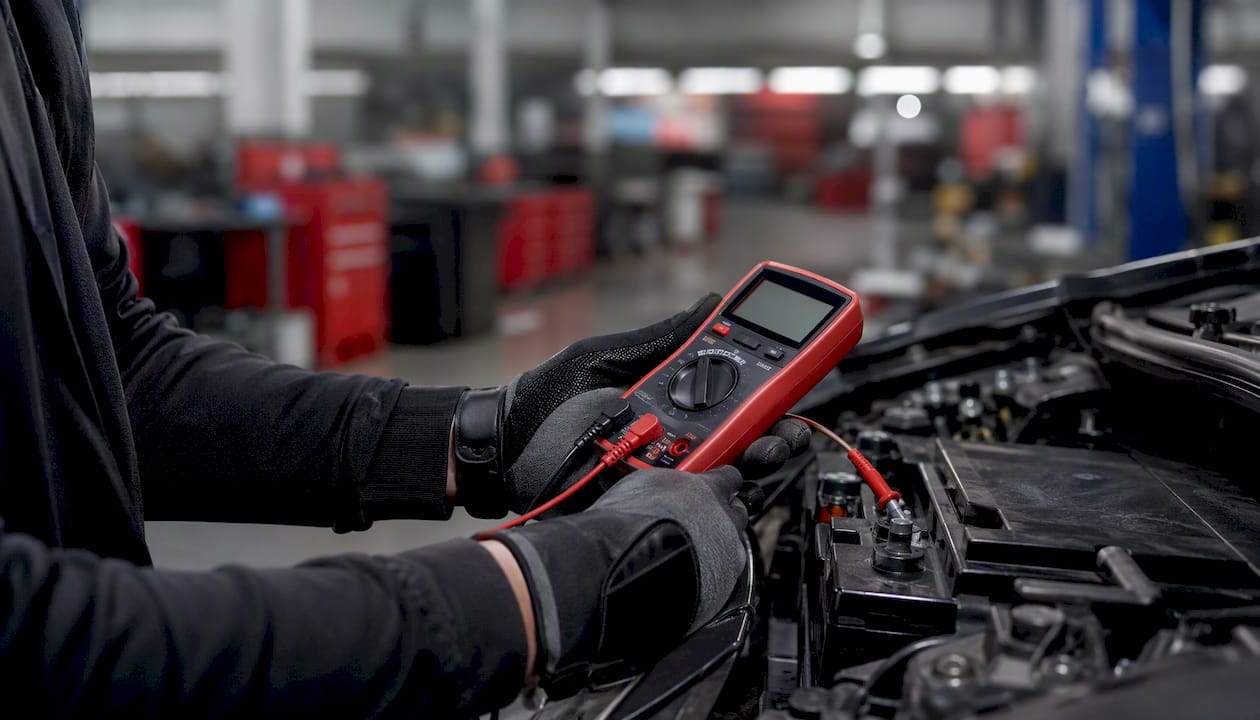
Most owners treat their warranty booklet like an afterthought until something breaks, and by then it's too late to negotiate terms or shop around. The owners who come out ahead are the ones who know their capacity threshold, their prorated math, and their point-of-sale state before they ever need to file a claim.
Where I think the conventional wisdom falls short is the assumption that factory coverage alone is enough for high-tech vehicles. A Range Rover, a Porsche Taycan, or a Mercedes EQS carries electrical complexity that a base sedan simply doesn't, and the failure points multiply accordingly. For owners who want the battery, electrical system, and high-tech components covered together, with labor included and the plan transferable if they sell, a plan through Rpmwarranty is worth a serious look rather than an afterthought bought in a panic after the first warning light.
Get Battery Protection Before You Need It
Rpmwarranty's Elite and Advanced plans are built for exactly the gap this article has been walking through: the space between what your factory warranty covers and what an actual battery failure costs. Both tiers extend to electrical systems, hybrid components, and high-tech electronics, the same systems that turn a routine 12-volt swap into a bigger bill on vehicles like a BMW X5 or a Mercedes GLE once the factory clock runs out.

If you drive a Volkswagen and want a plan built around that platform's electrical quirks, Rpmwarranty's Volkswagen-specific coverage options walk through what's included. For everyone else, the fastest path is a direct look at protection plan tiers to see how Elite, Advanced, and Essential differ on battery and electrical coverage.
Claims support runs through a nationwide network of ASE-certified mechanics, so you're not stuck finding a specialist shop on your own when a battery issue shows up. Get a free quote for your specific make and model, and confirm exactly what battery protection looks like before you're staring down a repair bill instead of a warranty claim.
Where to Verify Battery Warranty Rules
- Your vehicle's warranty booklet or manufacturer support page — check the exact defect definition, capacity threshold, and mileage caps specific to your model, such as Ford's battery warranty support page.
- The Alternative Fuels Data Center — a government resource for confirming federal EV benefits and policy-level warranty guidance.
- Your state's CARB status — confirm whether your vehicle's point-of-sale state follows California emissions rules, since that determines whether extended traction battery minimums apply.
- Independent battery testing guides — resources explaining load testing and capacity diagnostics help you understand what documentation a shop should provide before you file a claim.
Frequently Asked Questions
Does extended warranty cover hybrid battery packs? It depends entirely on the plan's language. Some extended vehicle service contracts explicitly name the traction battery as covered, often with module-level repair options, while others bundle it vaguely under "electrical systems" without naming it directly. Always ask the provider to confirm in writing.
Does a car battery replacement warranty cover labor costs? Not always. Some warranties prorate only the material cost of the battery itself, leaving the customer responsible for the full labor bill regardless of how much warranty term remains. Confirm labor inclusion before assuming a repair will be free or cheap.
What voids battery replacement under warranty? Common voiding factors include improper jump-starts, aftermarket electrical modifications that increase current draw, physical damage from accidents, and extended periods of neglect that lead to deep discharge. Environmental damage like flooding typically falls to insurance rather than warranty.
How long does auto battery warranty coverage typically last for EVs? Federal law sets a minimum of 8 years or 100,000 miles for hybrid and EV traction batteries. States that follow California's CARB standards commonly extend that to 10 years or 150,000 miles, so the answer depends partly on where the vehicle was originally sold.