

Your car's factory warranty just expired, and now you're facing a $3,000 transmission repair bill. This scenario plays out thousands of times daily across America, leaving vehicle owners scrambling to cover unexpected costs. Extended auto warranties promise protection against these financial shocks, but navigating coverage options, exclusions, and potential scams creates confusion for most buyers. This guide breaks down everything you need to understand about auto warranties in 2026, from basic coverage types to choosing a trustworthy provider that actually pays claims when you need it most.
Table of Contents
- Understanding auto warranties and coverage basics
- Types of extended auto warranties and what they cover
- How to spot scams and choose a trusted warranty provider
- Steps to choose the right extended auto warranty for you
- Protect your vehicle with trusted extended warranty plans
- Frequently asked questions about auto warranties
Key takeaways
| Point | Details |
|---|---|
| Extended warranties protect after factory coverage ends | These contracts cover major mechanical failures once manufacturer warranties expire, typically after 3 to 5 years |
| Coverage levels vary significantly | Bumper to bumper, powertrain, and component specific warranties offer different protection at different price points |
| Scam prevention requires verification | Always request written policies and check BBB ratings before purchasing any extended warranty |
| Exclusions determine real value | Carefully review what's not covered to avoid surprise claim denials when repairs are needed |
| Match coverage to vehicle condition | Choose warranty type based on your car's age, mileage, and likelihood of expensive repairs |
Understanding auto warranties and coverage basics
Factory warranties come standard with new vehicles, protecting you against manufacturing defects and mechanical failures for a limited time. Most manufacturers provide coverage lasting 3 to 5 years or 36,000 to 60,000 miles, whichever comes first. Once this period ends, you're responsible for all repair costs unless you purchase additional protection.
Extended warranties, sometimes called vehicle service contracts, step in where factory coverage stops. These agreements cover defects or damage not considered normal wear and tear, protecting you from major mechanical failures that occur after the manufacturer's obligation expires. The distinction matters because normal wear items like brake pads, tires, and wiper blades typically fall outside coverage boundaries.
Think of factory warranties as your safety net during the honeymoon period with a new vehicle. Extended warranties become your backup plan for the years when components start showing age. Understanding this timeline helps you decide when purchasing additional coverage makes financial sense for your situation.
Pro Tip: Review your factory warranty terms before it expires to identify which components will lose protection first, helping you prioritize extended coverage needs.
The language around warranties can confuse buyers, with terms like powertrain, bumper to bumper, and stated component creating uncertainty. Learning car warranty terminology before shopping prevents misunderstandings about what you're actually purchasing. Each coverage type protects different vehicle systems, and knowing these differences ensures you select appropriate protection.
- Factory warranties typically cover manufacturer defects and workmanship issues
- Extended warranties focus on mechanical breakdowns after factory coverage expires
- Service contracts and extended warranties are essentially the same product with different names
- Coverage duration and mileage limits vary widely between providers and plans
Types of extended auto warranties and what they cover
Extended warranty options fall into three main categories, each offering different protection levels at varying costs. Bumper to bumper, stated component, and powertrain warranties represent the spectrum from comprehensive to basic coverage. Bumper to bumper plans mirror factory warranties, covering nearly every vehicle component except normal wear items. Powertrain warranties protect only engine, transmission, and drivetrain components. Stated component coverage falls between these extremes, listing specific systems included in the contract.

Cost differences reflect coverage breadth. Prices range from around a thousand to several thousand dollars depending on your vehicle's value, age, and the protection level you select. A comprehensive bumper to bumper plan for a luxury vehicle might cost $4,000, while basic powertrain coverage for an older sedan could run $1,200. Payment structures vary too, with some providers offering monthly installments and others requiring lump sum payments.
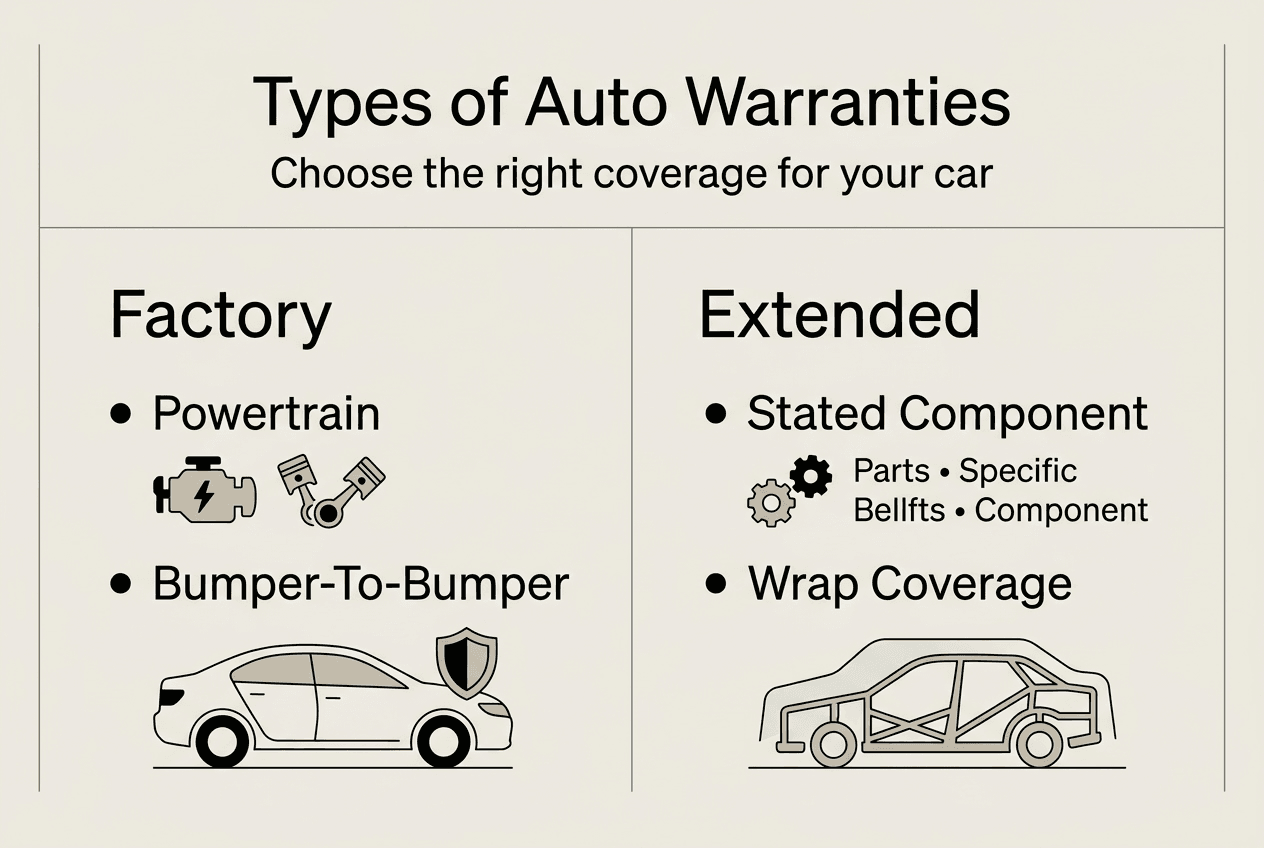
Exclusions create the biggest headache for warranty holders. Extended warranties often exclude crucial components, leading to denied claims when you need coverage most. Common exclusions include maintenance items, pre existing conditions, modifications, and damage from neglect or abuse. Some contracts exclude high tech components like navigation systems or advanced driver assistance features, leaving expensive repairs uncovered.
| Coverage Type | Typical Components Covered | Average Cost Range | Best For |
|---|---|---|---|
| Bumper to Bumper | Engine, transmission, electrical, A/C, suspension, steering | $2,500 to $4,500 | Newer vehicles under 5 years old |
| Powertrain | Engine, transmission, drivetrain, axles | $1,000 to $2,000 | Older vehicles with reliable accessories |
| Stated Component | Specific systems listed in contract | $1,500 to $3,000 | Mid age vehicles needing targeted protection |
Matching warranty type to your vehicle's condition prevents overpaying for unnecessary coverage. A 10 year old car with 120,000 miles needs different protection than a 3 year old vehicle just losing factory coverage. Consider which systems are most likely to fail based on your car's age and maintenance history.
Pro Tip: Request a sample contract before purchasing to review the exclusions section, which reveals what you won't be covered for when problems arise.
Reading fine print separates smart buyers from those facing claim denials. Coverage limits, deductibles, and claim procedures hide in contract details that most people skip. Some warranties cap total claims at $5,000 annually, meaning a major engine failure could exceed your coverage. Others require repairs at specific facilities or mandate pre approval before work begins. Understanding these requirements before signing prevents frustration when you need service.
- Bumper to bumper coverage excludes maintenance, wear items, and typically glass or tires
- Powertrain warranties leave you exposed for electrical failures, A/C problems, and suspension issues
- Deductibles range from $0 to $250 per repair visit
- Some contracts limit coverage to specific repair facilities or require manufacturer parts
Exploring top extended warranty options helps you compare what different providers include and exclude, making coverage differences transparent before purchase.
How to spot scams and choose a trusted warranty provider
The extended warranty industry struggles with trust issues for good reason. Not all extended car warranties are scams, but the industry's reputation suffers from aggressive sales tactics and misleading promises. Distinguishing legitimate providers from fraudulent operations requires knowing common red flags and verification methods.
Extended warranty scam calls are pervasive, often using prerecorded or automated messages with specific car information to appear legitimate. These robocalls create urgency, claiming your warranty is expiring soon or that you've been specially selected for coverage. Scammers pressure you to provide credit card information immediately, before you can research the company or review contract terms.
Protecting yourself starts with skepticism toward unsolicited contact. Never give personal or financial information to callers you didn't contact first. Legitimate warranty companies don't cold call with limited time offers or demand immediate payment. If someone calls about your expiring warranty, hang up and research the company independently before engaging.
Legitimate warranty providers should provide a written copy of the policy before you commit to purchase, allowing you to review coverage details and exclusions without pressure.
Reputable providers demonstrate trustworthiness through verifiable credentials and transparent business practices. Look for companies with Better Business Bureau accreditation, positive customer reviews across multiple platforms, and clear contact information including physical addresses. Established providers like Endurance Warranty and CarShield maintain strong reputations by honoring claims and providing straightforward contract terms.
Pro Tip: Search for company names with "complaints" or "reviews" to uncover patterns of denied claims or poor customer service before purchasing coverage.
Verification steps protect you from fraudulent warranty sellers:
- Check BBB ratings and read actual customer complaints, not just star ratings
- Request written contracts and review them for at least 48 hours before signing
- Verify the company's physical address and state licensing through official databases
- Ask specific questions about exclusions and claim procedures, noting vague or evasive answers
- Compare quotes from multiple providers to identify suspiciously low prices
Learning about warranty scams prevention equips you with specific tactics scammers use and how legitimate companies operate differently. This knowledge helps you confidently evaluate providers without falling for high pressure sales techniques.
Legit warranty providers should provide written policies upfront, giving you time to review coverage without commitment. Companies refusing to send contracts before payment or claiming special pricing expires within hours are using classic scam tactics. Walk away from any provider unwilling to let you carefully review terms.
Steps to choose the right extended auto warranty for you
Selecting appropriate warranty coverage requires systematic evaluation of your vehicle's condition, your financial situation, and available options. Following a structured approach prevents impulse purchases and ensures you get protection matching your actual needs.
First, assess your vehicle's repair risk profile. Consider the car's age, current mileage, and maintenance history. Vehicles approaching 100,000 miles face higher failure rates for major components like transmissions and engines. Research common problems for your specific make and model to identify which systems typically fail first. A Honda Accord might have bulletproof engines but problematic transmissions, while certain BMW models face expensive electrical issues.
Second, compare providers based on coverage breadth, cost, and reputation. Request quotes from at least three companies, ensuring you're comparing equivalent coverage levels. A $2,000 powertrain warranty from one provider might cover fewer components than a competitor's $2,200 plan. Review what each contract includes and excludes, paying special attention to components most likely to fail on your vehicle.
Third, review exclusions and contract wording carefully to understand exactly what protection you're buying. Exclusions sections reveal coverage gaps that marketing materials gloss over. Look for vague language like "mechanical breakdown" without defining covered components, which gives providers wiggle room to deny claims.
Fourth, calculate cost benefit ratios relative to likely repair expenses. If a comprehensive warranty costs $3,000 for three years but typical repairs for your vehicle average $800 annually, the math doesn't favor purchasing coverage. However, if your car has a history of $2,000 transmission problems and the warranty costs $1,500, protection makes financial sense.
| Step | Key Considerations | Expected Outcome |
|---|---|---|
| Assess vehicle condition | Age, mileage, known issues for make/model | Identify high risk components needing coverage |
| Compare providers | Coverage levels, costs, company reputation | Shortlist of 2 to 3 trustworthy options |
| Review contract terms | Exclusions, claim procedures, coverage limits | Clear understanding of actual protection |
| Calculate value | Warranty cost vs likely repair expenses | Data driven purchase decision |
| Make informed choice | Balance cost, coverage, and peace of mind | Appropriate protection for your situation |
The extended warranty market represents significant financial stakes. Companies paid billions in warranty claims and hold sizable reserves, reflecting the industry's scale and the real costs of vehicle repairs. Understanding this context helps you appreciate why thorough research matters when selecting coverage.
- Document your vehicle's current condition and mileage to establish baseline for coverage needs
- Research common failure points for your specific year, make, and model through owner forums and reliability reports
- Obtain written quotes from multiple providers, ensuring comparable coverage levels
- Review sample contracts focusing on exclusions, deductibles, and claim procedures
- Verify company credentials through BBB, state insurance departments, and independent review sites
- Calculate total cost including deductibles and compare against average repair costs for identified risk components
- Ask providers specific questions about claim approval rates and average processing times
- Take at least 48 hours to review all information before making a final decision
Exploring auto warranty protection plans gives you concrete examples of how different coverage levels work in practice, making abstract concepts tangible through real plan comparisons.
Protect your vehicle with trusted extended warranty plans
Now that you understand how extended warranties work and how to evaluate providers, taking action protects you from unexpected repair costs that could derail your budget. RPM Warranty offers comprehensive protection plans designed specifically for vehicle owners who want reliable coverage without the confusion or aggressive sales tactics common in this industry.
Our trusted extended warranty plans are backed by dealers nationwide and provide customizable coverage matching your vehicle's specific needs. Whether you need comprehensive bumper to bumper protection or targeted powertrain coverage, our extended auto protection plans offer transparent terms and straightforward claim processes. Get started with free auto warranty quotes and speak with coverage experts who answer your questions honestly, helping you make informed decisions about protecting your vehicle investment.
Frequently asked questions about auto warranties
What is typically excluded from extended warranties?
Most extended warranties exclude normal wear items like brake pads, tires, batteries, and wiper blades. Maintenance services including oil changes, tune ups, and fluid flushes aren't covered either. Pre existing conditions, damage from accidents or neglect, and modifications you make to the vehicle fall outside standard coverage.
How can I verify if an extended warranty provider is reputable?
Check the company's Better Business Bureau rating and read actual customer complaints, not just star ratings. Verify their physical address and state licensing through official databases. Request written contracts before payment and research the company name with terms like "complaints" or "scam" to uncover patterns of denied claims.
When should I consider purchasing an extended warranty?
Consider extended coverage when your factory warranty nears expiration, especially if your vehicle has known reliability issues for major components. Vehicles approaching 60,000 to 100,000 miles face higher repair risks, making protection more valuable. Calculate whether likely repair costs exceed the warranty price to determine if coverage makes financial sense.
Can I transfer my extended warranty if I sell my car?
Many extended warranties are transferable to new owners, which can increase your vehicle's resale value. Transfer procedures and fees vary by provider, with some charging $50 to $100 for the transfer. Check your contract's transfer provisions before selling, as this feature makes your car more attractive to buyers worried about repair costs.
Are extended warranties worth the cost for older vehicles?
Extended warranties for older vehicles depend on the car's condition and repair history. High mileage vehicles often face coverage denials for pre existing conditions or exceed providers' age limits. If your car is over 10 years old or has 150,000 miles, setting aside warranty costs in a repair fund might provide better value than purchasing coverage with numerous exclusions.
What should I do if my warranty claim gets denied?
Review your contract to understand the denial reason and whether it's legitimate based on exclusions. Document all communication with the warranty company and gather repair estimates from certified mechanics. If the denial seems unjustified, file complaints with your state's insurance department and the Better Business Bureau. For more guidance, visit our auto warranty FAQs for detailed claim dispute procedures.
Recommended
- Extended Vehicle Auto Motorcyle Warranty | Trusted By All Dealers Nationwide
- Extended Vehicle Auto Motorcyle Warranty | Trusted By All Dealers Nationwide
- Extended Vehicle Auto Motorcyle Warranty | Trusted By All Dealers Nationwide
- Best Volkswagen Extended Vehicle Auto Motorcyle Warranty | Trusted By All Dealers Nationwide