
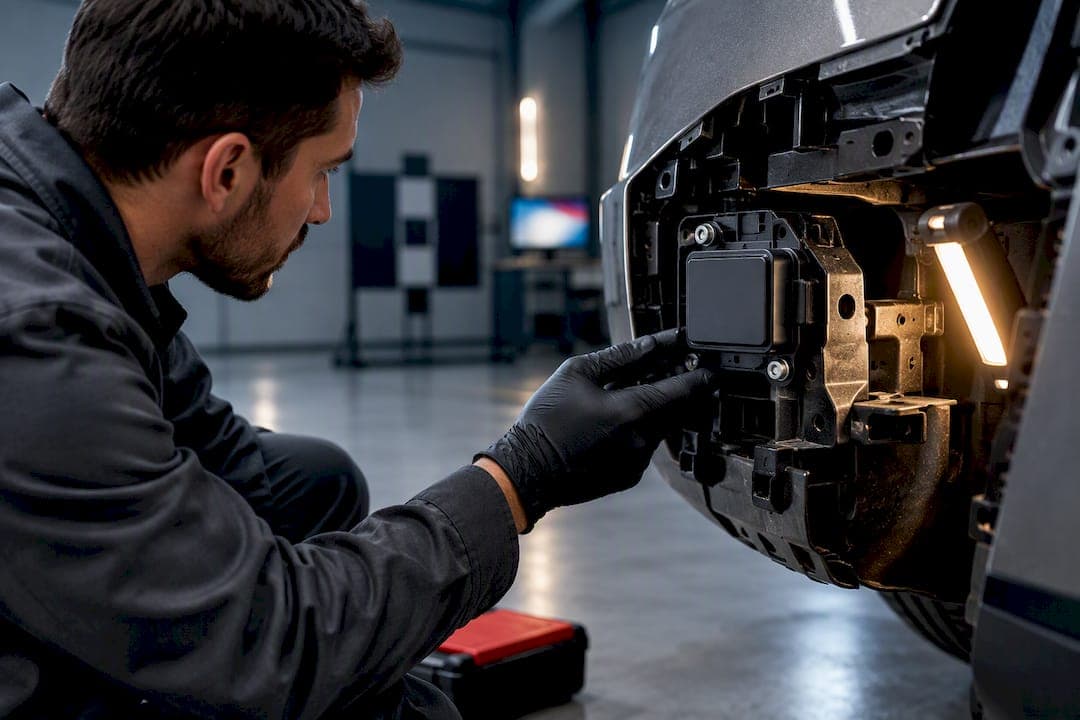
Factory-installed blind spot monitors are usually covered under warranty when the failure traces back to a manufacturing defect within the coverage window. Collision damage, aftermarket sensor kits, and botched bumper repairs almost never qualify. If your blind spot warning light is on, skip the DIY fixes, write down exactly what the dash is telling you, and book a diagnostic at a shop that can run an ADAS-capable scan.
TL;DR:
- Factory-installed blind spot monitor warranties typically cover internal sensor faults, wiring failures, and control module issues, but not damage from collisions or aftermarket modifications.
- Replacing sensors alone costs between $800 and $1,500, but most of the expense comes from recalibration, which can range from $100 to over $2,500 depending on complexity.
- Vehicle recent bodywork, collision damage, or DIY sensor swaps often lead to warranty claims being denied, especially if aftermarket parts are involved.
- Owners should document repair history, keep photographic evidence, and seek independent diagnostics if a warranty claim is rejected.
- Extended warranties with electronics coverage can help cover sensor and recalibration costs after factory warranties expire, especially on luxury vehicles.
Table of Contents
- What a Blind Spot Monitor Warranty Actually Covers
- Why Some Blind Spot Failures Get Denied
- What Blind Spot Monitor Repairs Actually Cost
- How to Fight Back After a Warranty Denial
- Where Extended Warranty Plans Fit In
- Get a Quote and Compare RPM Warranty Coverage
- Where to Verify These Numbers Yourself
- Sources
- FAQ
What a Blind Spot Monitor Warranty Actually Covers
Most new vehicles carry two layers of coverage that matter here: the basic/limited warranty (often 3 years/36,000 miles) and, on some brands, a separate electronics or technology warranty that runs longer. Blind spot monitoring, or BSM, usually falls under the electrical/electronics category rather than a stand-alone line item, since it's factory-integrated with other driver-assist systems like lane-keep assist and adaptive cruise control on vehicles from BMW, Mercedes-Benz, and Range Rover.
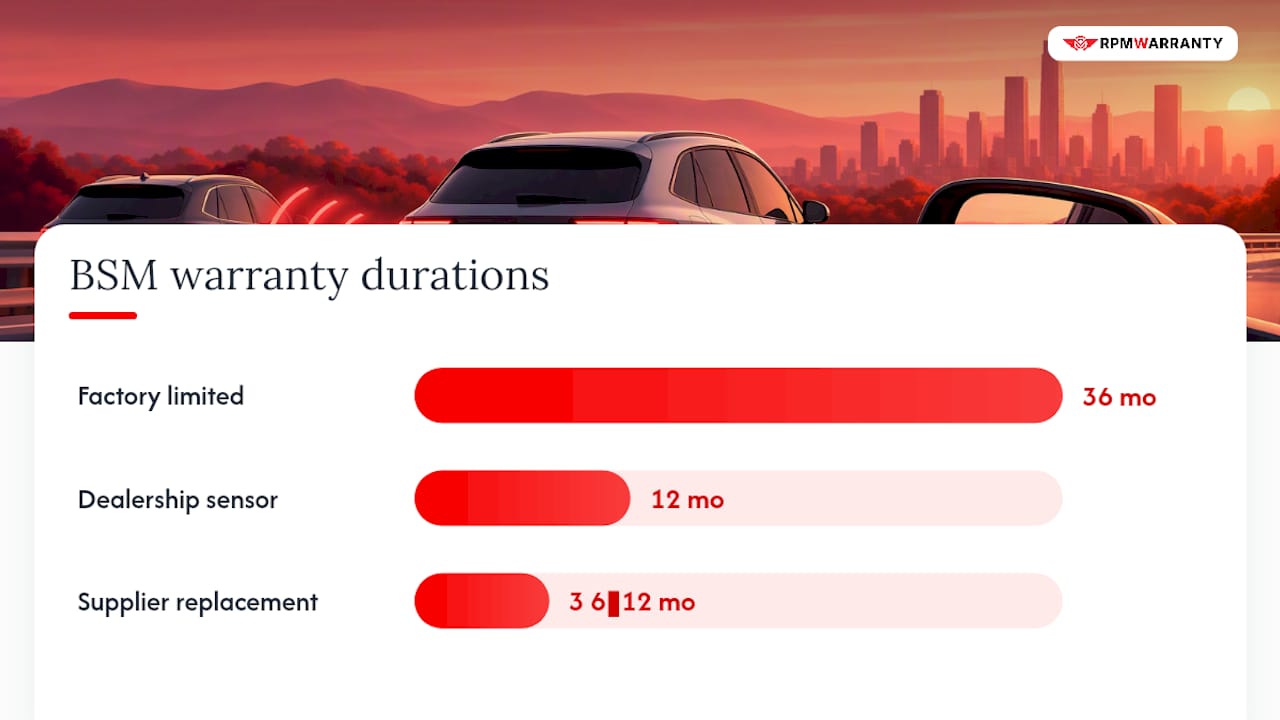
Replacement parts installed after the sale carry their own clock. A dealership-installed BSM sensor typically comes with a 12-month parts-and-labor warranty, separate from the vehicle's original coverage, while some parts suppliers extend 90-day to 1-year warranties on replacement units sold independently.
The line that trips up most owners is defect versus damage:
- Covered (usually): an internal sensor fault that throws a code with no impact history, a wiring harness that fails from a factory-side pinch point, or a control module that stops communicating on its own.
- Not covered (usually): a sensor cracked in a parking-lot fender-bender, corrosion behind a bumper that was never sealed properly after a prior repair, or a blind spot monitor warranty claim filed after an aftermarket dash cam or sensor kit was installed nearby.
That last point matters more than owners expect. KBB notes that OEM blind spot systems are integrated into the vehicle's factory calibration, while aftermarket blind spot detection warranty claims are almost always denied outright because the part was never part of the manufacturer's original design.
Why Some Blind Spot Failures Get Denied
Before you spend money on diagnostics, rule out the easy stuff. Road grime, ice, or a plastic bumper cover coated in wax can block the radar sensor and trigger a false "service required" alert that has nothing to do with a warranty issue at all.
Here's the order most technicians actually work through:
- Visual and sensor check. Clean the bumper-mounted sensors and inspect for cracks, loose mounts, or obvious impact damage.
- Confirm the dash message. Note the exact wording, since "BSM Unavailable" and "BSM Fault" often point to different root causes.
- Pull the diagnostic trouble codes. A dealer or independent shop with an ADAS-capable scan tool reads stored codes tied to the sensor, wiring, or control module.
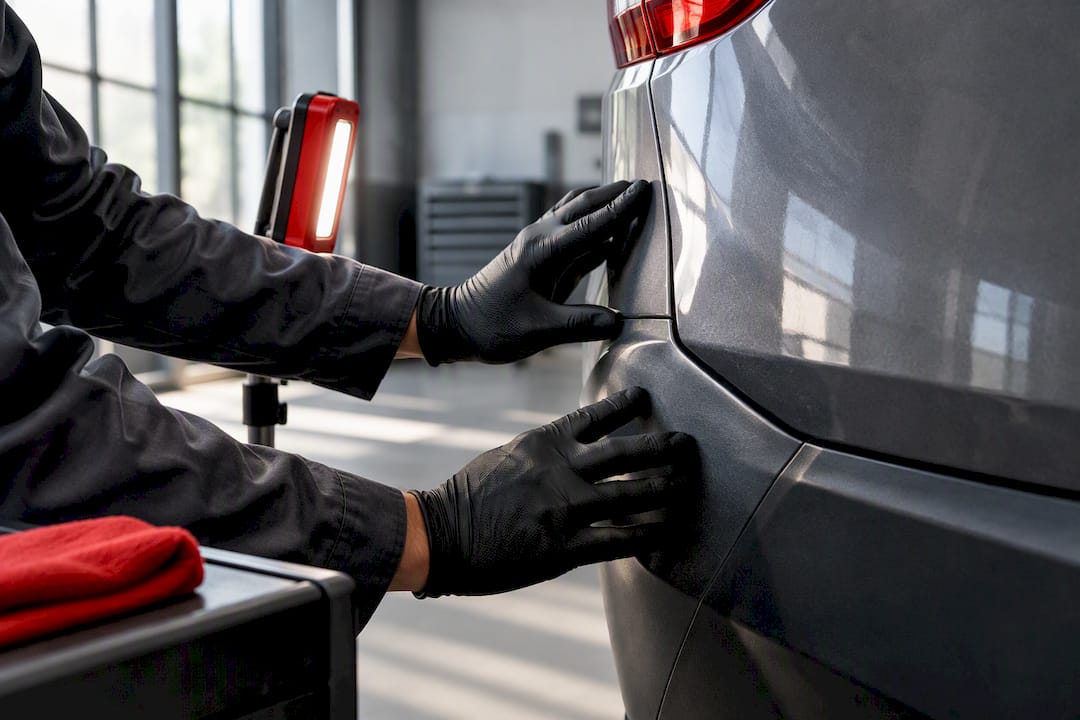
- Cross-check recent bodywork. Any bumper repair, windshield replacement, or even a recent battery disconnect can knock a networked ADAS sensor out of calibration without any physical damage to the sensor itself.
Internal sensor failures and control module defects typically pass warranty review. Corrosion from neglected drainage, collision damage, and DIY sensor swaps are the most common reasons a claim for blind spot detection warranty coverage gets rejected.
Pro Tip: If you had bodywork done anywhere near the rear bumper or quarter panels in the last year, mention it upfront. A denial for "unrelated prior repair" is one of the easiest disputes to lose if the shop finds out later instead of hearing it from you first.
What Blind Spot Monitor Repairs Actually Cost
Sensor prices vary by brand and mounting location, but the bigger cost driver is almost always recalibration, not the part itself.
By the numbers: AAA's report on ADAS repair costs found that repairs involving sensors and recalibration can vary widely in cost, depending on the sensor type and calibration method required.
Rough price bands you can expect to see on an estimate:
- Diagnostic and standalone recalibration: $100 to $400, with static in-shop calibration on the lower end and dynamic road-test calibration pushing it higher.
- OEM sensor replacement plus calibration: $800 to $1,500 or more, especially on vehicles like a Porsche Macan or Range Rover Sport where the sensor sits inside a painted bumper cover.
- Complex integrated repairs: $1,500 to $2,500-plus when a collision has damaged both the sensor and surrounding structure, requiring bumper replacement, paint, and full system recalibration.
Recalibration isn't a box a shop can skip to save you money. Swapping a sensor without recalibrating it can leave the system reading the road incorrectly, which defeats the entire purpose of the feature. Dealerships often charge more because they use OEM-specific calibration targets and software, but a well-equipped independent shop with the right ADAS tooling can do the job safely and for less, as long as they show you a post-repair calibration report.
How to Fight Back After a Warranty Denial
A denial letter isn't the final word. It's the opening move in a process that owners win more often than they expect, provided they document everything.
- Get the paperwork in writing. Request the repair order, the exact diagnostic trouble codes pulled, and a written denial reason, not just a verbal explanation from a service advisor.
- Photograph the vehicle immediately. Timestamped photos of the sensor area, bumper, and any surrounding panels protect you if the shop later claims damage that wasn't actually there.
- Request a reinspection. Ask specifically for a second technician to review the scan report, and get a copy of that report for your own file.
- Get an independent second opinion. A written diagnostic from a separate ADAS-equipped shop carries real weight, especially if it identifies the same fault as an internal defect rather than damage.
- Escalate methodically. Start with the dealer's service manager, move to the manufacturer's customer relations line if that fails, then contact your state's consumer protection office or attorney general, and treat small claims court as the last resort for high-dollar disputes.
When you call the manufacturer, keep it simple: "I'm requesting a review of claim [number]. My service records show no prior collision or bumper repair in this area, and the diagnostic report shows an internal sensor fault, not damage." That one sentence, backed by paperwork, resolves more disputes than a long complaint ever will.
Pro Tip: Recurring trouble codes across multiple visits are your strongest evidence. If the same code shows up on three separate service records over six months, that pattern argues defect, not accident, and it's hard for a manufacturer to wave away.
Where Extended Warranty Plans Fit In
Factory coverage runs out eventually, and that's where extended plans earn their keep. Some extended warranty plans include high-tech electronics coverage, which can cover BSM sensors and modules once the factory warranty ends.
Extended coverage tends to make the most sense for owners keeping a vehicle past the original warranty window, especially on luxury models like Mercedes, BMW, or Range Rover where sensor-heavy bumpers and integrated ADAS systems cost more to repair out of pocket. When comparing plans, don't just look at the monthly price. Confirm that electronics and driver-assist systems are explicitly named in the contract, check the deductible per claim, and ask how fast claims typically get approved.
The documentation habit doesn't change once you're on an extended plan. Keep the same diagnostic report, photos, and service history you'd use to fight a factory denial, since claims adjusters ask for the same proof either way.
— Kenneth
Get a Quote and Compare RPM Warranty Coverage
Once a factory blind spot monitor warranty runs out, you're covering every sensor, module, and recalibration bill yourself, and on a vehicle like a Porsche Cayenne or Range Rover, that adds up fast. Certain extended warranty providers offer plans that explicitly name high-tech electronics coverage for such gaps in factory coverage.
Getting a quote takes a few minutes. Have your VIN, year, make, and model, and current mileage ready, then compare the Elite, Advanced, and Essential protection plans side by side. Before you sign anything, confirm three things: that electronics and driver-assist components are listed by name, what the deductible looks like per claim, and whether the plan includes roadside assistance and rental reimbursement while your vehicle is in the shop. RPM Warranty also runs a motorcycle-specific Full Throttle plan for owners covering two wheels instead of four. Repairs go through a nationwide network of ASE-certified mechanics, so you're not stuck choosing between convenience and quality. Start with a free quote and read the coverage specifics before you decide which tier fits your vehicle and your budget.
Where to Verify These Numbers Yourself
For a deeper look at the figures cited above, AAA's Cost of ADAS Repairs report breaks down repair costs by sensor type and calibration method. KBB's blind spot monitor overview explains the OEM-versus-aftermarket distinction in plain terms, and PartCatalog's sensor replacement cost guide offers a useful side-by-side on parts pricing.
Sources
- AAA ADAS repair fact sheet (2023)
- KBB: Blind spot monitors (feature overview)
- Xerodrive: Blind Spot Alert Unavailable — causes and fixes
FAQ
How Much Does It Cost to Fix a Blind Spot Monitor?
Costs typically range from $100 to $400 for diagnostics and recalibration alone, climbing to $800 to $1,500 or more for OEM sensor replacement, according to AAA's ADAS repair cost data. Complex repairs involving bumper damage and full system recalibration can push past $2,500.
Is a TPMS Sensor Covered Under Warranty?
Tire pressure monitoring sensors follow the same defect-versus-damage rule as blind spot systems: a factory sensor that fails on its own is typically covered, while damage from a pothole, tire change, or corrosion usually isn't. Check your vehicle's parts warranty terms, since TPMS sensors often carry their own shorter replacement-part warranty separate from the main vehicle coverage.
What Should You Do if Your Blind Spot Monitor Is Not Working?
Start by cleaning the bumper sensors and checking for physical damage, since dirt and ice are common false triggers. If the warning persists, get a diagnostic scan that pulls the actual trouble codes rather than guessing, and keep a copy of that report for any warranty claim you file later.
What Causes a Blind Spot Monitor Malfunction?
The most common causes are dirty or obstructed sensors, wiring faults, internal module failures, and calibration loss after unrelated bodywork like a bumper repair or windshield replacement. Collision damage and corrosion from poor drainage are also frequent culprits, and both usually fall outside standard warranty coverage.
Does an Extended Warranty Cover Blind Spot Sensors After the Factory Warranty Ends?
Some extended plans, including RPM Warranty's higher tiers, name high-tech electronics and driver-assist components directly in their coverage. Always confirm the exact wording in the contract, since coverage for ADAS components varies by plan and provider.