

Yes, you can usually buy warranty coverage after you've already purchased a car, appliance, or electronics. But the window is not unlimited, and the paperwork matters more than most buyers realize. Before anything else, check your enrollment deadline, whether coverage runs concurrent or consecutive with what you already have, and any mileage or age caps tied to your specific item.
TL;DR:
- Warranty coverage for appliances and electronics typically must be purchased within 30 to 60 days after initial sale, while vehicle warranties can usually be bought at any time, though options decrease with higher mileage and age.
- Be prepared with your purchase receipt, VIN, current mileage, and proof of delivery or installation to determine your eligibility and secure better rates when buying warranty after purchase.
- Understand whether your plan offers concurrent coverage, which duplicates factory warranties, or consecutive coverage, which extends protection only after existing coverage ends, as this impacts the value of the contract.
- Opt for third-party warranties when buying for an older or high-mileage vehicle, but scrutinize provider reliability, claim processes, and extras like roadside assistance to avoid pitfalls.
- Avoid financing premiums into auto loans and leave yourself time to review and cancel contracts during the free-look period if terms are unsatisfactory.
Table of Contents
- How Do You Buy Warranty After Purchase? Start Here
- When Is It Too Late to Buy an Extended Warranty?
- Concurrent vs. Consecutive Coverage: What's the Difference?
- Manufacturer, Dealer, or Third-Party: Which Plan Type Fits?
- Is Buying a Warranty After Purchase Worth the Cost?
- How to Buy Coverage Now: Steps, Questions, and Red Flags
- What a Reputable Post-Purchase Warranty Process Looks Like
- When Buying Warranty After Purchase Actually Makes Sense
- Get a Quote After the Fact With Rpmwarranty
- Sources
- FAQ
How Do You Buy Warranty After Purchase? Start Here
Before you call anyone or fill out a quote form, gather a few things. This isn't busywork. It's what determines whether you're even eligible and what rate you'll get quoted.
- Purchase receipt and original warranty paperwork. These establish your purchase date, which most providers use as the anchor point for eligibility.
- Proof of delivery or installation, if the item was installed or delivered separately from the sale (common with appliances and some vehicle add-ons).
- VIN and current mileage, if you're insuring a vehicle. Providers will ask, and guessing wrong can void a quote later.
- The seller's stated enrollment window. Look through your original sales paperwork or the protection-plan terms for a deadline. Retailers and dealers almost always disclose this in writing somewhere, even if nobody pointed it out at checkout.
- Inspection scheduling, if your vehicle's age or mileage puts you near a threshold. Book it early. Providers can and do deny coverage while you wait for an inspection slot to open up.
- Financing math. If you're rolling the warranty cost into an existing loan, calculate the added interest. A $2,000 plan financed at auto loan rates over five years can cost you $2,400 or more by the time it's paid off.
None of this takes more than an hour. Skipping it costs you options later.
When Is It Too Late to Buy an Extended Warranty?
It depends entirely on what you're insuring and who's selling the plan. Retail protection plans on electronics and appliances typically give you a narrow window, often 30 to 60 days from purchase, to add coverage after the fact. Miss that, and most retailers won't reopen enrollment no matter how nicely you ask.
Vehicles work differently. You can purchase an auto service contract at almost any point in a vehicle's life, with some providers offering plans on vehicles up to 30 years old and 300,000 miles. The catch is that your options shrink as the odometer climbs. Coverage tends to get scarce, and pricier, once a vehicle passes roughly 50,000 to 60,000 miles, since the probability of a major mechanical failure rises right alongside the mileage.
Repair-cost reality: A single transmission replacement or engine repair can run into the thousands, which is exactly why mileage caps exist. Providers price against that risk, not against your good intentions.
A few things determine whether you're still in the game:
- Age and mileage caps. Many providers set hard cutoffs, and vehicles near or past those limits face higher premiums or outright denial.
- Inspection requirements. Higher-mileage vehicles often need a documented inspection and maintenance history before a provider will write a contract.
- Free-look periods. Once you do enroll, most contracts include a refund window, often 30 to 60 days, during which you can cancel for a full refund if the terms don't match what you expected. Treat this as your safety valve, not a formality.
If you're outside a retailer's 60-day add-on window but shopping for a vehicle contract, you're not out of luck. You're just facing narrower choices and probably a higher price than you'd have paid at the dealership.
Concurrent vs. Consecutive Coverage: What's the Difference?
This is the single most important distinction most buyers never ask about, and it directly affects whether the warranty you're buying actually does anything.
Concurrent coverage starts on your purchase date and can run alongside whatever factory or manufacturer warranty you already have. Sounds fine until you realize you might be paying for protection that duplicates coverage you already get for free. If your factory warranty already covers the engine for three more years, a concurrent plan covering the same parts for the same period isn't extending anything. It's just adding a second layer you probably don't need yet.
Consecutive coverage kicks in only after your existing warranty expires. This is the version that genuinely extends your protection window, and it's usually what buyers actually want when they say they're looking to "extend" a warranty.
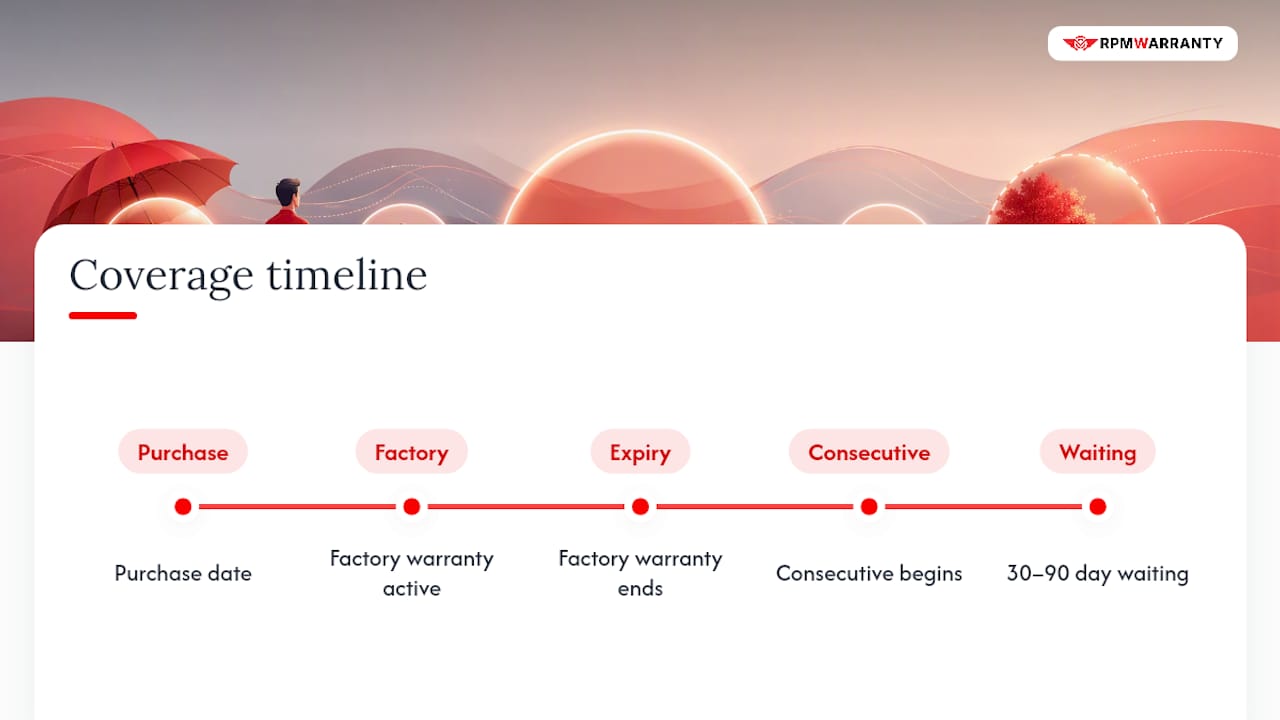
Federal disclosure rules require providers to state the exact trigger date in writing, whether that's your purchase date, a delivery date, or the vehicle's original in-service date. Read that clause closely. It's often buried in a paragraph titled something bland like "Coverage Commencement," and it's the line that tells you what you're actually buying.
Layered on top of start dates is the waiting period. Most vehicle and home service contracts impose a 30 to 90 day waiting period, sometimes paired with a small mileage threshold, before you can file your first claim. This exists to stop people from buying a contract the week their transmission starts making noise. Keep your delivery or installation proof handy; it's often the document that resolves a start-date dispute if one comes up.
Manufacturer, Dealer, or Third-Party: Which Plan Type Fits?
The provider you buy from changes what "buying after purchase" actually looks like in practice.
Manufacturer-backed plans tend to move fastest at claim time since the same company that built your vehicle is honoring the contract. The catch: some of these plans anchor coverage to your vehicle's original in-service date rather than your purchase date, which matters a lot if you bought used. Always ask which date controls before you sign.
Dealer-offered plans often give you more flexibility on enrollment timing, sometimes weeks or months after you drive off the lot. That flexibility can come at a cost. Dealer plans are frequently priced higher than comparable third-party contracts, and some route every repair through the dealership's own service bay, which limits where you can actually get work done.
- Ask whether the dealer plan requires dealer-only service or allows any licensed repair shop.
- Compare the dealer's quote against at least one independent provider before signing anything.
Third-party service contracts are usually your best bet if you're buying well after the sale or driving an older, higher-mileage vehicle. They're widely available and often more flexible on enrollment, but the tradeoff is variability in provider quality. Vet the company's financial stability, its inspection requirements, and, critically, how it pays claims. Some pay the repair shop directly. Others reimburse you after you've already covered the bill out of pocket, which can be a rough surprise if you weren't expecting it.
Home warranty and consumer-electronics plans follow their own enrollment norms entirely, so don't assume a rule that applies to your car applies to your refrigerator.
Is Buying a Warranty After Purchase Worth the Cost?
The math depends heavily on what you drive. A reliable, low-repair-cost vehicle rarely justifies an aggressive protection plan. A complex, expensive-to-fix vehicle often does.
Price gets driven by five factors: make and model, current age and mileage, coverage tier, deductible amount, and whether the contract is transferable if you sell the vehicle later. Higher-end makes like BMW, Mercedes-Benz, Porsche, and Range Rover carry electronics, air suspension systems, and turbocharged or hybrid drivetrains that are genuinely expensive to repair once they're out of factory coverage. A Range Rover air suspension compressor or a Porsche PDK transmission repair isn't a $300 fix. It's often a four-figure bill, and that's exactly the kind of exposure a well-chosen service contract is built to absorb.
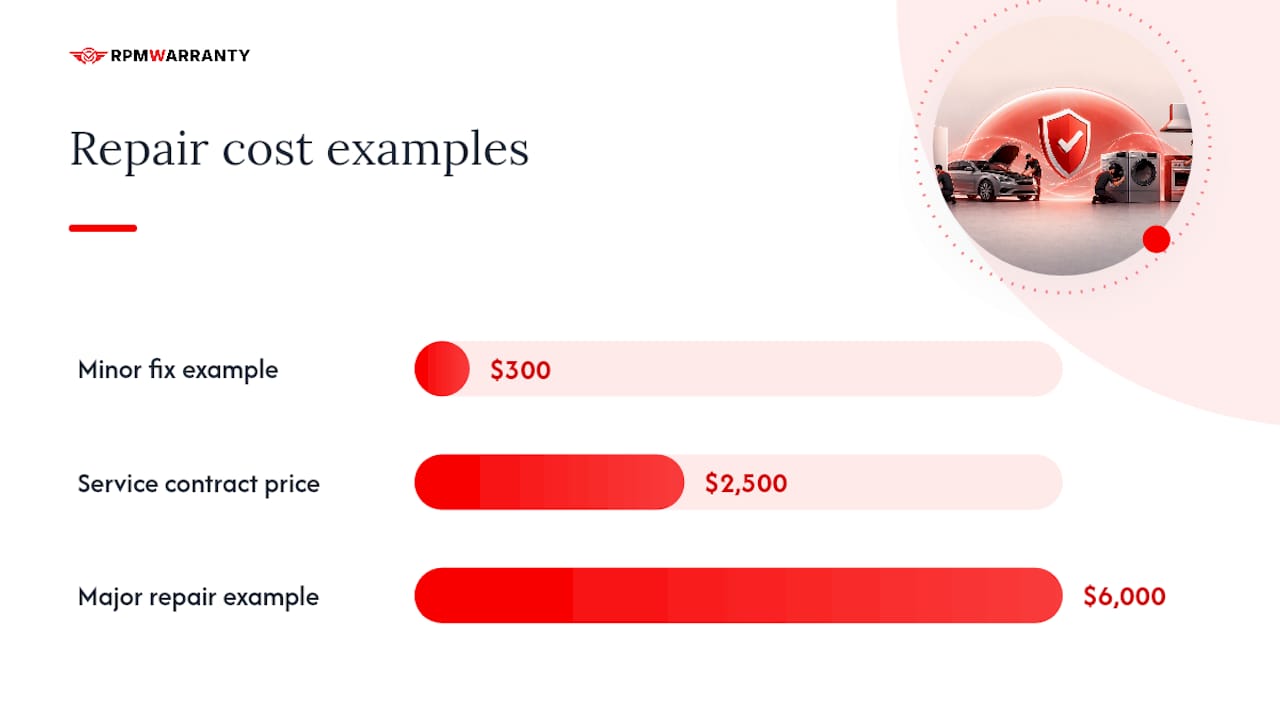
Run the break-even math before you commit. Estimate what a major repair on your specific vehicle would actually cost, then compare that to the total contract price plus your deductible. If a $2,500 plan protects you against a $6,000 transmission job on a vehicle known for transmission trouble, that math works in your favor. If you're driving a Honda with a reputation for going 200,000 miles without a major failure, the equation looks very different.
Pro Tip: Ask specifically whether the plan includes roadside assistance and rental reimbursement, and whether claims get paid directly to the repair shop. A plan that reimburses you after the fact can leave you fronting thousands of dollars while you wait for a check.
- Avoid financing the premium into your auto loan whenever possible; experts consistently recommend paying it separately to skip the added interest.
- Use any existing manufacturer extended-coverage option as your price and coverage baseline before comparing third-party contracts.
How to Buy Coverage Now: Steps, Questions, and Red Flags
Once you've decided to move forward, the process is straightforward if you follow it in order.
- Confirm your remaining factory coverage dates. You need this to know whether you want concurrent or consecutive coverage.
- Request the full written contract, not a summary sheet, before you pay anything.
- Verify the exact start date and waiting period stated in that contract.
- Schedule an inspection if the provider requires one for your vehicle's age or mileage.
- Sign and keep every document, including your quote, the signed contract, and any inspection report.
Ask these questions before you sign anything:
- What exact date or event triggers coverage, and is there a waiting period after that?
- Are pre-existing conditions excluded, and how does the provider define "pre-existing"?
- Is this contract transferable if I sell the vehicle?
- Who is the actual obligor, meaning who is financially responsible for paying claims?
Documents to have ready: your receipt, VIN or serial number, maintenance records, and delivery or installation confirmation.
Watch for red flags. The FTC specifically warns that an auto service contract is not the same as a warranty under federal law, and that unsolicited mail or calls claiming your "warranty is about to expire" are frequently scams designed to create false urgency. Aggressive, immediate-pressure sales tactics and requests for banking details before you've seen written terms are both signs to walk away.
What a Reputable Post-Purchase Warranty Process Looks Like
A trustworthy provider makes it easy to see what you're buying before you commit. Some providers structure their process around four steps: consultation, plan selection, customization, and final agreement, which gives buyers a chance to review terms at each stage instead of signing blind at a sales desk.
Coverage often comes in tiers, with different plans covering vehicles or motorcycles. Depending on the tier, inclusions typically cover components like the engine, transmission, cooling and electrical systems, and roadside assistance.
When you're evaluating any provider, including this one, ask for the same proof points:
- Expected claims turnaround time in writing, not verbally.
- Confirmation of a nationwide service network and access to ASE-certified mechanics.
- Clear, plain-language cancellation and free-look terms.
Compare the actual contract text against what a sales rep tells you verbally, and use your free-look period without hesitation if the written terms don't match the pitch.
When Buying Warranty After Purchase Actually Makes Sense
Buy later if you've already seen a pattern of early repairs, or if you own a vehicle where complex electronics, air suspension, or turbocharged systems make failures expensive rather than rare. That's a rational, data-driven reason to add coverage, not a panic buy.
Skip it if your vehicle has a strong reliability reputation and you'd rather self-insure by setting aside the premium amount in savings instead. That approach only works if you're disciplined enough to actually leave the money alone.
One operational rule holds regardless of vehicle: don't finance the premium if you can avoid it, and use your free-look period if anything about the signed contract surprises you.
— Kenneth
Get a Quote After the Fact With Rpmwarranty
Missing the dealership's time-of-sale pitch doesn't mean missing your shot at coverage. Rpmwarranty runs a transparent, tiered enrollment process built for owners buying after the fact, not just at delivery, so you're not stuck with whatever the finance office offered you on day one.
Whether you're driving a Range Rover with a suspension system that isn't cheap to fix or a daily-driver sedan you just want peace of mind on, the Elite, Advanced, and Essential plans let you match coverage to your actual risk instead of a generic package. Motorcycle owners can look at the Full Throttle plan for the same kind of tailored approach. Every plan comes with a free-look and cancellation window, so you can review the signed contract at home and back out if it doesn't match what you were told. Head to the protection plans page, enter your vehicle's year, make, and model, and get a quote before you decide anything.
Sources
- Auto warranties and auto service contracts | Consumer Advice
- When does an extended warranty start: Dates and waiting periods - LegalClarity
- Are extended car warranties worth it? | CNBC Select
- Does your new or used car need an extended warranty? | USA Today
FAQ
Can I Put a Warranty on My Car After Purchase?
Yes. Auto service contracts can typically be purchased at nearly any point in a vehicle's life, though options narrow and prices rise as mileage climbs past roughly 50,000 to 60,000 miles. Check the provider's specific age and mileage caps before applying.
How Long After Purchase Can I Buy an Extended Warranty?
For retail items like electronics and appliances, the window is often just 30 to 60 days from purchase. Vehicle service contracts are far more flexible, with some providers, including Rpmwarranty, writing contracts on vehicles up to 30 years old, though eligibility and pricing depend on current mileage and condition.
Is It Too Late to Buy an Extended Warranty?
It depends on what you own and how many miles or years have passed. Retail electronics often have hard cutoffs around 60 days, while vehicles usually remain eligible well beyond that, just with fewer choices and higher premiums as mileage increases.
Can I Buy My Own Extended Warranty Instead of Going Through the Dealer?
Yes, and it's often smarter to shop independently rather than accept the first dealer offer. Comparing a manufacturer-backed plan against third-party options, like the tiered plans Rpmwarranty offers, lets you weigh price, coverage, and claims handling before committing your money.