

TL;DR:
- A car warranty quote is a fixed-price offer that defines coverage, cost, and terms for extended vehicle service beyond the manufacturer's warranty. Vehicle details, coverage tiers, regional costs, and provider licensing influence the quote price, which is valid for 7–30 days. Reading the full agreement and verifying licensing help ensure a reliable, legal protection plan.
A car warranty quote is a formal, fixed-price estimate that defines the coverage scope, cost, and terms of an extended vehicle service contract beyond your manufacturer's original warranty period. Getting the right quote means more than finding the lowest number. It means understanding what the price actually covers, how long the offer stays valid, and whether the provider is licensed to sell in your state. For BMW, Mercedes-Benz, Range Rover, Honda, and Porsche owners especially, the difference between a well-structured quote and a vague one can mean thousands of dollars in uncovered repairs.
What factors influence car warranty quote prices?
Warranty quote pricing is not arbitrary. Providers calculate your price based on a specific set of vehicle and coverage variables, and knowing those variables puts you in a stronger position when comparing offers.
Vehicle-specific factors drive the largest share of price differences:
- Make and model: Luxury and performance vehicles like BMW 5 Series, Porsche Cayenne, and Range Rover Sport carry higher quote prices because their parts cost more and require specialized labor.
- Age and mileage: A 2019 Ford F-150 with 60,000 miles will receive a lower quote than a 2017 Mercedes-Benz GLE with 95,000 miles. Older vehicles with higher mileage represent greater risk for providers.
- Vehicle condition: Pre-existing mechanical issues can disqualify certain components from coverage or raise the base price of the plan.
- Coverage tier selected: Plans range from essential powertrain protection to elite-level coverage that includes electrical systems, cooling systems, and high-tech components.
Warranty pricing varies widely based on vehicle type, mileage, and coverage plan, often ranging from several hundred to a few thousand dollars annually. That range reflects just how much vehicle specifics and plan selection can shift the final number.
Regional pricing differences also matter. Providers operating in states with higher labor rates, like California or New York, often price quotes higher than those in lower-cost markets. Payment terms, including monthly installments versus a lump-sum payment, can also affect the total cost of the plan.

Pro Tip: Before accepting any quote, ask the provider to itemize what is and is not covered. A quote that lists "powertrain coverage" without defining which components are included is not a complete quote.
Coverage tiers are the most controllable variable in your quote. Rpmwarranty offers three distinct plan levels: Elite, Advanced, and Essential. Each tier covers a different set of components, so your quote price changes depending on which plan fits your vehicle and budget. Choosing a higher tier for a Honda Accord with 80,000 miles may cost more upfront but protects against the electrical and cooling system failures that commonly appear at that mileage.
How do warranty providers structure and validate their quotes?
A warranty quote is a formal business document, not a casual estimate. Quotes include itemized costs, payment terms, activation timelines, and defined coverage details. That structure matters because it sets the legal and financial terms of your agreement before you sign anything.
Standard professional quotations guarantee the quoted price for 7–30 days before expiration. That validity window gives you time to compare offers, but it also means a quote you received three weeks ago may no longer be honored at the same price. Always check the expiration date on any warranty quote before making a decision.
| Quote element | What it means for you |
|---|---|
| Validity period | Price is locked for 7–30 days; after that, the provider can reprice |
| Coverage scope | Lists which components and systems are included in the plan |
| Payment terms | Defines monthly or lump-sum payment structure and due dates |
| Activation timeline | States when coverage begins after purchase |
| Money-back guarantee | Specifies the refund window if you cancel early |
Once you accept a quote, it becomes a binding agreement. Acceptance creates legal obligations for both parties: the provider must deliver the defined coverage, and you must pay the agreed price. That is why reading the full quote document before signing is not optional.
Reputable providers commonly offer a 30-day money-back guarantee allowing a full refund if coverage is canceled within the first month. That consumer protection gives you a real exit window if you change your mind or find a better plan.
Pro Tip: Request your quote in writing, even if you received a verbal price over the phone. A written document is the only version that holds legal weight after acceptance.
One detail many car owners miss: the waiting period. Many extended warranty plans include a mandatory 30-day waiting period before you can file any claims. That means coverage does not activate the moment you sign. If your Range Rover's transmission fails on day 15, you may not be covered. Factor that gap into your timing when purchasing a plan.
What is the difference between a car warranty and car insurance?
Car owners regularly confuse warranties and insurance. They are not the same product, and they do not protect against the same risks. A car warranty covers repairs or replacements for defective or malfunctioning parts. Car insurance covers accidents, theft, and external damage. That distinction defines what each product is actually worth to you.
Here is how the protection split looks in practice:
- Warranty covers: Engine failure in a BMW 3 Series due to normal wear, transmission breakdown in a Ford Explorer, cooling system failure in a Mercedes-Benz C-Class, electrical system faults in a Porsche Panamera.
- Insurance covers: Collision damage from an accident, theft of your Honda Pilot, hail damage to your Range Rover Defender, flood damage from a storm.
"Consumers often confuse warranties with insurance. Understanding their distinct roles improves protection decisions." — Mercury Insurance
The practical implication is clear. If your BMW 5 Series engine seizes at 90,000 miles due to a manufacturing defect or normal wear, your auto insurance policy will not pay for the repair. Only a warranty covers that scenario. Conversely, if someone rear-ends your Porsche Cayenne in a parking lot, your extended warranty will not pay for the bodywork.
Some car owners add Mechanical Breakdown Insurance as a third layer of protection. This product sits between a standard warranty and a full insurance policy, covering mechanical failures that result from non-accident causes. It is worth requesting a separate quote for this coverage if your vehicle is older or has high mileage, since standard extended warranties sometimes exclude pre-existing wear patterns.
How to get, compare, and verify a reliable warranty quote
Getting an accurate extended warranty online quote takes preparation. Providers price quotes based on your vehicle's specific details, so arriving with incomplete information produces an inaccurate number.
-
Gather your vehicle information first. You need the year, make, model, trim level, current mileage, and VIN. For a 2021 Range Rover Sport HSE, the trim level matters because it determines which technology systems are installed and therefore which components need coverage.
-
Request quotes from multiple providers. Use each provider's online quote tool or call their sales line directly. Rpmwarranty offers a free quote request process that walks you through plan selection based on your vehicle's specifics.
-
Use a car warranty coverage checklist when comparing. Your checklist should include: engine coverage, transmission coverage, electrical systems, cooling systems, roadside assistance, rental car reimbursement, and claim filing process. If a quote does not address each item on your list, ask the provider directly.
-
Verify the provider's license. Verifying warranty provider licensing through state insurance department websites helps you avoid invalid policies and fake insurance certificates. An unlicensed provider can issue a document that looks legitimate but carries no legal protection. Check your state's insurance department website before signing anything.
-
Read the waiting period and exclusion clauses. Every quote document contains language about what is excluded and when coverage begins. Waiting periods of 30 days are standard. Pre-existing condition exclusions are also common. A car warranty checklist that includes these items prevents surprises after purchase.
-
Compare payment terms, not just total price. A plan priced at $2,400 paid over 24 months at $100 per month may cost more in total than a $2,000 lump-sum plan. Calculate the full cost before deciding.
Red flags to watch for: Providers who refuse to give written quotes, sellers who pressure you to sign the same day, and documents that list coverage in vague terms without itemizing specific components are all warning signs. Unlicensed sellers sometimes issue invalid documents, risking real financial losses for car owners who believe they are covered.
Key takeaways
A reliable car warranty quote is a written, fixed-price document with a defined validity period, itemized coverage, and verifiable provider licensing that protects you from unexpected repair costs.
| Point | Details |
|---|---|
| Quote validity window | Prices are guaranteed for 7–30 days; compare offers before the quote expires. |
| Coverage tier selection | Choose a plan tier based on your vehicle's age, mileage, and component risk. |
| Warranty vs. insurance | Warranties cover mechanical failures; insurance covers accidents and external damage. |
| Provider verification | Confirm licensing through your state insurance department before signing any quote. |
| Waiting period awareness | Most plans include a 30-day waiting period before claims can be filed. |
What I've learned from watching car owners get burned by bad quotes
Kenneth here. After years of watching car owners make expensive mistakes with extended warranty purchases, one pattern stands out above all others: people treat a quote like a receipt instead of a starting point for scrutiny.
The fine print on a warranty quote is where the real product lives. The headline price is just the number that gets your attention. What actually matters is the exclusion list, the waiting period language, and the provider's license status. I have seen Mercedes-Benz GLE owners purchase plans that excluded the air suspension system entirely, which is one of the most expensive components on that vehicle. The quote looked complete. The coverage was not.
The 30-day money-back guarantee is genuinely useful, but only if you use the time. Most car owners sign, file the document away, and never read it again until they need to file a claim. Read the full agreement within the first week. If something does not match what the sales representative described, cancel and request a refund before the window closes.
Provider verification is the step most car owners skip because it feels like extra work. It is not optional. Unlicensed warranty sellers have issued documents that look identical to legitimate policies. Your state insurance department's license lookup tool takes about two minutes to use. That two minutes can save you thousands.
Finally, balance cost against coverage honestly. The cheapest quote is rarely the best value for a BMW, Porsche, or Range Rover owner. High-end vehicles have expensive parts and specialized labor requirements. A plan that costs $400 more per year but covers electrical systems and high-tech components is almost always worth it for those vehicles.
— Kenneth
Rpmwarranty makes getting a transparent quote straightforward
Car owners who want a clear, no-surprise quote process have a direct path with Rpmwarranty. The platform is trusted by dealers nationwide and covers vehicles based on your specific year, make, and model, so the price you see reflects your actual vehicle, not a generic estimate.
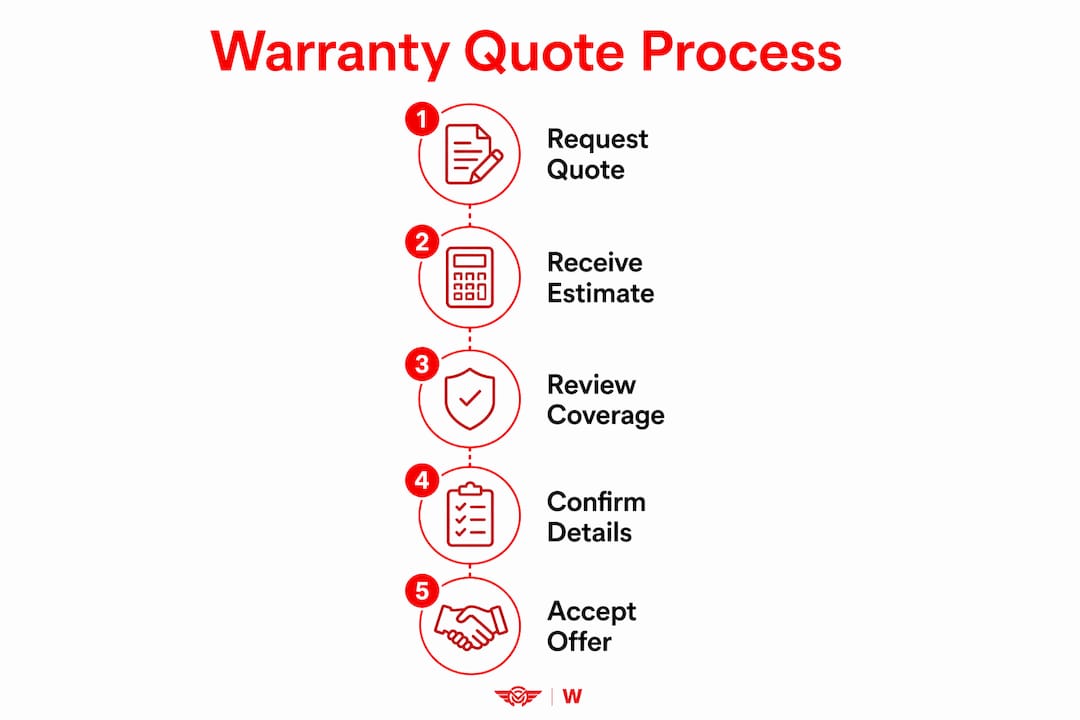
Rpmwarranty's vehicle protection plans include Elite, Advanced, and Essential tiers, covering everything from engines and transmissions to electrical systems and roadside assistance. The quote process follows four steps: consultation, plan selection, customization, and final agreement. There is no pressure to sign on the spot. You can also request a free warranty quote online and review your options before committing to any plan.
FAQ
What is a warranty quote for a car?
A car warranty quote is a written, fixed-price offer from a provider that defines the coverage scope, cost, and terms of an extended vehicle service contract. It is valid for a set period, typically 7–30 days, before the price may change.
How do I get a free warranty quote?
Request a free extended warranty quote online through a provider's website by entering your vehicle's year, make, model, and mileage. Rpmwarranty offers a no-obligation free quote process at rpmwarranty.com/free-quotes.
How long is a car warranty quote valid?
Standard warranty quotes are valid for 7–30 days from the date of issue. After that window closes, the provider can reprice the offer based on updated vehicle or market data.
What should a car warranty coverage checklist include?
A solid checklist covers engine, transmission, electrical systems, cooling systems, roadside assistance, rental car reimbursement, claim filing process, waiting periods, and exclusion clauses. Comparing quotes against this list prevents coverage gaps.
Is a car warranty the same as car insurance?
No. A car warranty covers mechanical failures and defective parts due to normal use or manufacturing issues. Car insurance covers accidents, theft, and external damage. Both serve different purposes and are not interchangeable.