
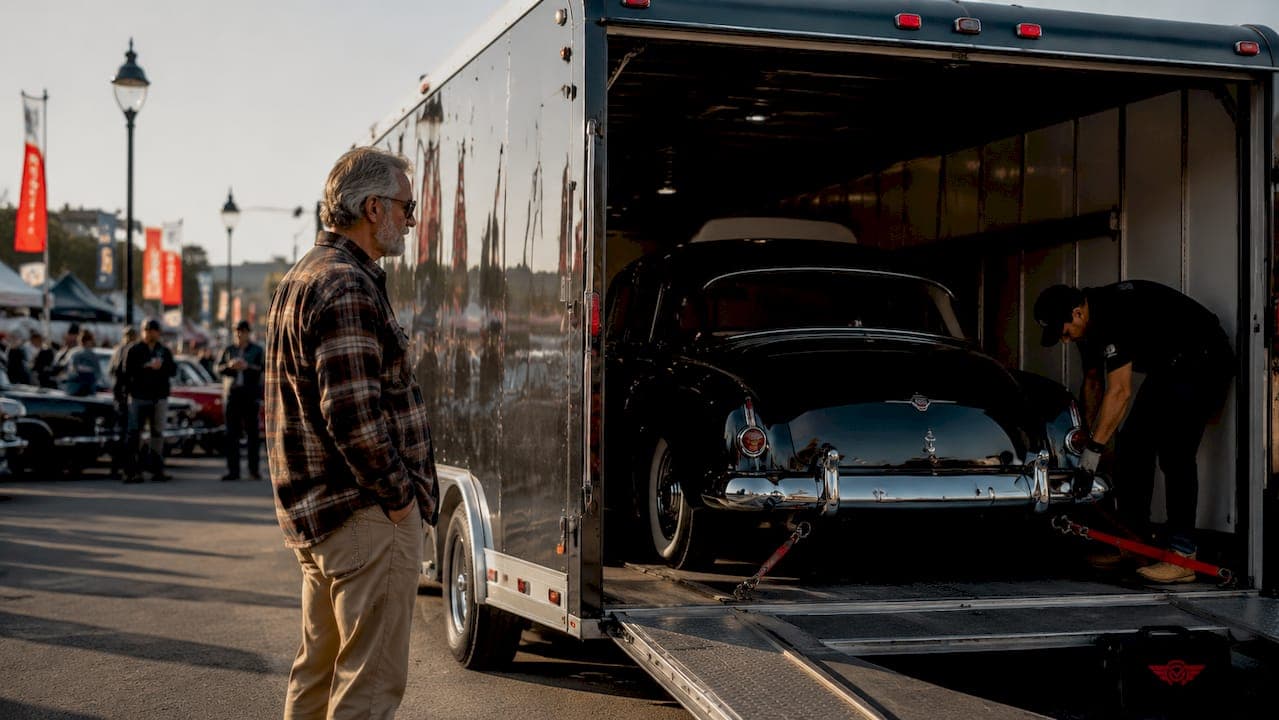
What are the best classic car transport companies in 2026?
Enclosed transport from a vetted, experienced carrier is the only acceptable standard for moving a collector vehicle in 2026. The companies below represent the strongest options across the full spectrum of classic car shipping services, from nationwide broker networks to direct carrier specialists with their own equipment.
| Company | Best For | Service Type | Insurance Options | Customer Rating |
|---|---|---|---|---|
| Montway Auto Transport | Reliable nationwide enclosed transport | Open and enclosed | Carrier cargo coverage | — |
| AmeriFreight | White-glove service and Agreed Value coverage | Enclosed, specialized | Agreed Value, customizable | — |
| ShipYourCarNow | Transparent quotes with real-time tracking | Enclosed, open | Standard cargo | — |
| Sherpa Auto Transport | Fully insured door-to-door enclosed service | Enclosed only | Comprehensive, verified | — |
| Easy Auto Ship | Flexible options and expedited booking | Open, enclosed, expedited | Standard cargo | — |
| uShip | Comparing multiple carrier bids | Marketplace, open, enclosed | Varies by carrier | — |
| Nexus Auto Transport | Vintage and exotic vehicle handling | Enclosed, verified carriers | Carrier cargo | — |
| Ship A Car Direct | Safe shipping with vetted carriers | Enclosed, open | Verified carrier insurance | — |
| Reliable Carriers | Carrier-owned equipment, professional drivers | Enclosed, white-glove | Direct carrier cargo | — |
| Intercity Lines | Antique and vintage car transport | Enclosed, specialized | Specialty cargo | — |
| Passport Transport | Enclosed shipping for classic and exotic vehicles | Enclosed, door-to-door | Hand-selected carrier coverage | — |
| Horseless Carriage | Collector-grade transport, historical vehicles | Enclosed, specialized | Specialty insurance options | — |
| Trans Global Auto Logistics | Customized logistics with marine export experience | Enclosed, international | Tailored, marine insurance | — |
| Classic Car Transport | White-glove service for collector cars | Enclosed, white-glove | Specialty cargo | — |
| Hemmings Shipping | Classic car community transport | Enclosed, community-based | Standard cargo | — |
A few providers stand out for specific reasons worth knowing before you call anyone.
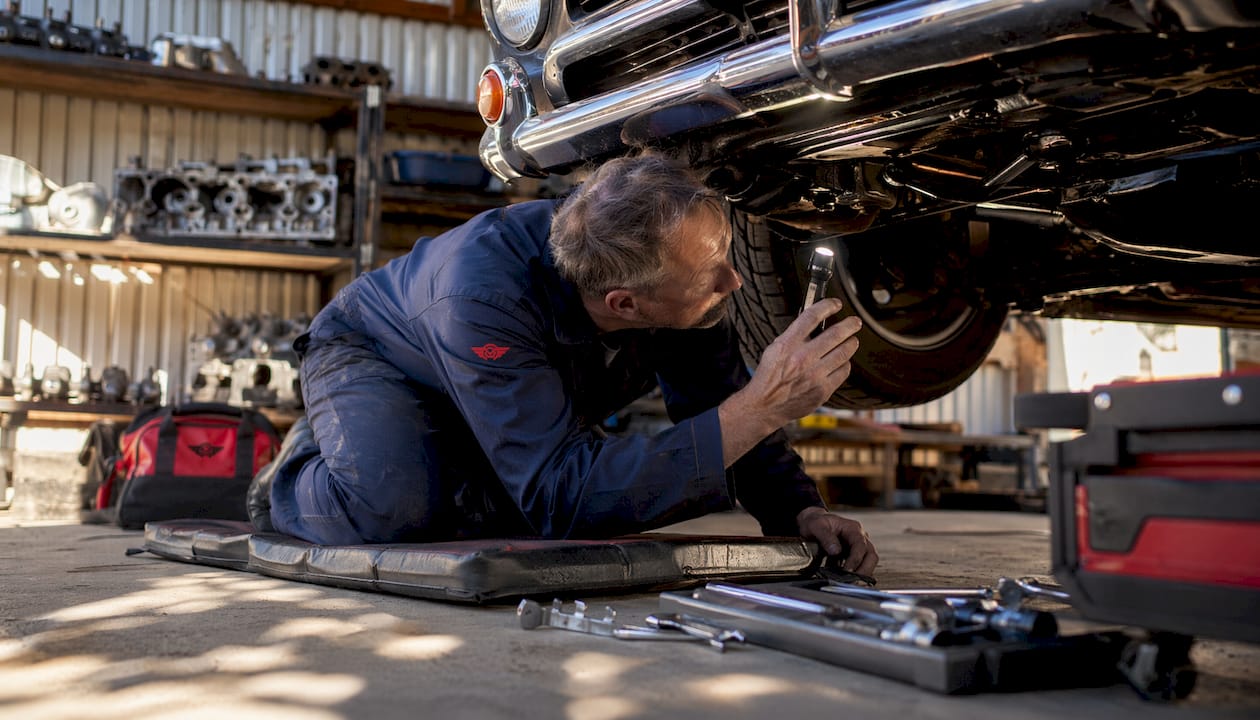
Reliable Carriers and Intercity Lines are direct carriers, meaning they own their trucks and load your vehicle themselves. That distinction matters because direct carriers own equipment and conduct loading, while brokers arrange shipments through third parties. When a Porsche 911 or a vintage Mercedes rolls onto a trailer, you want the person responsible for it to also be the person driving it.

Sherpa Auto Transport earns its reputation through rigorous carrier verification and a door-to-door enclosed model that eliminates terminal handling entirely. AmeriFreight is the strongest choice when Agreed Value insurance is a priority, particularly for restomod builds or rare classics where standard cargo policies would fall short.
uShip operates differently from every other name on this list. Its auction-style marketplace lets carriers bid on your shipment, which can produce competitive pricing, but the service quality varies widely by carrier. For a daily driver, that tradeoff is manageable. For a matching-numbers Ford Mustang Boss 302 or a concours-restored BMW 2002, it introduces risk that most collectors prefer to avoid.
Key strengths and limitations at a glance:
- Montway: large carrier network, good for coast-to-coast moves, broker model
- AmeriFreight: Agreed Value insurance options, careful handling protocols, white-glove positioning
- ShipYourCarNow: proprietary online tracking, transparent quoting, broker model
- Sherpa: carrier-owned trucks, comprehensive insurance verification, premium pricing
- Easy Auto Ship: multiple transport methods, flexible scheduling, standard service level
- uShip: competitive pricing through bidding, variable carrier quality
- Nexus: carrier vetting, specialty equipment for vintage and exotic vehicles
- Ship A Car Direct: thorough insurance verification, broker with strong carrier standards
- Reliable Carriers: direct carrier, consistent service, ideal for ultra-high-value classics
- Intercity Lines: experienced drivers with classic car expertise, enclosed specialists
- Passport Transport: hand-selected carriers, door-to-door enclosed service
- Horseless Carriage: focused exclusively on collectible and vintage vehicles
- Trans Global Auto Logistics: full logistics chain including marine export documentation
- Classic Car Transport: dedicated classic car focus, experienced handling team
- Hemmings Shipping: connected to the classic car marketplace, community-trusted
Enclosed transport is the recognized industry standard for collector vehicles, protecting against road debris, weather, and theft. Every company on this list offers it. The real differentiator is whether they own the equipment or broker it out.
How to choose the right classic car transport company
The single most important question to ask any provider is whether they own their trailers or arrange shipments through third-party carriers. That answer shapes everything else about accountability, communication, and care.
Carrier vs. broker: why it matters
A direct carrier owns the truck, employs the driver, and carries the insurance. A broker coordinates the shipment and passes your vehicle to whichever carrier accepts the load. Neither model is inherently bad, but for a vehicle like a Range Rover Classic or a restored Honda S2000, the broker model adds a layer of uncertainty. If something goes wrong, the question of whose insurance applies and who is responsible can get complicated fast. Brokers like Ship A Car Direct and ShipYourCarNow mitigate this by vetting their carrier networks rigorously, but you should still ask for the actual carrier's name and USDOT number before signing anything.
Insurance: Agreed Value vs. Actual Cash Value
Standard cargo insurance pays Actual Cash Value, which accounts for depreciation. For a rare classic or a heavily customized vehicle, that payout can be far below what the car is actually worth. Agreed Value coverage guarantees the pre-agreed payout amount regardless of depreciation, and it is the only policy type that makes sense for collector vehicles. AmeriFreight and Sherpa both offer or facilitate Agreed Value options. Before any shipment, request the carrier's current Certificate of Insurance and confirm the coverage limit. Reputable enclosed transport carriers carry cargo insurance between $250,000 and $1,000,000 per load.
Pre-shipment inspection and documentation
Photograph every panel, every wheel, and every piece of trim before the carrier arrives. Detailed pre-transport documentation is your legal protection if damage occurs during transit. The Bill of Lading, which documents shipment terms and vehicle condition at pickup, is evolving into electronic Driver Vehicle Inspection Reports that create a timestamped digital record. Note every existing scratch, chip, and imperfection in writing, and get the driver's signature confirming the condition at pickup.
Verifying safety ratings and regulatory standing
Every legitimate carrier has a USDOT number and Motor Carrier number. Look them up at safer.fmcsa.dot.gov before committing. Check for active authority, no out-of-service flags, and a Satisfactory or Unrated safety rating. An Unsatisfactory rating is a hard disqualifier, regardless of how competitive the quote looks.
Equipment requirements for classic vehicles
Not every enclosed trailer is appropriate for a classic car. The right setup includes:
- Hard-side trailers with rigid aluminum or composite panels, not fabric curtain trailers
- Hydraulic liftgates for vehicles with low ground clearance, such as a Porsche 911 or a lowered classic Ford
- Soft nylon straps that secure around tires or axles without metal contact on the chassis or body
- Climate-controlled options for vehicles with sensitive electronics or custom interiors
Scheduling and timing
Book at least 2–4 weeks ahead for standard enclosed transport. During car show season, which runs roughly from april through october, demand for enclosed trailers spikes and qualified carriers with the right equipment fill up fast. If your vehicle is non-running and requires winching, add another week to that window. Carriers with hydraulic liftgates and winching capability are a smaller subset of the market.
Pro Tip: Before signing a contract, ask the company specifically how many classic vehicles similar to yours they have transported in the past 12 months, and request references from those owners. A carrier that regularly handles a BMW M1 or a vintage Mercedes 280SL will handle yours differently than one that treats it like any other cargo.
Open vs. enclosed transport: what actually happens to your car
Open carrier transport is the default for standard vehicles. Your car rides on a multi-level trailer exposed to weather, road debris, and highway grit. For a 2022 Honda Civic, that is a reasonable tradeoff. For a concours-restored vehicle or a restomod with a custom paint job, it is not.
Enclosed transport uses hard-side trailers built from rigid aluminum or composite panels. These create a sealed environment that blocks wind-driven silt, road salt, and moisture. Fabric curtain trailers, which are sometimes marketed as enclosed, offer only partial protection. The 2026 industry standard for high-value vehicles is the hard-side configuration.
Trailer types and their effect on your vehicle
Single-car enclosed trailers offer maximum protection with minimal handling. Your vehicle is the only one loaded and unloaded, which eliminates the risk of another car's movement affecting yours. For a vehicle valued above $200,000, or for a pre-war classic with irreplaceable chrome and original paint, single-car trailers are the right choice.
Two-car enclosed trailers with hydraulic upper decks are appropriate for most collector vehicles. They balance cost with protection and are the most common format used by specialists like Reliable Carriers and Intercity Lines.
Multi-car enclosed haulers carrying six to eight vehicles are more cost-effective but involve more loading and unloading cycles. They are acceptable for moderately valued collectibles but not for a $300,000 matching-numbers muscle car.
Pros and cons by transport type:
Open transport:
- Lower cost
- Wider carrier availability
- Exposure to weather, debris, and UV
- Not appropriate for vehicles with custom paint or irreplaceable finishes
Multi-car enclosed:
- Moderate cost, better protection than open
- More handling cycles than single or two-car units
- Good for collectibles valued under $75,000
Single or two-car enclosed:
- Highest protection, minimal handling
- Climate control available
- Higher cost, fewer available carriers
- The correct choice for vehicles valued above $75,000 or with extensive custom work
Hydraulic liftgates are standard on quality enclosed trailers and prevent the scraping risk that traditional ramps create for low-clearance vehicles. A Porsche 911 with a lowered suspension or a classic Jaguar E-Type with minimal ground clearance cannot safely use a standard ramp.
What does classic car transport actually cost?
Enclosed transport for a cross-country move runs $1,400 to $2,800 in 2026, representing a 30%–60% premium over standard open carrier rates. That premium reflects the equipment, the reduced load size, and the specialized handling.
Cost snapshot: Enclosed auto transport costs 30%–60% more than open transport. For a cross-country haul, expect a price range of $1,400–$2,800 for multi-car enclosed carriers, while single-vehicle units can be meaningfully higher, depending on the carrier and vehicle specifics.
What drives the price up or down
- Distance: The biggest variable. A 500-mile regional move costs far less than a coast-to-coast haul.
- Transport method: Single-car enclosed trailers cost more than multi-car units, which cost more than open carriers.
- Vehicle condition: Non-running vehicles requiring winching equipment add cost and limit carrier options.
- Seasonal demand: Auction season—particularly around Barrett-Jackson and Mecum events—drives up demand for enclosed carriers and tightens availability.
- Vehicle dimensions: Lifted trucks, widebody builds, and oversized classics may require specialty trailers.
- Insurance requirements: Higher declared values require higher coverage limits, which some carriers price into the quote.
A quote that looks unusually low is worth scrutinizing. Carriers operating below market rate often cut corners on equipment, insurance coverage, or driver experience. For a vehicle like a BMW M3 or a restored Range Rover Classic, the difference between a $900 quote and a $1,600 quote often reflects the difference between a fabric curtain trailer and a hard-side unit with a hydraulic liftgate.
Main cost factors summarized:
- Distance traveled
- Enclosed vs. open transport method
- Single-car vs. multi-car trailer
- Peak season timing
- Vehicle size and operability
- Declared value and insurance requirements
Tips for getting the best value and keeping your car safe
Getting the transport right comes down to preparation before the carrier arrives, not just picking the right company.
Before pickup:
- Photograph every panel, wheel, and interior surface in good lighting. Pre-transport documentation is your primary protection if a damage claim arises.
- Confirm the carrier's Certificate of Insurance and verify that coverage limits match your vehicle's declared value.
- Remove all personal items from the vehicle. Most carriers prohibit personal belongings, and items left inside are not covered by cargo insurance.
- Set the fuel level to one-quarter tank or less. A full tank adds unnecessary weight.
- Disable the alarm system or provide the driver with clear instructions to prevent it from triggering during transit.
- Note all existing damage in writing on the Bill of Lading and get the driver's signature before the vehicle leaves your property.
Choosing the right equipment:
- Require hard-side enclosed trailers for any vehicle with custom paint, original finishes, or a value above $75,000.
- Confirm the carrier uses soft nylon straps, not metal chains or hooks, to secure the vehicle.
- For low-clearance vehicles like a Porsche 911 or a classic Mercedes 280SL, verify the trailer has a hydraulic liftgate.
Booking and scheduling:
- Book at least 2–4 weeks ahead for standard enclosed transport, and 3–4 weeks during peak show and auction seasons.
- For non-running vehicles, confirm the carrier has winching equipment and experience with inoperable classics before booking.
Pro Tip: For a vehicle valued above $200,000, or for any car with a bespoke paint job or irreplaceable original components, request a single-car enclosed trailer specifically. The added cost is modest relative to the protection it provides, and it eliminates the loading and unloading risk that multi-car units introduce.
After delivery:
- Inspect the vehicle thoroughly before signing the delivery receipt. Note any new damage immediately on the delivery paperwork.
- Photograph the vehicle again at delivery, matching the angles from your pre-shipment photos.
- If damage is found, do not move the vehicle until you have documented everything and contacted the carrier's insurance representative.
Extended warranty protection for classic vehicle owners
Transport insurance covers your vehicle during the move. Once it arrives, a different kind of protection takes over.
Classic and restomod vehicles, particularly those with modern powertrains installed in vintage bodies, carry a unique mechanical risk profile. A BMW-swapped classic or a Range Rover with upgraded suspension components sits outside the coverage window of any manufacturer warranty. Extended warranty plans fill that gap by covering the mechanical and high-tech systems that transport insurance never touches.
Coverage that matters for classic and restomod owners includes:
- Engine internals and long-block components
- Transmission and drivetrain systems
- Cooling systems, which are a common failure point on older vehicles running modern power
- Electrical systems and advanced electronics, increasingly relevant as restomods incorporate modern infotainment and driver-assist technology
- High-tech parts that standard policies often exclude
Rpmwarranty offers tailored extended warranty plans covering these systems with three tiers: Elite, Advanced, and Essential. Each plan is customizable by vehicle year, make, and model, which matters for a collector who owns a 1969 Ford Mustang with a modern Coyote engine or a classic Porsche 911 with upgraded fuel injection. Nationwide coverage and roadside assistance are included across all plan levels.
The claims process is designed to be straightforward. Owners select a plan, customize coverage to their vehicle's specific condition, and file claims without the friction that older warranty programs were known for. For a classic car owner who has just spent thousands on transport and wants protection on the other end, that simplicity is worth as much as the coverage itself.
Key warranty features for classic vehicle owners:
- Engine, transmission, and drivetrain coverage
- Cooling and electrical system protection
- Coverage for high-tech and advanced components
- Roadside assistance included
- Nationwide coverage with easy claims processing
- Customizable plans by vehicle year, make, and model
Rpmwarranty offers a different kind of protection for classic car owners
The companies compared in this article handle the transport side of classic vehicle ownership. Rpmwarranty handles what comes after.
Once your classic car arrives safely, the mechanical risks don't stop. Engines wear, cooling systems fail, and electrical gremlins surface at the worst possible times, especially in vehicles that blend vintage architecture with modern components. Rpmwarranty's Elite, Advanced, and Essential warranty plans are built for exactly this scenario, covering the systems that matter most in high-value and restomod vehicles, from long-block engine components to advanced electrical systems.
Getting covered takes four steps: consultation, plan selection, customization, and agreement. There are no dealer markups and no confusing exclusions buried in fine print. For classic car owners who have already invested in premium transport, protecting that investment with the right warranty plan is the logical next step.
Key Takeaways
Enclosed transport from a vetted carrier with Agreed Value insurance is the non-negotiable standard for moving any classic or collector vehicle safely across North America in 2026.
| Point | Details |
|---|---|
| Enclosed transport is the standard | Hard-side enclosed trailers protect against road debris, weather, and theft; open carriers are not appropriate for collector vehicles. |
| Pricing for cross-country enclosed transport runs $1,400–$2,800 in 2026, reflecting a 30%–60% premium over open carrier rates for long-distance hauls, due to the specialized service and equipment used. | |
| Agreed Value insurance is critical | Standard cargo policies pay depreciated Actual Cash Value; Agreed Value coverage guarantees the pre-agreed payout for rare and customized vehicles. |
| Book 2–4 weeks ahead | Peak show and auction seasons tighten carrier availability; non-running vehicles requiring winching need even more lead time. |
| Rpmwarranty covers what transport insurance doesn't | Extended warranty plans from Rpmwarranty protect engines, transmissions, electrical systems, and high-tech components after your vehicle arrives. |