
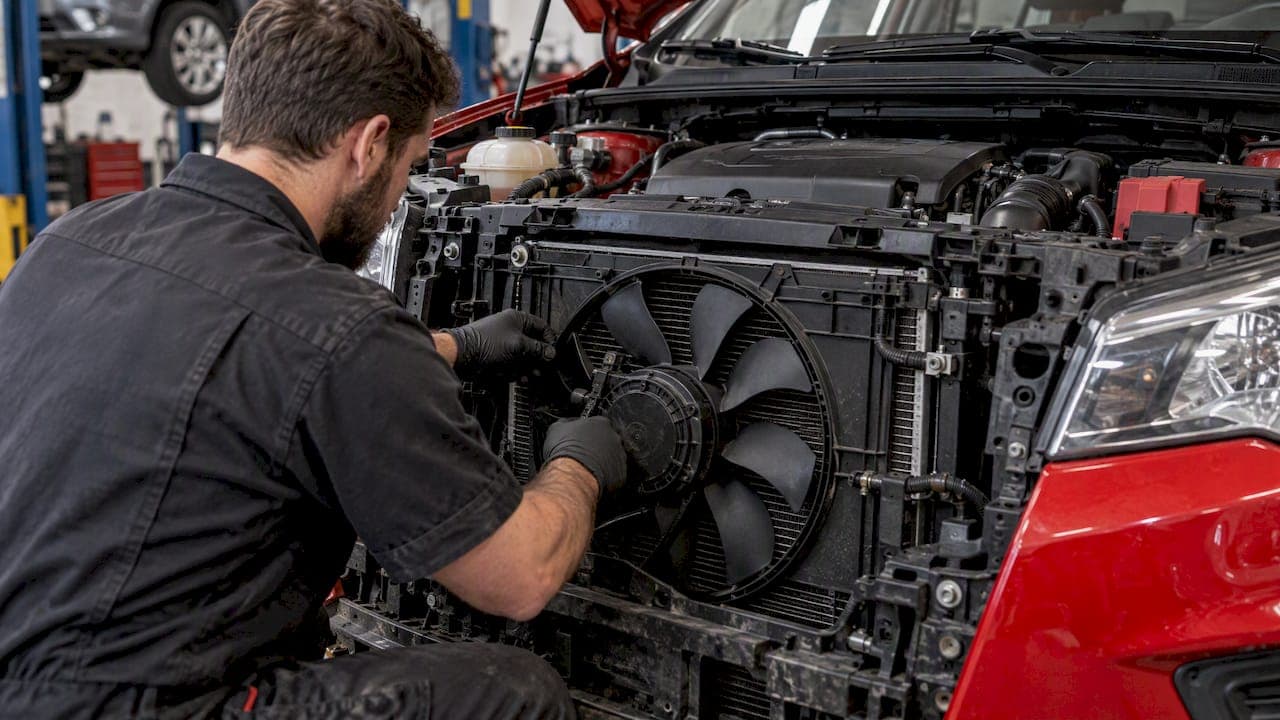
A failed engine cooling fan is usually covered by a factory warranty while it lasts, and it can be covered by an extended plan after that, as long as the plan lists cooling-system parts and the fan failed from a defect or ordinary component failure rather than neglect. The details sit in the contract wording, so this guide shows you what to look for, how mileage limits change the answer, and what to do when a claim is denied.
TL;DR
- A factory warranty covers a cooling fan that fails from a defect in materials or workmanship, but only inside its years and miles. Past that, you pay unless you hold a service contract.
- An extended warranty (a "service contract" in federal terms) is a separate, optional agreement. Whether it covers the fan depends on whether the plan names cooling-system and electrical components.
- Normal wear, abuse, and damage caused by improper maintenance or installation are the usual exclusions. Using an independent shop does not by itself void coverage.
- If a claim is denied, escalate in order: service manager, dealer owner or general manager, then the manufacturer's customer assistance line.
Table of Contents
- What the cooling fan actually does
- How a factory warranty treats a cooling fan
- When a recall is the real fix
- Model by model: what to ask before you rely on coverage
- What an extended warranty does for a cooling fan
- What is usually excluded
- Radiator versus cooling fan coverage
- Signs your cooling fan is going bad
- How to check coverage and file a claim
- If your cooling fan claim is denied
- Protect your vehicle before the fan fails
- FAQ
- Sources
What the cooling fan actually does
Your engine makes far more heat than the car can shed through airflow at low speed. The radiator moves heat out of the coolant, and the cooling fan pulls air through the radiator when you are idling, crawling in traffic, or climbing a grade. Most modern cars use one or two electric fans that a control module switches on and off. Many vehicles also run the fan for the air-conditioning condenser, so a weak fan can show up as warm air at a stoplight before it shows up as a temperature gauge climbing.
That design matters for warranty purposes. The fan is not one part. It is a motor, a blade or shroud assembly, a relay or control module, wiring, and a temperature sensor that tells the system when to run. A claim can touch any of them, and each plan may word them differently. A plan that covers "engine" and "cooling system" but not "electrical components" may leave a failed fan control module in a gray area. That is why the wording matters more than the plan's name.

How a factory warranty treats a cooling fan
The basic factory warranty, often called bumper-to-bumper, is where cooling fan failures are normally handled on a newer vehicle. Automakers publish the terms in the owner's warranty booklet, and the language is consistent in spirit. Chrysler's 2025 Basic Limited Warranty, for example, covers parts and labor to repair any item defective in material, workmanship, or factory preparation. A fan motor that seizes at 20,000 miles is a textbook example.
The Acura 2026 warranty reads similarly: it covers parts that are defective in material or workmanship under normal use, but excludes normal wear and failures from abuse, misuse, or improper installation or maintenance. Read that sentence as two tests. First, was the fan defective or did it fail on its own? Second, did something you or someone else did cause the failure?
Why the powertrain warranty often doesn't help
Owners are often surprised that a fan falls outside the powertrain warranty. The powertrain warranty typically covers the engine's internal lubricated parts, the transmission, and the drivetrain. A cooling fan is an ancillary component, so it generally sits under the shorter basic warranty. A widely read owner forum thread about a Mustang makes the same point: the poster was told the fan is not under the powertrain warranty and falls under the 3-year/36,000-mile coverage, which had already run out. Check your own booklet, since terms vary by brand and model year.
Years and miles decide most outcomes
Mileage and age limits are the practical boundary. Hyundai's 2026 new-vehicle limited warranty is 5 years or 60,000 miles, with adjustments covered for 1 year or 12,000 miles. Other brands set different limits, and the basic warranty on many vehicles is shorter than that. Whichever limit you hit first ends the coverage.
Here is what that looks like in practice:
| Situation | Factory basic warranty | Likely result |
|---|---|---|
| Fan motor fails at 25,000 miles, 2 years old | Active | Repair under warranty if the cause is a defect |
| Fan fails at 70,000 miles, 4 years old | Expired on mileage at many brands | Out of pocket, or a service contract if you hold one |
| Fan blade cracked after a collision or debris strike | Active | Likely excluded as outside damage |
| Fan stops after coolant leak went ignored and engine overheated | Active | Claim may be questioned over maintenance |
The table is a simplified guide. Your booklet and the claim adjuster decide the actual outcome.
When a recall is the real fix
Sometimes a cooling fan problem is not a warranty matter at all, because the manufacturer has already admitted a defect. FCA US investigated cooling-fan warranty claims and engine-compartment fire incidents on 2015 to 2018 Ram ProMaster vehicles and decided to conduct a voluntary safety recall. Recall repairs are done at no charge regardless of how many miles are on the vehicle, so before you pay for any fan repair or open a claim, enter your VIN on the federal recall lookup at NHTSA. If a recall applies, that is your route.
Model by model: what to ask before you rely on coverage
Cooling systems vary a lot between a family sedan and a performance SUV. The fan layout, the control electronics and the cost of reaching them change what a repair involves. We do not claim failure rates for any model here. What follows are the questions worth asking when you hold or shop for a plan on these vehicles.
Range Rover and other Land Rover models
Large luxury SUVs pack a lot into the engine bay: big radiators, intercoolers on turbocharged engines, and fans that are controlled electronically. When a fan or its control module needs replacement, labor is often the bigger part of the bill. For an owner of this type of vehicle, the useful question is whether the plan names electrical components and cooling-system parts in plain language, and whether it covers the labor to remove surrounding panels. Our page on extended warranty for Land Rover shows how we approach these vehicles.
BMW and Mercedes-Benz
German luxury sedans and SUVs typically manage cooling with electronically controlled fans and sensors that talk to the engine computer. That means a fan symptom can be a motor, a module, a sensor, or a wiring issue. Ask whether the plan covers the module and sensors along with the motor, because a shop may need diagnostic time to find which one failed. Also ask how diagnostic labor is handled when the root cause turns out to be a covered part.
Porsche
Sports cars are often built with tight packaging, and some place radiators and fans in less accessible spots than a typical commuter car. A fan job can mean removing bodywork before reaching the part. If you drive a Porsche, confirm that the plan's labor coverage reflects real shop rates and that the repair facility you choose is comfortable with the model.
Ford trucks and cars
Ford's range runs from trucks used for towing to everyday sedans. Towing and hot-weather driving put extra demand on any cooling system, which is a reason owners of trucks often want coverage that runs well beyond the factory term. The Mustang example above also shows why owners should know exactly which warranty, powertrain or basic, applies to which part.
Honda and Acura
Honda and Acura publish detailed warranty booklets, and the Acura text cited above is a useful template for reading any manufacturer's terms: defect coverage, a normal wear exclusion, and a maintenance requirement. Reliable models still age out of factory coverage, and a fan that fails at year six costs the same to fix as a fan on a model with a worse reputation.
Electric and hybrid vehicles
Hybrids and electric vehicles use cooling circuits for batteries and power electronics, not just the engine, and fans or pumps in those circuits are part of the system. If you drive one, look for plan language on hybrid systems and high-tech electronics. Our plans list hybrid systems among the covered component categories, and you can see the details on the Elite, Advanced and Essential plans page.
What an extended warranty does for a cooling fan
An extended warranty is not an extension of the factory warranty. The FTC describes a service contract as an optional agreement purchased separately from the product that gives additional protection beyond a factory warranty. The agency also notes that a factory warranty comes with the original purchase price, while a service contract requires an additional fee. In practice this means the contract in your hands, not the manufacturer's booklet, controls what happens when the fan quits.
When you compare plans, read these sections in this order:
- Covered components list. Look for the cooling system by name, then for electrical components, because fans often fall under one or both.
- Exclusions. Look for wear items, maintenance items, and pre-existing conditions.
- Waiting period. Some contracts have a short delay before you can file a claim.
- Labor and diagnostic terms. Fan repairs can be labor heavy.
- Where you can get repairs. Nationwide coverage and ASE-certified mechanics matter if you are far from home.
- Claim procedure. Know whether the shop calls for authorization before work starts.
We designed our Elite, Advanced and Essential plans with different levels of component coverage so owners can match the plan to their vehicle and budget. Cooling system, electrical system, steering, suspension and high-tech parts are among the protected categories we offer. The specific parts included on any plan are set out in the contract, so confirm the fan, fan motor and control module are listed before you sign.
What is usually excluded
Exclusions are where most cooling-fan disputes begin. Common ones are:
- Normal wear and deterioration. The Acura warranty excludes normal wear and expendable maintenance items, and fluids are excluded unless needed as part of a warranty repair. Coolant is a fluid, so topping it off is normally your cost.
- Abuse, misuse or improper maintenance. Running the engine hot after ignoring a warning light is a typical example.
- Damage from outside causes. A collision, road debris, or flooding that damages a fan is generally a matter for auto insurance, not a warranty.
- Defects caused by unauthorized parts or work. Warrantors are legally permitted to exclude liability for defects or damage demonstrably caused by unauthorized parts or services.
- Pre-existing conditions. Extended plans commonly exclude problems that existed before the contract started.
The fine print can have exceptions that help you. The Acura warranty, for example, covers air-conditioner refrigerant for the first 2 years or 24,000 miles, which is useful to know when a fan problem affects the A/C system.
Does using an independent shop void your coverage?
Not by itself. The FTC says companies may not void a warranty or deny coverage solely because a consumer used third-party parts or services, though they may refuse coverage for defects or damage those parts or services caused. Keep invoices for every oil change, coolant service and repair. They are your evidence that maintenance was done on schedule.
Radiator versus cooling fan coverage
Owners often ask whether a warranty that covers the radiator also covers the fan. Not necessarily. They are separate parts, and a contract may list them separately or lump them under a general cooling-system heading. Some plans name the radiator, water pump, thermostat and hoses and say nothing explicit about the fan, while others list the fan motor too. Two practical points:
- A radiator failure caused by corrosion or age may be treated as wear in some contracts, while a leak from a manufacturing defect is a defect claim. The cause matters.
- A failed fan can lead to overheating, and overheating can damage the engine. A good contract clarifies whether resulting damage is covered, and a factory or service contract may deny the consequential damage if the fan failure came from a maintenance lapse.
When you read a plan, find the line that names each part you care about: radiator, fan motor, fan clutch if your vehicle has one, fan relay or module, water pump, thermostat, and coolant temperature sensor.
Signs your cooling fan is going bad
Catching the problem early often keeps a repair small and keeps a claim clean. Watch for:
- A temperature gauge that climbs in traffic but settles on the highway.
- A/C that turns warm at idle.
- A fan that never spins when the engine is hot, or one that runs constantly after shutdown.
- A grinding or rattling noise from the front of the engine bay.
- A warning message about engine temperature.
If the gauge enters the red zone, pull over safely and shut the engine off. Driving on an overheated engine can cause damage that no fan warranty will undo, and a denied claim for neglect is a likely result.
How to check coverage and file a claim
- Find your paperwork. Pull the factory warranty booklet and, if you have one, your service contract. Note the term and mileage limits.
- Check your mileage and date against them. Whichever limit comes first applies.
- Search for recalls. Use your VIN on the federal recall lookup before paying for anything.
- Stop driving if the engine is overheating. Call roadside assistance if your plan includes it.
- Call the claims line before work starts if you hold a service contract. Many contracts require authorization before repairs begin.
- Give the shop your maintenance records. They support the claim if cause is questioned.
- Get the diagnosis in writing. It should name the failed part and the cause.
Our own claims process is built to be quick, and we aim for approvals within 24 to 48 hours. Your contract states the exact steps for your plan.
If your cooling fan claim is denied

A denial is not always final. Start by asking for the reason in writing and the contract section it relies on. Then work up the chain. Dodge's 2025 warranty guidance says that after a dealer denies a claim you should first speak with the service or sales manager, then the dealer's owner or general manager, and then contact the manufacturer's customer assistance center. That order is a sound template for any brand, and the same logic works with a service contract: ask for a supervisor review and supply your maintenance records and the shop's diagnosis.
If the denial rests on a claim that you used outside parts or service, remember the FTC position above: the company must connect the defect to those parts or services.
Our perspective on cooling fan coverage
In our experience, owners find out how much a cooling fan matters at the worst time: in traffic, in summer heat, with a warning light on. By then the factory coverage has often run out, and the repair bill arrives as a surprise.
That is why we build plans around the whole cooling and electrical picture instead of a short list of big parts. A fan is only one piece, and the control module, sensors and wiring around it are what shops spend hours diagnosing. We want you to know what is in your contract before you need it.
We also believe plain terms matter. Our four-step process, from consultation to plan selection, customization and agreement, is designed so you can read what you are buying and ask questions first. We claim no hidden fees, and we aim for fast claim approvals and repairs by ASE-certified mechanics nationwide.
For higher-end vehicles, where labor rates and parts costs run higher, we think coverage matters even more, and we tailor plans to the make, model and year.
Kenneth
Protect your vehicle before the fan fails
If your factory coverage is ending or already gone, compare our Elite, Advanced and Essential plans. Each plan has a different level of coverage for components such as the cooling system, electrical system and high-tech parts, and you can request a free quote based on your vehicle's year, make and model. Roadside assistance and rental reimbursement are part of what we offer.
Riding instead of driving? Our Full Throttle motorcycle plans are built for bikes, including liquid-cooled models where a cooling fan matters just as much.
FAQ
Is a cooling fan covered under a standard factory warranty?
Usually yes, if it fails because of a defect in materials or workmanship and you are still within the basic warranty's years and miles. It normally falls under the basic warranty, not the powertrain warranty. Normal wear, outside damage and neglect are typically excluded.
Does an extended warranty cover a cooling fan?
It can. A service contract is a separate, optional agreement, so coverage depends on the plan. Look for the cooling system, fan motor, control module and electrical components in the covered parts list, and read the exclusions before you sign.
Is the radiator covered the same way as the cooling fan?
Not always. They are different parts and contracts often list them separately. Radiator failures from corrosion or age can be treated as wear, while a defect is treated as a covered failure. Check the plan for each part by name.
Can an independent mechanic repair my car without voiding coverage?
Using a non-dealer shop does not by itself void a warranty under the FTC's position. A company can still deny a claim for damage that the outside parts or work caused. Keep every receipt and follow the maintenance schedule.
What should I do if my cooling fan claim is denied?
Ask for the denial reason in writing, then escalate in order: the service manager, the dealer's owner or general manager, and then the manufacturer's customer assistance center. For a service contract, request a supervisor review and submit your maintenance records and the shop's diagnosis.
Sources
- 2025 Chrysler Warranty
- 2026 Acura Warranty Basebook
- Hyundai 2026 warranty information
- FCA US chronology, 2015-2018 Ram ProMaster recall
- FTC Businessperson's Guide to Federal Warranty Law
- FTC advisory opinion on warranty rules and unauthorized parts
- FTC consumer alert on illegal warranty restrictions
- 2025 Dodge Warranty