

CornerStone United is a legitimate vehicle service contract (VSC) administrator operating through dealerships and approved distributors across North America, and for some buyers it represents a reasonable option — but only if you read the contract carefully, verify the underwriter, and understand the claims process before signing anything.
Here is what the evidence shows:
- Plan variety: CornerStone offers multiple product lines, including CornerStone Auto, Xtended Auto, Extended Care, and Limited Warranties, plus gap coverage. MarketWatch reports terms up to 8 years or 150,000 miles on select plans.
- Complaint patterns: The BBB complaint file shows recurring reports of denied claims citing exclusions, delays in authorization, and disputes over labor coverage and refunds.
- Trust signals: CornerStone United is listed on the BBB but is not BBB-accredited, and the BBB profile reflects multiple low-rated reviews focused on claim-handling and transparency concerns.
- Underwriter verification: CornerStone operates as an administrator, meaning a separate underwriter backs the financial obligation. That underwriter's identity and solvency matter more than the marketing brochure.
- Immediate next step: Before paying anything, request a sample contract and ask the dealer to name the underwriting insurance company in writing.
Key Takeaways
CornerStone United is a legitimate VSC administrator, but the complaint record and limited pricing transparency mean buyers must verify the underwriter and read the full contract before signing.
| Point | Details |
|---|---|
| Verify the underwriter first | Ask for the underwriting insurance company's name and state license number before signing any contract. |
| Contract type changes claim risk | Exclusionary plans cover more but require reading the exclusions section carefully for consequential-damage clauses. |
| Pre-authorization is mandatory | Starting a repair before the administrator approves it is one of the most common causes of claim denial. |
| BBB record shows complaint patterns | CornerStone United is not BBB-accredited and has multiple low-rated reviews citing delays and unexpected denials. |
| Rpmwarranty offers a transparent alternative | Rpmwarranty's Elite, Advanced, and Essential plans include online quotes and contract access without requiring a dealer conversation. |
Table of Contents
- What does a CornerStone warranty actually cover?
- How much do CornerStone plans cost, and what are the terms?
- How do you file a CornerStone claim, and what gets denied?
- What do customers say about CornerStone warranties?
- Is CornerStone United a legitimate company?
- Is a CornerStone warranty right for your vehicle?
- Cancellations, refunds, transfers, and disputing a denied claim
- What consumer protections apply to vehicle service contracts?
- How Rpmwarranty would evaluate a CornerStone offer
- Rpmwarranty plans: a transparent alternative worth comparing
- Sources
What does a CornerStone warranty actually cover?
CornerStone United markets several distinct plan lines, each aimed at a different buyer profile. Understanding which line you are being sold, and what it excludes, is the single most important step before signing.
The main product lines
CornerStone Auto targets newer vehicles and positions itself as a higher-tier, exclusionary-style plan. Exclusionary plans list what is not covered rather than what is, which sounds generous until you read the exclusions section closely. Consequential-damage clauses and modifier language frequently appear there and can dramatically narrow what gets paid.
Xtended Auto is typically offered for used vehicles with moderate mileage. It tends to use an inclusionary structure, meaning only the listed components are covered. That makes the coverage scope easier to verify upfront, but it also means anything not on the list is automatically excluded.
Extended Care is a mid-tier plan often presented to buyers of higher-mileage used vehicles. Coverage is component-specific and generally narrower than the flagship lines.
Limited Warranties are the most basic tier. They usually cover powertrain components only: engine, transmission, and drive axle. For a BMW 5 Series or a Range Rover Sport with a complex air suspension and turbocharged engine, a powertrain-only plan leaves a lot of expensive territory uncovered.
Gap coverage is a separate product that pays the difference between what your insurer pays on a total loss and what you still owe on the loan. It is not a mechanical breakdown plan and should not be confused with one.
Coverage and common exclusions
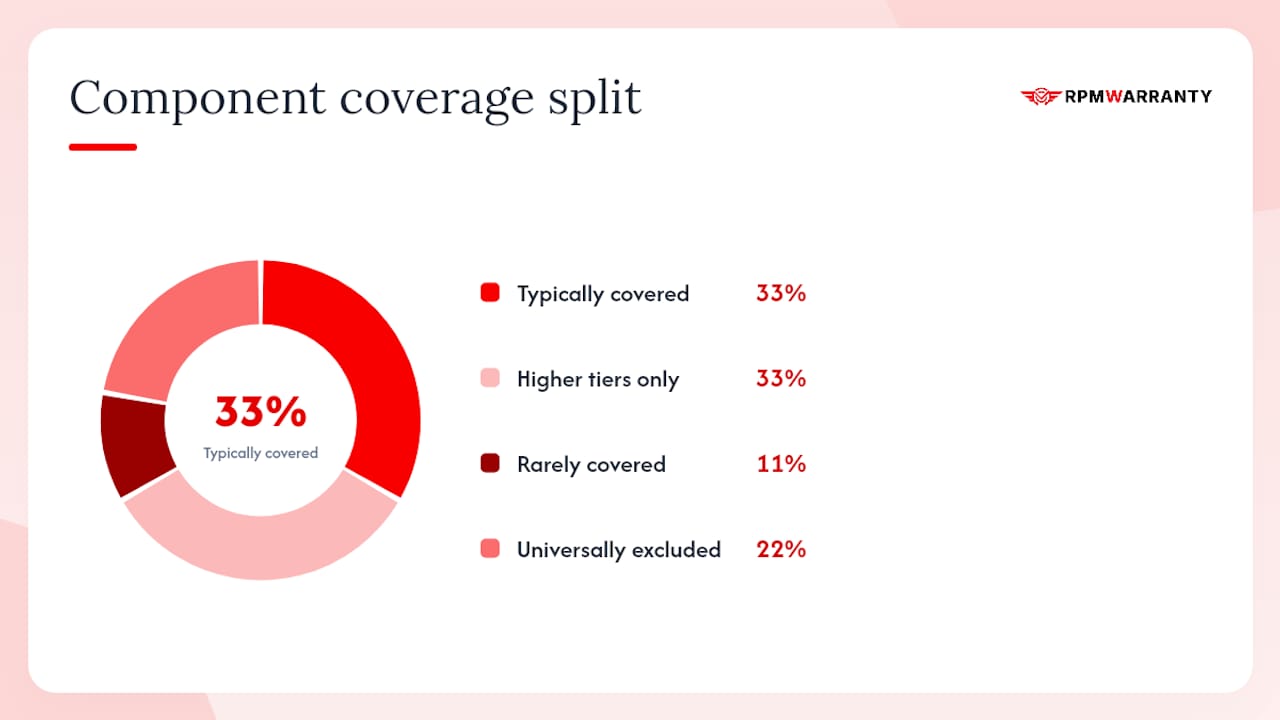
| Component | Typically Covered | Common Exclusion Triggers |
|---|---|---|
| Engine (internal parts) | Yes, on most tiers | Pre-existing damage, sludge from missed oil changes |
| Transmission | Yes, on most tiers | Fluid neglect, modifications |
| Drive axle / differential | Yes, on powertrain plans | Seals and gaskets often excluded separately |
| Turbocharger | Varies by plan | Frequently excluded on Limited and Extended Care tiers |
| Cooling system | Yes, on higher tiers | Overheating damage often excluded as consequential |
| Electrical / electronics | Higher tiers only | ADAS sensors, infotainment, hybrid battery typically excluded |
| Hybrid battery pack | Rarely covered | Usually requires a specific hybrid add-on or is excluded outright |
| Wear items (brakes, belts, tires) | No | Universally excluded across all tiers |
| Maintenance (oil, filters) | No | Universally excluded |
Turbochargers are a real borderline case. A Mercedes-Benz GLE 53 AMG or a BMW X5 M50i runs a twin-turbo setup that can cost $3,000–$5,000 to replace. Whether a CornerStone plan covers that repair depends entirely on which tier you bought and how the exclusion language is worded. Ask specifically about turbo coverage before signing.
Inclusionary vs. exclusionary contracts: An exclusionary contract covers everything except what is listed. An inclusionary contract covers only what is listed. The distinction changes your claim risk entirely. With an exclusionary plan, a denial requires the administrator to point to a specific exclusion. With an inclusionary plan, the burden is reversed: if the failed part is not on the covered-components list, the claim is denied by default. Most buyers do not realize which type they have until a claim is filed.
How much do CornerStone plans cost, and what are the terms?
MarketWatch's review confirms that CornerStone United offers plan terms up to 8 years or 150,000 miles on select tiers, though the specific windows available depend on vehicle age, mileage at enrollment, and the distributing dealer.
Pricing note: CornerStone does not publish pricing online. Quotes require going through an approved dealer or distributor, which limits your ability to comparison-shop before entering a sales conversation. Factor that into your process.
For used vehicles, shorter terms of 3–5 years or up to 100,000 miles are more common. High-mileage plans exist but typically carry higher deductibles and narrower component lists.
What drives the price of any VSC:
- Vehicle age and mileage at enrollment. A 2019 Porsche Cayenne at 60,000 miles costs significantly more to cover than a 2021 Honda CR-V at 30,000 miles, because the Porsche's repair costs are higher and its failure probability is greater.
- Coverage tier. Moving from a powertrain-only plan to an exclusionary plan can double the premium.
- Deductible choice. A $100 deductible per visit costs more upfront than a $200 deductible. On a vehicle like a Range Rover, where a single repair visit can run $2,000+, the deductible difference matters less than you might think.
- Dealer markup. CornerStone plans are sold through dealers, and dealers set their own margins. The same underlying plan can carry different sticker prices at different dealerships.
- Stated-component vs. exclusionary structure. Inclusionary plans are generally cheaper because the coverage scope is narrower.
Before you accept a quote, ask the dealer:
- What is the name of the underwriting insurance company?
- Is this an inclusionary or exclusionary contract?
- What is the per-claim limit and the aggregate cap?
- What is the labor rate cap per hour?
- Does the plan cover turbochargers, hybrid systems, or ADAS components?
- What is the cancellation and refund policy in writing?
How do you file a CornerStone claim, and what gets denied?
The LegalClarity explainer on VSC claims makes one point that applies directly to CornerStone plans: pre-authorization is not optional. Starting a repair before the administrator approves it is one of the most reliable ways to get a claim denied, regardless of whether the repair itself would have been covered.
Step-by-step claims process
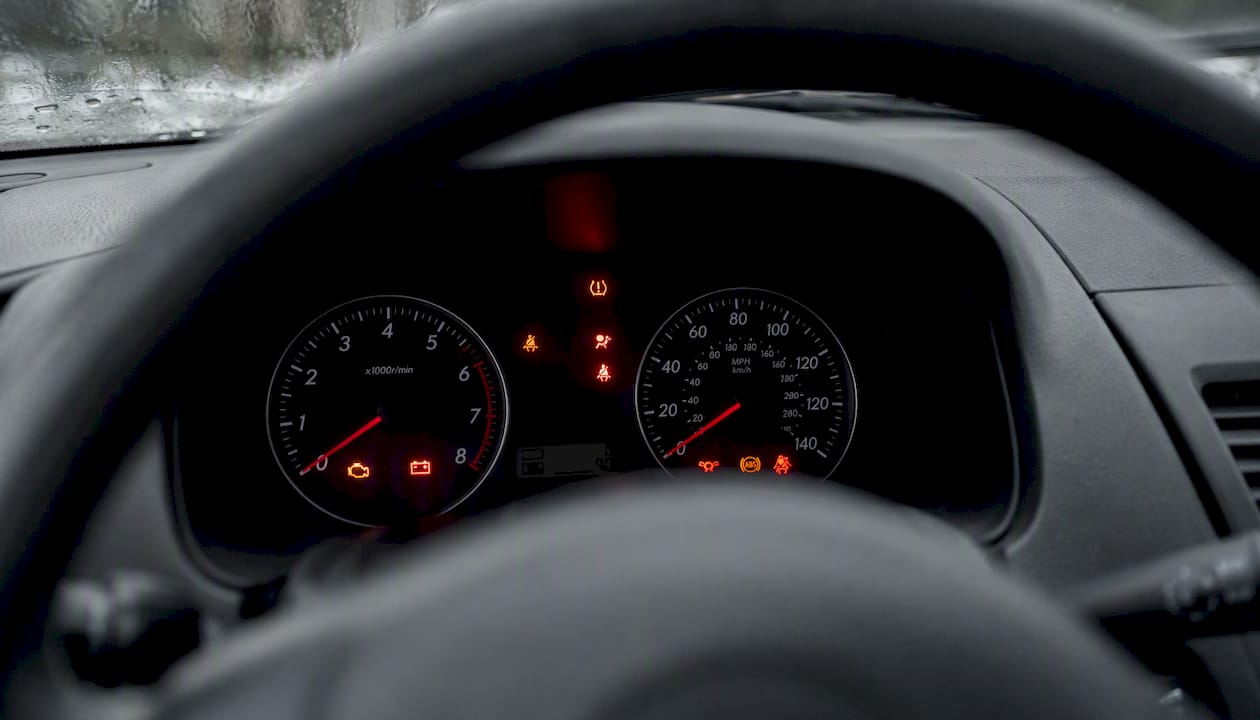
- Incident occurs. The vehicle breaks down or a warning light appears. Do not authorize any repairs yet.
- Take the vehicle to a licensed repair shop. Most plans require an ASE-certified facility. Confirm your shop is on the approved list before dropping the car off.
- Have the shop diagnose the problem. The technician documents the failure and the affected components. Keep a copy of the written estimate.
- Contact the claim administrator. The shop or you call the administrator's claims line with the diagnosis, the repair estimate, and the contract number. This is where the authorization process begins.
- Wait for authorization. The administrator may approve the claim by phone, send an adjuster to inspect the vehicle, or require a teardown to confirm the failure mode. Teardowns add days to the timeline and the cost of the teardown may or may not be covered if the claim is denied.
- Repair is authorized (or denied). If approved, the administrator issues an authorization number. The shop proceeds with the repair.
- Payment. The administrator pays the shop directly, minus your deductible. You pay the deductible to the shop.
Typical timeline: Initial claim response is usually within one business day. Adjuster visits add 2–5 business days. Full authorization to payment can range from a few days to two weeks depending on the complexity of the repair and whether a teardown is required.
Common denial reasons
According to LegalClarity's analysis of extended warranty denials, the most frequent triggers include:
- Pre-existing condition. The administrator argues the failure existed before the contract's effective date or waiting period (commonly 30 days or 1,000 miles after purchase).
- Maintenance neglect. Missing oil changes or skipped scheduled services give administrators grounds to deny engine or transmission claims. Keep every service receipt.
- Excluded components. The failed part simply is not on the covered list, or falls under a consequential-damage exclusion.
- Unauthorized repair. The shop started work before receiving an authorization number.
- Modification-related exclusion. Aftermarket parts, lift kits, or performance modifications can void coverage on related systems. A Ford F-150 with an aftermarket suspension lift may find its drivetrain claim denied on those grounds.
- Documentation gaps. Missing maintenance records, no written diagnosis, or a shop that cannot produce a repair order.
If your claim is denied: Request the denial reason in writing. Review the specific contract language cited. You can appeal internally, get an independent mechanic's written opinion on the failure cause, and if the dispute is unresolved, file a complaint with your state's insurance or consumer protection department.
What do customers say about CornerStone warranties?
The honest picture from public review sources is mixed, with the negative experiences concentrated around claim handling rather than the plans themselves.
The BBB profile for CornerStone United reflects multiple low-rated reviews, with reviewers citing long delays, unexpected denials, and required teardowns that added cost and time to already stressful repair situations. The company is not BBB-accredited.
The BBB complaint file contains recurring themes:
- A customer with a transmission failure on a used SUV reported the claim was denied citing a pre-existing condition, despite the vehicle passing a dealer inspection at purchase.
- A customer disputing a cooling-system repair described being told the resulting engine damage was "consequential" and therefore excluded, even though the original cooling failure was covered.
- Multiple customers reported difficulty reaching the claims department and delays of two or more weeks before receiving a written denial explanation.
On the positive side, some customers describe smooth experiences when the failure was clearly within the covered components and the shop followed the pre-authorization process correctly. Claims on straightforward engine or transmission failures on vehicles with clean maintenance records tend to generate fewer disputes.
The pattern that emerges: Claims on clearly listed components with documented maintenance history and proper pre-authorization tend to be approved. Claims involving consequential damage, borderline components, or vehicles with incomplete service records generate the most friction. Luxury vehicles with complex systems, like a Mercedes-Benz S-Class or a Porsche Panamera, carry higher claim-dispute risk simply because more of their expensive components fall into gray-area coverage territory.
Is CornerStone United a legitimate company?
Yes, CornerStone United is a real, operating business. It is headquartered in Hickory, North Carolina, and has been in the vehicle service contract space for years. It functions primarily as an administrator and distributor, meaning it manages the claims process but relies on a separate underwriting insurance company to back the financial obligation.
That distinction matters enormously in practice. If the underwriter becomes insolvent, the administrator's legitimacy does not protect you. The FTC's guidance on vehicle service contracts is direct on this point: the value of a VSC depends largely on the financial stability and reputation of the administrator and the underwriter behind it.
Key legitimacy checkpoints:
- CornerStone United is listed on the BBB but carries no BBB accreditation and has multiple low-rated reviews.
- The company markets through dealers and approved distributors, not directly to consumers online, which limits pricing transparency.
- Sample contracts are not readily available on a public website; buyers must request them through a dealer.
How to verify the underwriter and administrator
- Ask the dealer for the name of the underwriting insurance company in writing before signing.
- Request a sample contract or the full contract document, not just a brochure.
- Ask for the certificate of insurance or the policy number tied to your specific plan.
- Check whether the underwriting company is licensed in your state by searching your state insurance department's website.
- Look up the underwriter's financial strength rating through AM Best or a similar rating service.
Pro Tip: Request the claim administrator's National Association of Insurance Commissioners (NAIC) number or their state insurance license number. Any legitimate underwriter or administrator can provide this immediately. If the dealer hesitates or cannot produce it, treat that as a serious red flag.
Is a CornerStone warranty right for your vehicle?
The answer depends on your vehicle, your risk tolerance, and whether the specific plan offered actually covers the components most likely to fail on your car.
Buying checklist:
- Is your vehicle within the plan's age and mileage eligibility window?
- Does the plan cover the components most likely to fail on your specific make and model? (A Honda Accord's most common failures differ from a Range Rover Sport's.)
- Is the annualized plan cost reasonable compared to your vehicle's expected annual repair risk? A vehicle with a strong reliability record may not justify the premium.
- Does the deductible structure make sense for your typical repair costs?
- Is the plan transferable if you sell the vehicle before the term ends?
Three red flags that should stop the conversation:
- No sample contract available. If the dealer cannot or will not provide the full contract before you sign, walk away. You cannot evaluate what you cannot read.
- Vague denial language in the contract. Phrases like "at the administrator's discretion" or "as determined by the inspector" without defined criteria give the administrator broad authority to deny claims.
- High-pressure sales tactics. A legitimate plan does not expire in the next 24 hours. Pressure to sign immediately is a sales technique, not a product feature.
A simple cost-versus-risk check: Estimate your vehicle's likely annual repair cost based on its age, mileage, and reliability history. Multiply that by the plan's term in years. If the total plan cost is significantly higher than that estimate, the math does not favor buying. If your vehicle is a high-repair-cost model, like a BMW 7 Series or a Land Rover Defender, the calculus shifts.
Cancellations, refunds, transfers, and disputing a denied claim
Most vehicle service contracts, including CornerStone plans, include a free-look period, typically 30 days from the contract date. Cancel within that window and you generally receive a full refund. After the free-look period, refunds are typically calculated on a pro-rata basis minus an administrative fee, which can range from $25 to $75 depending on the contract.
How transfers work: If you sell your vehicle before the contract expires, many VSC plans allow the remaining coverage to transfer to the new owner, sometimes for a small transfer fee. That transferability can add real value to a private sale. When buying a used vehicle with an advertised CornerStone plan, verify the transfer directly with the administrator, not just with the seller. Confirm the contract is still active, the vehicle's maintenance records are intact, and the transfer has been formally processed.
Disputing a denied claim, step by step:
- Gather all documentation: the written denial letter, the repair order, your maintenance records, the contract, and any email or phone records with the administrator.
- Request a written explanation of the specific contract clause used to deny the claim.
- Submit a formal internal appeal in writing, referencing the clause and your counter-evidence.
- If the internal appeal fails, file a complaint with your state's insurance or consumer protection department. LegalClarity notes that the Magnuson-Moss Warranty Act and state regulators provide meaningful protections for VSC disputes.
- For smaller amounts, small-claims court is a realistic option in most states. For larger disputes, consult a consumer protection attorney.
Documents to keep from day one:
- All service and maintenance records (oil changes, inspections, fluid services)
- The signed contract and any addenda
- The claim authorization number and all claim correspondence
- Photos of the vehicle condition at purchase
- Any written communications with the dealer or administrator
What consumer protections apply to vehicle service contracts?
Vehicle service contracts are not the same as factory warranties, and the distinction has legal consequences. The FTC is explicit that VSCs are separate products, sold separately, and the buyer's protection depends on the contract language and the administrator's reliability, not on any implied warranty obligation.
The Magnuson-Moss Warranty Act governs written warranties on consumer products, and LegalClarity's overview confirms it applies to VSC disputes, giving buyers a federal avenue for certain claims. State insurance departments regulate VSC administrators in most states, and filing a complaint there is often the fastest way to get a response from an unresponsive administrator.
Practical verification steps:
- Search your state insurance department's website for the administrator's license status.
- Check the BBB for complaint trends and response patterns.
- Review the MarketWatch analysis of CornerStone United for an independent summary of plan terms and customer feedback.
- Read the FTC's consumer guidance before signing any VSC.
Useful sources for independent verification:
- FTC Auto Warranties and Service Contracts: defines VSC vs. warranty and explains buyer rights
- BBB CornerStone United Profile: complaint trends and review history
- MarketWatch CornerStone United Review: plan tiers, terms, and independent scoring
- LegalClarity VSC Claims Explainer: process steps, authorization requirements, and dispute paths
How Rpmwarranty would evaluate a CornerStone offer
The most important thing a buyer can do before committing to any extended warranty, including a CornerStone plan, is read the actual contract. Not the brochure. Not the dealer's verbal summary. The contract.
When evaluating a CornerStone offer, the questions worth asking are: Does the plan cover the components most likely to fail on your specific vehicle? Is the underwriter named and verifiable? Is the labor rate cap high enough to cover what shops in your area actually charge? And critically, what does the consequential-damage clause say?
A CornerStone plan may still make sense if the specific tier covers your vehicle's highest-risk components, the underwriter is financially sound, and the dealer provides the full contract before you sign. Where it becomes harder to justify is when the plan is sold without a sample contract, the underwriter is unnamed, or the coverage tier is a poor match for your vehicle's actual failure profile.
Rpmwarranty's approach is different: online contract access, transparent plan tiers, and a quote process that does not require a dealer conversation before you see what you are buying. Compare both fully before deciding.
Rpmwarranty plans: a transparent alternative worth comparing
If the CornerStone quoting process, which requires going through a dealer before you can see pricing or contract terms, feels like a barrier, Rpmwarranty offers a direct path.
Rpmwarranty's three plan tiers, Elite, Advanced, and Essential, cover a wide range of vehicles and components, including engines, transmissions, cooling systems, electrical systems, steering, suspension, and high-tech electronics. Roadside assistance and rental reimbursement are included. Every plan is backed by ASE-certified mechanics nationwide, and the quote process starts online without a dealer in the middle.
For owners of vehicles like a BMW X5, a Mercedes-Benz GLE, or a Range Rover Sport, where repair costs are high and component complexity is real, matching the right coverage tier to the right vehicle matters. Rpmwarranty's free quote tool lets you see plan options based on your vehicle's year, make, and model before committing. The RPM FAQ page walks through how the claims process works, what is covered at each tier, and what to ask when comparing any two plans side by side.
Read both contracts fully before buying. Verify the administrator. Then decide.
Sources
- Auto warranties and auto service contracts | Consumer Advice (FTC)
- CornerStone United Reviews: Cost and Plans (2026) — MarketWatch Guides
- CornerStone United, Inc. — BBB complaints
- CornerStone United, Inc. | BBB Reviews | Better Business Bureau
- How Do Car Warranties Work? What’s Covered and What’s Not - LegalClarity
This article provides general information about vehicle service contracts and is not a substitute for legal or financial advice. Verify current plan terms, administrator licensing, and contract language directly with the provider before purchasing.