
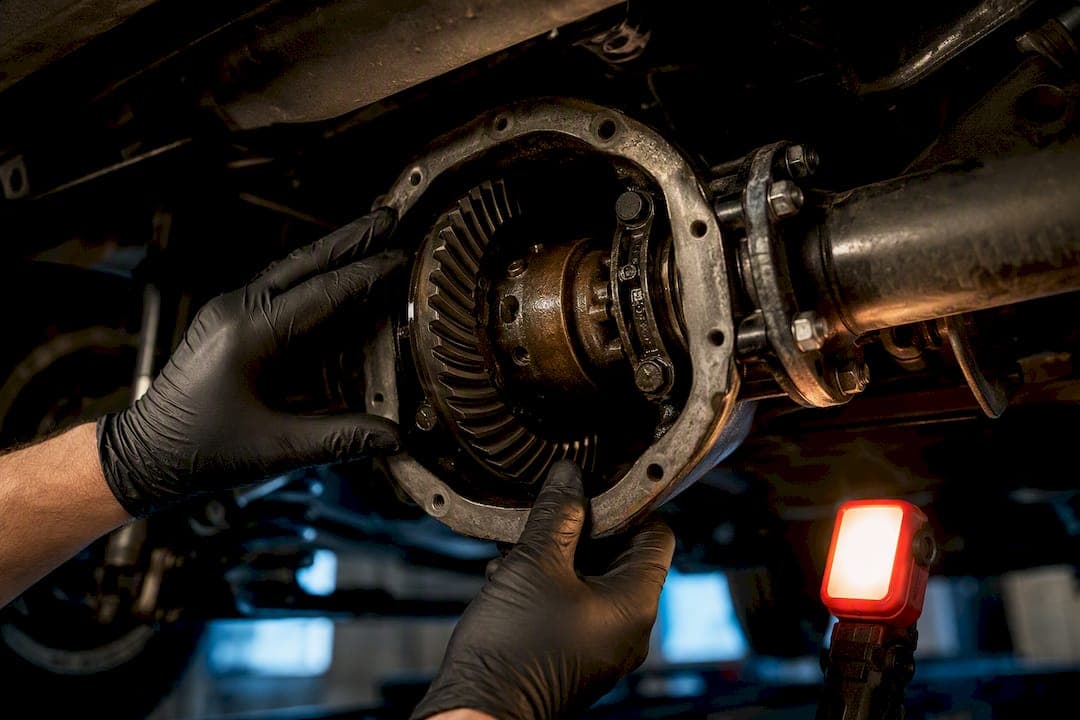
Most factory powertrain warranties do include the differential as a covered final-drive component, but that coverage isn't automatic or universal. Whether your differential warranty coverage actually pays out depends on the exact wording in your contract, which make and model you drive, and whether your maintenance records back up the claim. Skip the fine print and you risk a denied claim on a repair that can run into thousands of dollars.
TL;DR:
- Many factory warranties cover the differential as part of the powertrain, but the actual coverage depends on specific contract wording and maintenance records.
- Clear, VIN-specific language like "differential carrier assembly and internal parts" is crucial for ensuring your differential is covered, especially on complex or luxury models.
- Differential repairs typically cost between $800 and $2,500, and coverage can be denied for issues caused by wear, neglect, aftermarket modifications, or damage from collisions.
- Confirm coverage by reviewing your warranty booklet, checking with the manufacturer using your VIN, and gathering complete service records before any failure occurs.
- Extended plans should be verified through written, VIN-specific documents that list covered parts, exclusions, deductibles, and approved repair facilities to avoid surprises.
Table of Contents
- What's the Difference Between Powertrain and Drivetrain Warranty Coverage?
- What Exact Wording Should You Look for in a Warranty Document?
- Why Do Differential Warranty Claims Get Denied?
- How Do You Verify Your Differential Warranty Coverage?
- What Does RPM Warranty Offer for Differential Protection?
- An Editorial Take on Reading the Fine Print
- Get a VIN-Specific Quote for Differential Coverage
- Sources
- FAQ
What's the Difference Between Powertrain and Drivetrain Warranty Coverage?
"Powertrain" and "drivetrain" get used almost interchangeably in casual conversation, but they mean different things on paper, and that difference decides whether your differential gets fixed for free.
A powertrain typically includes the engine, transmission, driveshaft, differential (or transaxle on front-wheel-drive cars), and the axles that connect it all to the wheels. Manufacturers use this term for their factory-backed warranty, and it's the strongest guarantee you'll get on these parts. Kelley Blue Book notes that standard powertrain warranties commonly run for several years or tens of thousands of miles, depending on the automaker.
"Drivetrain warranty," on the other hand, is largely a term used by third-party sellers for service contracts, not a factory category. Chase's warranty guide confirms that OEMs are typically the only party offering guaranteed engine and final-drive coverage, while drivetrain contracts are built around exclusionary lists.
Typical powertrain components include:
- Engine block and internal parts
- Transmission and transfer case
- Driveshaft and constant-velocity joints
- Differential or transaxle assembly
- Front and rear axles
If a component isn't named on that list in your specific contract, don't assume it's covered just because it sounds like it belongs there.
What Exact Wording Should You Look for in a Warranty Document?
The words on the page matter more than the category name. Warranty booklets often use precise, almost legal phrasing, and small differences in that phrasing can mean the difference between a covered repair and an out-of-pocket bill.
Watch for these terms when you read your contract:
- "Differential" or "final drive assembly"
- "Differential carrier assembly and internal parts"
- "Differential cover" (often narrower than the phrase above)
- "Internal parts" versus "housing only"
- "Limited-slip differential" as a separate line item
There's a real gap between a contract that covers "the differential" broadly and one that covers only the "differential cover" or external housing. One example: Ram's 2026 limited powertrain warranty separates coverage by drivetrain configuration. Front-wheel-drive trims may list only "differential cover," while all-wheel-drive trims get the fuller "differential carrier assembly and all internal parts" wording.
Statistic to remember: repair costs for a failed differential typically fall between $800 and $2,500, depending on the vehicle and severity. That range is exactly why the specific wording in your contract matters so much.
Performance and luxury models often complicate this further. A Porsche 911 or a Range Rover with an electronically controlled locking differential may have components labeled and covered differently than a Honda Civic's simpler open differential, so always check the model-year document rather than a general brand overview.
Why Do Differential Warranty Claims Get Denied?
Denials rarely come out of nowhere. Almost every rejected differential claim traces back to one of a handful of predictable causes, and most are avoidable if you know what adjusters look for.
- Wear-and-tear exclusions. Gradual wear on gears or bearings from normal use is often excluded, since warranties generally cover mechanical failure, not aging.
- Fluid and seal issues. Low, contaminated, or wrong-spec differential fluid is a top reason for denial, since Kelley Blue Book points out that adjusters treat maintenance records as primary evidence.
- Missed service intervals. Skipping a scheduled fluid change on a BMW X5 or Mercedes-Benz GLE with an electronically controlled rear differential can void coverage even if the failure seems unrelated.
- Aftermarket modifications. Lifted trucks, lowered sports cars, or swapped gear ratios can trigger a denial if the modification contributed to the failure.
- Accident or impact damage. Warranties cover mechanical failure, not collision damage, even to the same part.
Limited-slip differentials get extra scrutiny because they contain wear items, like clutch packs, that many contracts classify separately from the main housing.
Pro Tip: Keep every oil change and differential fluid service receipt in one folder, digital or physical, tied to your VIN. Adjusters approve claims faster when the paper trail is complete and dated.
How Do You Verify Your Differential Warranty Coverage?
Confirming coverage before something breaks takes less than an hour and can save you a fight later.
- Read your owner's warranty booklet. Highlight every mention of "differential," "final drive," or "driveline," and note the exact wording used.
- Run a VIN-specific lookup. Contact the manufacturer directly or ask your dealer to confirm coverage in writing tied to your VIN, not a general brochure.
- Gather your maintenance records. Pull receipts, service logs, and any diagnostic reports. Flag any missed intervals that could weaken a future claim.
- Compare extended plan language carefully. If factory coverage has expired or never explicitly named the differential, read a prospective plan's exclusion list line by line before signing.
Things to bring to that verification step:
- Your full VIN
- Current mileage and in-service date
- All service receipts, especially fluid changes
- A copy of the original warranty booklet or a digital version from the manufacturer's site
This process matters just as much for used vehicles. A used Ford F-150 or Honda Accord may still carry the remainder of its original factory powertrain warranty, but only a VIN-specific check tells you how many months or miles are left, and whether the coverage transferred to a new owner without conditions.
What Does RPM Warranty Offer for Differential Protection?
Extended warranty coverage is often structured across three tiers and driveline and differential protection can be available depending on the plan and vehicle. Processes typically include consultation, plan selection, customization, and final agreement, with claims serviced through a nationwide network of certified mechanics.
Before you commit to any extended plan, from any seller, request these items in writing:
- A VIN-specific list of covered components, not a general brochure
- The full list of exclusions, including fluid and seal language
- The deductible amount per claim
- Rules on which repair facilities you're allowed to use
Pro Tip: If a salesperson can't produce a written, VIN-specific covered-parts list on request, treat that as a red flag regardless of how confident the verbal pitch sounds.
An Editorial Take on Reading the Fine Print
The biggest mistake I see owners make isn't choosing the wrong plan. It's trusting a brochure summary instead of demanding the actual contract language tied to their VIN. Marketing copy says "comprehensive driveline protection." The contract might say "differential cover only." Those aren't the same promise.
If your factory coverage is silent or narrow on the differential, run the math: a $2,500 worst-case repair against the premium of an extended plan tells you more than any sales pitch will. Insist on paper, not brochures.
— Kenneth
Get a VIN-Specific Quote for Differential Coverage
If your factory warranty is running out, or the wording on your differential coverage looks thinner than you'd like, Rpmwarranty gives you a way to lock in explicit, written protection instead of gambling on gray areas. Some providers build tiered plans around your actual VIN, allowing you to see the covered-component list before payment.
When you request a quote, ask specifically for the VIN-tied covered-parts list, the exclusions section, the deductible, and the claims process, the same four items any responsible seller should hand over without hesitation. Whether you drive a Range Rover with a complex electronic locking differential or a Honda with a straightforward setup, Rpmwarranty can tailor a plan to your vehicle's specifics and connect you with ASE-certified mechanics nationwide for repairs. If you drive a Volkswagen, there's a dedicated coverage page built around common driveline concerns for that brand. Compare plan tiers and covered components on the protection plans page, then get your free quote and talk to an advisor before your factory coverage runs out.
Sources
This article draws on manufacturer warranty excerpts and independent explainers, including Kelley Blue Book's powertrain warranty guide, Car Talk's breakdown of drivetrain contracts, and Ram's 2026 warranty documentation. Always confirm terms against your own VIN-specific warranty statement.
- What Is a Powertrain Warranty? | Kelley Blue Book
- Ram 2026 limited powertrain warranty (example excerpt)
- Powertrain vs drivetrain: what's the difference? | AutoZone
FAQ
Is a Rear Differential Part of the Powertrain?
Yes, in most manufacturer warranties, the rear differential is classified as a final-drive component under the powertrain warranty, though exact wording varies by make and model.
What's the Average Cost to Replace a Rear Differential?
Differential repair or replacement typically costs between $800 and $2,500, depending on the vehicle and the extent of the damage.
What Is the Lifespan of a Rear Differential?
A well-maintained rear differential can last the life of the vehicle, but fluid changes at manufacturer-recommended intervals are the main factor separating a long-lasting unit from an early failure.
Can You Drive with a Damaged Rear Differential?
Driving with a damaged differential is risky and can cause loss of control or further drivetrain damage, so it's best treated as an urgent repair rather than something to put off.
Does an Extended Warranty from Rpmwarranty Cover the Differential?
Rpmwarranty's tiered plans can include driveline and differential protection depending on the plan and vehicle, and the company recommends requesting a VIN-specific covered-parts list before purchase.