
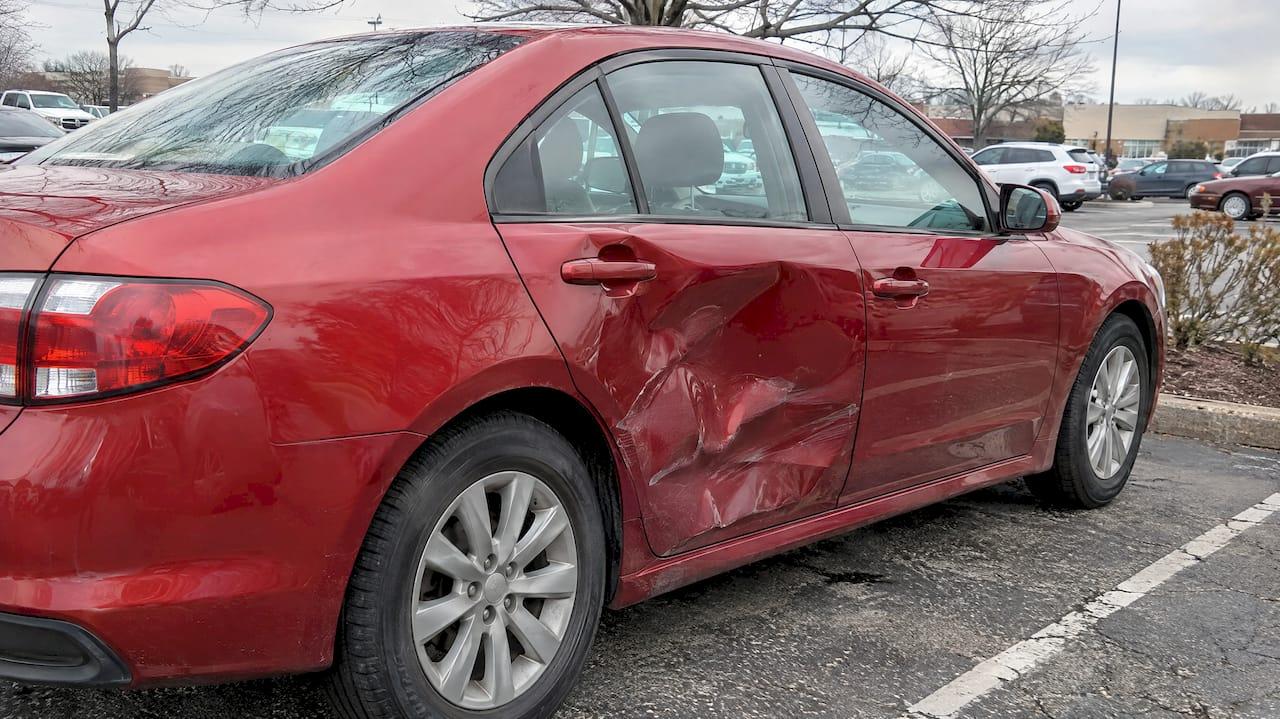
No. A manufacturer warranty pays to fix parts that fail because of a defect in materials or workmanship. It does not pay for damage from a collision, a pothole, a hailstorm or a runaway shopping cart. AAA explains that warranties cover manufacturing failures, not physical damage from accidents, collisions or road hazards, and that is the job of car insurance. The two work as a pair. A well-built extended warranty from RPM Warranty is designed for the other half of the risk: the expensive mechanical and electrical failures that insurance will never touch once the factory coverage runs out.
TL;DR
- A factory warranty covers defects in parts and workmanship. Crash, collision, theft, vandalism and weather damage are excluded.
- Accident damage goes through your auto insurance: collision coverage for crashes, comprehensive for theft, weather and animal strikes.
- An accident does not void your warranty by itself. A salvage or total-loss history is the real danger to factory coverage.
- Extended warranties follow the same logic: they cover breakdowns, not impact damage, so you need both a warranty and insurance.
- On a Range Rover, BMW, Mercedes or Porsche, one failed module or suspension component can cost more than a fender repair. That is where a warranty earns its place.
Table of Contents
- What a manufacturer warranty actually promises
- What is excluded: accidents and everything near them
- Who pays for accident damage
- Does an accident void your manufacturer warranty?
- Can a defect still be covered after an accident?
- How this plays out on higher-end vehicles
- Does an extended warranty cover accidents either?
- Why the breakdown side deserves its own protection
- Promo: coverage for the breakdown your insurer will not pay for
- A practical checklist before your factory coverage ends
- FAQ
- Sources
What a manufacturer warranty actually promises
The Consumer Financial Protection Bureau (CFPB, the federal agency that oversees consumer finance products) describes a manufacturer's warranty as coverage for defects or failures for a set time or mileage after purchase, included automatically with a new vehicle. Typical structures are a bumper-to-bumper warranty that is shorter, and a powertrain warranty for the engine and transmission that is longer. Exact terms differ by brand and model year, so read the booklet that came with your car.
The key word is defect. If a part was built wrong or failed early through no fault of yours, the maker pays. If something outside the car broke it, the warranty is not the right tool.
What is excluded: accidents and everything near them
AAA says virtually every factory warranty excludes the same groups of problems:
- Routine maintenance: oil changes, tire rotations, air filters, coolant flushes.
- Normal wear and tear: brake pads, tires, wiper blades, clutch discs.
- Accident or collision damage.
- Neglect or misuse.
- Environmental and weather damage, such as flooding, hail, extreme heat or animal damage.
Manufacturers spell this out in their own paperwork. Ford's warranty guide lists accidents, collisions and objects striking the vehicle, theft and vandalism, fire, contaminated fuel, water ingestion into the engine, environmental damage from things like road salt, tree sap, hail and floods, and road hazards such as stone chips, scratches, dings and dents.
That last item matters for the keyword. A cracked windshield from a rock or a dented door from a parking lot is not a warranty claim on any brand.
Who pays for accident damage
Insurance does. Consumer Reports explains the split:
| Event | Usual coverage |
|---|---|
| Crash into another car or object, single-car crash, parking lot hit | Collision |
| Theft, vandalism, hail, flood, falling objects | Comprehensive |
| Animal strike | Usually comprehensive |
| Injury or damage you cause to others | Liability |
| A part fails from a defect | Manufacturer warranty or extended warranty |
Experian's comparison adds that lenders typically require both collision and comprehensive on financed or leased cars. The Florida Department of Financial Services puts it simply: a warranty covers certain mechanical breakdowns, including parts and labor, while insurance helps repair a vehicle damaged by a specific cause such as an accident or theft.
AAA gives a clean example. A transmission that fails from a manufacturing defect is a warranty claim. The same transmission damaged in a rear-end collision is an insurance claim. Its summary is that you need both and neither replaces the other.
One naming trap: some insurers sell products called "mechanical breakdown insurance." Consumer Reports notes these are unrelated to traditional car insurance. They behave like warranties, not like collision coverage.
Does an accident void your manufacturer warranty?
Not by itself. A fender-bender, even a significant one that is properly repaired, does not cancel factory coverage on the rest of the car. Two things do change the picture.
Damage from the accident is excluded. If a collision bends your subframe and a suspension arm later fails, the warranty will not pay for the arm. Insurance handles it.
A salvage or total-loss history can end coverage. CarGurus reports that as a general rule manufacturer warranties become void when a car is totaled, regardless of age, and that rebuilt-title cars are most often sold as-is. If your insurer declares your car a total loss, the factory warranty is likely gone for good, even if the car is repaired.
Unrelated defects stay covered. If a car has a repaired collision and later the infotainment screen fails on its own, that is generally a separate question from the crash. Ask the dealer's service department to document the cause in writing. The same principle applies to aftermarket parts: AAA notes that under the federal Magnuson-Moss Warranty Act, installing an aftermarket part does not automatically void a warranty, and a manufacturer must show the part caused the specific damage before denying a claim.

Can a defect still be covered after an accident?
Yes, when the failed part is unrelated to the impact and the car has no branded title. The practical test is cause. A warranty adjuster looks at why the part failed. A window regulator that stops working after a side impact on that door is a collision issue. The same regulator failing on the opposite side, with no damage there, is a defect question.
To protect your position after any crash:
- Keep the repair estimate and final invoice from the body shop, listing every part replaced.
- Ask that repairs use parts that meet the manufacturer's specifications.
- Have the car serviced on schedule, and keep every record.
- Report mechanical symptoms promptly, instead of waiting until they worsen.
These records are what separate an accident-related denial from a legitimate defect claim.
How this plays out on higher-end vehicles
The stakes rise with the badge. Collision repair on a luxury car is costly, but so is the mechanical side, because modern premium vehicles pack sensors, control modules and adaptive hardware into nearly every system. Here is how the line between accident and breakdown looks on popular makes.
Range Rover
A Range Rover pairs an air suspension, adaptive electronics and a sophisticated terrain-response system. A curb strike that damages a suspension arm is an accident. An air spring or compressor that wears out, or a module that stops communicating, is a breakdown. Owners shopping for coverage after the factory term ends should check that suspension, electrical and high-tech components are listed. Our plans include suspension and high-tech electronics among the protected components.
BMW
BMW owners deal with a dense mix of turbocharged engines, cooling system parts and electronics. Overheating after a coolant hose or water pump failure is a mechanical issue. A radiator punctured by road debris is not. Cooling systems and electrical systems are among the component groups we cover, which matters because cooling problems can escalate into engine damage quickly. Be aware that most service contracts exclude overheating caused by low or contaminated fluids, as the California Department of Insurance notes, so keep up on fluid service.
Mercedes-Benz
Mercedes models carry advanced driver assistance, air suspension on many trims, and multiple control units. A radar sensor cracked in a fender-bender is an insurance repair. A sensor or control unit that fails on its own is a breakdown. Because one cracked bumper cover often takes a sensor with it, document which components the shop replaced and why.
Porsche
Porsche owners value the drivetrain: engine, transmission and the cooling hardware that keeps performance engines in range. Track-day damage and impact damage are excluded from factory coverage, and misuse is excluded from nearly every contract. A genuine internal failure on a road-driven car is the kind of event a warranty exists for. Keep full service history, since a clean maintenance record supports any claim.
Ford
Ford trucks and SUVs are often used for work and towing. Ford's guide excludes accident damage and road hazards, and the California guide notes that towing excess weight, or towing without an authorized tow package, is a common service-contract exclusion. Know your rated towing capacity before you hitch up.
Honda
Honda's reputation for reliability does not remove the need for a plan after the factory term. Transmissions, electrical components and climate systems are common repair categories on any high-mileage car. Repairs for these are covered by a warranty, while a dented quarter panel from a parking lot goes to insurance.
Audi, Volkswagen, Lexus and others
Each brand has its own pattern of expensive parts. If you drive one, we have brand pages that explain coverage in more detail: Audi, Volkswagen and Lexus. For exotics there are pages for McLaren as well.
Does an extended warranty cover accidents either?
No, and it is better to know this before you buy. An extended warranty, formally a vehicle service contract, is optional coverage. The CFPB says extended warranties are optional add-ons covering defects not covered by the manufacturer's warranty, and neither type generally covers routine maintenance, normal wear and tear or abuse. The Florida Department of Financial Services notes that these contracts usually take effect after the manufacturer or dealer warranty expires.
So when people search for an "accident warranty," they are usually describing one of three different things:
- Collision insurance, which pays for crash damage.
- A collision-repair warranty from a body shop, which guarantees the repair work itself.
- An extended warranty, which pays for mechanical breakdowns after the factory term.
Only the first handles the crash. The extended warranty is what protects you from the bill that arrives when a covered component fails later.
Why the breakdown side deserves its own protection
Think about the order of events. The factory warranty runs out first, usually while the car is still worth driving. Insurance keeps running, but it is not built for a failed transmission or an electrical fault. The CFPB advises anyone considering extended coverage to read the contract carefully, negotiate cost, check length, see what is and is not covered, and consider how they plan to use the vehicle. It also recommends checking whether the coverage overlaps with the manufacturer's warranty to avoid paying for something unneeded.
The California Department of Insurance adds that all repair agreements have exclusions, and lists common ones: skipped recommended service, overheating, insufficient or contaminated fluids, alterations, pre-existing conditions, negligence or abuse, and damage to a non-covered part caused by a covered part's failure. Knowing these in advance turns a contract into a plan instead of a surprise.
That is also why a clear, plainly worded plan matters. We designed ours around tiers so you can match coverage to the car and the budget.
Promo: coverage for the breakdown your insurer will not pay for
RPM Warranty offers three tiers for cars, Elite, Advanced and Essential, plus Full Throttle for motorcycles. Coverage can include the engine, transmission, cooling, electrical, steering, suspension, hybrid systems and high-tech electronics, along with roadside assistance and rental reimbursement. Repairs are handled nationwide through ASE-certified mechanics, and plans are customized by your vehicle's year, make and model. Our process has four steps: consultation, plan selection, customization and final agreement. You can get a free quote online or by phone.
Compare the car tiers on our protection plans page, or look at Full Throttle motorcycle coverage. Questions about terms are answered on our FAQ page.
A practical checklist before your factory coverage ends
- Confirm your dates. Find the time and mileage limits for your bumper-to-bumper and powertrain coverage in your warranty booklet.
- Confirm your insurance. Make sure you carry both collision and comprehensive, especially if the car is financed.
- Keep your records. Service receipts and repair invoices support every claim, whether insurance or warranty.
- Check the title. A branded title can end factory coverage, and it affects what you can protect.
- Choose a tier that fits the car. A daily driver with simple systems needs different coverage than a luxury SUV with air suspension and a full module network.
- Read the exclusions. Every contract has them. Know which parts and causes are listed before you sign.
What we tell owners
Most people reach us confused by one word: "coverage." They assume that if a car is protected, everything is protected. It is not, and we would rather explain that plainly than let anyone find out at the repair counter.
Insurance is for the crash. A warranty is for the failure. Our plans are designed for the second one, on cars where a single failed component can cost thousands: air suspension, control modules, cooling systems, transmissions, hybrid and high-tech electronics. That is why our Elite, Advanced and Essential tiers are built around component groups, so you can see where a given failure falls.
We built our process around simplicity. You talk with us, pick a plan, customize it to your year, make and model, and agree to terms you can read. Our claims process is designed for rapid approvals, within 24 to 48 hours, with repairs by ASE-certified mechanics nationwide, so a breakdown does not turn into a long wait.
If you drive a Range Rover, BMW, Mercedes, Porsche or any car whose repair bills worry you, start with a free quote and ask us to walk through the exclusions with you. We will gladly do it.
Kenneth
FAQ
Does a car accident void the manufacturer's warranty?
Not on its own. A properly repaired collision does not cancel coverage on unrelated parts. Damage caused by the crash is excluded, though, and a salvage or total-loss history can end factory coverage entirely.
What does an accident warranty cover?
There is no standard product by that name. People usually mean collision insurance, which pays for crash damage, a body shop's guarantee on its repair work, or an extended warranty, which covers mechanical breakdowns and not impact damage.
Can I use my warranty after filing an insurance claim?
Yes, for a separate failure. The claims run on different logic: insurance pays for damage from the event, and a warranty pays for a defective or failed covered part. If one repair is tied to the crash, insurance handles that part.
Is wear and tear covered under a car warranty?
Generally no. Brake pads, tires, wiper blades and clutch discs are treated as wear items on factory warranties, according to AAA. Extended plans vary in what they list, so review the contract for the wear items it names.
Sources
- AAA: What Does a Car Warranty Cover?
- CFPB: Manufacturer's warranty vs. extended warranty
- Ford: What is not covered by my warranty
- Consumer Reports: What Does Car Insurance Cover?
- Experian: Car Warranty vs. Car Insurance
- Florida Department of Financial Services: Magnuson Moss Warranty Act
- CarGurus: What is a Rebuilt Title?
- California Department of Insurance: Guide to Automobile Service Contracts