

Most people think electric vehicle batteries fail often and cost a fortune to replace. That's wrong. Battery warranty claims are incredibly rare, with less than 1% of batteries requiring replacement under warranty. Factory warranties for EVs are robust, covering critical components for years. Yet many owners wonder if they need extra protection beyond what comes standard. This guide breaks down what factory warranties cover, when extended warranties make sense, and how to choose the right coverage for your electric vehicle without wasting money on unnecessary protection.
Table of Contents
- Key Takeaways
- Understanding factory warranty coverage for electric vehicles
- Are extended warranties worth it for electric vehicles?
- Comparing factory and extended warranty coverage: what you get and costs to consider
- How to decide on electric vehicle warranty coverage that fits your needs
- Explore extended warranty options for your electric vehicle
- Frequently asked questions about electric vehicle warranty coverage
Key Takeaways
| Point | Details |
|---|---|
| Battery warranty claims rare | Fewer than 1% of EV batteries require replacement under warranty. |
| Factory warranties robust coverage | Factory warranties typically cover battery pack, electric motors, power electronics, charging systems, and onboard computers for 8 years or 100,000 miles, with some models extending to 10 years or 150,000 miles. |
| Extended warranties for high mileage | They help cover large repair costs when you drive a lot or own a luxury EV with expensive parts. |
| Factory warranty takes precedence | When buying used, rely on the factory battery warranty before adding any extended coverage. |
Understanding factory warranty coverage for electric vehicles
Every new electric vehicle comes with comprehensive factory warranty protection. These warranties typically cover the battery pack, electric motors, power electronics, charging systems, and onboard computers. The battery warranty usually spans 8 years or 100,000 miles, whichever comes first. Some manufacturers offer even longer coverage, extending to 10 years or 150,000 miles for certain models.
Battery degradation claims remain exceptionally rare because modern EV batteries hold their capacity remarkably well. Manufacturers design battery warranties around capacity retention, typically guaranteeing 70% capacity at the end of the warranty period. To trigger a warranty claim, the battery must fail multiple capacity tests, usually 2 to 3 consecutive failures. This high threshold means most batteries never qualify for replacement under warranty.
Factory coverage extends beyond just the battery. The electric drive unit, including motors and inverters, receives similar protection. Charging components, thermal management systems, and high-voltage wiring also fall under warranty coverage. However, standard warranties exclude certain items:
- Brake pads, rotors, and other wear components
- Tires and wheel alignment services
- Interior trim and cosmetic damage
- 12-volt auxiliary batteries in some cases
- Software updates beyond critical safety recalls
Understanding electric vehicle warranty basics helps you know what protection you already have. Most EV owners never need warranty service for major components. When issues do arise, they typically involve minor electrical glitches or software updates rather than catastrophic failures. The bumper-to-bumper warranty, usually 3 to 4 years, covers these smaller problems.
"EV battery technology has matured to the point where warranty claims for capacity loss are almost non-existent. The real value lies in coverage for other electrical systems and components."
Factory warranties also include specific provisions for battery capacity guarantees. If your battery drops below the specified capacity threshold during the warranty period, the manufacturer must repair or replace it at no cost. This protection gives EV owners confidence that their most expensive component has solid backing for years of ownership.
Are extended warranties worth it for electric vehicles?
The value of extended warranties depends entirely on your vehicle type, driving habits, and risk tolerance. For some EV owners, extended coverage provides crucial protection. For others, it's an unnecessary expense that never pays off.
Extended warranties make sense for high-mileage drivers and luxury EV owners facing potential repair bills exceeding $13,000 for battery replacement. If you drive 20,000 miles annually or own a premium electric vehicle with expensive proprietary parts, extended coverage acts as financial insurance. The peace of mind alone justifies the cost for drivers who can't absorb a sudden $10,000 repair bill.
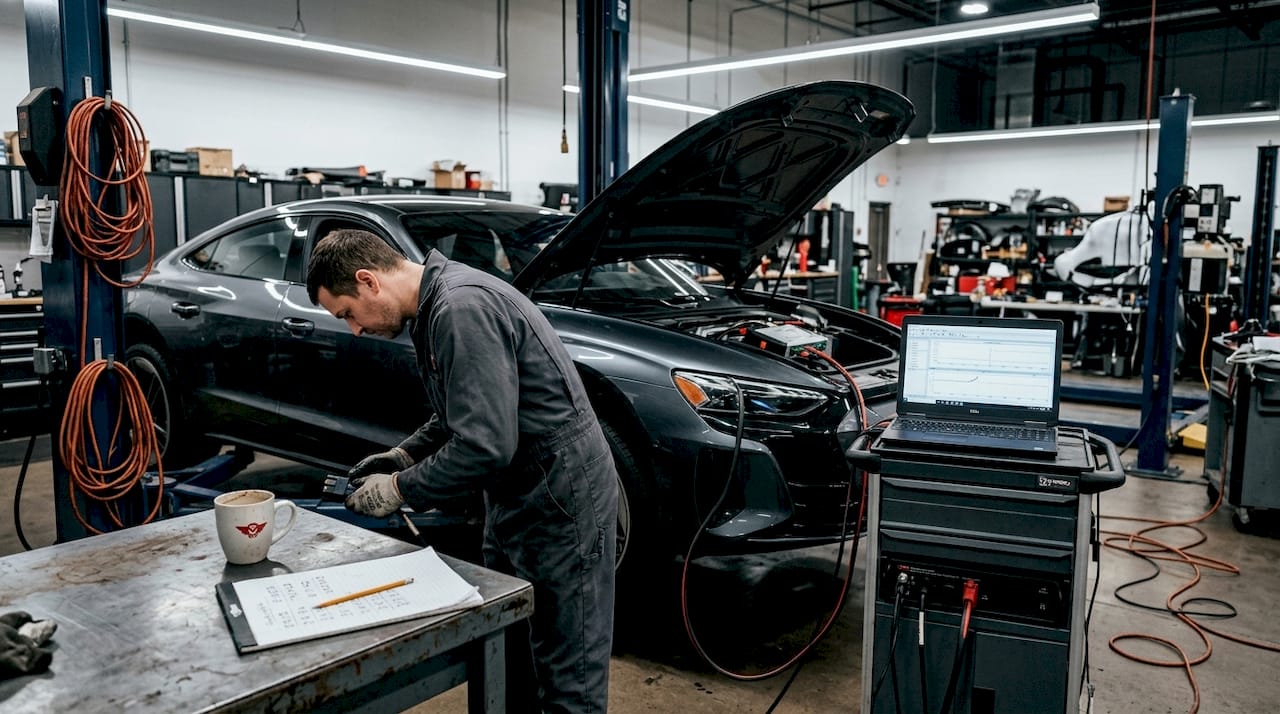
However, extended warranties often prove unnecessary for low-mileage drivers with strong factory coverage. If you drive 8,000 miles yearly and your factory warranty covers 8 years, you'll likely never exceed the original coverage period before trading in your vehicle. In these cases, you're paying for protection you'll never use.
Some EV owners choose to self-insure instead of buying extended warranties. They set aside monthly payments into a dedicated savings account, building a repair fund over time. This strategy works well if you have financial discipline and can handle unexpected costs without stress. You keep the money if nothing breaks, unlike with a warranty where you lose the premium regardless of claims.
Consider these factors when evaluating extended warranty value:
- Your vehicle's remaining factory warranty coverage and duration
- Average annual mileage and projected ownership timeline
- Repair costs for your specific EV model and common failure points
- Your emergency fund size and ability to cover large unexpected expenses
- The extended warranty cost versus potential repair savings
Pro Tip: Calculate your break-even point by dividing the extended warranty cost by the average repair cost for major components. If you'd need multiple major repairs to justify the warranty price, you're probably better off self-insuring.
Luxury EV owners face a different calculation. High-end electric vehicles use specialized components with limited third-party repair options. A single inverter replacement or battery module repair can cost more than an entire extended warranty. For these vehicles, extended warranties for luxury EVs often deliver genuine value.
The warranty market has evolved significantly. Modern extended warranties offer flexible coverage levels, allowing you to protect only the most expensive components rather than paying for comprehensive coverage you don't need. This targeted approach reduces costs while maintaining protection for catastrophic failures.
Younger used EVs present another scenario. If you buy a 3-year-old electric vehicle with 5 years of factory battery warranty remaining, adding extended coverage makes little sense initially. Wait until the factory warranty nears expiration, then reassess based on the vehicle's condition and your continued ownership plans.
Comparing factory and extended warranty coverage: what you get and costs to consider
Factory and extended warranties differ substantially in coverage scope, duration, and cost structure. Understanding these differences helps you make informed decisions about additional protection.
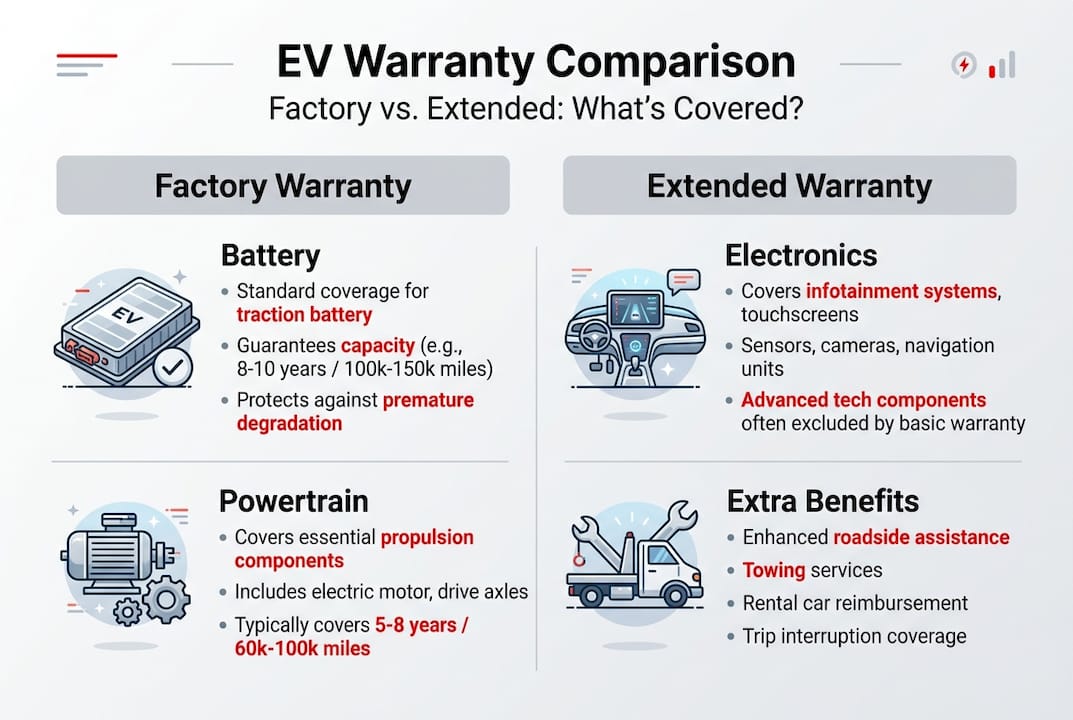
| Coverage Type | Factory Warranty | Extended Warranty |
|---|---|---|
| Battery coverage | 8-10 years/100,000-150,000 miles | Varies, often 2-5 additional years |
| Powertrain | Included for full term | May be separate or bundled |
| Roadside assistance | Limited term, usually 3-4 years | Often included throughout coverage |
| Deductible | Usually $0 | Typically $50-$200 per visit |
| Transferability | Transfers with vehicle | Varies by provider |
| Average cost | Included in purchase price | $1,500-$4,500 depending on coverage |
Factory warranties come standard with your vehicle purchase. You pay nothing extra, and coverage begins immediately. Extended warranties require upfront payment or financing, adding to your ownership costs. The price varies based on your vehicle's make, model, age, mileage, and the coverage level you select.
Extended warranty providers structure coverage differently than manufacturers. Some offer stated component coverage, listing exactly what's protected. Others use exclusionary coverage, protecting everything except specifically listed items. Exclusionary coverage typically costs more but provides broader protection.
Battery coverage represents the most critical difference. Factory warranties guarantee capacity retention, replacing batteries that fall below the specified threshold. Extended warranties may cover battery failure but often exclude gradual capacity loss. Read the fine print carefully to understand exactly what battery protection you're buying.
Additional perks often accompany extended warranties:
- 24/7 roadside assistance with towing
- Rental car reimbursement during repairs
- Trip interruption coverage for breakdowns away from home
- Transferable coverage that adds resale value
These extras add value beyond basic repair coverage. If you frequently take road trips in your EV, trip interruption benefits alone might justify the warranty cost. Long-term EV repair costs run lower than gasoline vehicles, but when repairs are needed, having comprehensive coverage prevents financial surprises.
When buying a used EV, prioritize remaining factory battery warranty over purchasing extended coverage immediately. The factory warranty provides superior protection at no additional cost. Only consider extended warranties as factory coverage nears expiration or if you plan to keep the vehicle well beyond the original warranty period.
Costs for extended warranties range dramatically. A basic powertrain-only plan might cost $1,200 for 3 years, while comprehensive coverage including battery, electronics, and all major systems could exceed $4,000. Shop multiple providers and compare coverage details, not just prices. The cheapest warranty often excludes the most expensive repairs.
How to decide on electric vehicle warranty coverage that fits your needs
Choosing the right warranty coverage requires honest assessment of your situation. Follow these steps to make a decision that protects your finances without overpaying for unnecessary coverage.
-
Calculate your average annual mileage over the past three years. If you consistently drive under 12,000 miles yearly, you'll likely stay within factory warranty limits for the full coverage period. High-mileage drivers exceeding 15,000 miles annually should seriously consider extended protection.
-
Review your vehicle's existing factory warranty in detail. Check the battery warranty duration, powertrain coverage, and bumper-to-bumper protection. Note the expiration dates for each coverage type. Many EV owners discover they have more protection than they realized.
-
Research common failure points for your specific EV model. Online owner forums and reliability reports reveal which components typically fail and when. If your model has a history of inverter problems after 100,000 miles, extended coverage makes more sense than for vehicles with stellar reliability records.
-
Evaluate your emergency fund and financial flexibility. Can you comfortably pay $5,000 to $15,000 for an unexpected repair without financial stress? If yes, self-insuring might work better than buying extended coverage. If that expense would create hardship, warranty protection provides valuable security.
-
Compare extended warranty plans from multiple providers. Request detailed coverage documents, not just marketing materials. Verify what's covered, excluded, deductible amounts, claim procedures, and any mileage or age restrictions. Don't assume all extended warranties offer identical protection.
Pro Tip: Time your extended warranty purchase strategically. You don't need to buy coverage the day your factory warranty expires. Many providers allow you to purchase extended warranties before expiration, and some offer better rates if you buy while the vehicle is still under factory coverage.
Your decision should also factor in ownership timeline. If you typically trade vehicles every 4 to 5 years, extended warranties rarely deliver value since you'll still be within factory coverage when you sell. Long-term owners keeping vehicles 10+ years face different math, as they'll eventually exceed all factory protection.
Consider the total cost of ownership beyond just warranty expenses. EVs require less routine maintenance than gasoline vehicles, saving money on oil changes, transmission service, and exhaust system repairs. These savings offset some extended warranty costs, but they also reduce the likelihood you'll need extensive repairs.
Make your final decision based on data, not emotion. Fear of expensive repairs drives many unnecessary warranty purchases. Calculate realistic repair probabilities for your vehicle and driving pattern, then compare that risk to warranty costs. This rational approach prevents overpaying for peace of mind you could achieve more affordably through self-insurance.
Explore extended warranty options for your electric vehicle
Protecting your EV investment doesn't have to be complicated. RPM Warranty specializes in extended coverage plans designed specifically for electric vehicles. Whether you drive a luxury EV or a practical daily commuter, customized plans match your vehicle's needs and your budget. Getting a free quote takes minutes, and you can compare coverage levels side by side to find the right fit. Nationwide dealer network support means you're covered wherever you drive.
Explore Volkswagen extended warranty plans for ID.4 and other VW electric models, or check out Tesla extended warranty options for Model 3, Y, S, and X vehicles. Browse comprehensive EV protection plans covering battery systems, electric drivetrains, and advanced electronics. Make an informed choice with transparent coverage details and straightforward pricing.
Frequently asked questions about electric vehicle warranty coverage
What does a standard electric vehicle factory warranty cover?
Factory EV warranties cover the battery pack, electric motors, power electronics, charging systems, and onboard computers. Battery coverage typically lasts 8 years or 100,000 miles with capacity guarantees. The bumper-to-bumper warranty covers most other components for 3 to 4 years.
How do extended warranties differ from factory coverage?
Extended warranties provide protection after factory coverage expires, often adding 2 to 5 years of coverage. They typically include roadside assistance and rental car benefits but may have deductibles. Coverage specifics vary widely between providers, so comparing plans is essential.
Who benefits most from purchasing an extended EV warranty?
High-mileage drivers exceeding 15,000 miles annually and luxury EV owners benefit most from extended coverage. Drivers planning to keep their vehicles beyond factory warranty periods also gain value. Low-mileage drivers with strong factory coverage rarely need additional protection.
What is the typical duration of EV battery warranties?
Most manufacturers offer 8-year or 100,000-mile battery warranties, with some extending to 10 years or 150,000 miles. These warranties guarantee minimum capacity retention, usually 70% of original capacity. Actual battery life typically exceeds warranty periods significantly.
How do I file a claim under my EV warranty?
Contact your dealership or warranty provider when issues arise. They'll diagnose the problem and determine if it's covered. For extended warranties, you may need pre-approval before repairs begin. Keep all maintenance records to support your claim and verify you've met coverage requirements.
Is an extended warranty cost-effective compared to self-insuring?
It depends on your financial situation and risk tolerance. Self-insuring works well if you can save the warranty cost and handle unexpected repairs. Extended warranties provide predictable costs and peace of mind for those who prefer fixed expenses over variable repair risks.
Recommended
- Best Tesla Extended Vehicle Auto Motorcyle Warranty | Trusted By All Dealers Nationwide
- Extended Vehicle Auto Motorcyle Warranty | Trusted By All Dealers Nationwide
- Best Volkswagen Extended Vehicle Auto Motorcyle Warranty | Trusted By All Dealers Nationwide
- Extended Vehicle Auto Motorcyle Warranty | Trusted By All Dealers Nationwide