
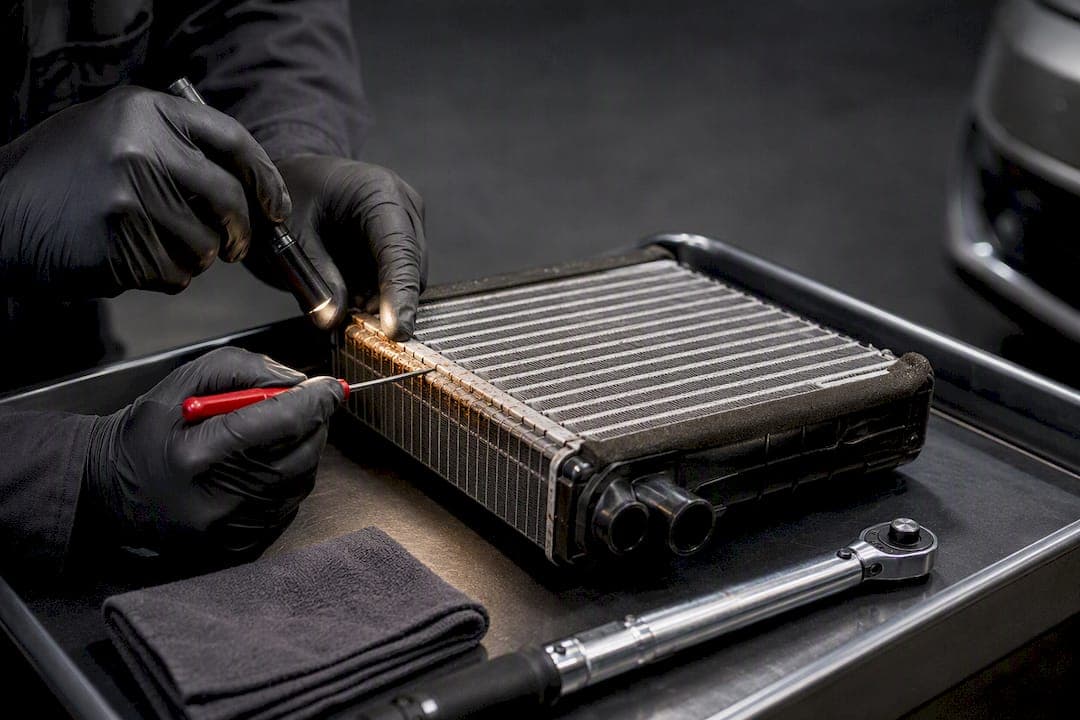
Most heater cores are not covered once you're past the manufacturer's basic warranty, and even within it, coverage depends on whether your plan treats the heater core as a powertrain part (usually excluded) or a comprehensive component (usually included). Luxury models from BMW, Mercedes, and Range Rover sometimes get extended coverage through manufacturer bulletins. Pull your warranty booklet or call the dealer with your VIN before assuming either way.
TL;DR:
- Warranty coverage for heater cores is mostly limited to bumper-to-bumper plans and specific extended warranties that explicitly list climate control parts; powertrain warranties generally exclude them.
- Coverage durations vary widely, often lasting only a few years or miles within basic warranties, but some manufacturers like Mercedes extend coverage explicitly to heater components through bulletins.
- Most warranty denials stem from issues like wear and tear, corrosion, improper maintenance, coolant contamination, or aftermarket modifications, making proper documentation crucial.
- Heater core replacements are labor-intensive and costly, especially in luxury vehicles with complex HVAC housing, often exceeding vehicle's warranty coverage windows.
- For long-term protection, consider extended warranty plans that explicitly cover cooling-system components, and always verify parts and coverage details before a repair or claim attempt.
Table of Contents
- Heater Core Warranty Coverage: Which Plan Types Actually Apply
- How Long Does Heater Core Warranty Coverage Last?
- Why Heater Core Claims Get Denied
- What Heater Core Repairs Actually Cost
- How Extended Warranties Handle Heater-Core Failures
- Filing a Heater Core Warranty Claim, Step by Step
- A Practical Next Step for Owners Weighing Their Options
- Protect Against Heater Core Repairs Before They Happen
- Documents Worth Checking Before You File
- Sources
- FAQ
Heater Core Warranty Coverage: Which Plan Types Actually Apply
Not all warranties treat the cooling system the same way, and that gap is exactly where heater-core disputes happen. Automotive coverage generally splits into five buckets, and knowing which one governs your vehicle tells you almost everything about your odds of a paid claim.
-
Bumper-to-bumper (basic) warranty: Covers nearly everything on the vehicle except tires and normal wear items, which usually includes the heater core.
-
Powertrain warranty: Covers the engine, transmission, and drivetrain, and typically stops at the water pump inlet or thermostat housing, leaving the heater core out entirely.
-
Emissions and corrosion warranty: Covers rust-through and emissions components, rarely touching climate control parts.
-
Manufacturer extended warranty: An automaker-sold plan that often mirrors bumper-to-bumper terms for a longer window.
-
Third-party or aftermarket vehicle service contracts: Coverage varies entirely by contract language and plan tier.
The pattern holds across brands: powertrain warranties commonly define cooling-system coverage narrowly, which is why a Ford F-150 owner with an expired bumper-to-bumper plan but active powertrain coverage often gets denied on a heater-core claim. Some manufacturers break that pattern on purpose. Mercedes-Benz extended limited warranty documents explicitly list heater-core and heater-housing assemblies among covered climate control components, so always read the actual parts list rather than assuming based on category name alone.
How Long Does Heater Core Warranty Coverage Last?
Coverage windows vary widely by automaker, and the clock matters as much as the category. Here's what's typical:
- Basic/bumper-to-bumper: Typically covers the first few years or tens of thousands of miles, whichever comes first, on most mainstream and luxury brands.
- Powertrain: Often covers major driveline components for several years or mileage, though it rarely helps with a heater core since that part sits outside the powertrain definition.
- Certified pre-owned (CPO) programs: Often extend bumper-to-bumper style coverage another 1 to 2 years past the original term, which matters for buyers of used Porsche, BMW, or Honda models still within CPO windows.
- Manufacturer extended factory programs: Sometimes stretch specific components further than the standard plan, but only when named explicitly.
Volkswagen set a notable precedent here. Facing widespread heater-core failures in Passat TDI models, the automaker issued a technical service bulletin extending coverage for the affected part well beyond the standard basic warranty term. That's the exception that proves the rule: check for a TSB tied to your exact model year before accepting a denial at face value.
Why Heater Core Claims Get Denied
Warranty denials on heater cores rarely come down to a coin flip. A handful of recurring issues account for most rejected claims.
- Wear-and-tear classification. Adjusters frequently argue that a heater core failed from age and normal degradation rather than a manufacturing defect, especially past the 8-year mark.
- Corrosion damage. Corrosion warranties almost never extend to internal cooling components, and corrosion is a leading cause of heater-core leaks in older Range Rover and Ford models exposed to road salt.
- Freeze damage or coolant contamination. Running the wrong coolant type or letting a system freeze voids coverage on almost every plan type.
- Lapsed or undocumented maintenance. If you can't show the cooling system was serviced on schedule, insurers treat the claim as a maintenance failure, not a warranty issue.
- Aftermarket modifications. Non-OEM radiators, aftermarket turbo kits, or modified cooling lines give administrators grounds to deny coverage even on an unrelated part.
Pro Tip: Keep every coolant flush and cooling-system inspection receipt in one folder, digital or physical, tied to your VIN. Dealers and warranty administrators weigh a complete service history far more heavily than a verbal claim that you "always kept up with maintenance."
What Heater Core Repairs Actually Cost
A heater core typically lasts between 8 and 15 years, though corrosion, coolant contamination, or clogging from debris can shorten that considerably. Watch for weak cabin heat, a sweet smell inside the car, foggy windows that won't clear, or coolant pooling near the passenger footwell. Any of those point toward a failing core.
By the numbers: Heater core replacement often runs into a significant repair bill once labor is factored in, since many vehicles require substantial dashboard disassembly to reach the part, and many manufacturer warranties on the component itself run only a year or less.
Labor accounts for most of the expense on this repair, not the part itself. You can check OEM part numbers and pricing context directly through manufacturer parts listings, but the bigger cost driver is how buried the core sits behind the dashboard on your specific model. A BMW or Mercedes with a densely packed HVAC housing will always cost more in labor than a simpler Honda layout, even with identical part prices.
How Extended Warranties Handle Heater-Core Failures
If you're shopping for a service contract specifically to protect against this kind of repair, plan structure matters more than plan price. Powertrain-only contracts almost never help here, since heater cores sit outside their definition by design. Bumper-to-bumper-style extended plans, or tiers explicitly listing climate control and cooling-system components, are the ones that actually pay out on a heater-core failure.
Before signing anything, confirm these terms in writing:
- Covered-parts list: Ask whether "heater core" or "heater housing assembly" appears by name, not just "cooling system" as a vague category.
- Pre-existing condition language: Some contracts exclude any issue that showed symptoms before the plan's effective date.
- Deductible structure: Per-visit versus per-repair deductibles change your out-of-pocket math significantly on a labor-heavy job like this one.
- Service network rules: Confirm whether you must use a specific repair network or can choose your own ASE-certified shop.
- Maintenance obligations: Most contracts require documented coolant service at manufacturer intervals to keep cooling-system coverage valid.
Plan tier names like "Elite" or "Comprehensive" usually signal broader component coverage, but the name alone isn't proof. Always cross-check the explicit parts list against your own vehicle before assuming a tier covers what you need.
Filing a Heater Core Warranty Claim, Step by Step
Getting a claim approved comes down to sequence and documentation, not luck.
- Identify your warranty type first. Pull the covered-parts list from your warranty booklet and confirm whether "heater core" appears explicitly or falls under a broader HVAC or climate control category.
- Gather every maintenance record. Coolant flush receipts, service invoices, and dealer visit history all strengthen your position.
- Get a written dealer diagnosis. A technician's notes tying the failure to a manufacturing defect, rather than neglect, carries far more weight than a verbal explanation.
- Submit the claim with full documentation attached, not just a description of the symptom.
If you're missing an original receipt, dealer service history, credit card statements showing the transaction, or printed shop invoices can all substitute as proof of maintenance. If the claim comes back denied, request the written denial reason and ask for the technician's diagnostic notes. Check whether a TSB exists for your model. As Volkswagen owners learned with the Passat TDI, citing the specific bulletin number when escalating to a claims manager can turn a denial into an approval, since it shifts the conversation from "is this normal wear" to "the manufacturer already acknowledged this defect."
Pro Tip: When you escalate a denial, don't just restate your symptoms. Reference the exact TSB number, attach the dealer's written diagnosis, and explicitly ask the claims manager to document why the bulletin doesn't apply to your case if they still deny it. That forces a specific, reviewable answer instead of a generic rejection.
A Practical Next Step for Owners Weighing Their Options
The single most useful thing you can do today is a VIN check paired with a written dealer diagnosis, filed and dated before you decide anything else. If you're still inside your basic or comprehensive coverage window, pursue the dealer warranty claim first. If you're outside it and facing a costly repair, that's the moment to compare extended coverage options built around what your specific vehicle actually needs. An extended warranty provider's four-step process—consultation, plan selection, customization, and agreement—is designed to make that comparison fast rather than another drawn-out research project.
— Kenneth
Protect Against Heater Core Repairs Before They Happen
Once a heater core fails outside your manufacturer coverage window, you're paying full labor and parts out of pocket, and that bill lands harder on models like BMW, Mercedes, and Range Rover where the HVAC housing sits deep behind the dashboard. Rpmwarranty's Elite, Advanced, and Essential plans are structured with tiered coverage designed to address cooling-system components like the heater core, so you're not stuck choosing between a surprise repair bill and hoping your manufacturer warranty stretches far enough.
Getting there takes four steps: a quick consultation, plan selection, customization to your vehicle's year, make, and model, and a final agreement, all without hidden fees buried in the fine print. Some warranty providers back plans with nationwide access to ASE-certified mechanics and a claims process built for rapid turnaround. If you drive a Volkswagen and want coverage shaped around known cooling-system issues like the Passat TDI heater-core bulletins, Rpmwarranty's Volkswagen coverage page walks through what that looks like for your specific model. Get a free quote and see whether a plan would cover your vehicle's heater core before the part ever fails.
Documents Worth Checking Before You File
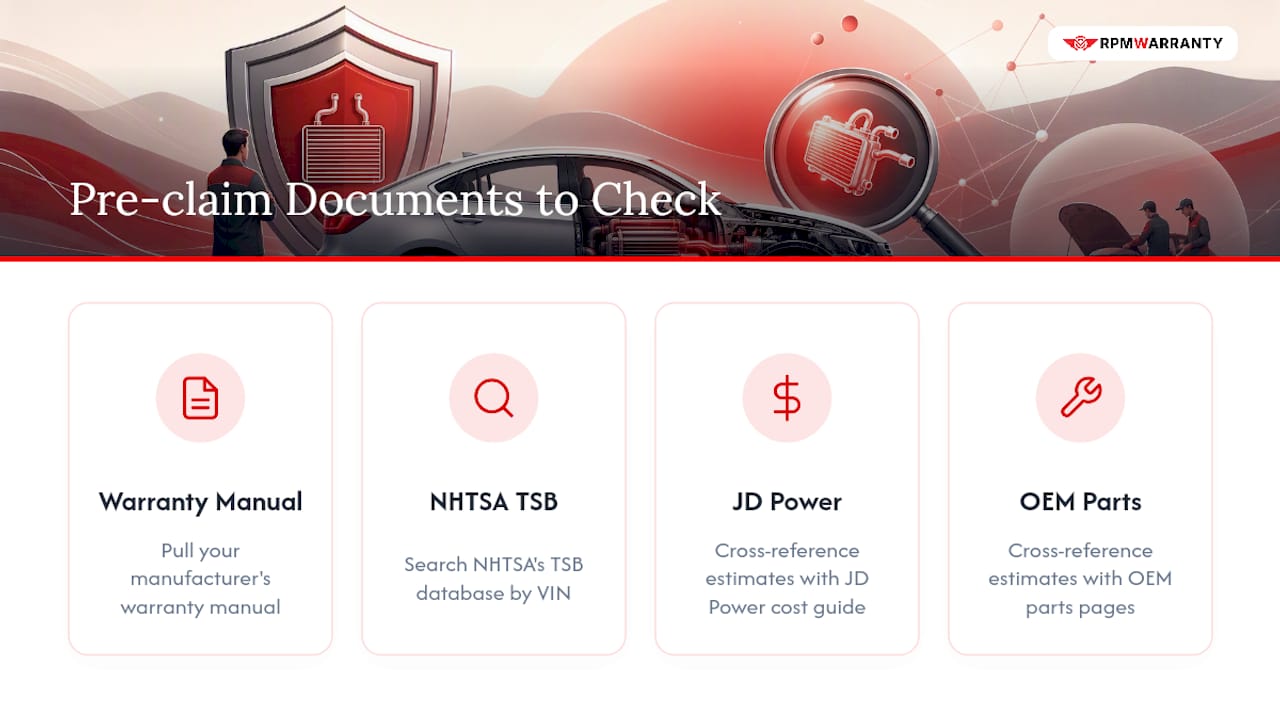
Pull your manufacturer's warranty manual and search NHTSA's TSB database by VIN. Cross-reference repair estimates against JD Power's cost guide and OEM parts pages before signing anything.
Sources
- How Much Does It Cost to Fix A Car Heater Core? — J.D. Power
- Does powertrain warranty cover the thermostat? — LegalClarity
- Mercedes-Benz Extended Limited Warranty (sample brochure)
FAQ
What is the average lifespan of a heater core?
Most heater cores last between 8 and 15 years, though corrosion, old coolant, or debris clogging can shorten that window considerably. Vehicles in road-salt regions tend to see earlier failures due to internal corrosion.
How much does it cost to replace a heater core?
Cost depends heavily on labor, since many vehicles require significant dashboard disassembly to reach the part. Luxury models with dense HVAC housings, like certain BMW and Mercedes trims, generally cost more in labor than simpler layouts.
Can I drive with a bad heater core?
You can usually still drive, but a failing heater core can mean poor cabin heat, foggy windows that reduce visibility, or coolant leaking into the cabin. A persistent sweet smell or wet passenger floor warrants prompt attention rather than delay.
Can I still claim warranty without a receipt?
Yes, in many cases. Dealer service history, credit card statements showing the transaction, and printed shop invoices can all serve as acceptable proof of maintenance when an original receipt is missing.