
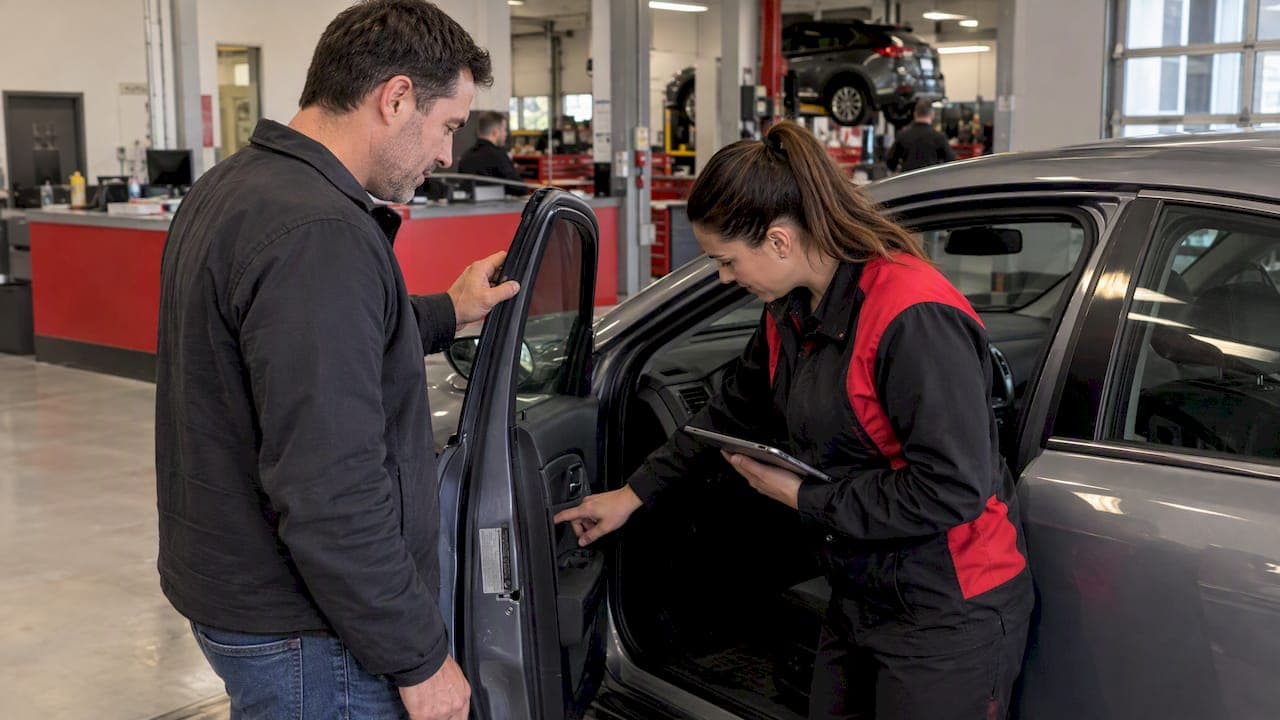
Use your 17-digit VIN on the vehicle maker's owner portal or call a franchised dealer with the VIN and current mileage to get an authoritative warranty status. Your owner manual and an NHTSA VIN search work as quick backups. Before you start, have three things ready: the VIN, your current odometer reading, and proof of purchase or registration.
TL;DR:
- An accurate VIN check is essential, and a dealer's confirmation is the most reliable way to verify warranty status and coverage details.
- Manufacturer owner portals provide precise warranty information, including specific coverage start and end dates, but may vary between brands and may require creating an account.
- Open recalls, technical service bulletins, and warranty extensions can be found by running your VIN through NHTSA's VIN decoder or a vehicle history report.
- Most warranties cover the powertrain for five to six years or 60,000 to 100,000 miles, with shorter durations for bumper-to-bumper coverage, and exclusions depend on specific brand terms.
- Maintaining organized records of receipts, service history, and regularly checking for campaign updates can help prevent warranty claim denials.
Table of Contents
- Find your VIN and run a VIN-based warranty check
- Use the manufacturer's owner portal to pull exact warranty terms
- Call or visit a dealer for a definitive answer
- Check your paperwork and maintenance records for proof
- Use NHTSA and vehicle-history tools to find extra coverage
- Read and interpret the fine print in your warranty
- What to do next if your warranty is expired or limited
- Small habits that prevent warranty headaches
- How RPM Warranty can help if factory coverage is expired or leaves gaps
- FAQ
- Sources
Find your VIN and run a VIN-based warranty check
Your VIN is the fastest path to an accurate answer, so get it exactly right before you search. You will find it on the lower-left corner of the dashboard (visible through the windshield), on a sticker inside the driver-side door jamb, on your title or registration, and on your insurance card.
Once you have it, follow these steps:
- Copy all 17 characters exactly: VINs never include the letters I, O, or Q, so a lookalike character usually means a typo.
- Paste it into your automaker's VIN-based warranty lookup tool or sign into your owner account to pull the same data.
- Compare the in-service date, remaining time and mileage, and the list of covered components against what you expected.
If the VIN returns no result, double-check for transcription errors first. A second common cause is a vehicle that was never registered with the manufacturer, often true for recent transfers or vehicles bought out of state.
Pro Tip: Photograph your door-jamb sticker with your phone. It saves you from crouching in a parking lot every time you need the VIN.

Use the manufacturer's owner portal to pull exact warranty terms
Every major automaker now publishes warranty status through an owner account, and Ford's warranty support page is a representative example of how these portals work: enter your VIN and the system returns your coverage dates without needing a dealer visit.
Look for warranty information under sections labeled Owner, My Garage, Support, or Warranty. Expect to see:
- A warranty start date tied to your original in-service date, not your purchase date if you bought the car used.
- Separate expiration figures for bumper-to-bumper, powertrain, and, for hybrids or EVs, battery coverage.
- Any open service campaigns or dealer-only adjustments tied specifically to your VIN.
Luxury brands like Mercedes, BMW, and Porsche tend to route more of this detail through a dealer-linked account rather than a public lookup, so you may need to create an account or call ahead. Mainstream brands such as Honda and Ford generally expose more warranty detail through open VIN search tools.
Call or visit a dealer for a definitive answer
A franchised dealer's service department can access factory records your home search cannot, including open recalls, technical service bulletins, and prior warranty repairs tied to your VIN. Range Rover and Porsche owners especially benefit from this step, since high-tech systems like air suspension or hybrid drive units often carry separate coverage windows that a general lookup might not show clearly.
Before you call, gather your VIN, current mileage, purchase date, and proof of ownership. Then:
- Ask directly: "Is this vehicle still under factory warranty?"
- Ask which systems are covered and for how long, by both time and mileage.
- Ask whether there are open service campaigns or warranty extensions tied to this VIN.
- Request written confirmation by email or on a service order, and ask how to escalate if you disagree with their answer.
Dealers pull all of this directly from the manufacturer's system, so their answer carries more weight than a generic online estimate.
Check your paperwork and maintenance records for proof
Your original warranty booklet, owner's manual, purchase invoice, and title all contain details that matter when a claim comes up. Honda's warranty basebook shows how detailed these documents can get, with coverage tables and exact procedures for filing a claim.
Dealer-stamped maintenance records matter just as much. They prove you followed the required service schedule, which many warranties treat as a condition of coverage.
- Check your glove box and any digital owner account for the original warranty booklet.
- Confirm the in-service or delivery date, since this is when your warranty clock actually starts.
- If records are missing, request copies from the dealer's service history, your lender, or your state DMV.
Use NHTSA and vehicle-history tools to find extra coverage
Beyond your standard warranty, manufacturers sometimes issue service campaigns or warranty extensions for known defects. These can cover repairs for free even after your normal warranty period ends.
Run your VIN through NHTSA's VIN decoder to pull open recalls and manufacturer communications, which include technical service bulletins and service campaigns.
- Search NHTSA by VIN to see active recalls tied specifically to your vehicle.
- Ask a dealer directly about TSBs, since some are not published for public search.
- A vehicle-history report from a service like CARFAX or AutoCheck can confirm your original in-service date and show prior warranty repairs.
- These reports charge a fee and can miss recent campaign data, so treat them as a supplement to a dealer check, not a replacement for one.
Some long-running service campaigns effectively extend coverage for a specific known defect well beyond the original warranty window, and checking with a dealer by VIN even after your warranty expires can turn up free repairs you did not expect.
Read and interpret the fine print in your warranty
Once you know your warranty is active, the real question becomes what it actually covers. Warranty terms vary by brand, but most break down into a few standard categories.
- Bumper-to-bumper (basic limited warranty): typically the shortest window, often around 3 years or 36,000 miles.
- Powertrain: usually the longest standard coverage, often 5 to 6 years or 60,000 to 100,000 miles, covering the engine, transmission, and drivetrain.
- Corrosion and emissions: separate, often longer windows tied to body rust-through or federal emissions requirements.
- Battery (hybrid and electric vehicles): its own coverage period, frequently longer than the basic warranty.
Pay close attention to the start date, mileage cap, listed exclusions, any deductible per visit, and required maintenance intervals. Missing a scheduled service can void a specific claim even while the rest of your warranty stays active.
The Magnuson-Moss Warranty Act requires clear written warranty disclosures and prevents a manufacturer from requiring you to use a specific repair shop to keep your coverage, as long as independent work did not cause the failure. An extended service contract, sometimes marketed as an "extended warranty," is a separate optional product, not governed by the same federal rules as your factory warranty, and it can duplicate coverage you already have.
Pro Tip: Before buying any extended coverage, check your factory warranty's remaining mileage and time. Paying for overlapping coverage rarely makes financial sense.
What to do next if your warranty is expired or limited
If your factory coverage has lapsed or a repair falls outside it, get everything in writing before you do anything else.
- Request written confirmation of coverage or denial directly from the dealer or manufacturer, not a verbal answer.
- Collect documentation for any appeal: service orders, repair photos, receipts, and screenshots of your VIN lookup results.
- If you disagree with a denial, escalate to the manufacturer's customer service line first, then your state consumer protection office, and file an FTC complaint only as a last resort.
- If you are genuinely out of warranty, ask about a goodwill repair, budget for paying out of pocket, or evaluate an extended service contract for future protection.
Be skeptical of anyone who contacts you first claiming your warranty is about to expire. Unsolicited calls and letters pushing an urgent renewal are a well-documented scam pattern, and a legitimate manufacturer or dealer will never pressure you into an immediate purchase over the phone.
Small habits that prevent warranty headaches
Most denied claims trace back to missing receipts or skipped scheduled maintenance, not some hidden exclusion. I have found that three small habits solve this: digitize every repair receipt the day you get it, bookmark your VIN warranty lookup page, and log each service visit in a simple note on your phone. After every appointment, confirm the shop stamped or recorded the visit before you drive off.
— Kenneth
How RPM Warranty can help if factory coverage is expired or leaves gaps
Once a VIN check or dealer call confirms your factory warranty has run out, we offer a straightforward next step instead of leaving you to absorb full repair costs alone. We offer plans in multiple tiers covering components like engines, transmissions, cooling and electrical systems, and high-tech electronics, plus roadside assistance. Motorcycle owners can compare a plan built for bikes specifically.
Before picking any extended plan, run through this short checklist:
- Confirm there is no overlap between your remaining factory coverage and the new plan's start date.
- Compare the deductible per visit across tiers.
- Ask how claims get approved and how long that typically takes.
- Check whether the plan includes nationwide service through ASE-certified mechanics.
We built our process around transparent terms and no hidden fees, with rapid claims approval, so you know what you are buying before you sign anything. Compare coverage and get a free quote on our protection plans page to see which tier fits your vehicle and budget.
FAQ
What is covered under a GM powertrain warranty?
Powertrain warranties generally cover the engine, transmission, and drivetrain components that move the car, though exact parts lists vary by brand and model year. Check your specific VIN through the manufacturer's owner portal or a dealer to get the exact coverage list and remaining mileage for your vehicle.
Do all new cars come with a 3-year warranty?
No, warranty length varies by manufacturer rather than following one universal standard. Many brands offer a basic bumper-to-bumper warranty around 3 years or 36,000 miles, with powertrain coverage running longer, but you should confirm your specific brand's terms through your owner manual or dealer.
What does a certified pre-owned designation mean for warranty coverage?
A certified pre-owned designation from a manufacturer typically extends or adds warranty coverage beyond what the original factory warranty would have left on a used vehicle. The exact terms, including covered components and remaining time or mileage, vary by brand, so confirm the specifics with a dealer using the vehicle's VIN.
How can I check warranty details using my VIN number?
Enter your 17-digit VIN into your vehicle manufacturer's official owner portal or warranty lookup tool to see your coverage dates and covered systems. You can find your VIN on the dashboard, door jamb, title, or insurance card, and a dealer can confirm the same information by phone if the online tool returns no result.
How do extended car warranties work compared to factory coverage?
An extended warranty, more accurately called a service contract, is an optional paid product you buy separately from your factory coverage, and it is not governed by the same federal rules as a manufacturer warranty. These contracts can duplicate coverage you already have and often include their own deductibles and exclusions, so compare them against your remaining factory warranty before buying. Our Elite, Advanced, and Essential plans are built to fill that gap once factory coverage ends, with clearly outlined terms and no hidden fees.