
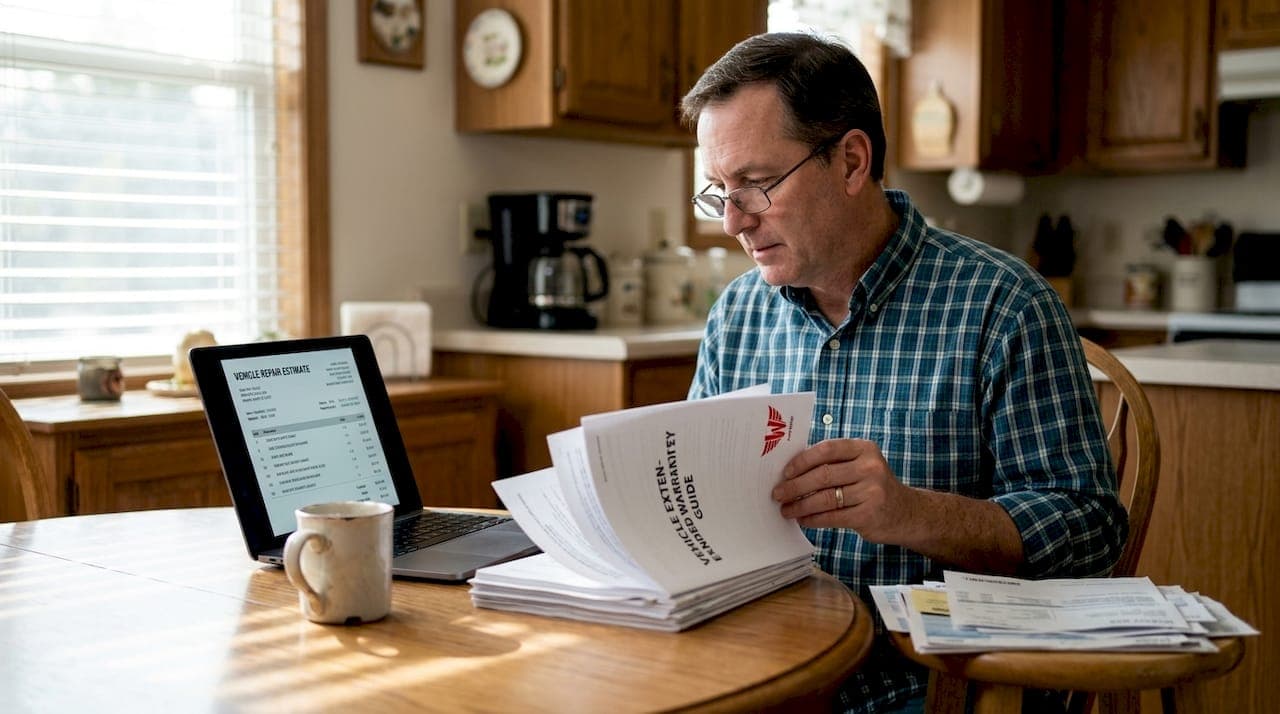
Unexpected vehicle repairs can cost thousands of dollars and disrupt your daily routine without warning. Renewing your auto warranty before it expires helps you avoid these out-of-pocket expenses for major repairs like engine or transmission failures. This guide walks you through everything you need to know about preparing for renewal, comparing providers, executing the process step by step, and verifying your coverage to ensure continuous protection for your vehicle.
Table of Contents
- Key takeaways
- Understanding when and why to renew your auto warranty
- Preparing to renew: What you need to know and check
- Step-by-step guide to renewing your auto warranty
- Verifying coverage and avoiding common renewal mistakes
- Protect your vehicle with trusted extended warranty plans
- How long does the auto warranty renewal process take?
Key Takeaways
| Point | Details |
|---|---|
| Renewal saves costs | Renewing your warranty can save thousands compared to paying for repairs out of pocket. |
| Compare providers | Compare providers carefully using ratings and coverage details before renewing. |
| Beware scams | Beware of scams offering fake renewals or pressuring you to buy. |
| Know renewal steps | The renewal process requires verifying expiration, comparing quotes, and selecting coverage. |
| Best for high mileage cars | Auto warranties are best for high mileage, luxury, or older cars prone to costly repairs. |
Understanding when and why to renew your auto warranty
Major vehicle repairs create financial stress for most car owners. Transmission replacements and engine failures can cost between $4,000 and $6,000, while extended warranties typically cost $70 to $180 per month or $1,500 to $4,000 total. This math makes warranty renewal financially smart for many drivers, especially those with older cars, high-mileage vehicles, or luxury models.
Renewal makes the most sense when your vehicle's repair risk exceeds the warranty cost. Older vehicles with over 100,000 miles face higher failure rates for major components. Luxury brands often require specialized parts and labor that dramatically increase repair bills. If you own a high-end vehicle like an Audi, renewal can prevent a single repair from costing more than years of warranty premiums.
Some vehicle owners prefer building an emergency repair fund instead of purchasing warranty coverage. This approach gives you full control over the money and eliminates monthly premiums. However, warranties offer predictable costs and peace of mind that a savings account cannot match. You know exactly what you will pay each month, and covered repairs require only a deductible payment.
"Extended warranties provide financial protection against unexpected repair costs, but vehicle owners should carefully evaluate whether the coverage matches their specific needs and driving patterns."
Critics argue that extended warranties sometimes cost more than the claims paid out for some owners. This outcome depends heavily on your vehicle's reliability and your luck with repairs. Research shows that warranty value increases significantly for owners who experience major component failures. Before renewing, check trusted reviews and BBB ratings for any provider you consider. Regional providers like those offering the best extended warranty in Michigan may offer competitive rates for local drivers.
Consider these factors when deciding whether to renew:
- Your vehicle's current mileage and age
- Manufacturer reliability ratings for your make and model
- Your budget for unexpected repairs
- The comprehensiveness of coverage options available
- Provider reputation and claims processing speed
The decision to renew requires balancing potential repair costs against warranty premiums. Evaluate your specific situation rather than following generic advice. Your vehicle's condition, your driving habits, and your financial comfort with risk all influence whether renewal makes sense for you.
Preparing to renew: What you need to know and check
Successful warranty renewal starts with gathering the right information before you contact any provider. Check your current warranty expiration date and coverage details first. Locate your original warranty documents to understand what components are currently covered and what exclusions apply. This baseline helps you compare renewal options accurately.
Gather your vehicle's maintenance records and history documentation. Providers often require proof of regular maintenance to approve renewal coverage. Service receipts showing oil changes, tire rotations, and manufacturer-recommended maintenance demonstrate that you have cared for your vehicle properly. Missing maintenance records can result in coverage denials or higher premiums.
Comparing multiple providers is essential for finding the best value. Focus on coverage options, limits, deductibles, and provider reputation. Request quotes from at least three different companies. Pay attention to what each plan covers and excludes. Some warranties cover only powertrain components, while comprehensive plans protect electrical systems, cooling systems, and high-tech parts.

Watch for common scam tactics that target vehicle owners during the renewal period. Unsolicited calls or mailers claiming imminent warranty expiry use high-pressure sales tactics to rush your decision. Scammers often claim affiliation with your vehicle manufacturer or dealer when no such relationship exists. These fake offers create artificial urgency to prevent you from researching legitimate options.
Contact your vehicle manufacturer or dealer directly to verify renewal options. Dealers can provide manufacturer-backed extended warranties that integrate seamlessly with your original coverage. These factory-backed plans often include benefits like loaner vehicles and OEM parts guarantees. Third-party warranties may offer lower prices but require more careful vetting.
Look for BBB ratings and customer reviews before choosing any provider. High ratings indicate reliable claims processing and customer service. Read recent reviews to identify patterns in customer experiences. Multiple complaints about denied claims or poor communication signal providers to avoid.
Pro Tip: Create a checklist of questions to ask each warranty provider about coverage scope, exclusions, claims procedures, and cancellation policies. This standardized approach helps you compare offers objectively.
Your preparation checklist should include:
- Current warranty expiration date and coverage summary
- Complete vehicle maintenance history and receipts
- Vehicle identification number and current mileage
- List of specific components you want covered
- Budget range for monthly or annual premiums
- Questions about coverage limits and deductibles
- Provider contact information verified through official channels
Thorough preparation prevents rushed decisions and helps you identify the best renewal option for your needs. Take time to organize this information before requesting quotes. The auto warranty renewal FAQs can answer common questions that arise during your research.
Step-by-step guide to renewing your auto warranty
Renewing your auto warranty follows a logical sequence that ensures you select appropriate coverage without falling for scams or missing important details. Follow these steps to complete your renewal confidently.
Step 1: Verify your current warranty expiration date and assess your coverage needs. Review what your existing warranty covers and identify any gaps. Consider whether your driving patterns or vehicle usage has changed since your original purchase. Increased mileage or new repair concerns may require more comprehensive coverage.
Step 2: Request renewal quotes from top providers and compare costs with coverage details. Leading warranty providers in 2026 include Endurance, Carchex, and Carshield, known for overall quality, claims service, and high-mileage coverage respectively. Contact at least three providers to ensure competitive pricing.
| Provider Type | Average Cost | Coverage Level | Best For |
|---|---|---|---|
| Manufacturer Extended | $2,500-$4,000 | Comprehensive | New to 5-year-old vehicles |
| Third-Party Premium | $1,800-$3,200 | Comprehensive | All vehicle ages |
| Third-Party Basic | $1,200-$2,000 | Powertrain Only | Budget-conscious owners |
| Dealer Extended | $2,000-$3,500 | Varies | Convenience and trust |
Step 3: Review terms carefully, including coverage limits, deductibles, and exclusions. Pay special attention to what is not covered. Some warranties exclude pre-existing conditions, wear items like brake pads, or repairs resulting from lack of maintenance. Understanding exclusions prevents surprise denials when you file claims.
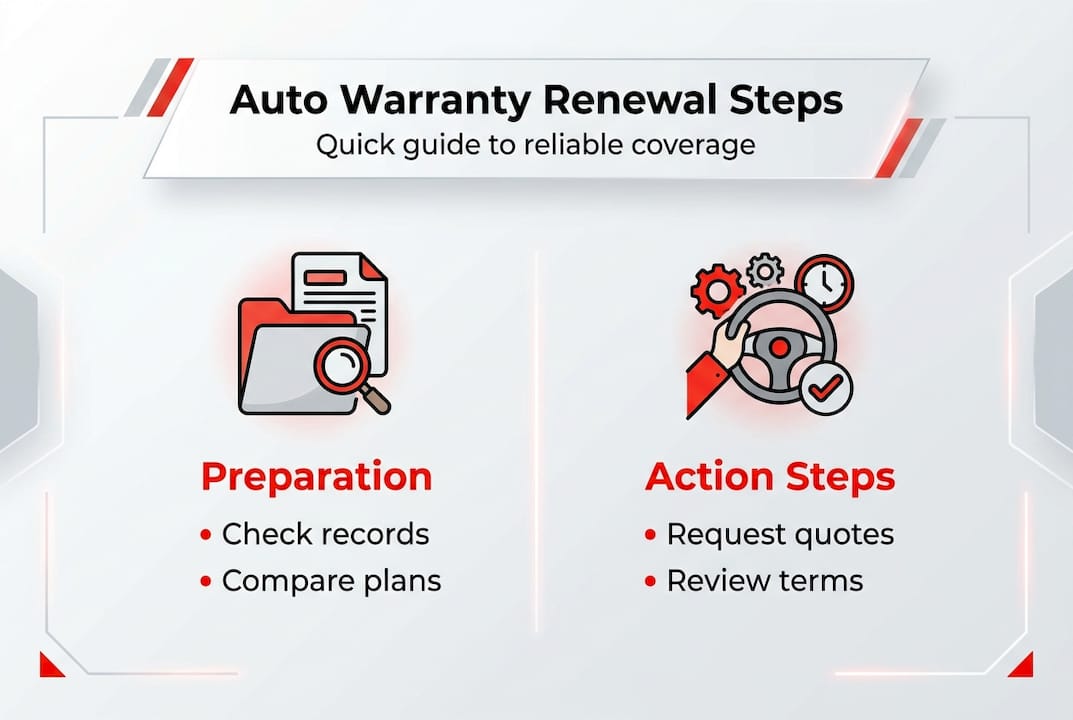
Step 4: Ask questions about the claims process, cancellation policy, and transferability. Understand how to file a claim and whether you can use any licensed repair facility or must visit approved shops. Clarify whether you can cancel for a prorated refund if you sell your vehicle. Transferable warranties add value if you plan to sell before the coverage expires.
Step 5: Select your preferred plan and complete the purchase following the provider's instructions. Most providers offer online enrollment, phone enrollment, or dealer-facilitated enrollment. Read the final contract before signing to ensure all verbal promises appear in writing. Verify that the coverage start date, end date, and mileage limits match your agreement.
Step 6: Confirm receipt of documentation and keep copies for your records. Store your warranty contract, proof of payment, and provider contact information in an accessible location. Digital copies in cloud storage ensure you can access your warranty information from anywhere.
Pro Tip: Time your renewal to start slightly before your current warranty expires to prevent coverage gaps, but avoid purchasing too early to prevent paying for overlapping coverage you cannot use.
The renewal process typically takes three to seven business days from initial quote to active coverage. Expedite the process by having all required documents ready when you first contact providers. The protection plans page offers detailed information about coverage options tailored to different vehicle types and budgets.
Verifying coverage and avoiding common renewal mistakes
Successful renewal requires confirming that your new coverage matches what you purchased and avoiding pitfalls that leave you unprotected or vulnerable to scams. Start by thoroughly reviewing your renewal contract when it arrives. Check that the coverage start and end dates align with your expectations and that no coverage gap exists between your old and new warranties.
Verify that the contract lists all components and systems you discussed with the provider. Compare the written coverage details against your notes from sales conversations. Discrepancies between verbal promises and written contracts favor the written terms, so address any differences immediately. Contact the provider to resolve errors before your coverage becomes active.
Watch for suspicious calls or offers after completing your renewal. Scammers sometimes target vehicle owners shortly after legitimate renewals, claiming additional coverage is needed or offering upgrades. Some owners mistakenly renew too late or fall for scams claiming warranty expiry to pressure them. Always contact your provider directly using the phone number on your contract rather than responding to unsolicited communications.
Keep your warranty documentation accessible for claims or disputes. Store physical copies in your vehicle's glove compartment along with registration and insurance documents. Maintain digital backups in email or cloud storage. Quick access to your warranty information speeds up claims processing when you need repairs.
Common renewal mistakes include delaying renewal until after expiration, misunderstanding coverage limits, and ignoring fine print about maintenance requirements. Some owners assume their coverage automatically renews, only to discover gaps when they need repairs. Others fail to maintain required service records, leading to claim denials despite paying premiums.
| Common Mistake | Best Practice | Consequence of Mistake |
|---|---|---|
| Delaying renewal past expiration | Renew 30-60 days before expiration | Coverage gaps or higher costs |
| Skipping contract review | Read entire contract before signing | Unexpected exclusions or limits |
| Ignoring maintenance requirements | Keep all service records | Claim denials for lack of proof |
| Trusting unsolicited offers | Verify through official channels | Financial loss to scams |
| Assuming automatic renewal | Confirm renewal status in writing | Unintentional coverage lapses |
Verification steps to complete after renewal:
- Confirm your provider's claims phone number and save it in your contacts
- Test your online account access if the provider offers digital claims
- Review the list of approved repair facilities in your area
- Understand your deductible amount and payment methods accepted
- Note any waiting periods before coverage becomes active
- Verify that your vehicle information is accurate in the system
If you discover errors or have concerns about your renewal, address them immediately. Most providers offer a review period during which you can cancel for a full refund if the coverage does not meet your needs. Taking action quickly protects your rights and ensures you get the coverage you paid for. The warranty renewal troubleshooting resources can help resolve common post-renewal issues.
Protect your vehicle with trusted extended warranty plans
Renewing your auto warranty protects you from unexpected repair costs and provides peace of mind for years of driving ahead. RPM Warranty offers trusted nationwide extended vehicle warranty plans tailored to various vehicles, from daily drivers to luxury models. Their comprehensive vehicle protection plans help you avoid costly unexpected repairs with coverage options that fit your budget and needs.
Explore your warranty options today to find the right protection for your vehicle. Visit RPM Warranty to get free quotes and compare coverage plans suited to your vehicle's year, make, and model. Their streamlined process makes renewal simple, and their customer support team answers questions about coverage, claims, and customization. Check out their auto warranty FAQs for additional guidance on selecting and maintaining your extended warranty coverage.
How long does the auto warranty renewal process take?
The renewal process typically takes three to seven business days from requesting quotes to having active coverage. You can expedite this timeline by preparing all required documents beforehand, including your vehicle information, maintenance records, and current warranty details. Some providers offer same-day approval for straightforward renewals, while others require more detailed vehicle inspections or documentation review. Exact timing depends on the provider's processing procedures and whether you choose manufacturer-backed or third-party coverage.
Can I renew my auto warranty after it has expired?
Late renewals are sometimes possible but may result in coverage gaps, higher costs, or additional requirements like vehicle inspections. Many providers require your vehicle to undergo a mechanical inspection before approving coverage after expiration. This inspection ensures no pre-existing conditions exist that would immediately trigger claims. Some providers refuse late renewals entirely, particularly if significant time has passed since expiration. Renew promptly before your current warranty expires to ensure continuous protection and avoid these complications.
Are extended warranties worth the cost for older or high-mileage cars?
Extended warranties are particularly worthwhile for older, high-mileage, or luxury cars where repairs often exceed $3,000 on average. These vehicles face higher failure rates for major components like transmissions, engines, and electrical systems. A single major repair can cost more than years of warranty premiums, making coverage a smart financial decision. Consider your vehicle's repair risk, your emergency fund size, and your comfort with unexpected expenses when deciding. The extended warranties for older cars may offer specialized coverage for high-mileage vehicles in your area.
How can I avoid scams when renewing my auto warranty?
Do not trust unsolicited renewal offers by phone, text, or mail claiming your warranty is about to expire. Scams often involve unsolicited calls, fake affiliations, and high-pressure tactics designed to rush your decision. Contact your vehicle dealer or manufacturer directly using verified phone numbers to confirm your warranty status and renewal options. Research any provider's BBB ratings and customer reviews before committing to coverage. Legitimate providers never pressure you to decide immediately or threaten consequences for delaying. Take time to compare multiple offers and verify all claims independently before purchasing any warranty coverage.
Recommended
- Extended Vehicle Auto Motorcyle Warranty | Trusted By All Dealers Nationwide
- Extended Vehicle Auto Motorcyle Warranty | Trusted By All Dealers Nationwide
- Extended Vehicle Auto Motorcyle Warranty | Trusted By All Dealers Nationwide
- Best Audi Extended Vehicle Auto Motorcyle Warranty | Trusted By All Dealers Nationwide