
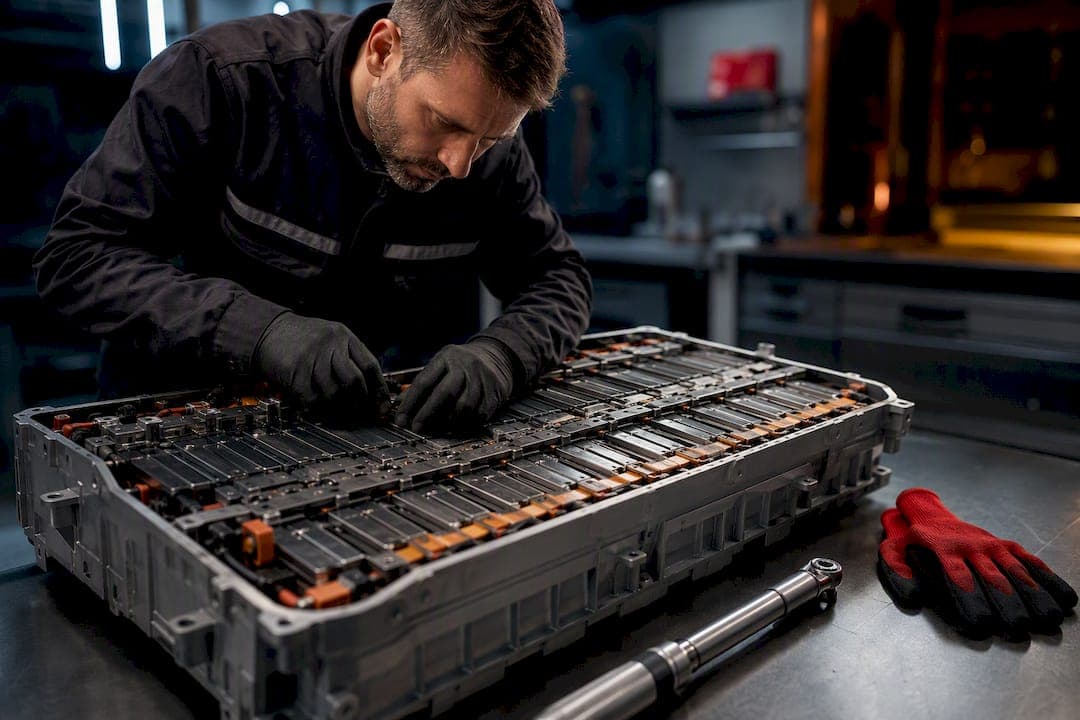
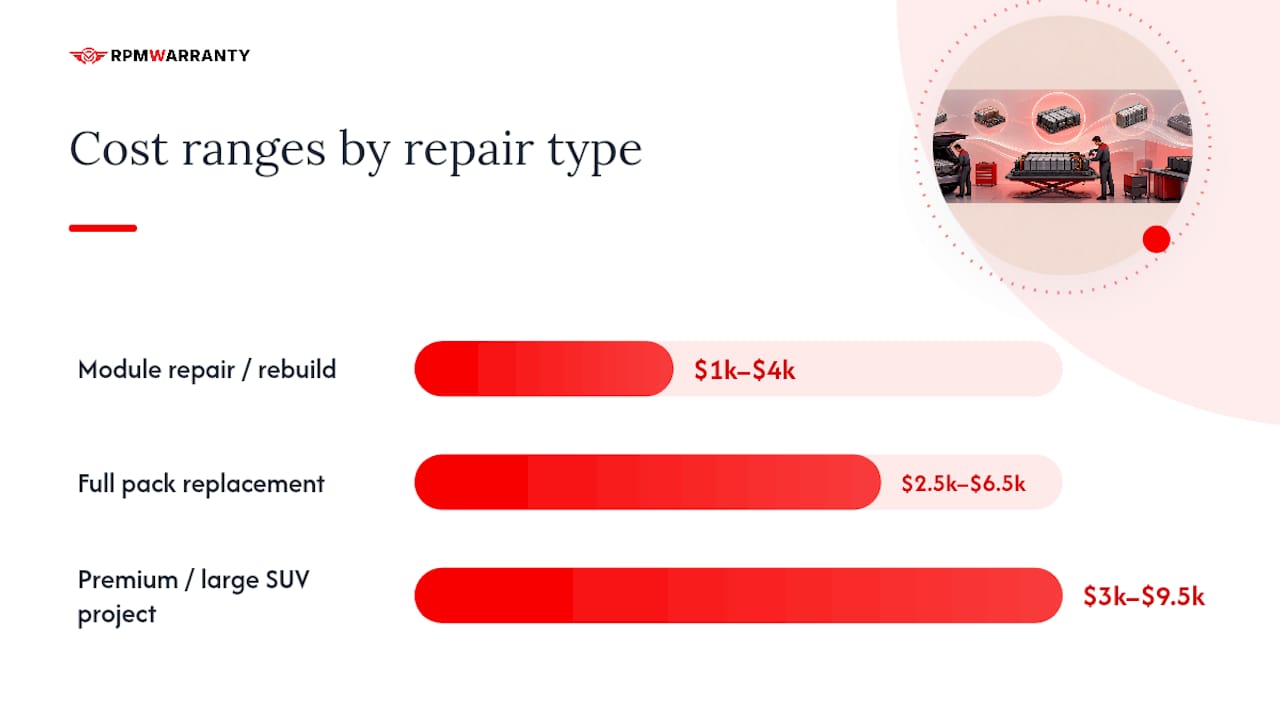
Expect to pay $50 to $180 for a proper diagnostic, $1,000 to $4,000 for a module repair or rebuild, and $2,500 to $6,500 for a full pack replacement, with premium SUVs and luxury hybrids pushing toward $9,500 in total project cost. The right first move is booking a module-level diagnostic, not guessing which path you need. Your actual number depends heavily on your vehicle's make, model, and battery chemistry.
TL;DR:
- The diagnostic fee for hybrid battery issues typically ranges from $50 to $180, which helps determine whether a single module or the entire pack needs repair.
- Repair costs vary based on vehicle make, model, and battery chemistry, with module repairs costing $1,000 to $4,000, and full pack replacements reaching $2,500 to $6,500 or more.
- Costs are higher for newer lithium-ion packs and larger SUVs, while older nickel-metal hydride packs on mainstream models are usually less expensive to repair.
- Owners should ask shops if quotes cover single-module repairs or full pack replacements, as misleading pricing can lead to unnecessary expenses.
- Replacement is generally worthwhile if repair costs are under 40% of the vehicle’s market value, and extended warranties can significantly offset high repair costs on premium hybrids.
Table of Contents
- Hybrid Battery Replacement Cost Breakdown: Where the Money Goes
- Why Two Hybrid Owners Get Wildly Different Quotes
- Repair, Rebuild, or Replace: Your Real Options
- Is Replacing the Battery Actually Worth It?
- Getting an Honest Estimate: What to Ask Before You Pay
- How an Extended Warranty Changes the Math on Hybrid Battery Risk
- A Straight Answer on What Most Owners Should Do
- Sources
Hybrid Battery Replacement Cost Breakdown: Where the Money Goes
A hybrid battery invoice isn't one number. It's five, stacked on top of each other, and most shops don't explain that clearly enough before you sign anything.
The diagnostic fee typically runs $50 to $180 and tells the technician whether you're dealing with one bad module or a pack-wide failure. Skip this step and you're guessing, which is how owners end up paying for a full pack when a $1,200 module swap would have solved it.
From there, costs split into three tiers. Module repair or rebuild work runs $1,000 to $4,000, averaging around $2,500. Full pack replacement lands at $2,500 to $6,500 for most mainstream hybrids. Premium vehicles and larger SUVs can push total project costs to $3,000 through $9,500, especially when a new OEM pack is specified instead of a remanufactured one.
Labor is the piece most owners underestimate. Jobs typically run 4 to 12 hours depending on how buried the pack is and how much module testing is required, and shop rates vary widely by region and certification level.
Beyond those core figures, watch for:
- Core charges for returning your old pack (often credited, not extra, but confirm this upfront)
- Disposal fees for battery recycling, which vary by state and shop
- Programming or calibration charges to sync a new pack with your vehicle's computer
- Warranty add-ons priced separately from the parts and labor
Why Two Hybrid Owners Get Wildly Different Quotes
The same make and model can generate a $1,800 repair quote and a $6,000 quote depending on chemistry, damage, and who's doing the work.
Older hybrids running nickel metal hydride (NiMH) packs, like early Toyota Prius and Honda Civic Hybrid generations, tend to have cheaper module costs because the parts market is mature and remanufactured units are everywhere. Newer lithium-ion packs, common in Ford, BMW, and Mercedes plug-in hybrids, cost more per module and have fewer aftermarket rebuild options right now.
Vehicle class matters just as much. A compact hybrid sedan has a smaller, more accessible pack than a Range Rover Sport PHEV or a Porsche Cayenne E-Hybrid, where the battery is integrated into a more complex electrical architecture with additional labor steps.
- Single-module failures cost far less than pack-wide thermal damage or battery management system (BMS) faults
- Dealer service departments often quote higher than independent shops, though they may have better access to OEM parts
- High-volume models like the Prius benefit from parts scale that luxury hybrids simply don't have
Pro Tip: Ask specifically whether your quote covers a single module or the entire pack. "Battery replacement" gets used loosely, and some shops quote full-pack pricing when a targeted repair would work.
Repair, Rebuild, or Replace: Your Real Options
You've got four realistic paths, and the right one depends on your car's condition and how long you plan to keep it.
- Module-level repair. Cheapest option, typically $1,000 to $4,000. Best for isolated cell failures in an otherwise healthy pack. Not ideal if your pack is already 10+ years old and other modules are likely close behind.
- Remanufactured pack. A rebuilt unit with new or refurbished cells, usually carrying a 1 to 4 year warranty. Solid middle ground for owners keeping the car 3 to 5 more years.
- Refurbished or used pack. The cheapest route, but warranties are shorter and risk is higher. Only makes sense if the car's resale value is already low and you need the cheapest fix to keep it running.
- New OEM pack. Highest cost, strongest warranty, best fit for owners planning to keep a Honda, Porsche, or Mercedes hybrid for the long haul.
Is Replacing the Battery Actually Worth It?
Run a simple test: compare the repair cost against what the fix restores in market value, not just against what the car is "worth" while it's broken.
A repaired or remanufactured pack backed by a multi-year transferable warranty often restores resale value close to pre-failure levels, which matters enormously if you're trading in rather than keeping the car. A "check engine, hybrid system" listing tanks your trade-in offer far more than the repair itself would cost.
- If repair cost is under 40% of the vehicle's healthy market value, replacement usually pays for itself
- If you're facing battery failure plus a failing transmission or major suspension work, the math often stops working
- High-mileage vehicles (150,000+ miles) on a low base value rarely justify a full OEM pack replacement
- Fuel savings from a healthy hybrid system can offset repair cost over 2 to 4 years of ownership for daily drivers
A useful budgeting approach: think in two buckets, the diagnostic and the likely outcome, rather than one blended number. It keeps quotes from different shops actually comparable.
Getting an Honest Estimate: What to Ask Before You Pay
- Book a hybrid-specific diagnostic and request the module-level test results, not just a verbal summary.
- Get a written, itemized estimate covering labor hours, hourly rate, parts origin (OEM, remanufactured, or used), disposal fees, and core charges.
- Confirm certification. ASE-certified technicians with high-voltage training matter here more than almost any other repair category.
- Ask if the warranty transfers if you sell the car within the coverage window.
- Get two quotes minimum, and favor the shop that hands you actual test data over the one that just names a price.
Pro Tip: If a shop won't show you diagnostic printouts or gives you a vague "it needs a new battery" without module-level testing, walk. That's the single biggest red flag in this repair category.
How an Extended Warranty Changes the Math on Hybrid Battery Risk
High-voltage hybrid systems are expensive precisely because they're specialized, and that's exactly the kind of repair extended coverage is built to absorb. Warranty plans that include electrical system and high-tech component protection can shift a $5,000 pack replacement from an out-of-pocket shock to a covered claim.
Rpmwarranty's tiered structure reflects how differently owners weigh this risk:
- Elite plans lean toward comprehensive coverage, including high-voltage and hybrid-specific electrical components
- Advanced plans balance broader powertrain protection with cost, a common fit for hybrids past factory warranty
- Essential plans suit owners prioritizing lower premiums over deep hybrid-system coverage
If you're driving a hybrid Range Rover, BMW, or Mercedes past the manufacturer's warranty window, a plan through Rpmwarranty is worth comparing against the self-insure route, especially since hybrid battery repairs on premium vehicles run well above mainstream sedan pricing. Get a free quote built around your specific make, model, and year before deciding either way.
A Straight Answer on What Most Owners Should Do
Most owners overthink this decision. If your hybrid is under 150,000 miles and otherwise mechanically sound, a module repair or remanufactured pack almost always beats a full OEM replacement on cost per year of remaining service. Save the new-pack money for vehicles you're keeping past the 100,000-mile mark.
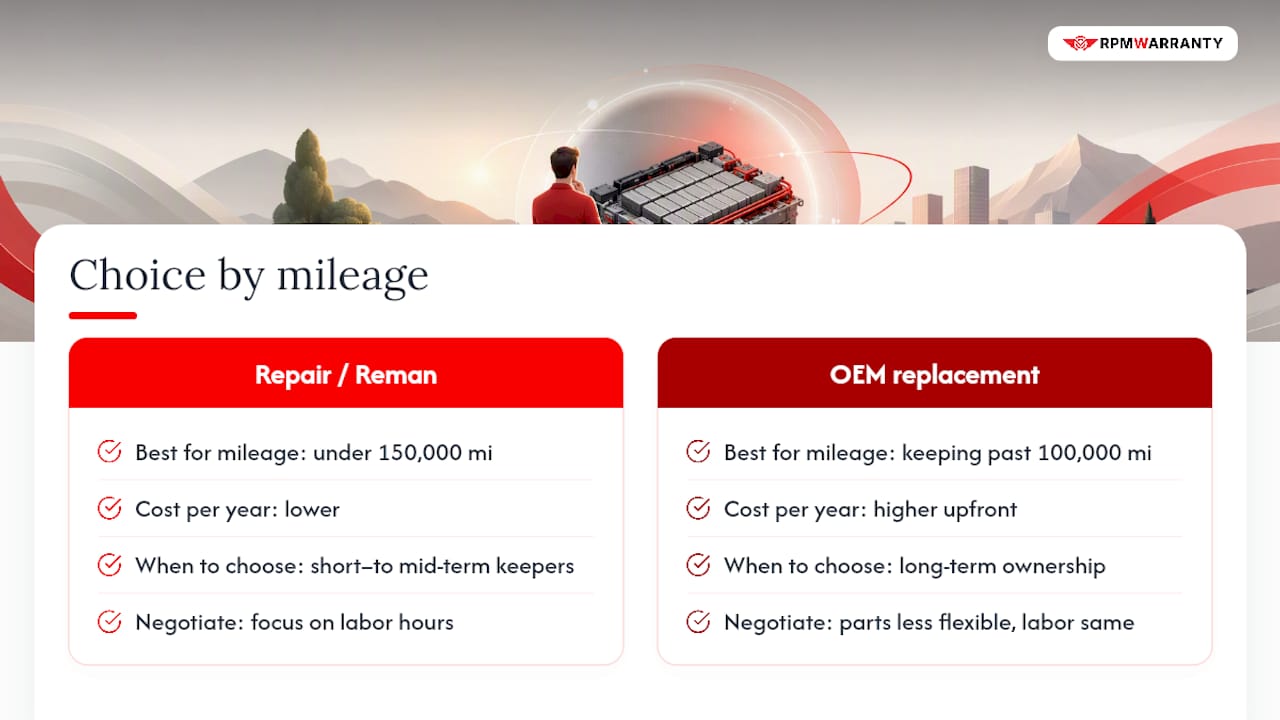
Negotiate hard on labor hours, not parts. Shops have more flexibility there than they admit. And keep every diagnostic printout and invoice. That paperwork is what protects your resale value and your warranty claim later, whether or not you ever end up needing it.
Don't let sentimental attachment override the math, but don't undervalue a car that's treated you well either. Sometimes the "worth it" answer isn't purely financial.
— Kenneth