
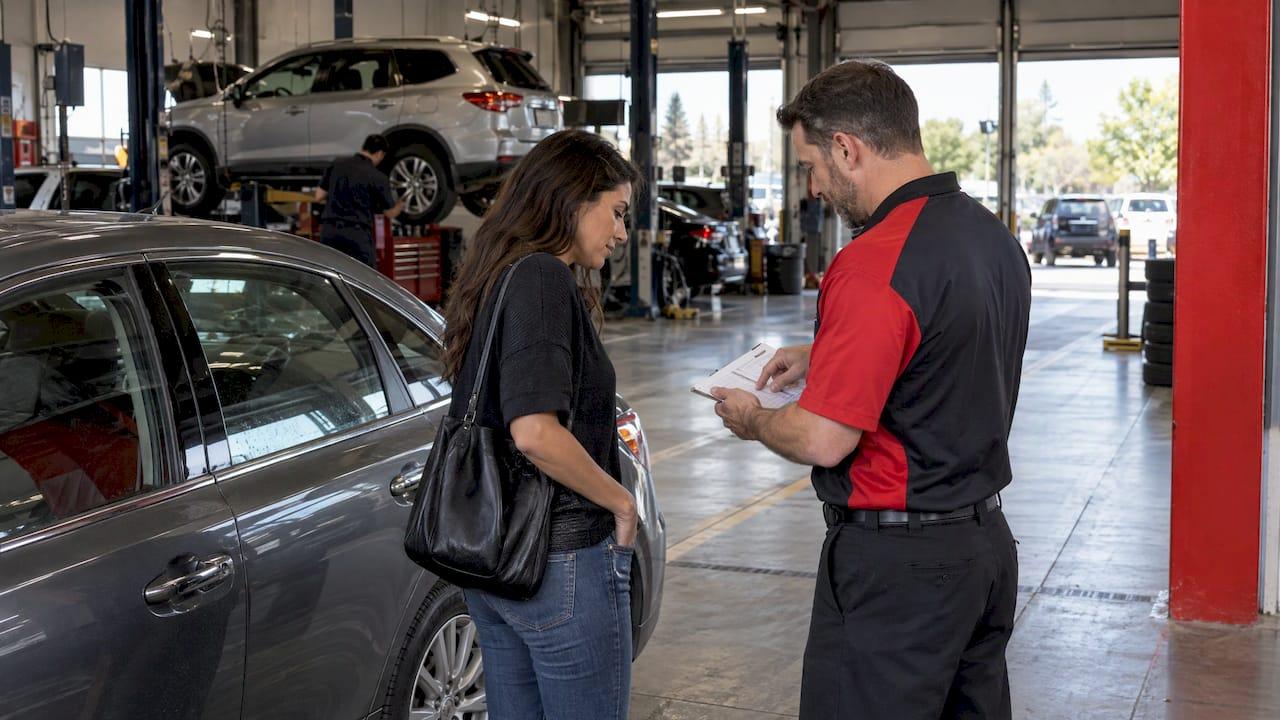
A warranty is a promise to repair. A lemon law is a state remedy that applies when that promise fails. The manufacturer's warranty comes first: it pays for covered repairs. A lemon law steps in only if a covered defect keeps coming back and the car still cannot be fixed, and then it can mean a refund or a replacement. Neither one pays for a breakdown that falls outside its terms, and that gap is where an extended warranty from us at RPM Warranty fits.
This guide explains the difference in plain terms, shows how the rules change from state to state, walks through the records you need, and then looks at what protects a $60,000 SUV or sports sedan once the factory coverage is gone.
TL;DR
- A warranty is a contract that covers repairs for a set time or mileage. A lemon law is a state statute that gives a refund or replacement when a covered defect cannot be fixed.
- A lemon law claim almost always depends on a warranty: no covered defect, no claim.
- Lemon laws differ by state, in time limits, mileage limits, the number of repair attempts and how used cars are treated. Check your own state's attorney general page.
- Lemon laws protect you from a defective car. They do not pay for ordinary mechanical failures later in the car's life, which is what an extended warranty is for.
- Keep every repair order. They are the proof in either situation.
Table of Contents
- The core difference in one minute
- How lemon laws and warranties overlap
- Why the rules depend on your state
- What a lemon law gives you, and what it does not
- Steps to take if you think you have a lemon
- What about the $3,000 rule?
- When the factory warranty ends
- Choosing coverage: what to read in a plan
- Get a plan before you need one
- Our perspective
- FAQ
- Sources
The core difference in one minute
Think of the two as a repair promise and a safety net under it.
A warranty is a written promise from a manufacturer, dealer or contract provider. It says which parts are covered, for how long, and what the company will do about a failure. The Federal Trade Commission explains that the federal Magnuson-Moss Warranty Act is the law that governs warranties on consumer products, and that written warranties must disclose their terms.
A lemon law is a state law, not a contract. It says that if a new car (and in some states a used one) has a serious defect covered by the warranty, and the maker cannot fix it after a reasonable number of tries, the owner may be entitled to get the car bought back or replaced. The California Attorney General describes the trigger as a warranty-covered problem that substantially impairs the vehicle's use, value or safety and remains unrepaired after a reasonable number of attempts.
So the two are not rivals. The warranty defines what is covered. The lemon law defines what happens when repairs fail repeatedly.
| Warranty | Lemon law | |
|---|---|---|
| What it is | A contract | A state statute |
| Who sets the terms | The company that issues it | Your state legislature |
| Typical trigger | A covered part fails | A covered defect that is not fixed after repeated attempts |
| Usual outcome | Repair or replacement of the part | Refund or replacement vehicle |
| Applies to | Whatever the contract lists | Mostly new vehicles, with some used-car rules |
| Ends when | Time or mileage runs out | Your state's rights period ends |
How lemon laws and warranties overlap
The overlap is the manufacturer's warranty. California's guidance says most new cars come with an express warranty, which is the manufacturer's stated promise about how the car will perform, and that the Lemon Law works on top of it. If the problem is not something the warranty covers, there is generally nothing for the lemon law to enforce.

That has a practical meaning. A lemon claim is built from warranty paperwork: the date the problem first appeared, each visit to the dealer, each repair order, and the days the car sat in the shop. The better the warranty record, the stronger the claim.
Federal law adds a second layer. Under the Magnuson-Moss Act, a warrantor that gives a written warranty meeting federal minimum standards must provide a remedy within a reasonable time and without charge, and it may not impose an unreasonable duty on you beyond notifying it. This is sometimes called the federal lemon law, though it works differently from the state statutes: it enforces the warranty rather than creating a buyback right.
Why the rules depend on your state
There is no single national lemon law test. The Consumer Financial Protection Bureau says that protections vary by state and situation, that most states and D.C. have laws on defective vehicles, and that used cars are generally covered only when the problem occurs under warranty or stays unresolved after reasonable repairs.
Here is how much the numbers move between states, using each state's own official guidance.
| State | New-car coverage window | Repair-attempt triggers |
|---|---|---|
| California | Problem first arises within 18 months or 18,000 miles | Four attempts on the same issue, two for a serious safety issue, or more than 30 cumulative days out of service |
| Ohio | Defect reported within 12 months or 18,000 miles | Three attempts on the same problem, 30 cumulative days out of service, eight attempts for any problems, or one attempt for a defect likely to cause death or serious injury |
| New York | Warranty coverage when you first received the car, plus a New York connection and mainly personal use | Four unsuccessful repair efforts, or at least 30 total days unusable |
| Michigan | Defect reported within one year of delivery to the original buyer | See the state's guidance |
California describes its numbers as a rebuttable presumption, meaning a starting assumption that can be challenged, not the only way to qualify. Do not assume the California numbers apply in Texas or Florida. Look up your own state's attorney general or consumer protection page and read the current rules.
What about used cars?
Used-car protection is patchier. Several states give you something, but it often depends on the dealer sale, the mileage and the price.
- Michigan generally excludes used vehicles from its lemon law, but it can apply if the manufacturer's express warranty still covers the car at purchase and the defect is reported within a year of delivery to the original buyer.
- Massachusetts applies its used-vehicle warranty law to qualifying dealer sales of personal-use vehicles costing at least $700 with under 125,000 miles at sale. Its protection period is 90 days or 3,750 miles under 40,000 miles at sale, 60 days or 2,500 miles from 40,000 to 79,999, and 30 days or 1,250 miles from 80,000 to 124,999, whichever limit comes first.
- New York has a separate used-car framework. Its minimum dealer warranty is 90 days or 4,000 miles at or below 36,000 miles, 60 days or 3,000 miles above 36,000 and below 80,000, and 30 days or 1,000 miles from 80,000 through 100,000.
Notice how short these windows are. Even in states that protect used-car buyers, the coverage lasts weeks or a few months. That matters for the next section.
What a lemon law gives you, and what it does not
When a claim succeeds, the remedy is significant. In California an eligible lemon may have to be repurchased or replaced, and the consumer may choose a refund. Ohio's Attorney General says a qualifying new vehicle that cannot be corrected may be eligible for a refund or replacement, with exact thresholds set by the state.
In New York's used-car guide, a buyer may qualify for a refund or, at the dealer's option, a replacement when the dealer fails after a reasonable time to correct a covered defect that substantially impairs value. The same guide notes that abuse, neglect or unreasonable modifications can defeat a claim.
Now the limits of the framework. A lemon law is built around a defect that the warranty covers and that the manufacturer or dealer cannot repair. It is a remedy for a car that was never right. It is not designed to pay for the transmission that wears out at 78,000 miles, the cooling system that fails after the factory coverage has ended, or the infotainment screen that goes dark in year seven. Those are the repairs most owners actually face, and they are the repairs a lemon law does not address.

Steps to take if you think you have a lemon
This is the general routine. State rules differ, so confirm the details with your state's official guidance, and see a lawyer who handles lemon law cases if the manufacturer denies your claim.
- Get every visit in writing. Montana's Department of Justice advises keeping purchase or lease paperwork, maintenance records, repair orders, receipts, written communications and copies of any manufacturer notice. It says work orders are strong proof of when the issue was first reported.
- Report the problem early and in the right way. California's guidance says to give the manufacturer notice if the warranty or owner's manual requires it, and to act quickly.
- Count the attempts and the days. Write down each repair visit for the same issue, and the number of days the car was in the shop. Compare them with your state's thresholds above.
- Check for a dispute program. Many manufacturers offer state-certified arbitration. Montana says its process may require the consumer to submit a dispute to a state-certified dispute-settlement program before pursuing a refund or replacement.
- Watch for new procedures. California created optional streamlined lemon-law procedures through AB 1755 and SB 26 for manufacturers that opt in. The Department of Consumer Affairs says SB 26 was signed April 2, 2025, and that it must publish the list of opted-in manufacturers by December 15 each year. For opted-in manufacturers there are pre-suit notice and response timelines, so read that page if you live in California.
- Escalate if needed. If the manufacturer will not resolve it, an attorney who handles lemon law cases, or your state attorney general's consumer office, is the right next stop. That is a legal step we leave to them.
What about the $3,000 rule?
People search for a $3,000 rule for car repairs, but it is not a national lemon-law threshold. The one official figure of that size in our research is New York's small-claims limit: $3,000 in town and village courts, excluding interest and court costs. If someone quotes a dollar rule to you, ask which state and which court it comes from.
When the factory warranty ends
This is the point where most owners of newer, well-equipped cars actually need to think. The factory warranty is time-limited and mileage-limited. The lemon law rights period is usually shorter still. After both end, every repair bill is yours.
The CFPB explains that a manufacturer's warranty is included with the purchase, while an extended warranty or service contract is an optional add-on bought for an additional charge. It typically covers mechanical and electrical problems the manufacturer's warranty does not. That is the layer that picks up where the others leave off.
It matters most on cars where one repair can cost as much as a used compact. Consider the kinds of vehicles our customers ask about.
Range Rover and other luxury SUVs
A Range Rover is full of systems that make it comfortable and capable: adjustable air suspension, multiple electronic control modules, large touchscreens, driver assistance sensors and an all-wheel-drive system. Each of those systems is expensive to diagnose and repair once it is out of factory coverage. Our plans list suspension, steering, electrical and high-tech electronics among the components we protect, with plan options matched to the vehicle's year, make and model.
BMW and Mercedes-Benz
German luxury sedans and SUVs pack in turbocharged engines, multi-speed automatic transmissions, cooling systems with electric pumps, and dense electronics. The driver-assistance cameras and radar, digital instrument clusters and infotainment units that make these cars appealing are also the parts owners worry about when the warranty runs out. Engine, transmission, cooling and electrical coverage are the categories we write plans around.
Porsche
A Porsche owner pays for precision. Engine and transmission work on a performance car is specialized, and electronics on newer models add to the bill. An owner who keeps a Porsche for weekend drives and long trips benefits from knowing that a major repair is already planned for.
Ford and Honda
These are the high-volume brands, and not everyone who buys them thinks of an extended warranty, but the numbers still apply. A Ford F-150 or Explorer, or a Honda Accord, CR-V or Pilot, runs for many years and many miles. Modern trucks and crossovers carry transmissions, hybrid systems on some trims, and sophisticated electronics. A repair at 90,000 miles on a three-row family vehicle is still a big check for most households. Our Essential, Advanced and Elite plans are designed so you can match coverage to the vehicle and the budget.
Hybrids and electric vehicles
Hybrid systems and high-tech electronics are among the protected categories we offer. If you drive a hybrid, make sure the plan you pick names those systems. Owners of specific makes can also look at our model pages, such as the one for Tesla coverage or Volkswagen coverage.
Choosing coverage: what to read in a plan
Whichever plan you consider, read the contract with the same care you would give a warranty. The federal guidance says written warranties disclose what is covered, how long, what is excluded, what the consumer must do and what the remedy is. Use that as your checklist for any plan:
- Covered components. Are engine, transmission, cooling, electrical, steering, suspension, hybrid systems and electronics named?
- Duration and mileage. When does coverage start and end?
- Exclusions. What is not covered, in plain words?
- Claim steps. Who do you call, and who authorizes the repair?
- Extras. Does it include roadside assistance and rental reimbursement?
- Where you can get repairs done. Nationwide coverage with qualified mechanics matters if you travel.
Our plans are built around this list. Elite, Advanced and Essential offer different levels of coverage so you can fit the plan to your vehicle and budget, and the process is four steps: consultation, plan selection, customization and final agreement. We say our plans are transparent, without hidden fees, and our terms are written to be clear. We also say claims approvals typically come in 24 to 48 hours, and repairs are handled by ASE-certified mechanics nationwide.
Get a plan before you need one
The best time to look at an extended warranty is while the car runs well, not after the dashboard lights up. A lemon law cannot help once a defect is outside the warranty, and the factory coverage will not last forever.
We offer Elite, Advanced and Essential plans for cars and trucks, with roadside assistance and rental reimbursement among the benefits, and a free quote based on your vehicle's year, make and model. Motorcycle owners can look at Full Throttle.
The quote is online or by phone, and the plan can be customized for your vehicle before you agree to anything. Pricing is not published, because it depends on your car.
Our perspective
Owners often come to us with the same worry: they heard of a lemon law, and they assume it will cover whatever goes wrong. It will not, and it was never meant to. A lemon law protects you from a car that was defective from the start and cannot be fixed. A warranty is the contract that decides who pays for repairs. We think of the two as the front and back of the same idea.
The question we hear most is about the years after the factory coverage ends. That is when a Range Rover's suspension, a BMW's electronics or a Mercedes' transmission becomes a bill you pay on the spot. We built our plans for that stage of ownership: Elite, Advanced and Essential tiers, customizable by make, model and year, with roadside assistance and rental reimbursement.
What we want you to take away is that protection is a plan you make early. Keep your records, know your state's rules, and when the factory warranty is nearing its end, get a quote and read the terms. Our four steps are meant to keep it simple: consultation, plan selection, customization and final agreement.
Kenneth
FAQ
Is a lemon law the same as a warranty?
No. A warranty is a contract that sets what a company will repair and for how long. A lemon law is a state statute that gives a refund or replacement when a covered defect cannot be fixed after reasonable attempts. The lemon law usually depends on the warranty, so the two work together.
Is it illegal for a company to not honor a warranty?
A warrantor that gives a written warranty meeting federal minimum standards must provide a remedy within a reasonable time and without charge, under the Magnuson-Moss Warranty Act. Whether a specific refusal breaks the law depends on the contract terms and the facts, so a consumer attorney or your state attorney general's office is the right place for a denied claim.
Does lemon law cover used cars?
Sometimes. The CFPB says used cars are generally covered only when the problem occurs under warranty or remains unresolved after reasonable repairs, and that it varies by state. Michigan, Massachusetts and New York each have their own used-car rules with short protection periods, so check your state's official guidance.
What happens if a used car dealer sells me a lemon?
It depends on your state. In New York, a buyer may qualify for a refund or, at the dealer's option, a replacement if the dealer fails after a reasonable time to fix a covered defect that substantially impairs value. Massachusetts ties the protection period to the car's mileage at sale. Keep your repair orders and contact your state attorney general's consumer office.
Can an extended warranty help if my car is out of lemon law protection?
Yes, that is its role. An extended warranty is an optional contract that typically covers mechanical and electrical problems the manufacturer's warranty does not. Our plans are written for vehicles beyond factory coverage, and you can request a free quote based on your car's year, make and model.
Sources
- Buying and Maintaining a Car, California Attorney General
- Can I return a car I bought if it has mechanical problems? CFPB
- Manufacturer's warranty vs. extended vehicle warranty or service contract, CFPB
- Businessperson's Guide to Federal Warranty Law, FTC
- U.S. Code Title 15, Chapter 50, Consumer Product Warranties
- Michigan's Lemon Law, Michigan Department of Attorney General
- Guide to Used Vehicle Warranty Law, Mass.gov
- New Car Lemon Law, New York Attorney General
- New York's Used Car Lemon Law
- Auto, Ohio Attorney General
- Vehicles and the Lemon Law, Montana Department of Justice
- New Lemon Law Procedures, California Department of Consumer Affairs