
Yes, a dated mileage-plus-service record, backed by receipts or a technician's sign-off, is the single most effective way to protect your warranty. Start one now for every vehicle you own, then scan every existing receipt into cloud storage before it fades or gets lost. Two rules govern this: the Magnuson-Moss Warranty Act and 40 CFR §85.2104. Both put the burden of proof on you, the owner.
TL;DR:
- Maintaining a detailed, verifiable service record with exact dates, mileages, work descriptions, and parts used is essential for protecting your warranty claims.
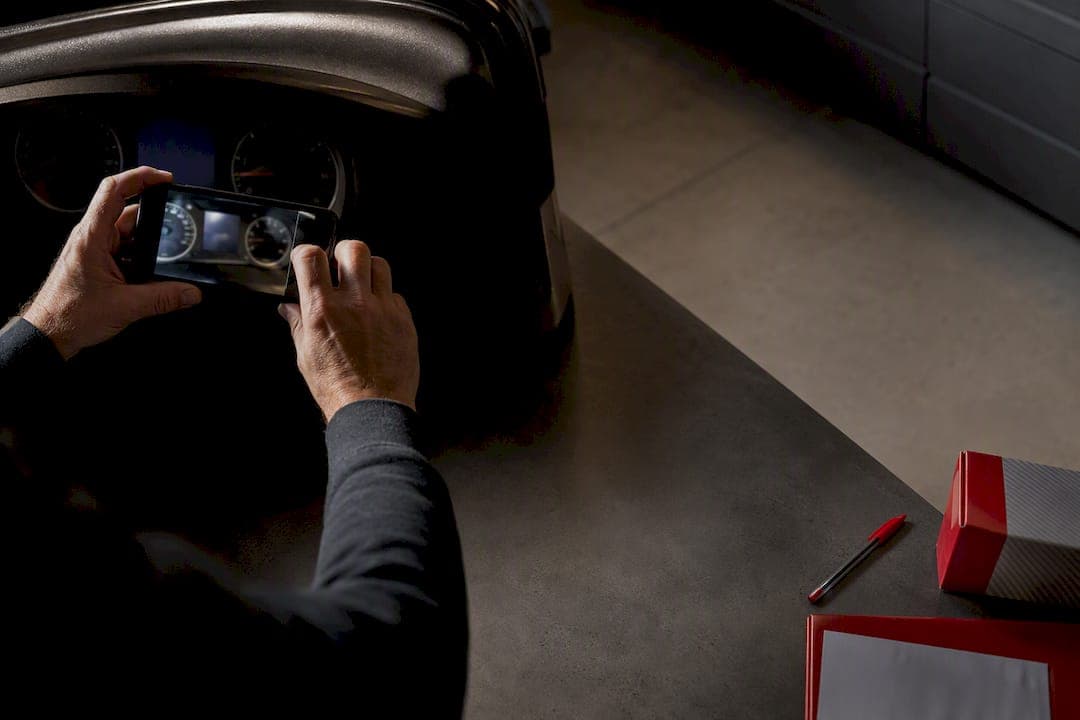
- Keep physical and digital copies of all receipts, photos of odometer readings, and technician signatures or statements for all maintenance performed.
- Use a systematic approach by recording each service in a spreadsheet and storing scanned documents in a cloud folder to prevent losing proof of maintenance.
- Dealerships typically provide the easiest-to-validate records, but independent shops and DIY work can also be compliant if properly documented with specific details.
- Carfax and similar vehicle history reports often miss independent and DIY work, so owners must build their own record trail for warranty protection and resale purposes.
Table of Contents
- What Maintenance Records Must Contain to Validate a Warranty Claim
- Who Can Perform Maintenance and What Proof Each Option Needs
- How to Build a Recordkeeping System That Actually Holds Up
- Why Your Records Might Not Show Up on Carfax
- What Manufacturers Actually Look for and the Red Flags That Trigger Denials
- How Long to Keep Records and What to Do When You Sell
- If Your Warranty Claim Gets Denied
- Why Meticulous Records Matter More Than People Think
- How Rpmwarranty Plans Connect to Your Maintenance Records
- Sources
- FAQ
What Maintenance Records Must Contain to Validate a Warranty Claim
A warranty reviewer isn't looking for a shoebox of gas station receipts. They're looking for a specific, verifiable pattern that shows you did the work on schedule, on your Range Rover, your F-150, or your Accord, the way the manufacturer specified.
Federal guidance under 40 CFR §85.2104 spells out what counts as real evidence of compliance: a maintenance log validated at roughly the right intervals, shop service records, or a detailed owner statement backed by parts receipts. Notice that a date by itself proves almost nothing. A receipt dated March 3 tells a claims reviewer nothing about whether your BMW X5 had 42,000 miles or 89,000 miles on it that day, and mileage is what ties the service to the manufacturer's actual maintenance schedule.
Every entry in your log should include:
- Date of service — the calendar day the work happened, not the day you dropped the car off.
- Exact odometer reading — not "around 60k," the actual number on the dash.
- Description of the work performed — "replaced transmission fluid and filter" beats "serviced transmission."
- Parts and fluids used, with part numbers when the invoice lists them (this matters a lot on a Porsche 911 or a Mercedes S-Class, where OEM-spec fluids are often a warranty condition).
- Service provider name and contact information — a shop name and phone number a reviewer could call if they had questions.
- Itemized invoice or receipt, not a credit card statement showing a lump total.
That combination, date plus mileage plus description plus proof of purchase, is what separates a real maintenance history from a folder of paper. It also protects you from the most common denial reason adjusters cite: an apparent gap in service that looks like a missed interval, even when the work actually happened.
A few supplementary documents go a long way toward making a thin file bulletproof. Photograph the odometer immediately before and after a service visit, timestamp included. Keep the parts packaging or box label if the shop hands it back to you; it corroborates the part number on the invoice. And whenever possible, get the technician's signature or printed name on the work order. On a Honda Pilot with a routine oil change, that level of detail might feel like overkill. On a high-end vehicle with an extended warranty covering the transmission or electrical system, it's the difference between an approved claim and a drawn-out dispute.
Who Can Perform Maintenance and What Proof Each Option Needs
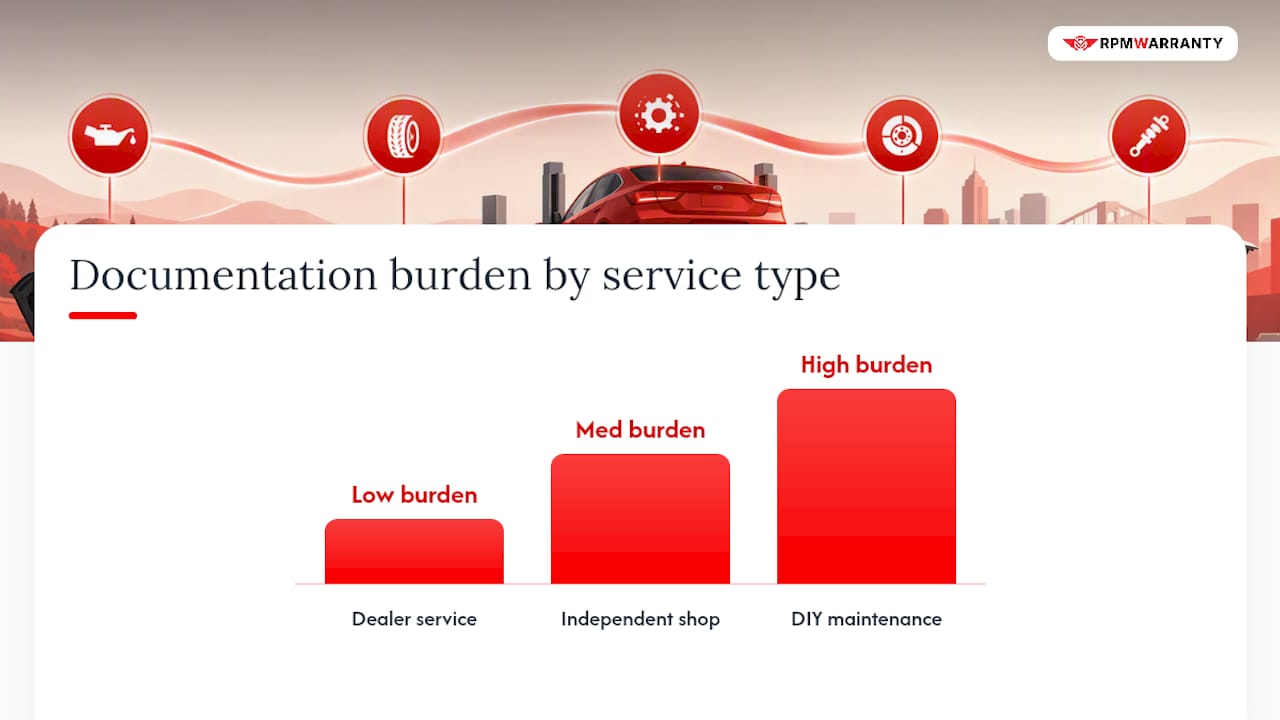
You do not have to service your vehicle at the dealership to keep your warranty valid. Under the Magnuson-Moss Warranty Act, a manufacturer generally cannot void your coverage simply because an independent shop, rather than the dealer, changed your oil or replaced a belt. The catch is that you still have to follow the maintenance schedule in your owner's manual, and you carry more of the documentation burden the further you get from the dealer network.
Dealer service records are the easiest to defend. Dealerships typically log the visit into their own system tied to your VIN, print a detailed invoice, and often report the service to third-party databases. If you own a Range Rover or a Mercedes-Benz and use the dealer for every service, your paper trail mostly builds itself.
Independent shop invoices require a little more attention on your part. Ask for:
- The shop's letterhead or business name and address on the invoice
- The exact mileage at the time of service
- A line-item list of parts and fluids used, not just a labor charge
- The technician's name, even handwritten, on the work order
DIY maintenance carries the heaviest documentation burden, and it's where most warranty disputes start. If you change your own oil filter on an F-150 or swap brake pads on a Civic, keep the parts receipt, take a dated photo of the odometer, and write the entry into your own log the same day. Some owners ask a friend with mechanical experience, or an independent technician, to sign that self-service log as a witness. It's not required, but it adds a layer of credibility a reviewer can't dismiss outright.
Pro Tip: Keep a $5 spiral notebook in your glove box specifically for DIY entries. A handwritten, contemporaneous log carries more weight than a memory reconstructed six months later when a claim gets questioned.
How to Build a Recordkeeping System That Actually Holds Up
Most owners don't lose warranty claims because they skipped maintenance. They lose them because they can't prove the maintenance happened. Fixing that takes a system, not good intentions.
Here's the workflow to follow at every single service visit, whether it's a $40 oil change on your Corolla or a $1,200 transmission service on your Porsche Cayenne:
- Record the date and odometer reading the moment the work starts, before the shop touches anything.
- Photograph the odometer as a timestamped backup to the written entry.
- Get an itemized invoice listing parts, fluids, part numbers, and labor separately.
- Log the part numbers into your master record, especially for anything warranty-sensitive like transmission fluid spec or engine coolant type.
- Ask for a technician signature or printed name on the work order.
- Scan or photograph the receipt and upload it to a dated cloud folder the same day, before it ends up crumpled in a cup holder.
For physical storage, a simple binder works fine: one tabbed section per vehicle, with labeled envelopes for original receipts sorted by date. For digital storage, create one folder per vehicle in a cloud service like Google Drive or Dropbox, named by VIN or license plate, with subfolders by year. Inside, keep scanned PDFs of every invoice and a single master spreadsheet log that mirrors your binder entry for entry.
Your master log doesn't need to be complicated. A basic spreadsheet with these columns covers almost every warranty scenario:
| Column | What Goes Here |
|---|---|
| Date | Calendar date of service |
| Odometer | Exact mileage reading |
| Service performed | Plain description of work |
| Parts/fluids | Part numbers and fluid specs |
| Provider | Shop name and phone number |
| Cost | Total from itemized invoice |
| Receipt location | File name or binder tab reference |
Pro Tip: Take five minutes right now to build this spreadsheet for your current vehicle, even if it's mostly blank. An empty template with the right columns is far easier to fill in retroactively from old receipts than trying to remember the structure later.
Set a recurring phone reminder to back up your digital folder every quarter. A cracked phone or a dead laptop shouldn't be the reason you lose four years of maintenance proof on your Mercedes GLE.

Why Your Records Might Not Show Up on Carfax
Vehicle history services depend entirely on what businesses choose to report. Dealerships and some large chains submit service data automatically, but a huge share of independent mechanics never do, and DIY work obviously never gets reported by anyone. That means a gap on a Carfax report doesn't necessarily mean a gap in maintenance. It usually just means the shop that did the work wasn't plugged into that reporting network.
Treat these services as supplemental, never as your primary proof. Build your own independent trail instead:
- Time-stamped odometer photos paired with each service
- Scanned receipts stored in dated, backed-up cloud folders
- Email confirmations from shops that schedule or invoice digitally
- A running log entry for every service, DIY or professional
If you're heading into a warranty claim or preparing to sell a vehicle with a strong service history, it can help to proactively send your compiled records directly to the claims adjuster or list them in the vehicle's listing, rather than waiting to be asked and hoping a database fills in the blanks for you.
What Manufacturers Actually Look for and the Red Flags That Trigger Denials
The regulatory standard is more specific than most owners realize. 40 CFR §85.2104 lists exactly what counts as acceptable evidence: a maintenance log validated at approximately the right intervals by a business that services vehicles, shop service records showing the work was done on schedule, or a detailed owner statement backed by parts receipts. A manufacturer cannot deny a claim purely because you lack a formal receipt. They have to show that a failure to maintain the vehicle actually caused the part to fail.
A manufacturer can't deny an emissions-related warranty claim solely because you don't have a receipt. They must demonstrate that noncompliance with the maintenance schedule directly caused the failure. But in practice, that burden of proof shifts onto the owner the moment a claim gets questioned.
That last point is the one owners underestimate. The law protects you on paper, but you're the one who has to produce the paperwork.
Common red flags that trigger a denial or a drawn-out review:
- Missing or inconsistent mileage entries between services
- Repairs performed after a failure, then mischaracterized as routine preventive maintenance
- Technician claims with no invoice, shop name, or contact information to verify them
- Long, unexplained gaps between scheduled services on high-mileage components like a BMW's cooling system or a Ford Explorer's transmission
Avoid all four by keeping technician contact details on file, itemizing every part on every invoice, and photographing the odometer at the start of each visit. OEM guides, including Toyota's own warranty and maintenance documentation, make clear that a missing receipt alone rarely sinks a claim. What sinks a claim is a failure that traces back to neglect, and no record to argue otherwise.
How Long to Keep Records and What to Do When You Sell
Keep every maintenance record for the entire time you own the vehicle, plus the full length of any factory warranty or extended coverage still active. That means a record from year one can still matter in year seven if a covered component fails late in a long-term plan.
When you sell:
- Hand the buyer a printed binder along with a digital copy on a USB drive or shared cloud folder.
- Flag the most recent major services, timing belt, transmission service, brake overhaul, so the new owner sees the intervals at a glance.
- Highlight any remaining transferable warranty coverage tied to those records.
Old receipts for unrelated, long-replaced parts (an air filter from six years ago, say) can be archived separately or discarded once the newer service supersedes them. Anything tied to a major component still under any warranty stays in the active file until that coverage ends.
If Your Warranty Claim Gets Denied
A denial isn't final. It's the start of a documentation fight you can usually win if your records are solid.
- Request the denial in writing, with the exact reason stated, not a verbal explanation over the phone.
- Gather your full file: dated log, itemized receipts, odometer photos, and any technician statements you have on hand.
- Ask the warrantor what specific evidence they say is missing or what caused the alleged noncompliance.
- Compare their stated reason against your owner's manual's actual maintenance schedule, since claims sometimes cite intervals that don't match what the manual requires.
- File a formal written appeal referencing your documentation directly, and cite the Magnuson-Moss Warranty Act if the denial rests solely on using a non-dealer shop.
- Escalate if the appeal fails. Contact your state's consumer protection office, file a complaint with the FTC, or pursue arbitration or mediation if your warranty contract includes that clause.
Every one of those steps depends on having the paperwork ready before you need it, not scrambling to reconstruct it after a denial letter arrives.
Why Meticulous Records Matter More Than People Think
Warranty disputes rarely come down to whether maintenance happened. They come down to whether it can be proven. A dated log with mileage and a receipt has settled arguments that a technician's memory alone never could, especially on components like transmissions and electrical systems where "preventive maintenance" and "post-failure repair" can look identical on paper. The habit is simple: date, mileage, receipt, every single time. Owners who treat that as routine rarely lose a claim over paperwork.
— Kenneth
How Rpmwarranty Plans Connect to Your Maintenance Records
If you're building a maintenance log because you're worried about protecting coverage, the plan you choose matters as much as the paperwork itself. Some extended warranty providers offer tiered coverage plans built around engine, transmission, electrical, and other high-cost components, plus roadside assistance, so a documented service history can help protect those investments.
Some warranty providers accept reasonable documentation for claims, including dated mileage entries, itemized receipts, and technician statements, which aligns with the recordkeeping system laid out above. Riders aren't left out either: the Full Throttle plan extends similar protection to motorcycles. If your vehicle is a Range Rover, a BMW, or an Accord well past its factory coverage, compare Elite, Advanced, and Essential protection plans and request a quote based on your vehicle's year, make, and model.
Sources
- eCFR — 40 CFR §85.2104 owners' compliance
- Auto warranties and auto service contracts — FTC
- Magnuson‑Moss Warranty Act overview
- Toyota Warranty & Maintenance guide (manufacturer example)
FAQ
Can I Look Up My Car's Maintenance History Online?
Partially. Services like Carfax only show maintenance that a reporting dealership or participating shop submitted, so independent and DIY work often never appears. Treat any online report as a supplement to your own records, not a replacement for them.
What Must Maintenance Records Contain?
At minimum, each entry needs the date, exact odometer reading, description of the work, and the parts or fluids used, backed by an itemized receipt. Federal guidance under 40 CFR §85.2104 lists this combination as acceptable evidence of maintenance compliance.
Do All Maintenance Records Show Up on Carfax?
No. Carfax and similar services depend on dealerships and participating shops choosing to report data, so many independent mechanics and virtually all DIY work stay off those reports. Keep your own dated log and receipts as your primary proof.
How Long Should I Keep Maintenance Records?
Keep full records for as long as you own the vehicle and for the entire length of any active factory or extended warranty. When you sell, pass a printed binder and a digital copy to the new owner, especially records covering major recent services.
Does Rpmwarranty Require Dealer Service Records for Claims?
No. Rpmwarranty accepts reasonable documentation, including dated mileage entries, itemized receipts, and technician statements, regardless of whether the service came from a dealer or an independent shop. Check current protection plans for specific coverage details by vehicle.