
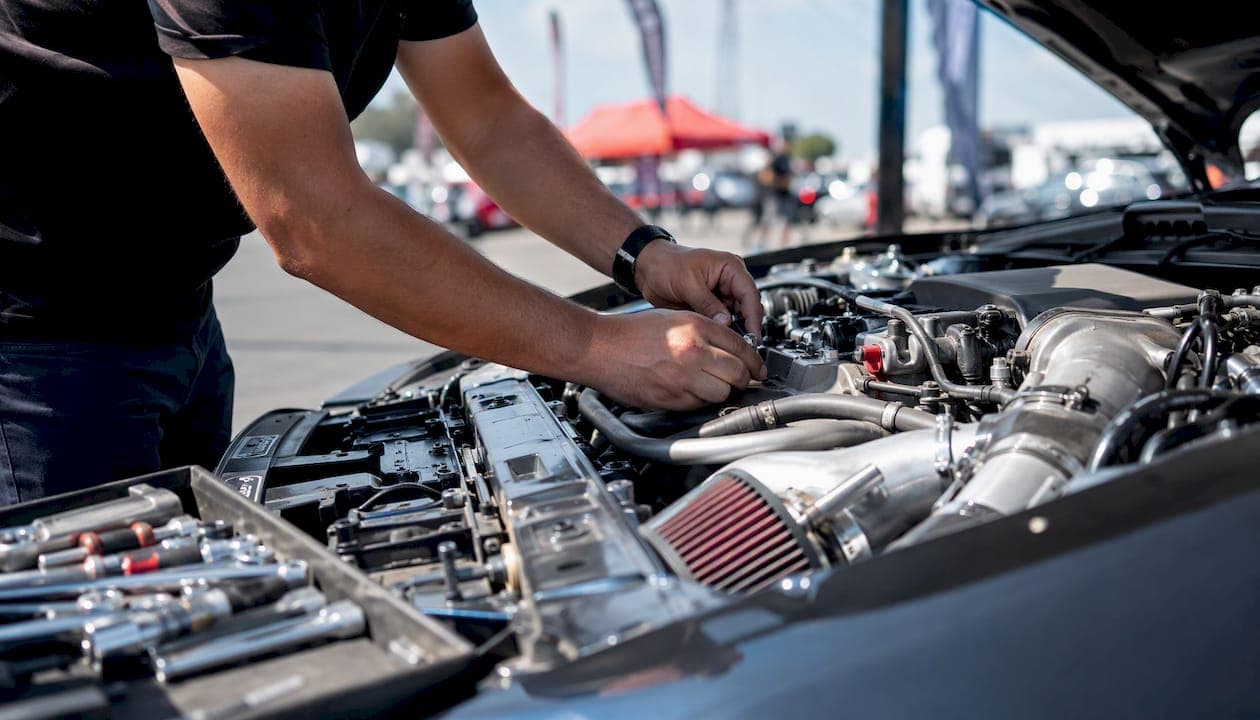
Modified cars can qualify for extended warranty coverage, but the path looks different than it does for a stock vehicle. The federal baseline comes from the Magnuson-Moss Warranty Act, which stops manufacturers from voiding your entire warranty just because you bolted on aftermarket parts. The Federal Trade Commission backs this up with its own consumer guidance. Providers like Rpmwarranty also offer tiered plans that can be customized once modifications are disclosed upfront.
That's the short version. The longer version depends on what you modified, how well you documented it, and whether you're buying a fresh extended service contract or trying to protect a factory warranty you already have.
Three things to do right now, before you read another word of theory:
- Save every receipt. Installation invoices, parts receipts, and dyno sheets are your best defense if a provider ever tries to blame a mod for an unrelated failure.
- Ask before you install. A quick pre-approval call with your warranty provider on a major mod (turbo, ECU tune, lift kit) can save you a denied claim months later.
- Read the exclusions section of your contract today. Don't wait for a claim to find out a "mod exclusion clause" already carved out your engine or suspension.
With those three steps handled, the rest of this guide walks through the legal groundwork, the real difference between a factory warranty and a purchased service contract, which mods actually trigger denials, and how to buy or protect coverage the smart way.
Key Takeaways
Modified cars can get extended warranty coverage, but federal law only protects factory warranties from blanket mod-based denials, while service contracts rely on disclosure, documentation, and contract-specific terms.
| Point | Details |
|---|---|
| Federal law limits factory denials | Magnuson-Moss requires manufacturers to prove a modification caused the specific failure before denying a claim. |
| Service contracts carry more mod risk | Extended warranties are service contracts with their own exclusion language, not covered by the same federal protections. |
| Documentation prevents disputes | Receipts, signed invoices, dyno sheets, and dated photos give you leverage if a provider questions a modification. |
| Rpmwarranty offers disclosure-based coverage | Elite, Advanced, and Essential plans can be customized around disclosed modifications during the enrollment process. |
Authoritative Resources for Modified Vehicle Owners
These are the primary sources behind the legal claims in this guide, useful if you're disputing a denial or want to read the underlying rules yourself. The Magnuson-Moss Warranty Act overview explains the federal causation standard in plain terms. The FTC's consumer guidance on auto warranties covers your rights when using independent shops or aftermarket parts. SEMA's consumer warranty enforcement page offers advocacy resources specifically for modified vehicle owners. And Rpmwarranty's protection plans page lays out the tiered coverage options discussed throughout this guide.
Table of Contents
- How Federal Law Treats Modified Cars and Extended Warranties
- Why Mods Matter More to Extended Warranties Than Factory Coverage
- Which Modifications Trigger the Most Claim Denials
- Protecting Your Coverage Before and After You Modify
- Buying an Extended Warranty for an Already-Modified Vehicle
- How RPM Warranty Approaches Modified Vehicles
- What to Do If Your Claim Gets Denied
- What Coverage for a Modified Car Actually Costs
- Get a Custom Quote for Your Modified Vehicle
- Frequently Asked Questions
- Sources
How Federal Law Treats Modified Cars and Extended Warranties
Manufacturers cannot void your warranty solely because you installed an aftermarket part or had work done outside the dealership. That's the core of the Magnuson-Moss Warranty Act, and it's been federal law since 1975. To deny a claim, the manufacturer or provider has to prove that a specific modification caused the specific failure you're claiming.
That burden of proof matters more than most car owners realize. Say you installed a cold air intake and your transmission fails two years later. A denial based on "you modified the car" alone doesn't hold up. The provider would need to show a direct mechanical link between that intake and the transmission failure, which in most cases doesn't exist. The FTC's guidance on auto warranties makes the same point about independent repairs: using a non-dealer shop for maintenance doesn't give a manufacturer grounds to deny coverage either.
The Magnuson-Moss Warranty Act requires manufacturers to prove causation before denying a claim tied to an aftermarket part. A blanket "modifications void your warranty" statement is not legally enforceable on its own.
The FTC isn't just publishing pamphlets and hoping companies comply. In 2022, the agency announced settlements against companies that told customers third-party parts or independent repairs would automatically void their coverage. That's a real enforcement action, not a theoretical protection. If a service writer tells you your warranty is dead because you swapped your intake manifold, you have federal law and recent precedent on your side when you push back.
Why Mods Matter More to Extended Warranties Than Factory Coverage
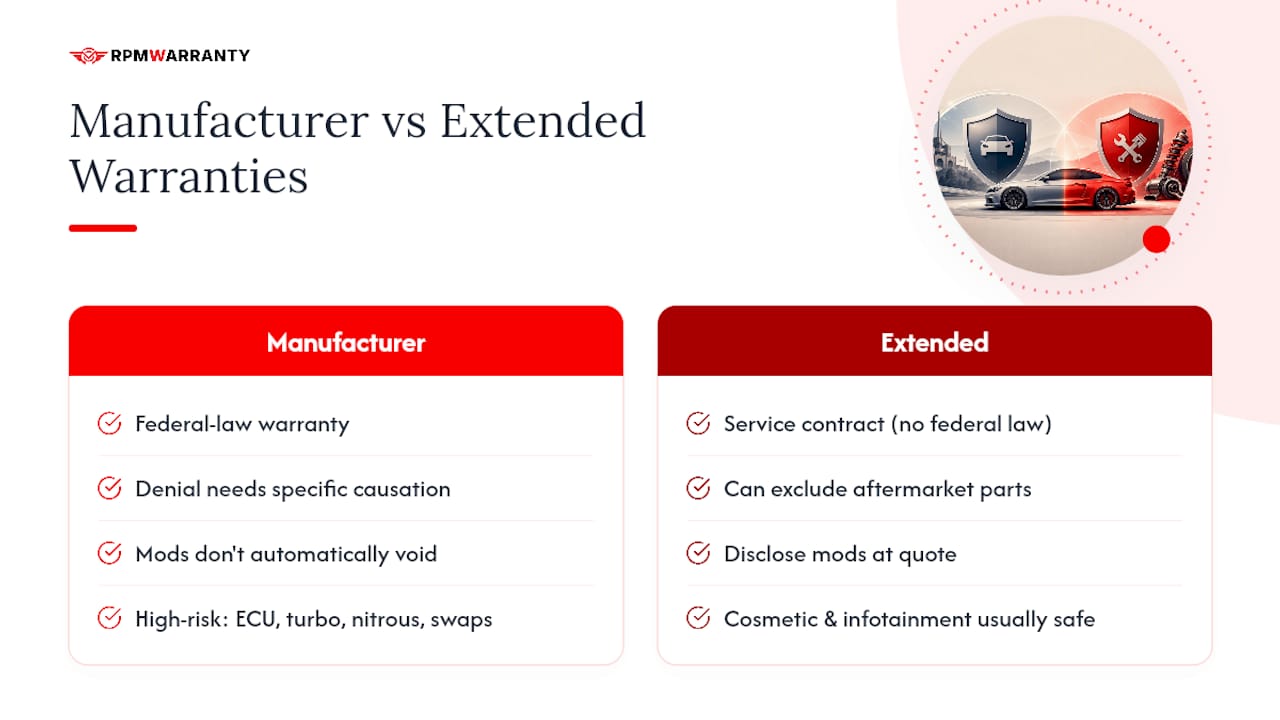
Your extended warranty gets scrutinized for modifications far more heavily than your factory warranty ever will, and the reason comes down to what kind of legal document you're actually holding. An extended warranty isn't a warranty in the legal sense at all. It's a service contract, and service contracts don't carry the same federal protections that Magnuson-Moss extends to factory warranties.
That distinction shows up in the fine print. Manufacturer warranties are bound by disclosure rules under the FTC's businessperson's guide to federal warranty law, which require clear "full" or "limited" labeling. Service contracts aren't required to follow that same framework, which gives providers more room to write exclusions specific to aftermarket parts, performance tuning, or off-road use.
| Feature | Factory Warranty | Extended Warranty (Service Contract) |
|---|---|---|
| Legal classification | Warranty under Magnuson-Moss | Service contract, separate legal category |
| Mod-related denial standard | Manufacturer must prove causation | Provider sets contract-specific exclusions |
| Typical mod language | General causation requirement | Named exclusions (ECU tunes, forced induction, lift kits) |
| Inspection before coverage | Rarely required | Often required for known modifications |
| Cancellation risk | Low, protected by federal law | Higher if mods weren't disclosed at signing |
Look for two clauses specifically when you're reading a service contract: the "modification exclusion" clause, which lists parts or changes not covered outright, and the "causation" clause, which spells out how the provider determines whether a mod caused a failure. Some contracts also bury language about required manufacturer endorsements for performance parts. If you own a modified Ford Mustang GT with a supercharger or a BMW M3 running a tune, this is exactly where a provider will draw the line between covered and excluded.
Which Modifications Trigger the Most Claim Denials
Not all modifications carry the same risk. Powertrain and drivetrain changes sit at the top of the denial list because they alter the mechanical stress the engine and transmission were engineered to handle. Cosmetic and infotainment changes rarely cause a problem because they don't touch anything a claims adjuster would connect to a mechanical failure.
Here's how the risk breaks down, ranked from highest to lowest:
- ECU tunes and remapping. Reflashing the factory tune on a Subaru WRX or a modified Volkswagen GTI is one of the fastest ways to draw scrutiny, since it directly changes fuel, timing, and boost parameters the engine was calibrated around.
- Turbochargers and superchargers. Adding forced induction to a naturally aspirated engine, like a Honda Civic Si, dramatically increases internal pressure and heat, and providers will look hard at any related engine failure.
- Nitrous oxide systems. Even occasional use can leave detectable residue and stress signatures that make a denial easy to justify.
- Engine swaps. Dropping a different engine into a chassis, common in the Honda and BMW enthusiast worlds, almost always requires disclosure and often falls outside standard coverage entirely.
- Oversized tires and altered gearing. Larger tires change load calculations on the drivetrain and can accelerate wear on components like CV joints and wheel bearings.
- Lift kits and suspension modifications. Popular on trucks and on off-road-oriented SUVs like a Range Rover or a Ford Bronco, these can shift stress onto steering and suspension components not designed for the new geometry.
- Altered braking systems. Upgraded calipers or rotors sound safe, but mismatched components can trigger disputes over ABS or stability control failures.
- Exhaust modifications that affect sensors. Aftermarket exhaust systems on a Mercedes-Benz or Porsche can throw off oxygen sensor readings, which sometimes cascades into unrelated electrical fault codes.
Reversible modifications carry meaningfully less risk than permanent ones. A cat-back exhaust you can swap back to factory in an afternoon is a much easier conversation with a provider than a built engine with forged internals. Keep the original parts if you can, and document the swap both ways.
Protecting Your Coverage Before and After You Modify
The single best thing you can do to protect coverage is document everything before you ever touch a wrench. Providers deny claims when they can't tell what happened to your vehicle; owners who keep a paper trail make that job easy for themselves and hard for the adjuster looking for a reason to say no.
Build a documentation habit around these items:
- Keep every receipt for parts and labor, including the shop's business information.
- Get a signed installation invoice from whoever did the work, not just a handwritten note.
- Choose manufacturer-approved or OEM-branded parts where they exist, especially for performance upgrades on vehicles like a Porsche 911 or a BMW M4.
- Call your dealer or provider for pre-approval before major upgrades, particularly engine or drivetrain work.
- Stay current on routine service intervals and keep those records too, since a lapse in maintenance is its own separate reason for denial.
- Pull a dyno sheet before and after any tune, which gives you a documented performance baseline.
- Take dated photos of the installation process, especially anything that gets covered up once the car is reassembled.
Pro Tip: Get a pre-modification inspection from an ASE-certified shop and ask them to put their findings in writing. If a claim dispute ever comes down to "did this part cause that failure," a dated, professional statement showing the vehicle's condition before the mod went in makes the causation argument almost impossible for a provider to win.
Buying an Extended Warranty for an Already-Modified Vehicle
You can buy extended coverage for a car that's already modified, and the process starts with full disclosure rather than trying to hide the mods and hope nobody notices. Providers that work with modified vehicles typically ask about performance changes during the quote process, then apply endorsements or adjusted terms based on what you tell them.
Before you sign anything, run through this checklist with any provider:
- Does the plan require a physical inspection? Some providers inspect modified vehicles before writing a policy; others rely entirely on your disclosure.
- What exclusions apply to my specific mods? Ask for the exact language, not a verbal summary.
- Are endorsements or add-ons available for performance parts? Some plans let you pay extra to bring a tuned engine or upgraded turbo under coverage.
- Is there a waiting period before coverage becomes active? This matters if you're modifying the car soon after buying a plan.
- How does the contract treat pre-existing conditions? Make sure a prior issue on the car doesn't get lumped in with your new modifications.
- Is the plan transferable if you sell the vehicle? This affects resale value on a heavily modified build.
Pay close attention to three specific clauses while reading the contract: the mod exclusion clause (what's flatly not covered), the causation clause (how they'll determine if your mod caused a failure), and any pre-existing condition language that could be stretched to cover damage from before your policy started. Expect pricing to shift too. Higher-risk mods like forced induction or engine swaps commonly come with a higher deductible, a higher premium, or specific component exclusions rather than a flat rejection.
How RPM Warranty Approaches Modified Vehicles
Rpmwarranty offers tiered coverage that can be customized once you disclose your vehicle's modifications during the quote process, rather than issuing a blanket denial for anything aftermarket. The three plan tiers map to different modification scenarios depending on how extensively your car has been changed and what kind of protection you're after.
The Essential tier suits owners with minor, reversible modifications, like a cosmetic trim upgrade or an infotainment swap on a Honda Accord. The Advanced tier fits owners running moderate performance mods who want broader component protection, covering things like electrical and cooling systems alongside standard mechanical parts. The Elite tier is built for owners who want the most comprehensive protection available, useful for high-value vehicles like a Range Rover Sport or a Mercedes-Benz with meaningful drivetrain or engine work already done.
When you disclose modifications during enrollment, Rpmwarranty can factor those changes into your plan rather than leaving you to discover an exclusion the day you file a claim.
Enrollment follows four steps: a consultation where you describe your vehicle and its modifications, plan selection based on your coverage goals, customization where you add endorsements for specific components, and a final agreement that spells out exactly what's covered. When you apply, write a short disclosure that lists each modification, the installation date, and the shop that performed the work. That single document does more to protect you at claim time than almost anything else you can hand a provider.
What to Do If Your Claim Gets Denied
Ask for the denial in writing the moment it happens, and specifically ask what evidence the provider is relying on to connect your modification to the failure. A verbal denial over the phone isn't good enough, and a provider that can't produce specific causation evidence is on shaky legal ground under Magnuson-Moss.
Work through these steps in order:
- Request the complete repair and service records the provider used to make its decision.
- Get an independent mechanic's report, ideally from an ASE-certified shop unaffiliated with the provider, evaluating whether your mod actually caused the failure.
- File a formal appeal with the provider, attaching your documentation and the independent report.
- If a factory warranty is involved, escalate directly to the manufacturer's customer service or warranty division.
- File a complaint with the FTC if you believe the denial violates Magnuson-Moss protections.
- Contact your state Attorney General's consumer protection division, since many states have their own lemon-law and warranty enforcement offices.
- Reach out to SEMA's consumer warranty resources, which advocates specifically for enthusiasts and can point you toward additional escalation channels.
When you file any of these complaints, include your written denial, your repair history, your independent mechanic's report, and copies of every receipt tied to the disputed modification. The more paper you bring, the faster these complaints tend to move.
What Coverage for a Modified Car Actually Costs
Expect to pay more for coverage on a modified vehicle, or to need specific endorsements added to a standard plan, rather than assuming a flat universal rate applies. Pricing depends on the type of modification, your vehicle's make and model, current mileage, the plan tier you choose, your deductible, and what a pre-purchase inspection turns up.
High-risk categories tend to see the biggest premium adjustments. Forced induction setups, full engine swaps, and any vehicle used commercially typically carry higher premiums or a higher deductible than a stock daily driver would. A modified Ford F-150 used for towing work, for example, faces different pricing considerations than the same truck used purely for weekend trips. Luxury and performance vehicles like a Porsche Cayenne or a BMW X5 with aftermarket suspension work can also see adjusted pricing given the higher cost of parts and labor if something does fail.
Exact pricing varies widely by vehicle, region, and provider, so treat any number you see online as a rough starting point rather than your quote. The most reliable way to know what your specific modified vehicle will cost is to run it through Rpmwarranty's free quote tool, which factors in your actual mods, mileage, and plan preferences instead of a generic estimate.
Balancing Performance Goals With Warranty Protection
Documentation is the difference between a modified car that keeps its coverage and one that loses it at the worst possible moment. Owners who treat their receipts, dyno sheets, and installation invoices as seriously as their horsepower numbers rarely lose a claim fight, because there's nothing left for a provider to argue about.

Reversible modifications deserve more attention than most owners give them. A tune you can flash back to stock, an exhaust you can swap out in an afternoon, a suspension setup with the factory parts still in the garage. Those choices cost you a little convenience but buy you enormous leverage if a warranty dispute ever comes up. My clear recommendation for most modified car owners: disclose everything to your provider upfront, keep every piece of paper related to the work, and if performance is a real priority for you, choose a higher coverage tier that's built to handle the added complexity rather than hoping a basic plan stretches to cover it.
Get a Custom Quote for Your Modified Vehicle
Rpmwarranty builds plans around what you actually drive, including vehicles that already have performance parts, suspension work, or engine modifications on them, as long as you tell them what's been done. That's the real advantage here: instead of guessing whether a generic plan will hold up at claim time, you disclose your mods during the quote process and get coverage terms that already account for them.
Getting started takes four steps. First, request a free quote and describe your vehicle's year, make, and model. Second, disclose every modification you've made, including installation dates and the shop that did the work. Third, review the Elite, Advanced, and Essential plan tiers and pick the one that matches how you actually use and modify your car. Fourth, finalize your agreement once you've confirmed which components and endorsements are included. If you drive a Volkswagen with performance upgrades, Rpmwarranty's Volkswagen-specific coverage page is a good place to see how model-specific plans are structured. Start your quote today and find out what coverage actually looks like for the car you built.
Frequently Asked Questions
Does modifying my car automatically void the factory warranty? No. Under the Magnuson-Moss Warranty Act, a manufacturer must prove your specific modification caused the specific failure you're claiming before it can deny coverage. A blanket "mods void your warranty" statement isn't legally enforceable on its own.
What's the difference between a manufacturer warranty and an extended warranty for a modified vehicle? A manufacturer warranty is a legal warranty protected by federal law. An extended warranty is a service contract that isn't bound by the same protections, so it can include specific exclusions for aftermarket parts.
Which modifications are most likely to cause a claim denial? ECU tunes, turbochargers, superchargers, nitrous systems, and engine swaps carry the highest risk because they directly affect powertrain stress. Cosmetic and infotainment changes rarely cause problems.
Can I still buy an extended warranty for a car that's already modified? Yes, in many cases, as long as you disclose the modifications during the quote process. Providers may apply endorsements, adjusted pricing, or specific component exclusions based on what you tell them.
What should I do if my warranty claim gets denied because of a modification? Request a written denial and ask for the specific causation evidence the provider relied on. Gather your repair records, get an independent mechanic's report, and file an appeal. If the denial seems unlawful, you can report it to the FTC or your state Attorney General.
This article provides general information about extended warranty options and is not legal advice. Confirm specific contract terms and your legal rights with the warranty provider or a qualified professional before making a purchase decision.
This article is general information, not a substitute for advice from a qualified lawyer. Consult a qualified legal professional about your own circumstances before acting on anything here.
Sources
- Magnuson-Moss Warranty Act
- What is the difference between a manufacturer's warranty and an extended vehicle warranty or service contract?
- Auto Warranties, Routine Maintenance, and Repairs: Is Using the Dealer a Must? (FTC guidance)
- FTC says companies’ warranty restrictions were illegal | Consumer Advice
- Consumer warranty information & enforcement | SEMA