
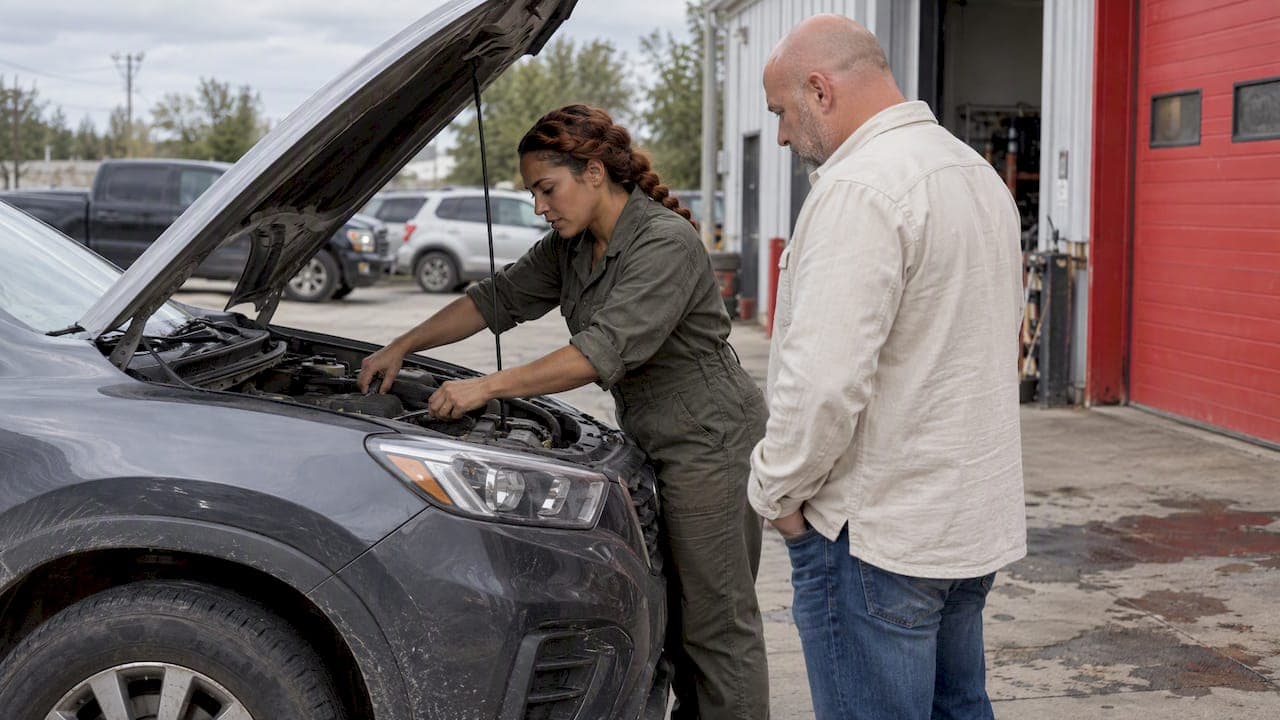
Yes, you can usually get warranty repairs out of state, but how easy it is depends on which kind of warranty you hold. A factory warranty travels with the vehicle to any authorized dealer of that brand. An extended warranty, which is legally a service contract, is only as portable as its fine print. Some contracts let you use any licensed repair shop. Others tie you to a network or a single dealer, and that can leave you stranded 800 miles from home.
This guide covers both cases. It also covers what changes when you drive a Range Rover, BMW, Mercedes-Benz, Porsche, Ford or Honda, and exactly what to do when a warning light comes on in a state you don't live in.
TL;DR
- Factory (manufacturer) warranties are honored by any franchised dealer of the same brand in any state. You don't need the dealer that sold you the car.
- Extended warranties are service contracts, not warranties under federal law, and some restrict where you can have repairs done. Confirm in writing that you can use any ASE-certified mechanic nationwide.
- Before any teardown, get authorization from your provider. If the failure isn't covered, you may owe the diagnostic labor.
- Luxury and high-tech vehicles need the most careful reading: air suspension, infotainment, driver-assist sensors and hybrid parts are often excluded unless listed by name.
- Lemon laws are state-based, so moving or buying out of state can change your rights.
Table of Contents
- Factory warranty vs. extended warranty: two different rules
- Does buying a car in another state change your warranty?
- Can you use any shop under warranty?
- The fine print that decides out-of-state coverage
- What to do when your car breaks down out of state
- Luxury and high-end vehicles: what to check by make
- A worked example: a road trip gone wrong
- How to compare plans before you buy
- Our perspective on out-of-state repairs
- Coverage built to travel with you
- Common mistakes with out-of-state claims
- FAQ
- Sources
Factory warranty vs. extended warranty: two different rules
Most confusion about out-of-state repairs comes from treating every "warranty" as the same thing. They aren't.
A manufacturer's warranty is a promise from the carmaker to fix certain defects during a set period. It is included in the price of a new vehicle. Because the promise comes from the brand and not from the individual dealership, any franchised store of that brand can perform covered work. If you bought a Ford in Ohio and the transmission acts up in Arizona, a Ford dealer in Arizona can handle it.
An extended warranty is usually a vehicle service contract. The FTC explains that these are sometimes called extended warranties, but they are not warranties as defined by federal law. They are optional agreements to pay for certain repairs. The CFPB describes them as covering costs above or after the manufacturer's warranty. Who can perform the work, how claims are paid and what is excluded all live in the contract itself.
That is why two drivers with "a warranty" can have very different experiences at the same shop in the same town.

Does buying a car in another state change your warranty?
For the factory warranty, no. The coverage follows the VIN, and franchised dealers of the brand service it regardless of where the sale happened. What can change is your paperwork and your legal remedies:
- Registration and inspection. Your home state's rules apply once you register the car there.
- Lemon law protection. These laws are enforced at the state level and generally apply to vehicles sold or registered in that state. Thresholds differ, but they often hinge on repeated repair attempts for the same defect or a long total time out of service. If you buy out of state, check which state's law governs before you assume you're covered.
- Extended contracts. Some contracts sold by a dealer are tied to that dealer's repair network. If you moved away from that dealer, the plan can lose most of its practical value.
Can you use any shop under warranty?
The federal Magnuson-Moss Warranty Act sets baseline standards. In general, a warrantor can't void your coverage just because routine maintenance was done by an independent shop, unless the work was done improperly or with unauthorized parts. There is an important exception: for a warranty that provides repair at no charge, the warrantor can require that you use specific repair facilities. That is why factory warranty repairs go to franchised dealers, while oil changes and brake pads at a good independent shop usually don't threaten your coverage.
Keep every receipt and record. If a claim is ever disputed, documented maintenance is your best evidence.
The fine print that decides out-of-state coverage
When you read an extended warranty contract, these are the clauses that determine whether it works away from home.
Repair facility rules
The FTC warns that some service contracts limit your choice of repair facility, including to the dealer that sold the vehicle or a specific network. Look for wording like "any licensed repair facility," "any ASE-certified mechanic," or "nationwide." If the contract names a network, ask how many shops are in the states where you travel or plan to move.

Authorization before work starts
Most contracts require the shop to call the provider before repairs begin. Out of state, this matters more, because you can't just drive the car back to the shop that knows your plan. Ask whether the provider pays the shop directly or reimburses you after you pay.
Diagnostic and teardown labor
If a mechanic has to take an engine apart to find the problem and the failure turns out not to be covered, you may be responsible for labor on both the teardown and the reassembly. The CFPB notes this can cost thousands of dollars. Before approving a teardown away from home, ask the provider in writing whether the suspected failure is covered.
Exclusions
The FTC has warned that some third-party sellers misrepresent coverage, and that exclusions can be buried in the contract. Ask for the full written contract and read the exclusions before you pay anything. If the contract doesn't match what the salesperson described, walk away.
Roadside and rental benefits
Out-of-state breakdowns usually come with a tow, a hotel night or a rental car. Check whether towing is included, how far, and whether rental reimbursement has a daily cap and a per-claim limit.
What to do when your car breaks down out of state
- Get to safety and stop driving if a warning light signals serious trouble. Driving on can turn a covered repair into a denied one.
- Call roadside assistance if your plan includes it. Ask where the vehicle will be towed.
- Identify which warranty applies. Is the car still under factory coverage, or does your extended plan apply? Many drivers have both in different parts.
- Choose a qualified shop. For factory coverage, search for a franchised dealer of your brand. For an extended plan, check your contract for approved shops or the "any ASE-certified" clause.
- Call your provider before authorizing repairs. Give them the shop name, the VIN, the mileage and the diagnosis.
- Get the estimate and cause of failure in writing. Note what the shop says is covered and what is not.
- Approve diagnostic work only after confirming the cost rules. See the teardown note above.
- Keep all paperwork: invoices, repair orders, maintenance records and call notes with dates and names.
If the shop cannot fix the problem after several attempts, remember that lemon law remedies are set by state and generally apply to new vehicles within specific time and mileage limits. See your state attorney general's consumer protection office or an attorney who handles lemon law claims in your state.
Luxury and high-end vehicles: what to check by make
Premium vehicles combine expensive parts with complex electronics, so out-of-state repairs carry more risk. The FTC's guidance is that wear-and-tear items and advanced electronics may be excluded, so if a component isn't listed as covered, assume it isn't. Below are the systems worth checking by name for each brand, and the questions to ask. These are contract checks, not claims about how often any model fails.
| Make | Features worth confirming are covered | Out-of-state question to ask |
|---|---|---|
| Range Rover | Air suspension components, terrain response and transfer case, infotainment and digital cluster, cooling system | Will the provider authorize a shop that works on Land Rover products if there is no dealer nearby? |
| BMW | Turbocharged engines, iDrive and display modules, adaptive suspension, driver-assist sensors, cooling components | Are electronic modules and sensors listed by name? |
| Mercedes-Benz | Air suspension, 9-speed or dual-clutch transmissions, MBUX infotainment, mild-hybrid and plug-in hybrid systems | Does the contract cover hybrid battery and drive components specifically? |
| Porsche | Dual-clutch PDK transmission, turbo and engine components, adaptive suspension, cooling, electronics | Is a specialist shop acceptable for authorized repairs? |
| Ford | EcoBoost engines, 10-speed automatic, SYNC infotainment, hybrid systems on F-150 and Maverick, high-tech safety sensors | Are infotainment and safety sensors covered or excluded? |
| Honda | CVT and automatic transmissions, hybrid and Accord/CR-V hybrid systems, infotainment, steering and suspension | Is the CVT covered as a transmission component? |
Range Rover and Land Rover models
Range Rover, Range Rover Sport and Velar owners tend to ask about air suspension, which is a high-cost system on any vehicle that has it. Ask whether the air springs, compressor, height sensors and control module are each listed. A Range Rover also has a lot of electronics, from the digital instrument cluster to the touchscreen and camera systems. If you travel through rural areas where the nearest brand dealer is hours away, the contract's repair-shop wording matters more than the price.
BMW
BMW's turbocharged engines, adaptive suspension and iDrive electronics make it a clear example of why you read the component list. Ask whether the contract covers the turbocharger, cooling system parts, electronic control modules and driver-assist sensors. If you drive a 3 Series, X5 or an electrified model, ask separately about the hybrid or high-voltage components.
Mercedes-Benz
Mercedes models such as the C-Class, E-Class, GLE and S-Class carry air suspension on many trims, plus large infotainment and driver-assist packages. Confirm that these are listed. Plug-in hybrid versions add battery, charger and electric drive components that general plans often treat separately.
Porsche
Porsche owners often drive their cars for pleasure and take them on road trips, which makes out-of-state coverage a real concern. Ask about the PDK transmission, turbocharged engines on the 911 and Macan, adaptive suspension and cooling parts. Also ask about track use: many contracts exclude damage from racing or competition, so read that clause if you attend driving events.
Ford
Ford trucks and SUVs like the F-150, Explorer and Bronco combine turbo engines, multi-speed transmissions and large touchscreens. Ford has a large dealer network across all states, which helps with factory coverage. For an extended plan, ask whether the contract covers the transmission, the infotainment system and the sensors behind features like adaptive cruise control.
Honda
Honda's reputation for reliability doesn't mean parts are free once the factory coverage ends. Ask whether continuously variable transmissions, hybrid system components, power steering and infotainment screens are covered. Honda owners often keep cars past 100,000 miles, so check mileage limits too.
Other makes
We also write guides to specific brands. If you drive a Volkswagen, a Hummer, a Lotus or another specialty vehicle, the same rules apply: list your high-cost systems and check each one against the contract.
A worked example: a road trip gone wrong
Imagine you live in Georgia and drive an out-of-warranty SUV to Colorado. A coolant warning appears in the mountains. Here is how a well-prepared owner handles it.
- You pull over, shut the engine off and call the roadside number on your plan.
- The vehicle is towed to a licensed shop. Because your contract allows any ASE-certified mechanic, you don't have to find a specific dealer.
- Before the shop starts work, you call your provider with the VIN and mileage. The shop shares its diagnosis.
- The provider authorizes the repair for covered parts and tells you what you owe, such as a deductible.
- You keep every document and file a rental reimbursement request if your plan includes one.
Now imagine the same trip with a plan that requires a specific dealer in Georgia. You either pay out of pocket in Colorado and fight for reimbursement or have the car towed home. The difference is one clause in the contract, which is why we recommend reading it before you buy.
How to compare plans before you buy
For a decision this size, use criteria and not slogans:
- Where can I get repairs? Ask for the exact wording: any licensed shop, any ASE-certified mechanic, or a limited network.
- How are claims paid? Direct payment to the shop is easier than reimbursement, especially away from home.
- Which components are named? Engine, transmission, cooling, electrical, steering, suspension, hybrid and high-tech parts should each be listed.
- What is excluded? Read this section first.
- What happens during diagnosis? Know who pays if the problem isn't covered.
- What extras are included? Roadside assistance, towing and rental reimbursement matter most on the road.
- Can you take time? The FTC advises against making the purchase on the spot in a finance office. Ask for the full contract and compare at home.
If you are comparing types of providers, the main options are the manufacturer's own plan, a dealer-sold plan and an independent plan sold directly. Each has trade-offs on repair-shop choice and price. Whatever you choose, get the contract in writing and read it.
Our perspective on out-of-state repairs
We built our plans around a simple observation: people don't break down where it's convenient. A plan that works only near the dealer that sold it is a plan that fails the moment you take a vacation, relocate for a job or send a car off to college with your kid.
That is why our coverage is designed to work nationwide, with access to ASE-certified mechanics, and why we put the repair-shop question at the center of every conversation. We also explain the terms in plain language, and our claims process is built for fast decisions: approvals typically within 24 to 48 hours. We'd rather you ask hard questions up front than discover a restriction on the side of a highway.
For higher-end vehicles, we pay particular attention to the components owners worry about: engines, transmissions, cooling, electrical, steering, suspension, hybrid systems and high-tech electronics. When you request a quote we look at your vehicle's year, make and model, then customize coverage to fit it and your budget. Our process has four steps: consultation, plan selection, customization and a final agreement.
My advice is the same one I'd give a friend: read the contract before you pay, and read the exclusions first.
— Kenneth
Coverage built to travel with you
Our Elite, Advanced and Essential plans give you tiered coverage options, with roadside assistance and rental reimbursement available, so you can match protection to your vehicle and budget. You can compare them on our protection plans page, or request a free quote for your exact year, make and model. Motorcycle riders can look at our Full Throttle motorcycle plan, since bikes are even more likely to travel long distances. Plan prices are not published, so a quote is how you see your number.
Common mistakes with out-of-state claims
- Authorizing work before calling the provider. Many contracts won't reimburse repairs approved without prior authorization.
- Assuming the factory warranty and extended plan work the same way. Dealers handle factory claims. An extended plan follows its own contract.
- Skipping maintenance records. Missing records give a provider a reason to dispute a claim.
- Approving a teardown without cost clarity. Ask who pays if the failure isn't covered.
- Buying under pressure. The FTC recommends reviewing the full contract first, not agreeing to it in a finance office.
- Trusting verbal promises. If the contract doesn't match what you were told, don't sign.
FAQ
Will a dealership in another state honor my factory warranty?
Yes. Manufacturer warranties are honored by franchised dealers of the same brand, wherever the car was originally sold. Bring your VIN and maintenance records, and call ahead to book service since appointments can take days at busy stores.
Can I get my car repaired anywhere under warranty?
It depends on the warranty. For free repairs under a factory warranty, the manufacturer can require franchised dealers, per the federal warranty rules. For an extended plan, your contract decides: some allow any licensed shop and others limit you to a network. Read that clause before you buy.
What happens if my car is under warranty and they can't fix it?
Keep returning it and keep every repair order. State lemon laws can provide a refund or replacement after a reasonable number of failed attempts, often tied to repair attempts or days out of service. Details vary by state, so check your state's rules or speak with a lemon law attorney.
Does moving to a new state cancel my extended warranty?
Not automatically, but your plan may be less useful if it is tied to a dealer or network near your old home. Check the repair-facility clause, ask your provider about relocation and update your address in writing.
Who pays if the shop finds the problem isn't covered?
Usually you do, for diagnostic work and sometimes for teardown and reassembly labor. Ask your provider whether the suspected failure is covered before approving that work.
Sources
- Auto Warranties and Auto Service Contracts, FTC Consumer Advice
- What to know about auto service contracts and extended warranty scams, FTC
- What is an extended warranty or vehicle service contract? CFPB
- Servicemembers, arm yourself with basic car buying skills, CFPB
- 15 U.S. Code § 2304, Federal minimum standards for warranties, LII
- Lemon, Wex, LII
- FTC Consumer Advice