
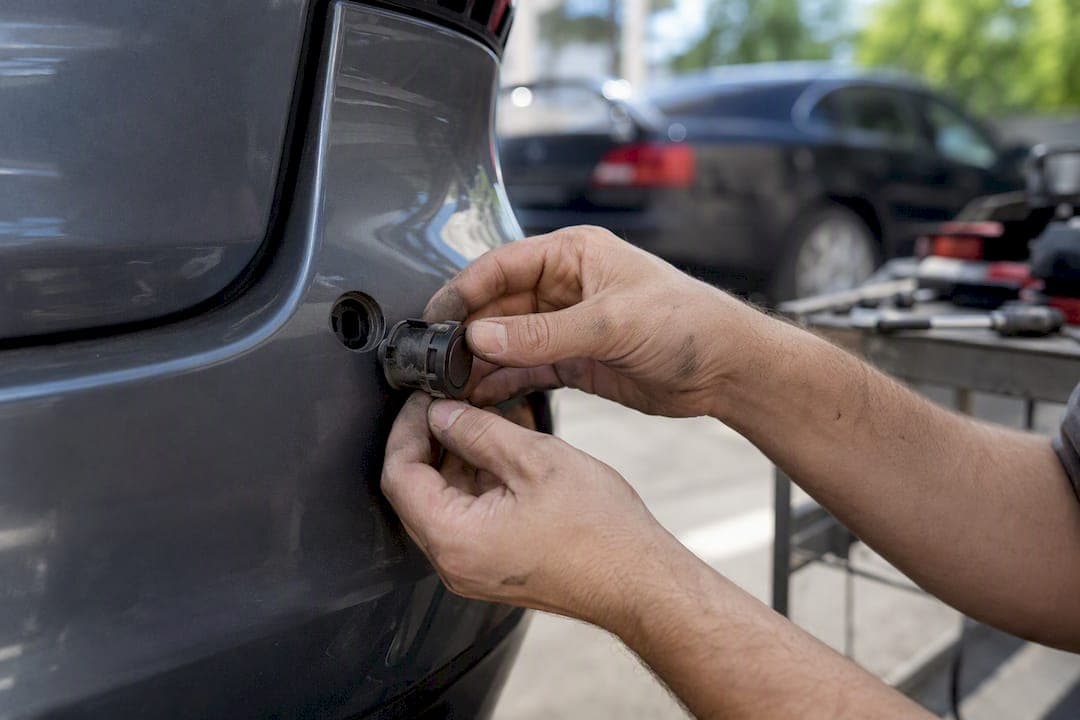
Factory-installed parking sensors are typically covered when a manufacturing defect causes the failure, and denied when the damage traces back to a curb strike, a pothole, or aftermarket bodywork. That's the whole verdict in one sentence, but the fine print decides which side of the line your claim lands on.
- Defect vs. damage: a sensor that fails from a wiring or module fault is usually covered; one cracked by a parking bump usually isn't.
- Factory vs. aftermarket: sensors installed at the factory follow your new-vehicle warranty terms; sensors added later by a body shop follow whatever warranty that shop offered.
- Extended service contracts, including plans from Rpmwarranty, can add electronics and ADAS coverage that fills gaps once the factory warranty runs out.
Key Takeaways
Parking sensor warranty coverage depends almost entirely on whether the failure is a manufacturing defect or external damage, and proving which one it is requires a diagnostic scan and clean documentation.
| Point | Details |
|---|---|
| Defect beats damage | Manufacturing defects typically get covered; impact, corrosion, and wear typically don't. |
| Get the scan in writing | A module readout costing roughly $60 to $130 often decides the outcome of a claim. |
| Watch the calibration paper trail | Any prior sensor or bumper work needs a recalibration receipt to support a future claim. |
| Know your cost baseline | Sensor repairs range from $80 for a single part to over $1,300 for radar units. |
| Extended plans fill the gap | Rpmwarranty's tiered plans can extend electronics and ADAS coverage past the factory warranty. |
Table of Contents
- What Manufacturer and Extended Warranties Usually Cover for Parking Sensors
- Why Do Warranty Claims for Parking Sensors Get Denied?
- What Do Dealers Check to Prove a Sensor Defect?
- What Do Parking Sensor Repairs and Recalibration Cost?
- How Do You File a Parking Sensor Warranty Claim?
- How Do Extended Warranties Handle Parking Sensor and ADAS Coverage?
- Rpmwarranty: Getting Parking Sensor and ADAS Coverage Sorted Before You Need It
- Sources
What Manufacturer and Extended Warranties Usually Cover for Parking Sensors
A manufacturing defect means the part failed because of how it was built or installed at the factory, not because something hit it. Automakers apply that same standard to parking sensors and the control modules that run them. A sensor that stops transmitting data with no impact history, no corrosion, and no prior repair work is a strong candidate for a defect claim.
Factory-installed sensors matter here because they're built into the vehicle's original warranty paperwork. Swap in an aftermarket sensor after an accident, and you've likely stepped outside that coverage entirely.
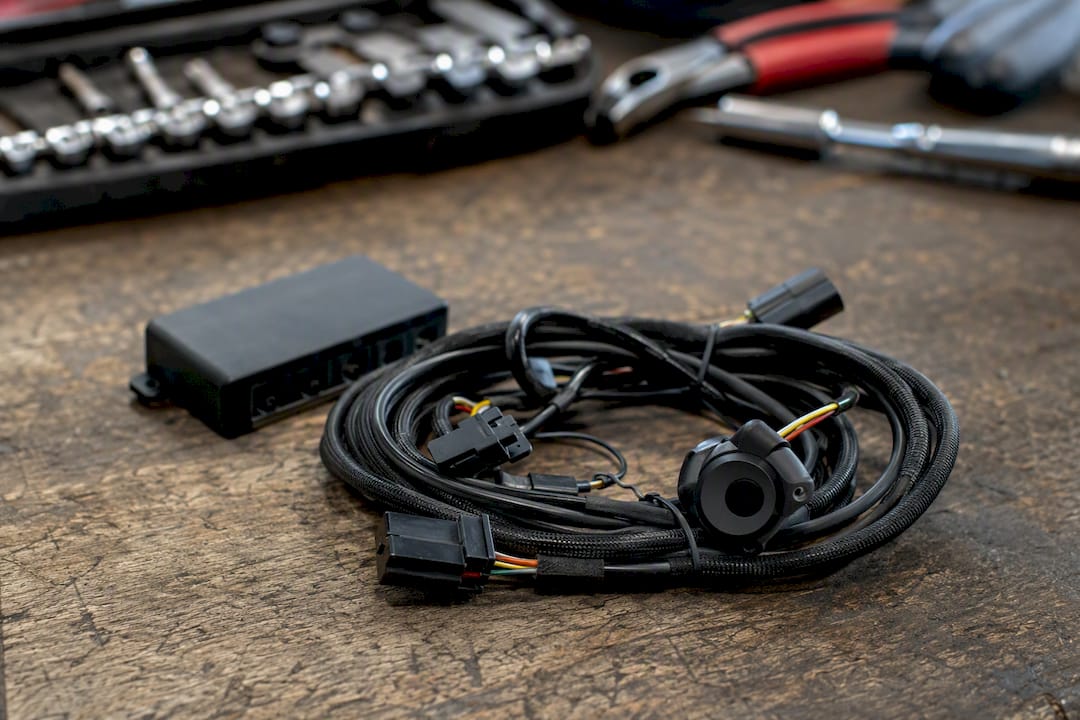
Owner's manuals often add a wrinkle: many manufacturers label parking-distance warnings as a "supplemental" feature. Kia's owner documentation, for example, states plainly that the system doesn't cover accidents caused by its limitations, and that phrasing shows up across other brands too.
Extended plans vary widely in how they treat this technology:
- Some list "electronics" as a broad category that includes sensors and modules.
- Others specifically name ADAS components like cameras and radar units.
- A few exclude calibration labor even when they cover the part itself.
Read the contract language before assuming any of these apply to your car.
Why Do Warranty Claims for Parking Sensors Get Denied?
Most denials trace back to four patterns, and once you know them, you can often tell in advance whether your claim has a real shot.
- Impact damage: a sensor cracked by a low-speed bump reads as external damage, not a defect, even if the crack seems minor.
- Aftermarket work: bodywork or sensor swaps done outside the dealer network can void the original coverage on that component.
- Wear and environmental exposure: corrosion from road salt, or connector degradation over years of use, usually falls under normal wear and tear.
- Supplemental-feature language: because manufacturers frame parking sensors as an aid rather than a guarantee, they often deny liability for detection misses tied to the system's known limitations rather than an actual part failure.
Owner forums back this up with real examples. One PistonHeads discussion shows dealers pointing to "external influence" clauses even when the owner sees no visible damage at all.
Pro Tip: Ask the service writer to cite the exact warranty clause used to deny your claim, in writing. Vague verbal denials often don't hold up once you push back with documentation.
What Do Dealers Check to Prove a Sensor Defect?
Diagnosis is where most claims are won or lost, and it starts long before anyone touches a wrench.
- Module scan first. A technician pulls live data from the park-assist module to see whether the fault sits at the sensor, the wiring, or the module itself.
- Photo documentation. Clear images showing no cracks, no scrapes, and no corrosion around the sensor housing help rule out external damage.
- Pattern analysis. When several sensors fail simultaneously, that points toward a module or wiring problem rather than four unrelated part failures, and that distinction often decides whether a claim gets approved.
- Calibration proof. If the vehicle had any prior bumper or sensor work, the service history needs to show a proper OEM calibration was completed afterward.
A basic diagnostic scan runs roughly $60 to $130 and can save you from an unnecessary full-array replacement quote. It's the single cheapest step that carries the most weight in a claim file.
What Do Parking Sensor Repairs and Recalibration Cost?
Costs swing hard depending on whether you're replacing one sensor or an entire system, and whether calibration is required afterward.
- Single ultrasonic sensor: independent shops often quote $80 to $250, while dealer estimates run 40 to 60% higher for the same part.
- Front radar unit: $500 to $1,300 according to AAA's fact sheet on ADAS components.
- Camera systems: front cameras run $600 to $800, and around-view camera setups can reach $1,600.
- Recalibration: typically $75 to $200 and required any time a sensor, camera, or bumper is disturbed.
Dealer labor rates and OEM-only parts policies push these numbers up. A proper diagnostic scan often turns a "replace everything" quote into a much smaller connector repair or single-sensor swap.
How Do You File a Parking Sensor Warranty Claim?
- Document the symptom immediately. Note when the warning fails, take photos of the sensor area, and avoid any repairs until the dealer has seen the car in its current condition.
- Get the diagnostic scan in writing. Request a printed copy of the module readout and any stored error codes before you leave the service desk.
- Ask direct questions. Find out whether the technician is calling this a defect or external damage, and ask them to point to the specific reasoning.
- If denied, escalate methodically. Get the denial in writing with the cited reason, gather your full service history, and consider appealing to the manufacturer's regional office or a third-party arbitration program before accepting the answer.
Pro Tip: Keep every recalibration receipt after any bodywork. Many claims fail simply because there's no paper trail showing the system was properly reset.
How Do Extended Warranties Handle Parking Sensor and ADAS Coverage?
Once the factory warranty expires, an extended plan becomes the only thing standing between you and a full-price repair bill on this kind of electronics. Before enrolling in any plan, check these terms specifically:
- Does the contract name "electronics" or "ADAS components" explicitly, or just imply it?
- Is calibration labor included, or only the part itself?
- Does it require OEM parts, or allow aftermarket substitutes that could affect future claims?
- What's the deductible per visit, and is diagnostic labor reimbursed separately?
Rpmwarranty's tiered plans, Elite, Advanced, and Essential, scale coverage from basic mechanical protection up to broader electrical and high-tech component protection. A BMW owner dealing with a failed rear camera module, or a Range Rover owner facing a radar recalibration after a bumper repair, would look at whether the plan's electronics tier extends to that specific part. A scratched sensor from a curb strike still falls outside any plan, warranty or not, since that's damage rather than a defect.
What Owners Consistently Get Wrong About Sensor Claims
Most denied claims I've seen come down to one thing: the owner accepted the first verbal explanation instead of demanding a written diagnostic report. Insist on the module scan, request it in writing, and photograph everything before repairs start. Service records win arguments that memory never will.
— Kenneth
Rpmwarranty: Getting Parking Sensor and ADAS Coverage Sorted Before You Need It
A factory warranty eventually runs out, and dealer-only electronics coverage disappears right along with it. That's the gap Rpmwarranty is built to close: extended plans that name electronics and high-tech components directly, so a failed park-assist module or a radar unit needing recalibration doesn't land as a surprise four-figure bill.
The Elite, Advanced, and Essential tiers scale coverage differently, and each spells out what's included for sensors, cameras, and control modules rather than burying it in vague language. Whether you drive a Porsche, a Mercedes, or a Honda, the plan should match your vehicle's actual electronics, not a generic template. To get a quote, you'll need your vehicle's year, make, model, and current mileage. From there, you can compare coverage options for your specific make or request a free quote and see exactly what's covered before you're stuck negotiating a repair bill with no backup plan.