
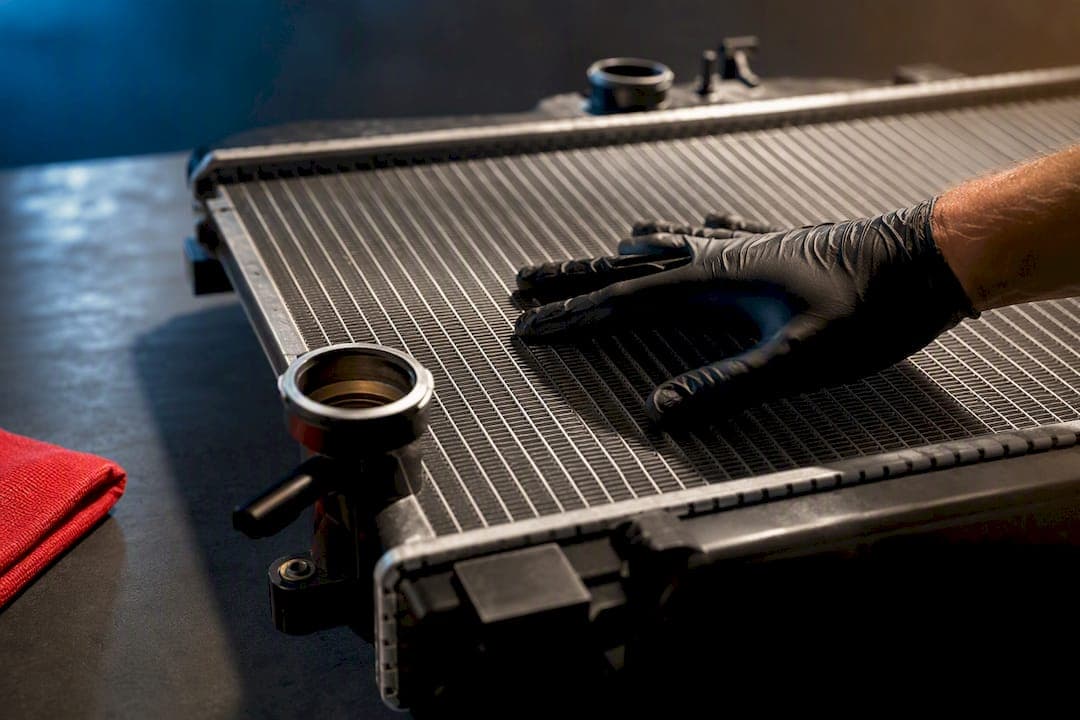
Radiators are typically covered under bumper-to-bumper and exclusionary extended service contracts, but almost never under powertrain-only plans, which treat cooling components as peripheral rather than internally lubricated parts. The two fastest ways a claim gets denied: using the wrong coolant or a contaminated cooling system, and skipping a documented professional installation or flush. Before filing anything, pull together proof of purchase, timestamped photos, the part's serial number, and your installer's receipt.
TL;DR:
- Warranty coverage for radiators varies; exclusionary plans and detailed documentation are more likely to pay for repairs than basic powertrain or limited warranties.
- Common claim denials occur due to wrong coolant, improper installation, stray voltage, driving after overheating, or chemical contamination, all preventable with proper maintenance.
- Most warranties cover manufacturing defects, leaks, and material flaws but exclude wear, accident damage, hoses, caps, clamps, and consequential engine damage.
- Proper documentation, including proof of purchase, serial numbers, installation receipts, and timestamped photos, is essential for successful warranty claims.
- Extended protection plans generally cover cooling-system components at higher tiers, but verifying specific inclusions and maintaining meticulous service records are key.
Table of Contents
- Warranty at a Glance: Types, Durations, and Where to Look
- What Radiator Warranties Typically Cover
- Common Exclusions and Warranty Busters
- How to Submit a Radiator Warranty Claim
- Who Pays: Parts, Labor, and Consequential Damage
- Radiator Lifespan and When Filing Actually Pays Off
- How Rpmwarranty Approaches Cooling System Protection
- Kenneth's Take: Read the Exclusions Before You Read the Coverage List
- Get a Free Rpmwarranty Quote for Cooling System Protection
- Sources
Warranty at a Glance: Types, Durations, and Where to Look
Not every warranty treats a radiator the same way, and the label on your paperwork matters more than most owners realize.
- Bumper-to-bumper (basic limited): Broadest coverage, typically a few years and limited mileage, and the most likely to include radiator failures.
- Powertrain: Covers the engine, transmission, and drivetrain. Radiators are usually excluded because they sit outside the lubrication system, per Kelley Blue Book's warranty guide.
- Stated-component plans: List covered parts explicitly. If "cooling system" or "radiator" isn't named, assume it's not covered.
- Exclusionary service contracts: Cover everything except a printed exclusion list, which often makes them friendlier to cooling-system claims than powertrain-only policies.
Some radiator manufacturers add their own layer on top: a 1-year parts-only warranty is common, while a handful of premium brands advertise lifetime replacement claims on the core itself. Your owner's manual, warranty booklet, and in-service date are the actual source of truth. High-end brands like Range Rover, BMW, and Mercedes also issue technical service bulletins covering known cooling-system defects on specific model years, which can extend protection beyond the printed warranty term.
What Radiator Warranties Typically Cover
Radiator warranties are built around one core idea: they cover the part failing on its own, not the part failing because of something you did.
Covered failure modes usually include:
- Manufacturing defects in the core or seams
- Premature leaks from a factory weld or joint
- Material flaws that show up under normal operating pressure
Commonly excluded:
- Wear from age, mileage, or road debris
- Damage caused by an accident or improper handling
- Hoses, caps, and clamps, which many policies treat as separate wear items rather than warrantied components
- Consequential engine damage, meaning if your radiator fails and the engine overheats as a result, that secondary damage is often the owner's responsibility
Manufacturer language on this is blunt. APDI's limited warranty terms cap the remedy at repair or replacement of the defective part, explicitly excluding labor and any resulting damage. That "parts only" framing shows up across the industry. A BMW or Mercedes cooling system failure that cracks a plastic radiator tank might qualify for a free replacement core, while the tow bill and diagnostic labor land on your invoice unless a separate labor warranty applies.
Common Exclusions and Warranty Busters
Most denied radiator claims trace back to one of five preventable mistakes. Know these before you touch the cooling system.
- Wrong coolant or mixed coolant types. Aluminum radiators need coolant within a specific pH range, generally between 7.7 and 11, and manufacturers require the exact formula listed in the owner's manual, according to APDI's warranty documentation. Mixing green and orange coolant, or using tap water long term, throws off that chemistry fast.
- Improper installation. Cross-threaded fittings, wrong bolt torque, or skipping a full cooling-system flush before the new radiator goes in are among the top reasons installers void coverage.
- Electrolysis and stray voltage. Even a tiny stray current, as low as 0.1 volts, can corrode an aluminum radiator from the inside out, according to Northern Radiator's warranty guidance. Aftermarket stereos, lighting, or accessory installs with poor grounding are frequent culprits. Shops test for this with a simple voltage draw test between the radiator and battery ground.
- Driving after overheating. Continuing to drive once the temperature gauge spikes almost always counts as operator negligence.
- Chemical contamination. Stop-leak additives, the wrong sealant, or oil intrusion from a failed gasket can all void coverage.
Pro Tip: Inspect a new radiator the moment it arrives. Photograph the serial number and part label before installation, not after a failure. If a warranty administrator asks you to return the old core, hold onto it until the claim closes. A part you've already scrapped can't be inspected, and no inspection usually means no payout.
How to Submit a Radiator Warranty Claim
Documentation wins or loses radiator claims more often than the actual defect does. Here's what to gather and how the process typically runs.
What you'll need:
- Original proof of purchase
- The radiator's serial or part number
- An installer's receipt that specifically notes a cooling-system flush
- Timestamped photos of the failure point and the part's label
How the process usually plays out: Most administrators start with a photo-based review. Cold-Case Radiators' warranty process, for example, often approves an initial evaluation from photos and a serial number alone before requesting the physical part back. If a physical inspection is required, expect an RA number, a shipping window, and a decision before a replacement ships.
Labor, shipping, towing, and rental cars are rarely covered under standard part warranties, so don't count on reimbursement for those unless a specific program says otherwise. Never install a part you suspect is already damaged, since that voids your ability to claim a manufacturing defect. Save every old part until the claim is fully resolved, and ask for the decision in writing.
Who Pays: Parts, Labor, and Consequential Damage
The gap between what a radiator warranty promises and what it actually pays out usually comes down to three words: parts, labor, and consequential. Most manufacturer warranties cover the replacement part itself and stop there. Labor, shipping, towing, and a rental car while your Ford or Honda sits in the shop are typically on you.
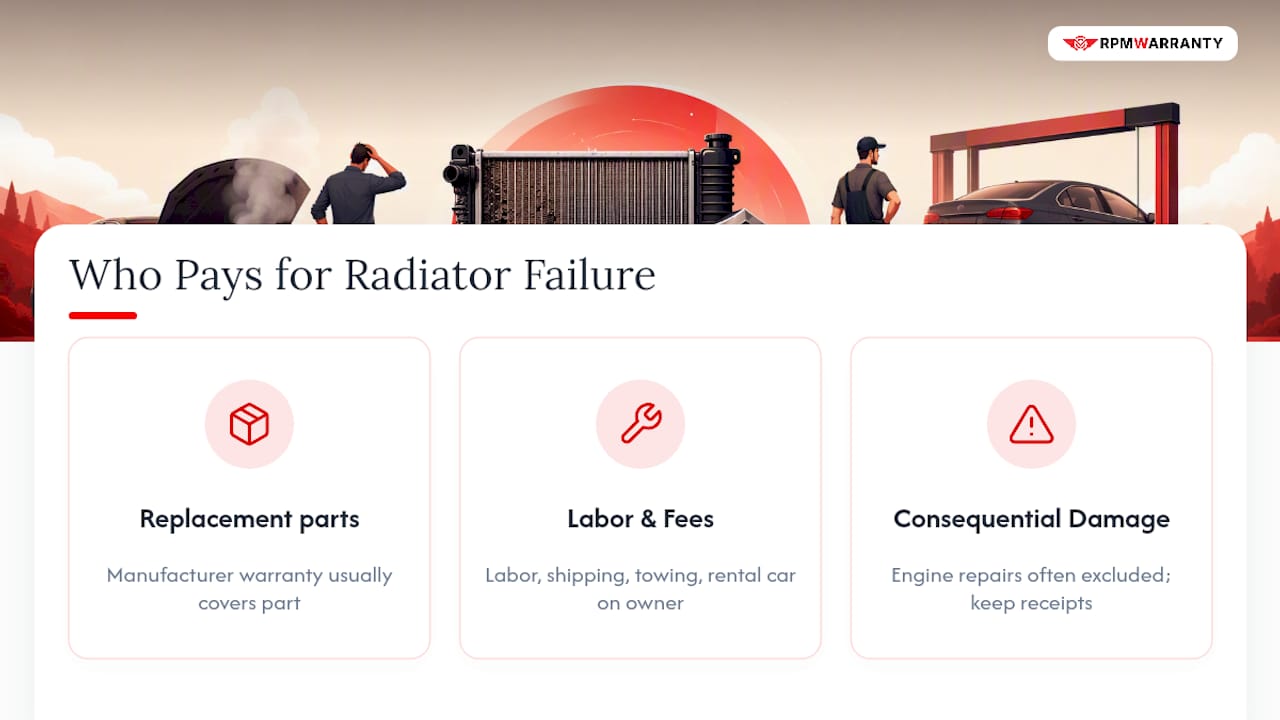
Consequential damage is the bigger trap. If a radiator fails and the engine overheats badly enough to warp a head gasket, that engine repair is frequently excluded, even though the radiator failure caused it, according to LegalClarity's analysis of coolant leak coverage. Dealerships sometimes step in with goodwill repairs for owners with a clean, consistent service history, even after the printed warranty has expired, per WheelsByJason's reporting on radiator coverage. Keep every oil change and flush receipt. It's the strongest argument you have.
Radiator Lifespan and When Filing Actually Pays Off
Aluminum radiators dominate modern vehicles because they're lighter and cheaper to manufacture than copper or brass units, though copper brass radiators generally resist corrosion longer when maintained properly. Either way, expect somewhere in the range of 8 to 10 years of service life under normal conditions, shorter if you're running hard-water coolant mixes or driving in salt-heavy climates.
Replacement cost depends heavily on the vehicle. RepairPal's cost estimator for a Honda Civic shows a model-specific range for parts and labor, and premium vehicles like a Porsche Cayenne or Range Rover Sport typically run well above that because of tighter engine bays and more labor-intensive access.
Whether filing a warranty claim makes sense depends on your deductible relative to the repair bill, per Kelley Blue Book's guidance on service contracts. A $200 deductible on a $300 repair isn't worth the paperwork. A $500 repair on a BMW X5 or Mercedes GLE with documented maintenance history is a different calculation entirely.
How Rpmwarranty Approaches Cooling System Protection
Radiator coverage really comes down to plan structure. Exclusionary contracts and stated-component plans that explicitly list cooling-system parts are the ones most likely to pay out on a radiator failure, while narrow powertrain-only plans typically won't touch it.
Rpmwarranty's tiered plans, Elite, Advanced, and Essential, are built around that same logic, with broader cooling-system protection generally available at higher tiers. The enrollment process runs through four steps: consultation, plan selection, customization, and final agreement, which gives owners a chance to ask specifically about cooling-system inclusions before signing anything. Documentation habits mentioned above, like saving flush receipts and installer paperwork, are exactly what speeds up any claims process, regardless of provider. Review the full plan terms or request a quote for coverage specifics on your vehicle.
Kenneth's Take: Read the Exclusions Before You Read the Coverage List
Most owners read a warranty backward. They check whether the radiator is listed as covered and stop there, when the exclusions list is where the real answer lives. A part can be technically covered and still get denied because of a missing flush receipt or a bottle of the wrong coolant sitting in the garage.
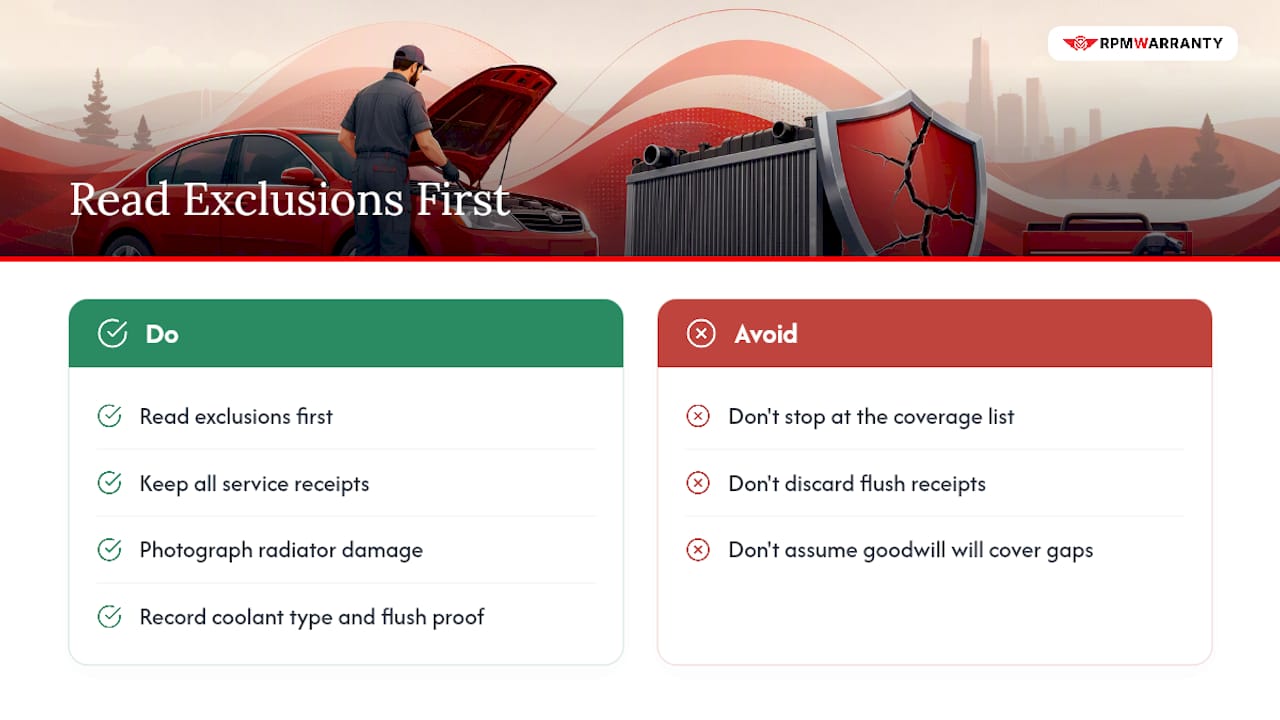
The conventional advice, "just check if it's under warranty," undersells how much documentation determines the outcome. Two identical radiator failures, one with photos and a flush receipt, one without, can get completely different rulings from the same administrator. That's not a loophole. It's just how parts-only warranties are written.
If you own a European or luxury vehicle, this matters even more. Aluminum-intensive cooling systems on a BMW, Mercedes, or Range Rover are more sensitive to stray voltage and coolant chemistry than the cast-iron systems of decades past. Treat every cooling-system service like it's being watched by an insurance adjuster, because functionally, it is. Keep the receipts, take the photos, and don't assume goodwill will cover a gap that documentation could have closed.
— Kenneth
Get a Free Rpmwarranty Quote for Cooling System Protection
If your factory warranty is aging out or already gone, an extended plan is a practical way to help keep radiator and cooling-system repairs from becoming a surprise bill. Some providers offer tiered coverage with nationwide service through ASE-certified shops, so you may not be stuck hunting for a repair facility that will honor your contract.
Cooling-system components, including the radiator, are often part of the broader protection available at higher plan tiers, though exact inclusions depend on which plan you choose, so it's worth verifying coverage details for your specific vehicle before enrolling. A claims process that moves fast with the right documentation on hand, including proof of purchase, installer receipts, and photos, is important. Start with a free quote to see what a plan would cost for your make and model, or visit the main coverage page to compare tiers side by side. Review the terms carefully for deductibles and exclusions specific to your vehicle before you sign.