
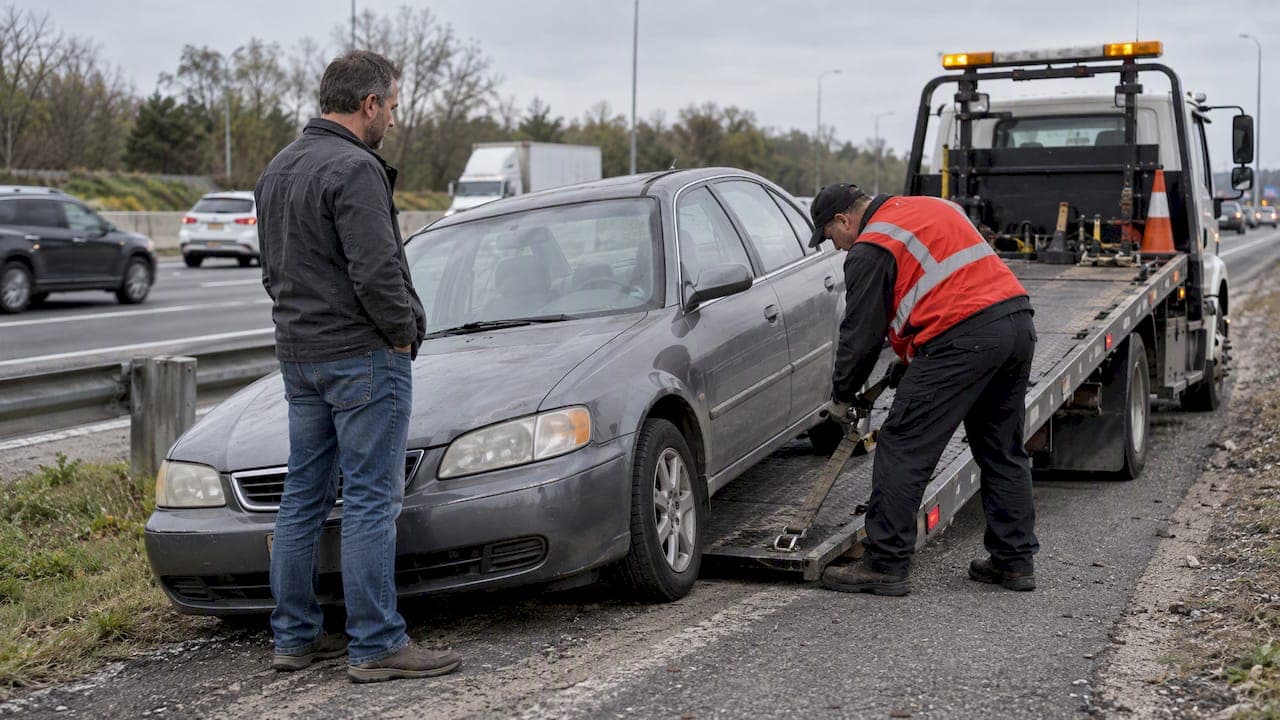
Roadside assistance covers on-site emergency help like jump-starts, flat-tire changes, lockout service, and fuel delivery when your car breaks down but can likely be fixed where it stopped. Towing coverage kicks in when the car cannot be fixed on the spot and needs to be hauled to a shop. The rest of this guide covers the limits, where to buy coverage, and how to pick a plan that fits your vehicle.
TL;DR:
- Most roadside assistance plans cap towing between a few miles and over 100 miles, often limited to the nearest repair shop unless you pay more out-of-pocket.
- Coverage for EVs is inconsistent, with some plans offering mobile charging to reach a charger, while others only tow the vehicle to a station, emphasizing plan selection based on your vehicle type.
- An average roadside plan costs between $15 and $130 annually, with higher tiers offering longer tow limits and additional benefits, but most plans restrict service calls to three to five per year.
- Many drivers already have some coverage from insurance, automaker programs, or credit cards, so review existing policies to avoid double paying for roadside services.
- A comprehensive roadside plan is more essential for EV owners, long-distance travelers, or older vehicle owners, especially if they are uncomfortable handling minor repairs themselves.
Table of Contents
- What roadside assistance actually covers, service by service
- Roadside assistance vs. towing: which one do you actually need?
- Where to get roadside assistance coverage
- How to choose the right roadside plan
- How extended protection plans work alongside roadside assistance
- When roadside assistance is worth prioritizing
- Compare protection plans and get a free quote
- FAQ
- Sources
What roadside assistance actually covers, service by service
Most roadside plans bundle the same core services, but the fine print on limits varies a lot between providers.
Towing is usually capped by distance, often somewhere between a short tow of a few miles and a long-distance tow of over 100 miles, depending on the plan tier. Many plans only cover towing to the nearest licensed repair shop; if you want your car taken to a specific dealer or mechanic farther away, you may pay the difference out of pocket.
Jump-starts are the most common call type. A technician arrives and jumps the battery on-site. Most plans stop there: full battery replacement is a separate, billable repair, not a roadside benefit, even though the roadside visit might confirm the battery is dead.
Flat tire service typically means the technician swaps on your spare. If you don't carry a spare, you'll likely need a tow instead, and that shifts the visit from a quick fix to a full tow call.
Lockout assistance covers getting you back into a locked vehicle, but it rarely covers replacing a lost or broken key. Many contracts cap lockout-related reimbursement at a modest dollar amount, leaving locksmith or dealer key-cutting fees to the owner.
Fuel delivery is one of the most misunderstood benefits. Plans generally cover the cost of sending someone to bring you gas or diesel, but according to Experian's roadside assistance explainer, the fuel itself is usually billed to the owner, not the plan. The same logic applies to fluids like coolant or oil.
Winching or recovery applies when a vehicle is stuck off the roadway, like in a ditch or snowbank, and needs to be pulled back before it can be driven or towed. Plans typically limit how far off the road the winch can reach, and if the vehicle is too far gone, a tow truck takes over entirely.
EV and hybrid support is growing but still inconsistent. Some plans offer mobile charging to get an EV enough range to reach a charger; others simply tow the vehicle to the nearest charging station, since most roadside trucks cannot carry enough charge to fully power a dead EV battery on-site.
Trip interruption and rental reimbursement benefits, where included, reimburse lodging, meals, or a rental car when a breakdown happens far from home, usually with daily and total caps.
Pricing varies by channel and tier: Experian notes membership-style plans commonly run about $50 to $130 a year, while simpler add-on coverage through other channels can run closer to $15 to $30 annually, making a single expensive tow often worth more than a year of coverage.
Nearly every plan also caps the number of service calls per year, often between three and five, after which additional calls may cost extra.

Roadside assistance vs. towing: which one do you actually need?
The simplest way to think about it: roadside assistance tries to fix the problem where your car is parked; towing moves the car because it can't be fixed there. According to NAIC guidance on auto coverage, this distinction is the whole point of the two service types, not a technicality.
- Dead battery, flat tire, locked keys, empty tank: roadside assistance handles these on-site, usually in under an hour.
- Engine failure, transmission trouble, or collision damage: these require towing to a repair facility because no on-site fix exists.
- No spare tire or a tire damaged beyond repair: this converts a flat-tire call into a tow.
- An EV with a fully drained battery far from a charger: this often needs a tow rather than a quick on-site remedy.
In practice, the two overlap. Most roadside plans bundle towing as one of several covered services, so a single membership or add-on often handles both situations without you needing separate coverage.
Where to get roadside assistance coverage
Coverage comes from several channels, and many drivers already have some version of it without realizing it.
- Insurance add-ons: usually the cheapest option, integrated with your existing policy, but check the towing mileage limit and whether you pay upfront and get reimbursed.
- Automaker or dealer coverage: often free for a limited period after purchase, per Consumer Reports, but may route you only to an authorized dealer, which can be inconvenient once that window closes.
- Membership clubs: typically offer longer tow distances and travel perks, with annual fees reflecting the broader service range.
- Credit card or phone plan perks: convenient if you already have the card, but often reimbursement-only, meaning you pay the tow truck first and file for reimbursement later.
- Employer or association benefits: coverage scope and portability vary widely, so confirm exactly what's included before relying on it.
Before buying anything new, check your insurance policy, your automaker's warranty booklet, and any credit card benefits guide. It's common to find overlapping coverage and end up paying twice for the same protection.
How to choose the right roadside plan
Once you know what's out there, narrow it down with a short checklist instead of comparing marketing pages line by line.
- Towing distance per incident: confirm the mileage cap and whether it covers transport to a shop of your choice or only the nearest one.
- Annual call limit: most plans cap you at three to five service calls a year.
- Per-incident dollar cap: ask what happens if the tow or service cost exceeds the stated limit.
- EV and charging support: if you drive a Ford Mustang Mach-E, a Mercedes EQS, or another electric vehicle, confirm whether the plan offers mobile charging or only towing.
- Authorized repair network: some plans restrict which shops or dealers can receive the tow.
- Rental reimbursement or trip interruption: check daily caps and whether it applies only on trips a certain distance from home.
- Mobile battery replacement: find out if the technician can swap a dead battery on-site or only jump it.
Ask providers directly: What's the mileage cap on towing? How many calls am I allowed per year? Is fuel delivery free, or do I pay for the fuel? Is reimbursement automatic or do I need to submit a claim?
On pricing, expect insurance add-ons toward the low end, membership clubs in the middle, and card-based perks somewhere in between depending on card tier, matching the ranges noted by Experian above.
Watch for red flags: vague mileage language, reimbursement-only models that require large out-of-pocket payment upfront, and exclusions buried in fine print that exclude common situations like lockouts or EV towing.
Pro Tip: Save your provider's phone number and membership ID in your phone and tuck a printed copy in the glovebox, since a dead phone battery is its own kind of roadside emergency.
How extended protection plans work alongside roadside assistance
Roadside assistance gets you unstuck. It doesn't pay for the actual repair once the car reaches a shop, and that's where an extended vehicle protection plan does different work. A service contract covers the cost of repairing components like the engine, transmission, cooling system, or electrical system after a mechanical failure, something roadside assistance was never designed to do.
Our plans are structured around that gap:
- Each tier bundles different levels of component coverage with benefits like towing and rental reimbursement built in.
- A driver whose transmission fails far from home can use the roadside-linked towing benefit to reach a shop, then rely on the warranty to cover the repair bill itself.
- Comparing plan terms matters here too: check mileage limits, covered components, and exclusions the same way you would with a roadside plan.
Readers who want specifics can compare tiers on our protection plans page.
When roadside assistance is worth prioritizing
Some drivers need roadside coverage more than others. EV owners, long-distance commuters, and anyone driving an older vehicle with higher breakdown odds should treat it as nearly essential, especially if they're not comfortable changing a tire or diagnosing a dead battery themselves.

If you already have solid coverage through your insurer, automaker, or a credit card, and you mostly drive short distances in a newer, reliable vehicle, roadside assistance may be a lower priority than other protections.
Three things to do today: check your existing policies for overlap, save your provider's contact info, and confirm your spare tire is actually usable.
— Kenneth
Compare protection plans and get a free quote
We build our Elite, Advanced, and Essential plans to cover the repair costs roadside assistance was never meant to handle, with nationwide service through ASE-certified mechanics and no hidden fees buried in the contract.
If you drive a Range Rover, a BMW, or any vehicle where repair bills tend to run high, it's worth comparing coverage levels on our protection plans page or requesting a free quote. Motorcycle owners can check our Full Throttle plan for similar protection. Read the plan limits and exclusions carefully before you sign, since coverage details differ by tier.
FAQ
What does roadside assistance cover?
Roadside assistance typically covers towing, jump-starts, flat-tire changes, lockout help, and fuel delivery, according to Experian. Some plans add winching, EV charging assistance, or trip-interruption benefits, but coverage specifics depend on the individual contract.
What is the best roadside assistance coverage?
The best coverage depends on your vehicle and driving habits rather than one universal answer. A good plan offers a reasonable towing distance, a workable annual call limit, and clear terms on EV support if you drive an electric or hybrid vehicle.
What is typically covered by roadside assistance?
Most plans cover emergency, on-site services: jump-starts, tire changes, lockouts, fuel delivery, and short-distance towing, per Experian's coverage breakdown. Full repairs, replacement parts, and long-term mechanical issues generally fall outside roadside assistance and require separate repair coverage.
Which car insurance is best for roadside assistance?
Rather than one insurer standing out, the better approach is checking whether a given policy's roadside add-on fits your needs, since towing mileage limits, call caps, and reimbursement rules vary by insurer. NAIC guidance notes that roadside and towing coverage is typically an optional add-on, not a standard part of a policy, so it's worth comparing terms before assuming any two policies are equal.