

A manufacturer warranty comes free with your car and covers defects for a set number of years or miles. A service contract, often marketed as an "extended warranty," is an optional product you pay for separately, sold by dealers or third-party administrators. The single most important move before buying one: check your factory warranty's end date against the contract's start date so you're not paying for coverage you already have.
TL;DR:
- Most service contracts are overpriced unless the vehicle has high repair costs or is nearing the factory warranty's end, making self-insurance more cost-effective for reliable cars.
- It is essential to compare the contract's start date with your factory warranty to avoid paying for coverage you already own and to verify the administrator’s legitimacy before signing.
- Coverage on modern vehicles often includes engine, transmission, and electrical systems, but exclusions such as routine maintenance and wear items are common pitfalls to watch out for.
- The total cost of a service contract, including deductibles, towing, and transfer fees, should be carefully calculated and compared to actual expected repair expenses for your specific vehicle.
- Filing claims typically requires preapproval, and contracts vary on authorized repair locations; skipping maintenance or losing receipts can lead to claim denial.
Table of Contents
- Service Contract vs Warranty: The Legal Difference
- What Each One Actually Covers
- What These Plans Cost and How to Judge the Value
- How the Claims Process Actually Works
- Red Flags and a Decision Checklist
- When Buying a Service Contract Actually Makes Sense
- How RPM Warranty Approaches Coverage
- The Real Question Isn't Warranty or Contract, It's Whether the Math Adds Up
- Get a Custom Quote From RPM Warranty
- Sources
- FAQ
Service Contract vs Warranty: The Legal Difference
A factory warranty is baked into the price of your Honda, Ford, or Range Rover the day you drive it off the lot. It's the manufacturer's promise, backed by federal law, that certain defects and parts get fixed at no extra charge for a defined window, usually a set number of years or miles for bumper-to-bumper coverage.
A service contract is a different animal entirely. It's a standalone agreement, sold by the dealer, the manufacturer, or an independent administrator, that you buy on top of whatever warranty you already have. Under the Magnuson-Moss Warranty Act, a warranty is considered part of "the basis of the bargain," meaning it's baked into what you paid for the car. A service contract carries no such built-in status. It's a separate purchase, and sellers have to disclose its terms clearly because it isn't automatically part of the deal.
What Each One Actually Covers
Coverage language is where things get slippery. Manufacturer warranties on a BMW or Mercedes-Benz often include separate powertrain coverage that outlasts the bumper-to-bumper term, sometimes running a longer period of coverage for the engine and transmission. Service contracts fall into two camps: "listed component" plans that name exactly what's covered, and "exclusionary" plans that cover everything except a printed list of exclusions, similar to how comprehensive auto insurance works.
Here's what tends to hold true across both makes and price points:
- Commonly covered: engine internals, transmission, drivetrain, electrical systems, and increasingly, hybrid battery components on vehicles like a Porsche Taycan or a Ford hybrid model.
- Commonly excluded: routine maintenance (oil changes, brake pads, tires), wear-and-tear items, and anything tied to a collision or prior neglect.
- Access matters as much as coverage: some contracts require repairs at a specific dealer network, while others authorize any ASE certified shop, and nearly all require preapproval before work begins.
A Range Rover owner facing an air suspension failure needs to know whether the contract covers that part by name or excludes it as "wear and tear." That single word can be the difference between a covered claim and a $3,000 bill.
What These Plans Cost and How to Judge the Value
Service contract prices vary enormously; the FTC notes they can run from a few hundred dollars to several thousand, depending on the vehicle's age, mileage, make, and how broad the coverage is. A contract for a Honda Accord with 40,000 miles costs far less than one for a Mercedes-Benz S-Class with 70,000 miles, because repair costs and failure rates differ so much between them.
A few numbers matter more than the sticker price:
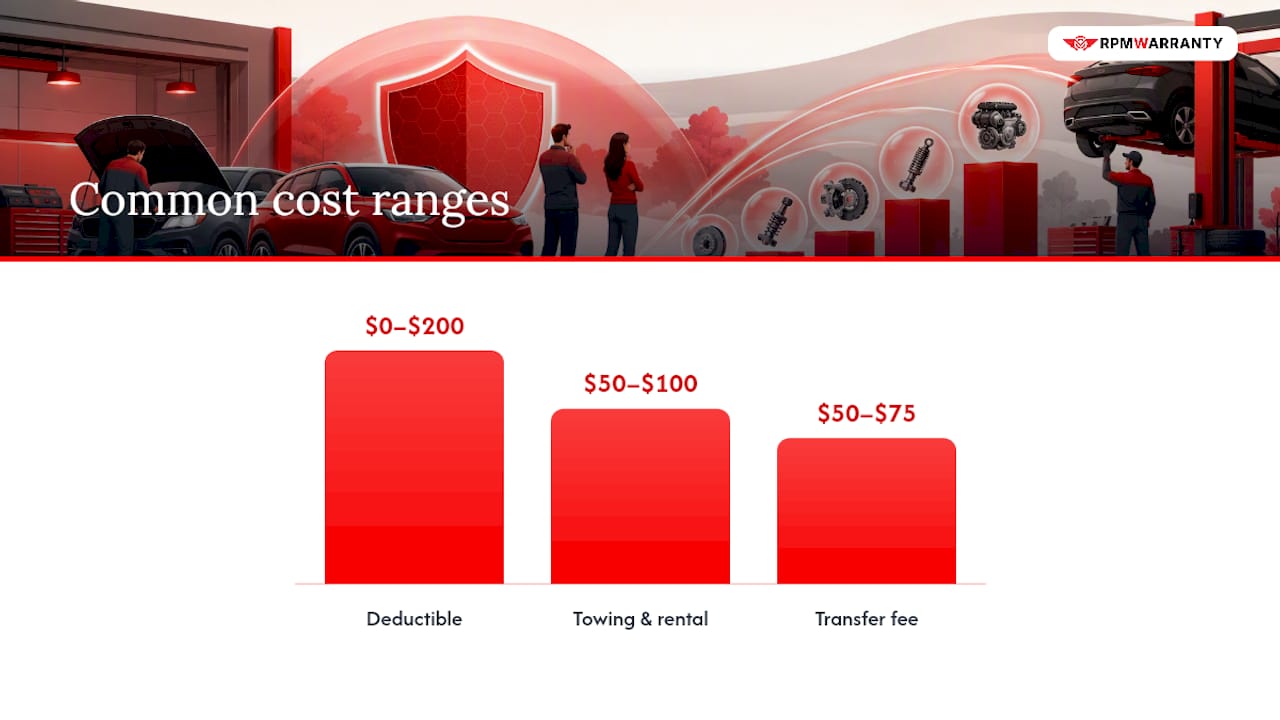
- Deductibles typically range from $0 to $200 per visit, and they apply per repair, not per contract.
- Ancillary limits on towing or rental reimbursement often cap out at $50 to $100 per day, which sounds generous until you're waiting on a backordered transmission part for a week.
- Transfer fees, usually $50 to $75, apply if you sell the car before the contract expires.
Pro Tip: Divide the total contract price by the number of years it covers to get an annualized cost, then compare that number to what you'd realistically spend on repairs for that specific model. A multi-year contract's annualized cost can be calculated by dividing the total price by the number of years covered. If your BMW's transmission has a known repair cost north of $4,000, that math looks a lot different than if you're driving a Honda Civic with a strong reliability track record. Most contracts also include a cancellation window with a partial or full refund if you change your mind early, so confirm those terms before signing.
How the Claims Process Actually Works
Filing a claim starts with a call to the administrator, not the repair shop, in most cases. You'll typically need preapproval before any diagnostic work begins, and skipping that step is one of the fastest ways to get a claim denied outright.
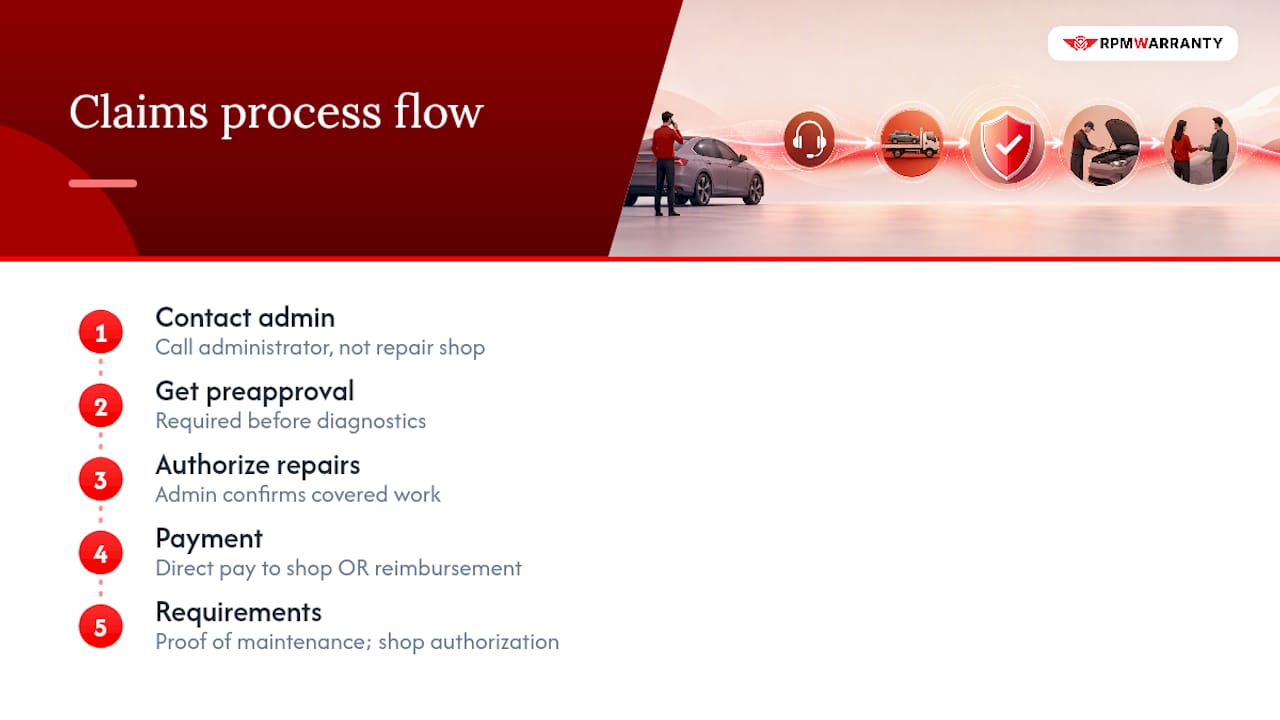
Two payment models exist: direct pay, where the administrator sends money straight to the repair shop, and reimbursement, where you pay upfront and submit receipts. Direct pay is far less stressful when a transmission repair on a Porsche Cayenne runs into five figures.
Repair location matters too. Some contracts lock you into dealer-only service; others authorize any qualified shop nationwide. And nearly every contract requires proof of regular maintenance. Skip an oil change interval, lose your receipts, and an administrator has grounds to deny a claim even on a covered part.
Red Flags and a Decision Checklist
Regulators have flagged a consistent pattern: aggressive telemarketing calls claiming your "warranty is about to expire," often from companies with no connection to your dealer or manufacturer. If you can't easily verify who administers the contract or find their complaint history, treat that as a warning sign, not a minor detail.
Work through this before signing anything:
- Pull up your factory warranty's exact end date and mileage cap, and compare it against the service contract's start date.
- Look up the administrator's business name, not just the dealer's, and check for complaints with your state attorney general's office.
- Calculate the annualized cost and stack it against your model's typical repair costs.
- Confirm in writing whether the contract is transferable and what the cancellation refund looks like.
- Read the exclusions list line by line. If it's longer than the coverage list, ask why.
Pro Tip: If you drive a vehicle with a strong reliability reputation, say a Honda CR-V or Toyota Camry equivalent, and you have $3,000 to $5,000 in savings you could set aside for repairs, self-insuring often beats buying a contract. The math only favors a service contract when repair costs are high, mileage is climbing, or your savings cushion is thin.
When Buying a Service Contract Actually Makes Sense
Buying a service contract while your factory warranty still has substantial time left often means paying for coverage you already have. Regulators consistently recommend against that kind of overlap.
The calculation flips for high-mileage drivers, owners of repair-expensive vehicles like a Range Rover or Mercedes-Benz with complex electronics, or anyone without a repair emergency fund. Dealer-sold contracts are convenient, often bundled into your financing, but usually cost more and come with sales pressure at the worst possible moment: while you're signing loan paperwork. Independent administrators can offer better pricing and broader repair-network access, but you carry the burden of vetting them yourself.
How RPM Warranty Approaches Coverage
Extended warranty plans are often structured in multiple tiers, allowing coverage to match a vehicle's age, mileage, and the owner's risk tolerance instead of forcing everyone into a single plan. Each level of coverage typically addresses core mechanical systems such as the engine, transmission, cooling, and electrical components, often including roadside assistance for unexpected breakdowns.
The process often involves consultation to understand the vehicle, plan selection, customization to fit the specific make and model, and a final agreement for review before commitment. Claims typically run through a nationwide network of certified mechanics, which matters if you split time between cities or prefer not to be tied to a single dealer's service bay.
The Real Question Isn't Warranty or Contract, It's Whether the Math Adds Up
Most people ask the wrong question. It's not "warranty or service contract," it's "does the annualized cost of a contract beat my realistic repair risk for this specific vehicle?" Run the numbers before you run the pitch a finance manager gives you.
Check your factory warranty's exact expiration date and mileage first. Request a sample contract in writing, then get a repair-cost estimate for your make and model before you sign anything. Keep every maintenance receipt. Buy only when the arithmetic, not the sales pressure, tells you to.
— Kenneth
Get a Custom Quote From RPM Warranty
If factory coverage is running out and the math favors buying extended coverage, tiered options are available instead of a single one-size-fits-all plan that may not align with actual coverage needs.
Plans are typically customizable to the vehicle's year, make, and model, accommodating different usage patterns and vehicle complexities. Repairs generally occur through a nationwide network of certified mechanics, providing flexibility beyond a single dealer appointment. Start by browsing RPM Warranty's protection plans and requesting a free quote to see what coverage actually costs for your specific vehicle.
Sources
- CFPB: What is the difference between a manufacturer’s warranty and an extended vehicle warranty or service contract?
- Businesspersons’ guide to federal warranty law (FTC) — Magnuson-Moss context
FAQ
What Are the Risks of Buying a Service Contract?
The biggest risks are duplicating coverage you already have, buying from an unverified telemarketer, and getting stuck with an administrator who won't pay claims quickly. FTC alerts specifically warn about callers falsely claiming your warranty is about to expire.
Is It Worth Getting a Service Contract for a Car?
It depends on your vehicle's repair costs, mileage, and how much you have saved for emergencies. High-mileage drivers or owners of repair-expensive models often benefit more than someone with a reliable, low-mileage car and a solid savings cushion.
Is a Service Contract a Good Idea?
A service contract can be a smart move if the annualized cost is lower than the expected repair risk and the administrator has a verifiable track record. Plans with tiered coverage and nationwide certified repair access are worth comparing against your factory warranty before deciding.
What Is the Difference Between a Warranty and a Service Plan?
A warranty is included in your purchase price and covers defects for a set period at no extra cost. A service contract is a separately purchased agreement that extends or changes coverage, and it isn't automatically part of the sale.