
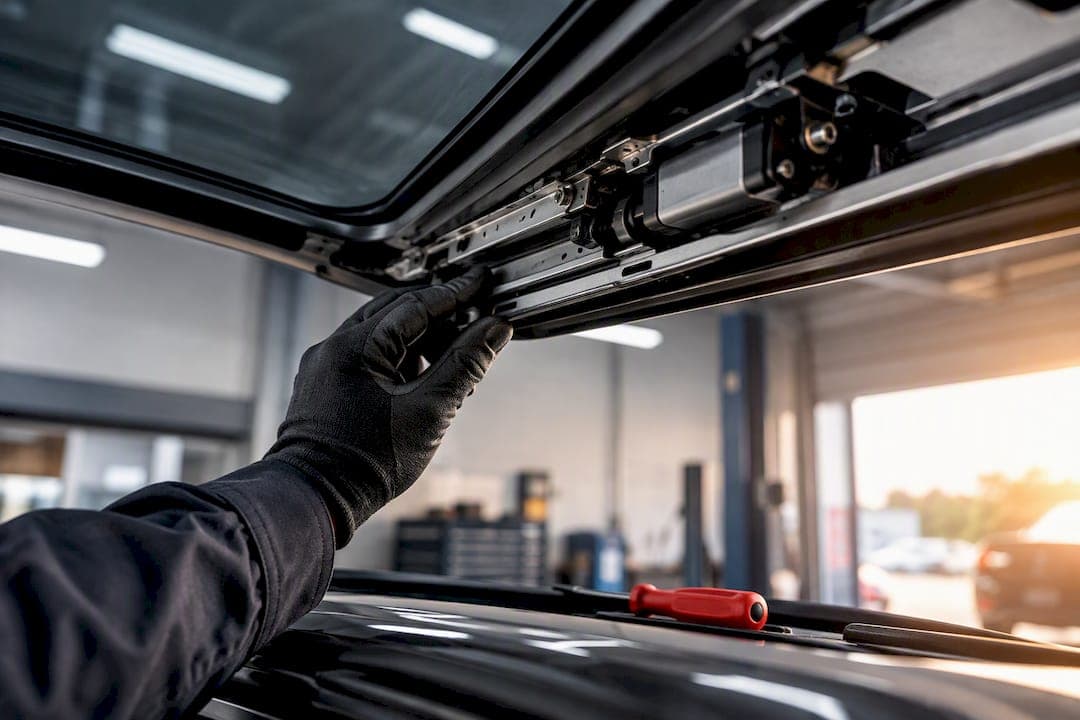
A sunroof motor repair is covered when the failure traces back to a defect in materials or workmanship while the vehicle sits inside its manufacturer's warranty window. Coverage usually stops when the cause is wear and tear, water damage from a clogged drain, an accident, or an aftermarket modification. If your sunroof stops working, check your warranty booklet for the exact time and mileage limits, then document the symptom before your dealer visit.
TL;DR:
- The sunroof motor is covered under warranty only if the failure stems from a manufacturing defect within the vehicle's warranty period, excluding wear, water damage, or aftermarket modifications.
- Diagnosing a failed sunroof motor involves checking fuses, relays, and the motor itself, with costs varying based on whether only the motor or the entire assembly is replaced.
- Proper documentation, including photos and maintenance records, speeds up warranty claims and helps avoid disputes over coverage exclusions.
- Extended warranty plans from providers like RPM Warranty offer nationwide service, fast claim processing, and coverage options suited to vehicle age and owner needs.
- Only failures caused by manufacturing defects are covered; damage from neglect, leaks, collisions, vandalism, or aftermarket work is typically excluded from warranty coverage.
Table of Contents
- What OEM new vehicle and parts warranties usually cover
- Common failure causes and exclusions
- How technicians diagnose a failed sunroof motor
- How to document and file a warranty claim
- Extended warranties and how they fit sunroof coverage
- Deciding between a warranty claim and paying out of pocket
- A practical closing take on sunroof coverage
- How an RPM Warranty plan protects you from sunroof motor repair bills
- Where to verify your own coverage
- Sources
- FAQ
What OEM new vehicle and parts warranties usually cover
Manufacturers separate coverage into two buckets: the new vehicle limited warranty and the shorter replacement parts or accessory warranty. A new vehicle limited warranty typically runs on a time and mileage combination, whichever comes first. BMW's MY26 limited warranty booklet sets its coverage at 48 months or 50,000 miles, while Honda's warranty handbook lists 3 years or 36,000 miles for many components. A sunroof motor generally falls under electrical or body hardware coverage in these documents.
"Defect in materials or workmanship" means the part failed because of how it was built, not how it was used. Diagnosis is typically included while the vehicle is still inside the warranty period, so a dealer should not charge you to determine what's wrong before telling you whether the fix is covered.
- Check your warranty booklet's electrical and body component sections for the specific mileage and time limits.
- Pull your dealer-stamped maintenance records if you need to confirm the vehicle's in-service date.
Common failure causes and exclusions
A sunroof motor rarely fails on its own. Inside the housing, small plastic gears strip down after repeated cycling, and that wear pattern looks different from a manufacturing defect once a technician opens the assembly. Electrical faults, worn regulator tracks, and clogged drainage channels round out the usual suspects.
- Stripped internal gears, most common on higher mileage vehicles and older Range Rover and Mercedes models with heavy sunroof use.
- Fuse or relay faults that mimic a dead motor but cost far less to fix.
- Regulator or track wear that binds the glass panel and strains the motor.
- Clogged drains that let water sit against the motor housing until corrosion sets in.
Exclusions tend to follow a pattern too: water damage from neglected drains, corrosion from a leak nobody addressed, collision or vandalism damage, and aftermarket sunroof installs that void factory coverage on that component. Before your appointment, note any grinding noise, a switch that clicks without moving the glass, intermittent operation, or water stains on the headliner.
Pro Tip: Keep a short phone video of the symptom, timestamped. A clip showing the sunroof clicking or grinding gives a service advisor evidence of a persistent fault rather than a one-time glitch.

How technicians diagnose a failed sunroof motor
Shops rarely replace a motor as the first move. The typical sequence starts with checking the fuse and power at the switch, then inspecting the relay and its terminals, then testing continuity and bench-testing the motor itself, and finally inspecting the regulator, tracks, and drains. RepairPal's diagnostic breakdown follows this same fuse-to-motor order, because a bad fuse or sticky relay produces symptoms that look identical to a dead motor.
Cost depends heavily on whether the shop replaces just the motor or the entire assembly, and on how much headliner disassembly the job requires.
- OEM parts cost more than remanufactured units but usually carry a fresh replacement warranty.
- Headliner access adds labor time on vehicles like Porsche and Mercedes models where the panel is harder to drop.
How to document and file a warranty claim
A warranty claim moves faster when you show up with the right paperwork instead of just a complaint. Dealers need to see that the vehicle is in warranty and that the failure looks like a defect rather than neglect.
- Gather your owner's manual, proof of purchase or registration, and any maintenance records showing roof or drain upkeep.
- Take photos and video of the sunroof failing, along with any prior repair records tied to the roof or electrical system.
- Contact an authorized dealer and request a diagnostic appointment with a written diagnostic report.
- Review the estimate and confirm in writing whether the shop is submitting the repair as warranty work before you authorize any paid repairs.
- If coverage is denied, ask for a manufacturer warranty review, keep copies of every email or call summary, and request the denial in writing.
A written denial matters if you need to escalate later. Dealers sometimes reverse an initial "not covered" call once a regional warranty administrator reviews the file.
Extended warranties and how they fit sunroof coverage
Once the factory warranty runs out, a service contract is the main way to keep sunroof motor repairs off your own bill. Not every plan treats electrical components the same way, so the fine print matters more than the marketing page.
- Look for explicit electrical system coverage or language naming the sunroof assembly or high-tech electronics group.
- Check whether the plan pays for OEM parts or only remanufactured ones, since that affects both repair quality and out-of-pocket cost.
- Confirm the deductible and labor reimbursement terms before you assume a claim is worth filing.
RPM Warranty structures its coverage into three tiers, Elite, Advanced, and Essential, and states that repairs run through a nationwide network of ASE-certified mechanics with a streamlined claims process.
Pro Tip: Compare a plan's deductible against the repair cost ranges above. A $100 deductible on a $1,100 motor replacement is a clear win; the math looks different on a $150 fuse fix.

Deciding between a warranty claim and paying out of pocket
The math usually comes down to three questions: is the vehicle still covered, how does the repair cost compare to your deductible, and how likely is the shop to call this a covered defect rather than an exclusion.
- Pay out of pocket for a quick fuse or relay swap, or for a temporary seal to stop water intrusion before it causes interior damage.
- File a claim when a motor or regulator failure is suspected, since those repairs tend to exceed most deductibles.
- Ask about rental reimbursement if the repair requires a part that's on backorder, since that can stretch a simple fix into a multi-week wait.
Delaying a leak repair risks headliner staining and mold, so speed sometimes outweighs the savings of shopping around for a cheaper shop.
A practical closing take on sunroof coverage
Seal the sunroof if it's stuck open, then document everything before you call anyone. A written diagnostic report is worth more than a verbal opinion once you're arguing about whether a failure counts as a defect. If you plan to keep the vehicle past its factory warranty, an extended plan removes the guesswork from that argument entirely.
— Kenneth
How an RPM Warranty plan protects you from sunroof motor repair bills
A motor replacement running toward $1,100 is the kind of surprise bill that makes extended coverage worth a second look. RPM Warranty's protection plans come in three tiers, Elite, Advanced, and Essential, so you can match coverage depth to your vehicle's age and how long you plan to keep it.

- Nationwide service access through ASE-certified mechanics means you're not tied to a single dealer for repairs.
- Claims processing is built to move fast, with approvals stated at 24 to 48 hours.
- Plans are customizable by vehicle year, make, and model, whether you drive a Ford pickup or a Range Rover.
If your factory warranty is running out or already expired, compare the Elite, Advanced, and Essential plans and request a free quote to see what coverage fits your vehicle and budget.
Where to verify your own coverage
- Check your vehicle's specific OEM warranty booklet and owner's manual for exact time and mileage limits.
- Cross-reference repair costs against estimators like RepairPal and PartPriceGuide.
Sources
- Sunroof Motor Replacement Cost Estimate — RepairPal
- Sunroof replacement cost guide — PartPriceGuide
- BMW MY26 new vehicle limited warranty booklet (PDF)
- Honda warranty handbook excerpt
FAQ
How much is a new motor for a sunroof?
A sunroof motor replacement averages between $983 and $1,151 according to RepairPal's estimator](https://repairpal.com/estimator/sunroof-motor-replacement-cost). Part-only costs run lower, with used OEM motors listed around $50 to $200, while labor and a full assembly swap push the total higher.
How to know if a sunroof motor is bad?
Listen for grinding noises, or a switch that clicks without moving the glass panel. Intermittent operation and visible water stains on the headliner are also common warning signs before a full failure. Technicians confirm a bad motor by checking the fuse and relay first, then bench-testing the motor itself.
Is a sunroof covered under warranty?
It's covered when the failure is a defect in materials or workmanship and the vehicle is still inside its new vehicle limited warranty period, such as the 48 months or 50,000 miles listed in BMW's warranty booklet. Damage from clogged drains, corrosion, accidents, or aftermarket modifications is typically excluded.
How long does a sunroof last?
Many sunroof motors last well beyond 150,000 miles based on aggregated service data, though failures do happen and often coincide with regulator wear. Regular drain maintenance and gentle use of the switch help extend that lifespan.