
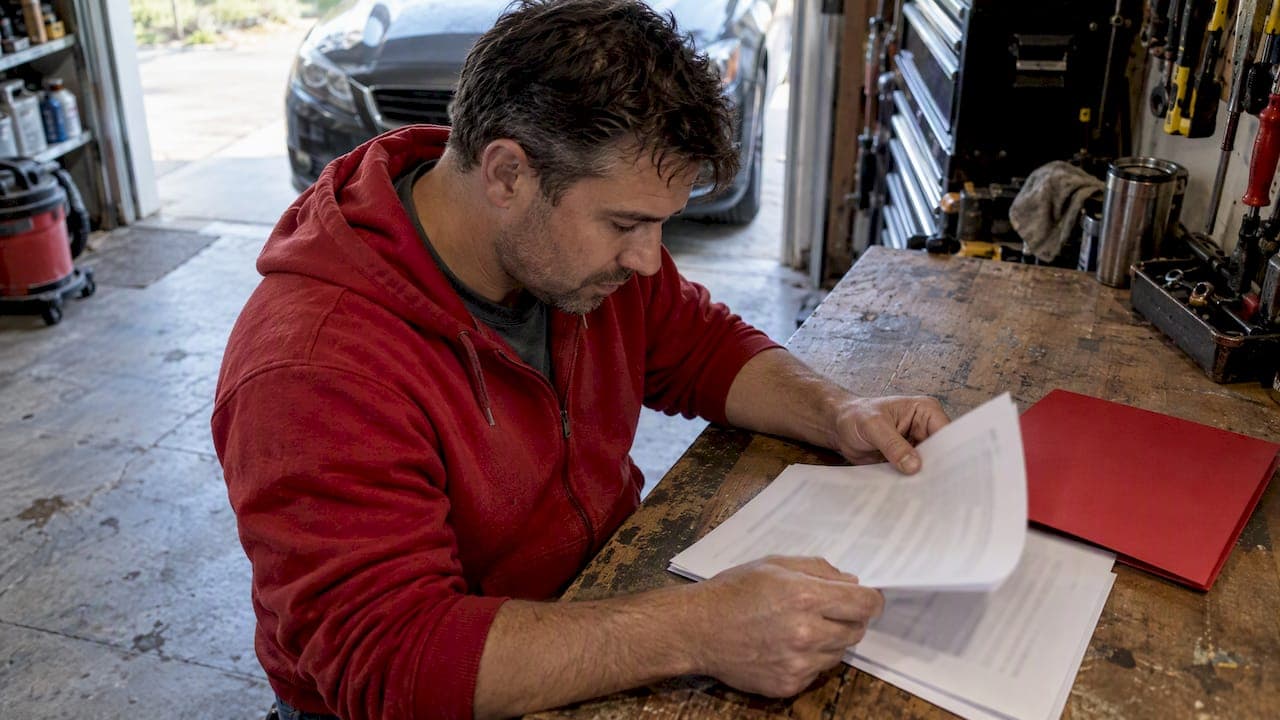
Third-party service contracts, often marketed as extended warranties, can be legitimate, but legitimacy depends on the company behind them, not the pitch. Before you sign anything, run three checks: who actually administers the contract and pays claims, whether the exclusions are written in plain language, and what the company's complaint history looks like. Skip those checks and you are buying a bet, not a protection plan.
TL;DR:
- Before paying, get the legal business name, actual claims administrator, and financial backer in writing, then check registrations and complaint records for each company.
- Read exclusions before coverage: wear items, preexisting problems, missing maintenance records, and modifications can defeat claims, while vague component language favors the administrator.
- Keep maintenance receipts and obtain written administrator approval before repairs; confirm whether the contract requires an approved shop, or a covered claim may be denied.
- Compare premiums plus deductibles with likely repair costs and ownership period; coverage is more compelling for costly, complex cars or vehicles past 60,000 miles.
Table of Contents
- What a Vehicle Service Contract Actually Is
- Why Claims Get Denied: Fine Print and Exclusions
- Red Flags: Robocalls, Pressure Tactics, and Illegal Practices
- How to Verify a Provider Before You Buy
- Do They Actually Pay Claims? The Process, Step by Step
- Is the Cost Worth It for Your Car?
- RPM Warranty: What We Offer and How to Verify It
- How to Confirm a Third-Party Warranty Is Backed by a Reliable Insurer
- Comparing Warranty Plans and Coverage Levels
- Reading Reviews and Testimonials the Right Way
- State and Federal Laws That Govern These Contracts
- What Years of Watching This Industry Taught Me
- Ready for Coverage? How to Request a Quote and What to Ask
- FAQ
- Sources
What a Vehicle Service Contract Actually Is
A "third-party extended warranty" is not a warranty at all. It is a vehicle service contract: a promise from a company other than the manufacturer to pay for certain repairs, in exchange for a fee you pay upfront or in installments. A manufacturer's warranty is included with the car and backed by the automaker. A service contract is a separate purchase, and the protections differ accordingly, a distinction the FTC spells out clearly for consumers.
Three parties are usually involved, and knowing which is which matters more than the brochure:
- The seller or marketer, who may be a dealership, a call center, or an online broker.
- The administrator, the company that actually reviews and approves claims.
- The insurer or financial backer, who pays if the administrator cannot.
If the seller and the administrator are different companies, ask who makes the final call on your claim. That is the entity whose financial stability and reputation matter most.
Coverage tiers vary by name but tend to fall into familiar buckets. "Powertrain" plans cover the engine, transmission, and drivetrain, the parts most likely to cause a breakdown. "Bumper-to-bumper" style plans extend further into electrical systems, cooling, steering, and sometimes high-tech components like infotainment or driver-assist sensors, though almost none cover literally everything between the bumpers.
Most contracts also require you to follow the manufacturer's maintenance schedule and, in many cases, get pre-approval before a shop starts a repair. Miss either requirement and a legitimate claim can still get denied on a technicality.
Why Claims Get Denied: Fine Print and Exclusions
Legitimate providers deny claims too, often for reasons spelled out in the contract that buyers never read closely. Understanding the common patterns helps you spot a bad contract before you sign, and defend a good claim after you file it.
- Wear-and-tear exclusions. Brake pads, tires, and clutch wear are normal maintenance items, not mechanical failures, so most contracts exclude them outright.
- Lack-of-maintenance denials. If you cannot produce service records showing oil changes and scheduled maintenance, the administrator can argue the failure was caused by neglect, not covered.
- Preexisting condition clauses. A problem that started before your coverage began, even if it was not diagnosed yet, is typically excluded.
- Aftermarket modification voids. Lift kits, performance tuning, and non-factory parts can void coverage on the systems they touch, sometimes the entire contract.
- Ambiguous repair language. Vague phrasing around what counts as a "covered component" gives administrators room to interpret the contract narrowly, and that interpretation usually favors the company.
The FTC notes that missing documentation is one of the most common reasons claims fail, not because the repair itself was uncovered, but because the paperwork proving maintenance was never kept.
Pro Tip: Photograph every receipt and service invoice the day you get your car back, and store them in one folder. A missing $40 oil-change receipt can sink a $2,000 claim.
Read the exclusions section before you read the coverage section. Contracts are written to sound generous up front and narrow down in the details, and the details are where most denials happen.
Red Flags: Robocalls, Pressure Tactics, and Illegal Practices
The most common scam in this industry is not a fake company selling fake contracts. It is a legitimate-sounding call pressuring you into a decision before you can check anything.
The FTC has repeatedly warned that robocalls claiming your "warranty is about to expire" are almost always scams, often with no connection to your actual vehicle or manufacturer. These calls rely on urgency: you have a limited time to act, the price goes up tomorrow, your coverage lapses this week.
Watch for these patterns:
- A caller who cannot tell you which vehicle you own or when you bought it.
- Demands for payment by gift card, wire transfer, or immediate card charge with no written contract first.
- Refusal to send you the contract before you pay.
- Vague answers about who administers claims or where the company is based.
- Forced arbitration clauses with no appeal path, buried in small print.
A July 2024 settlement shows this is not a fringe problem. One major vehicle service contract seller agreed to pay $10 million to resolve FTC charges of deceptive advertising and false claims about what its plans actually covered. Enforcement actions like this confirm that deceptive sales tactics in this industry are an active, ongoing concern, not a historical footnote.
If you get a suspicious call or offer: hang up, do not give out your VIN or payment information, and document the number and script. File a complaint with the FTC, your state attorney general, or the CFPB if a lender or dealer pressured you into an add-on you did not want.
How to Verify a Provider Before You Buy
Vetting a service contract company takes twenty minutes and can save you thousands. Work through these steps before you sign anything.
- Confirm the corporate identity. Search your state's business filings for the company's legal name, not just its marketing brand, and check how long it has operated under that name.
- Identify the actual claims administrator. Ask directly: if I file a claim, who approves it? Get the name in writing.
- Check state registration requirements. Many states require service contract providers to register, maintain a bond, or fund a trust account to guarantee payouts. The NAIC's model act on service contracts outlines how states commonly structure this oversight.
- Request a sample contract before you pay. A legitimate provider will send you the full terms, not a summary, without requiring payment first.
- Ask about average claims payout time and whether reimbursement goes to you or directly to the repair shop.
While you're reviewing, check these sources for complaint history:
- Your state attorney general's consumer complaint database.
- The Better Business Bureau's complaint log for the specific legal entity, not just the brand name.
- The CFPB's consumer complaint database for add-on product issues, including refund disputes.
- Recent state or federal enforcement actions tied to the company name.
A provider that resists sharing its claims process, administrator name, or sample contract in writing has already told you most of what you need to know.
Do They Actually Pay Claims? The Process, Step by Step
A typical claim follows a predictable sequence: you notice a problem, you contact the administrator for pre-approval, an approved repair shop diagnoses the issue, the administrator authorizes the repair, and payment goes either to the shop directly or to you as reimbursement.
Where claims break down is almost always at the documentation or pre-approval stage. If you authorize a repair before getting administrator sign-off, many contracts allow a flat denial, even for an otherwise covered part.
- Keep every maintenance receipt in one place, organized by date and mileage.
- Get pre-approval in writing, by e-mail, before any repair work begins.
- Confirm whether your contract requires an approved repair shop or allows any licensed mechanic.
- If a claim is denied and you believe it is covered, ask for the denial reason in writing and escalate through your state insurance regulator if the explanation does not match the contract language.
The CFPB has found that some companies failed to issue required refunds for unused coverage, and Consumer Reports has long noted that many buyers end up spending more on premiums than they ever recover in repairs. Neither finding means every contract is a bad deal, but both are reasons to read the refund and cancellation terms as closely as the coverage terms.
Pro Tip: Consider requesting a claims history report after any denial. A pattern of denials for the same reason across many customers is a signal worth researching before you renew.
Is the Cost Worth It for Your Car?
The decision comes down to a simple comparison: what you'll likely pay in premiums and deductibles versus what you'd likely pay out of pocket for repairs over the time you plan to keep the car.
A high-mileage Honda Civic with a known reliability record carries a very different risk profile than a Range Rover Sport with an air suspension system and a turbocharged engine prone to expensive repairs once it's out of factory coverage. A BMW 5 Series or Mercedes-Benz E-Class with complex electronics and sensors can turn a single repair into a four-figure bill, which changes the math considerably compared to a Ford F-150 with simpler, more serviceable components.
- Estimate your vehicle's likely repair costs based on known issues for its make, model, and age.
- Factor in how long you plan to keep the car: a short ownership horizon reduces the value of a multi-year contract.
- Compare the total cost of premiums plus deductible against the cost of a single major repair for your specific model.
- Consider a self-funded repair account as an alternative, especially for vehicles with strong reliability records.
Coverage tends to make the most sense on higher-repair-cost vehicles, luxury models, turbocharged engines, or cars already past 60,000 miles, and tends to make less sense on vehicles with a strong track record of low-cost, infrequent repairs.
RPM Warranty: What We Offer and How to Verify It
We built our plans around the same transparency standard this entire article asks you to apply to any provider, including us. We offer four plan tiers, Elite, Advanced, and Essential for cars, and Full Throttle for motorcycles, each covering a different depth of protection:
- Engine, transmission, and drivetrain components, the core of powertrain-style coverage.
- Electrical systems and high-tech parts, including sensors and modern driver-assist components.
- Cooling, steering, and suspension systems, depending on plan tier.
- Roadside assistance and rental reimbursement, included to reduce the cost of being stranded.
We walk every buyer through a four-step process: consultation, plan selection, customization to the vehicle's year, make, and model, and a final written agreement, so the terms are clear before commitment.
We state our claims as a company would want them checked: we aim for rapid claims turnaround, access to qualified mechanics nationwide, and clearly outlined terms with no hidden fees. Ask us directly for a sample contract and our typical claims turnaround time before you buy, the same way you'd vet any provider.
How to Confirm a Third-Party Warranty Is Backed by a Reliable Insurer
Every service contract has a financial backer standing behind the administrator's promise to pay. Confirming that backer exists and is solvent is one of the fastest ways to separate a stable provider from a risky one.
Ask the company directly which insurer or financial backing entity stands behind claims if the administrator cannot pay. A legitimate provider will name the entity without hesitation. You can then check that insurer's standing with your state's department of insurance, which tracks financial solvency and licensing status.
Some providers use a trust-account or reserve-fund model instead of a traditional insurance backstop. The NAIC's model act framework describes how states commonly require these reserves to be funded and monitored, so ask whether your state mandates this for the specific company you're considering.
If a seller cannot or will not identify who ultimately pays claims when things go wrong, treat that as a serious gap, not a minor omission. The administrator name on your paperwork is not always the same as the entity financially responsible for paying you, and the two can be very different companies.
Comparing Warranty Plans and Coverage Levels
Service contracts are typically sold in tiers, and the names vary by provider, but the structure tends to follow a predictable pattern from narrow to broad coverage.
Entry-level plans generally cover the powertrain only: engine, transmission, and drivetrain. Mid-tier plans add electrical systems, cooling, and steering or suspension. Top-tier plans extend into high-tech components like infotainment systems, advanced sensors, and driver-assist electronics, the parts increasingly common on vehicles from Porsche, Mercedes, and BMW.
When comparing tiers from any provider, check three things side by side: what components are explicitly listed as covered, what the deductible is per repair visit, and whether roadside assistance or rental reimbursement is bundled in or sold separately. A lower-priced plan that excludes your vehicle's most failure-prone system is not actually the better value.

For vehicles with known complex systems, a Range Rover's air suspension, a BMW's electronic components, a Porsche's advanced drivetrain, matching the plan tier to the system most likely to fail matters more than matching it to the lowest price.
Reading Reviews and Testimonials the Right Way
Reviews are useful for spotting patterns, but only when you read past the star rating. A handful of five-star reviews mentioning fast approval means less than a consistent pattern across dozens of reviews describing the same claims experience.
Look specifically for reviews that describe an actual claim being paid, not just the sales process. A company can have a smooth, friendly sales call and still deny claims aggressively. The reviews that matter most mention the repair shop, the wait time for approval, and whether the payout matched the contract terms.
Cross-reference what you read in reviews against formal complaint data from the Better Business Bureau or your state attorney general's office. A pattern of complaints about denied claims or delayed refunds carries more weight than a handful of negative reviews about customer service tone.
Consumer Reports has noted that fine print and restrictive terms are common enough across the industry that skepticism, not blind trust in star ratings, is the more reliable approach when evaluating any provider.
State and Federal Laws That Govern These Contracts
Vehicle service contracts sit in a regulatory gray zone: they are not insurance in the traditional sense, but most states still require oversight. The NAIC's Service Contracts Model Act gives states a framework for registration, financial reserve requirements, and consumer protection standards, though adoption and enforcement vary by state.
At the federal level, the FTC enforces truth-in-advertising rules against deceptive sales tactics, which is the basis for the 2024 enforcement action resulting in a $10 million settlement over false coverage claims. The CFPB separately oversees add-on products sold through auto financing, including refund rights when a loan is paid off early or a contract is canceled.
Because enforcement sits across multiple agencies and states, your most reliable path when something goes wrong is layered: start with the company, escalate to your state attorney general or insurance department, and file a federal complaint with the FTC or CFPB if the issue involves deceptive sales or refund denial.
What Years of Watching This Industry Taught Me
Most complaints I have seen trace back to the same two failures: buyers who never checked who administers claims, and buyers who never got pre-approval in writing before a repair. Both are preventable.
A reader who asked for a sample contract before paying caught a forced-arbitration clause buried on page six and walked away. Another who kept every maintenance receipt for three years got a transmission claim approved without a fight.
Three takeaways: verify the administrator before the price, keep every receipt, and get repair pre-approval in writing every time.
— Kenneth
Ready for Coverage? How to Request a Quote and What to Ask
If you have run through the checks above and decided coverage makes sense for your vehicle, requesting a quote takes a few minutes.
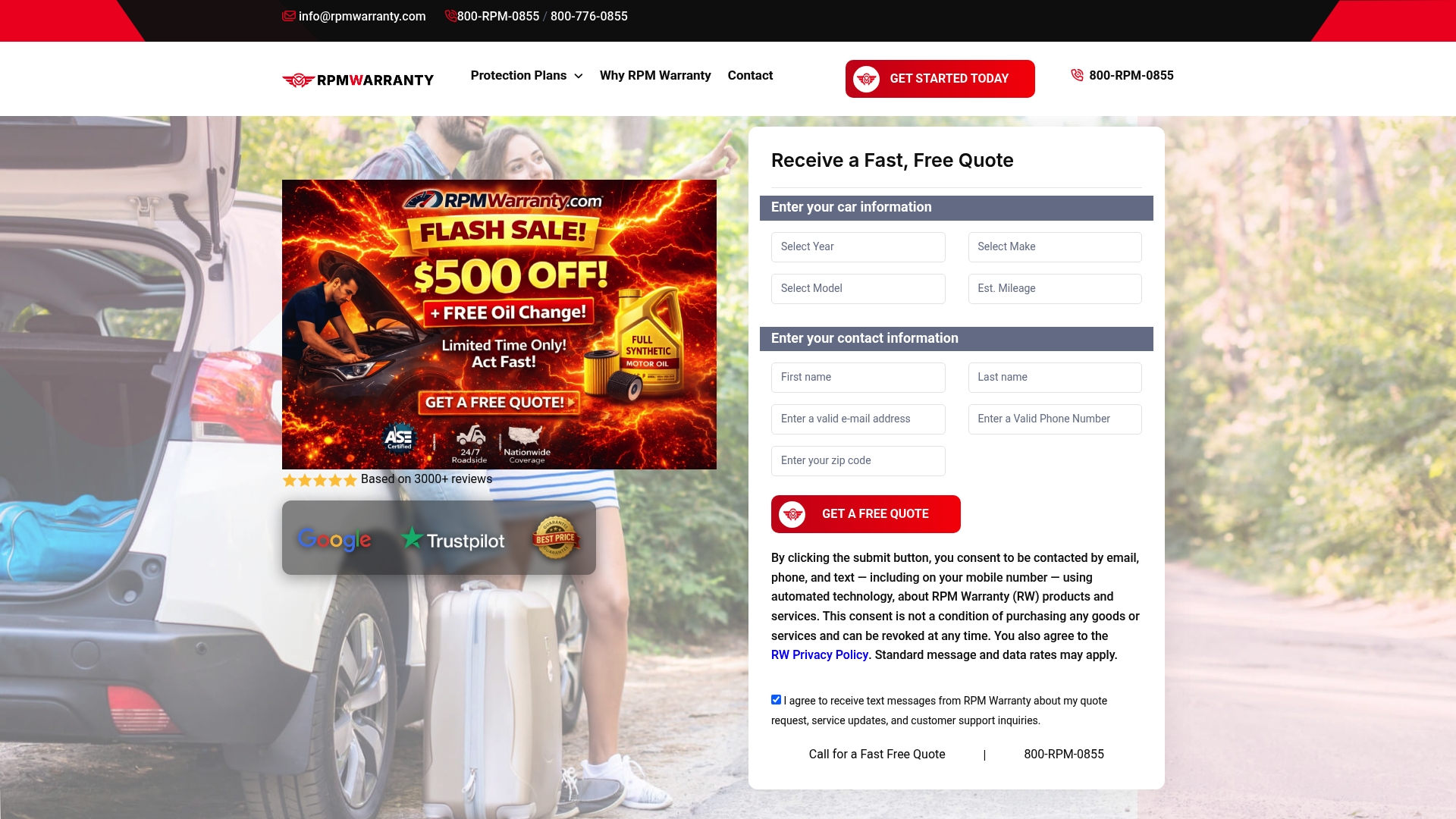
Have your VIN, current mileage, and recent maintenance records ready before you start. We use these to match coverage to your vehicle's specific year, make, and model rather than selling a one-size plan that misses your car's most likely failure points.
Before you commit to any plan, including ours, ask these questions directly:
- Can you send me a sample contract before I pay anything?
- What is the typical claims turnaround time from approval to payment?
- Do I have access to ASE-certified mechanics nationwide, or only a limited network?
- Is coverage transferable if I sell the car?
- What are the cancellation terms and how is a prorated refund calculated?
You can start the process on our free quotes page or review tiered coverage details on our protection plans page first. Compare whatever you receive against the checklist earlier in this article before you sign.
FAQ
Are third-party extended warranties worth it?
It depends on your vehicle and how long you plan to keep it. Coverage tends to pay off most on higher-repair-cost vehicles or cars already past typical reliability milestones, while Consumer Reports has found that many buyers spend more on premiums than they recover in repairs.
What does financial advice commonly say about extended car warranties?
Popular financial advice often recommends skipping extended warranties in favor of building a dedicated repair savings fund instead, on the reasoning that most drivers pay more into a plan than they get back. That view aligns with Consumer Reports survey findings showing many plans go underused relative to their cost.
What are red flags in extended warranty contracts?
Watch for robocalls claiming your warranty is about to expire, refusal to provide a written contract before payment, forced arbitration clauses with no appeal, and vague language around what counts as a covered component. The FTC warns that these robocall tactics are a common scam pattern in this industry.
How do I know if a third-party warranty company is legitimate?
Confirm the legal business name through your state's filings, identify the actual claims administrator in writing, and check complaint history with the Better Business Bureau, your state attorney general, and the CFPB. A legitimate provider will send a sample contract before requiring payment, and we provide ours through our protection plans page for exactly this reason.
Will a third-party warranty actually pay my claim?
Payment depends on following the contract's requirements: documented maintenance, written pre-approval before repairs, and use of an approved repair facility where required. The CFPB has noted that documentation gaps and refund disputes are common sources of denied or delayed claims across the industry.