
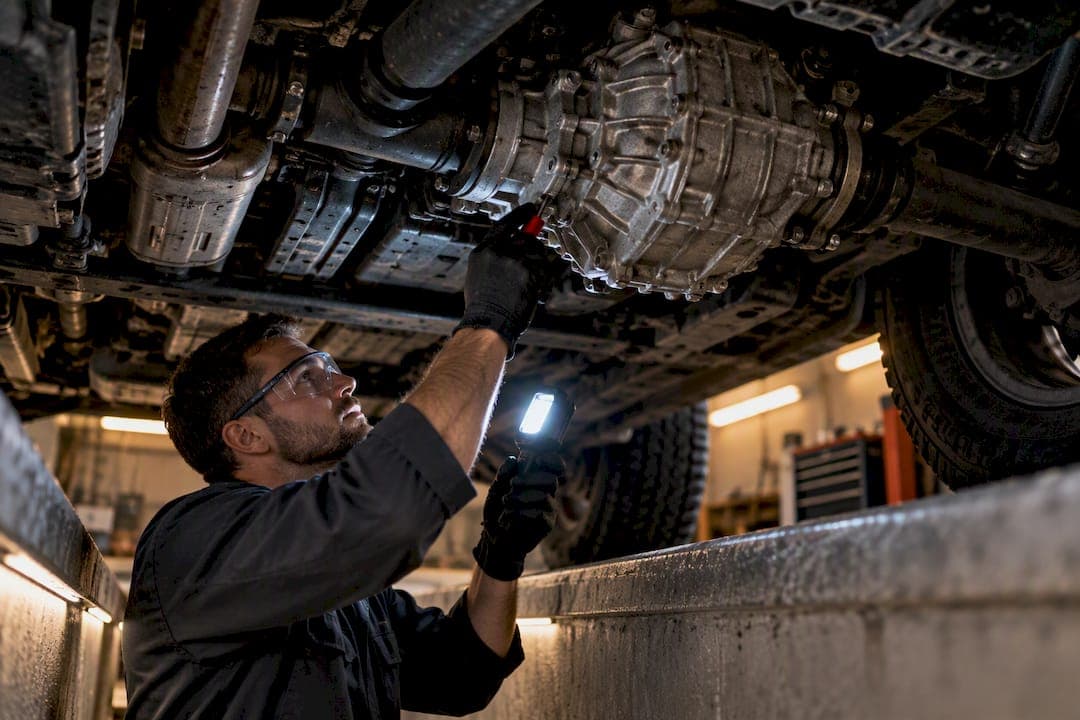
Your transfer case is often covered, but only when the warranty or service contract specifically names it, usually under phrasing like "transfer case and all internal parts." Factory drivetrain warranties tend to include it by default; extended contracts vary by tier. If you suspect a failure, stop driving if the vehicle is unsafe, pull your maintenance records together now, and read the contract's component list before you call anyone. The checklist below tells you exactly what to look for.
TL;DR:
- Factory warranties generally include transfer case coverage for internal components like gears, seals, and housings, but extended plans often limit coverage to specific parts or exclude wear and contamination.
- Claims are frequently denied if there is documented neglect, contamination, or unaddressed leaks, emphasizing the importance of maintaining proper fluid change records and photos.
- Reading your warranty contract carefully for covered parts, exclusions, deductibles, and pre-authorization rules can prevent delays and issues when filing a claim.
- Repair costs can range from a few hundred dollars for covered internal failures to over four figures if contamination or wear-and-tear are involved, with repair duration typically lasting 3 to 7 business days.
- RPM Warranty offers tiered plans with transparent coverage for transfer cases and encourages maintaining detailed maintenance records to maximize claim approval chances.
Table of Contents
- What Is a Transfer Case, and How Do Warranties Describe It?
- Factory Warranty vs. Extended Contract: Where Transfer Case Coverage Splits
- Why Transfer Case Claims Get Denied
- How to Read Your Contract Before You File a Claim
- What Transfer Case Repairs Cost and How Long They Take
- How RPM Warranty Structures Transfer Case Protection
- What Actually Protects a Transfer Case Claim
- Get a Transfer Case Coverage Quote From RPM Warranty
- Where to Verify Transfer Case Coverage Yourself
- Sources
- FAQ
What Is a Transfer Case, and How Do Warranties Describe It?
The transfer case sits between the transmission and the front and rear axles on any four-wheel-drive or all-wheel-drive vehicle. It splits engine power between the front and rear wheels, and on trucks like the Ford F-150 or SUVs like the Range Rover, it's the component that lets you shift between two-wheel drive, four-high, and four-low. It's a mechanical hub, not a single part, which is exactly why warranty language gets specific about what's inside it.
Coverage usually comes down to internal versus external. Internal components, the gears, chains, bearings, and seals that do the actual work, get named individually in most manufacturer documents. External or linkage parts, like electronic shift motors or actuator housings, sometimes fall under a separate electrical or "high-tech component" clause instead.
OEM booklets tend to follow a pattern. A phrase like "transfer case and all internal parts" is common shorthand for full internal coverage, according to warranty language patterns BMW's 2026 limited warranty booklet illustrates. What that booklet typically lists includes:
- Internal gears, shafts, and bearings
- Chain-drive components on chain-style transfer cases
- Seals and gaskets tied to internal lubrication
- Housing, only when damage results from a covered internal failure
Mercedes-Benz 4MATIC systems and Porsche's PTM (Porsche Traction Management) use different hardware, but the coverage logic is the same. Read the parts list, not just the section title.
Factory Warranty vs. Extended Contract: Where Transfer Case Coverage Splits
Factory powertrain or drivetrain warranties almost always include the transfer case, typically for a few years or a given mileage limit across most mainstream brands, with some luxury makers offering shorter comprehensive terms and longer powertrain-specific windows. BMW's booklet, for example, lays out component-level time and mileage limits and requires warranty repairs to go through authorized dealers, a pattern most manufacturers share, per BMW's 2026 warranty document.
Extended service contracts work differently. They're not warranties in the legal sense. They're contracts you buy separately, and the FTC's consumer guidance makes the distinction plain: compare the contract's defined parts list, exclusions, and claims process against what your factory coverage already provides before you sign anything.
A few things tend to separate the two documents:
- Waiting periods. Many extended contracts won't pay claims for 30 to 90 days after purchase.
- Contract-defined parts lists. Instead of "all internal parts," some plans name individual components, and anything left off the list isn't covered.
- Deductible structure. Per-repair or per-visit deductibles vary widely between plans.
An extended plan makes sense once factory coverage lapses, not while it's still active. Buying one that duplicates existing coverage just adds cost without adding protection.
Why Transfer Case Claims Get Denied
Wear-and-tear exclusions are the most common denial reason, and they're written into nearly every service contract for a reason: transfer cases are mechanical parts that degrade with use, and insurers distinguish gradual wear from sudden mechanical breakdown. Contamination (water intrusion from deep-water fording, common in off-road use of a Range Rover or a Ford Bronco), rust from road salt exposure, and unauthorized drivetrain modifications round out the usual list.
Maintenance triggers cause almost as many denials. Claims reviewers typically check for:
- Documented fluid changes at manufacturer-recommended intervals
- Fluid condition at the time of failure (contaminated or burnt fluid suggests neglect, not defect)
- Evidence of prior seal or leak repairs that went unaddressed
- Whether recommended diagnostic steps were followed before the failure occurred
ASE technical guidance ties transfer case health directly to fluid service records, and documented maintenance is often the single strongest piece of evidence in a claim ASE's study guide outlines. Diagnostic teardown labor is the other wrinkle: some contracts exclude the labor cost of opening the case to diagnose the problem, even when the part itself would be covered once identified.
Pro Tip: Keep every fluid-change receipt in one folder, and photograph the drain plug and fluid color at each service. If a claim gets questioned later, that visual record often settles the argument faster than a service invoice alone.

How to Read Your Contract Before You File a Claim
Pull your contract and look for five things before you pick up the phone: the covered-components list, the exclusions section, the deductible amount, whether pre-authorization is required, and which repair shops are approved. Missing any one of these when you call customer service slows everything down.
Search the document for specific headings and terms rather than skimming the whole thing:
- "Covered components" or "covered parts schedule"
- "Exclusions" or "what is not covered"
- "Pre-authorization" or "prior approval required"
- "Deductible" and how it applies per visit versus per repair
- "Authorized repair facility" or shop-reimbursement limits
Verifying whether teardown labor and diagnostic fees are included matters here too, since some contracts leave that cost on the owner even when the part itself is covered, a distinction Ford's own performance parts warranty documentation calls out directly.
Before calling, gather your VIN, full service history, photos of the failure symptoms, and any mechanic notes describing what's wrong. If a claim gets denied, ask for the denial in writing with the specific exclusion cited, then request a second inspection or escalate to a supervisor. Most contracts specify an appeal window, often 30 days, so don't sit on a denial letter.
What Transfer Case Repairs Cost and How Long They Take
Expect a diagnostic process that runs inspection, teardown, parts ordering, and reassembly, often 3 to 7 business days depending on parts availability for your specific make and model. Luxury vehicles like Porsche or Mercedes-Benz models can run longer if a dealer has to source parts from overseas.
Cost swings dramatically based on the outcome:
- Covered internal failure: you typically pay only the deductible, often $100 to $200 for extended contracts.
- Excluded contamination or wear-and-tear: you pay full parts and labor, and a transfer case rebuild routinely runs into four figures on higher-end vehicles.
The FTC has flagged cases where service-contract advertising overstated what was actually covered, leaving customers with denied claims they didn't expect. That's exactly why the exclusions section matters more than the marketing brochure. Choosing an ASE-certified independent shop over a dealer can sometimes speed up scheduling, but confirm your contract doesn't cap reimbursement below what an independent shop charges.
How RPM Warranty Structures Transfer Case Protection
RPM Warranty builds transfer case protection into its drivetrain coverage across its Elite, Advanced, and Essential tiers, with Full Throttle covering motorcycle drivetrains separately. Each tier scales coverage breadth to budget, so a higher-mileage vehicle might warrant a higher tier than a newer daily driver.
What RPM Warranty emphasizes to cut down on claim friction:
- Clear, plainly written contract terms instead of buried exclusion language
- Nationwide access to ASE-certified repair shops, so you're not limited to a single dealer network
- A claims process built around fast turnaround once documentation is submitted
The fastest way to check transfer case coverage for your specific vehicle is to run a quote through the protection plans page, entering your year, make, model, and mileage. The plan comparison will show which tier includes drivetrain and transfer case protection for that exact vehicle.
What Actually Protects a Transfer Case Claim
The owners who get paid are the ones who kept records before they needed them, not after. Document every fluid change, use a certified shop, and request pre-authorization before repairs start. If your vehicle is past factory coverage and you drive a lot of miles on a demanding drivetrain, an extended plan usually pays for itself faster than self-insuring does. If you want a quote, RPM Warranty's plan comparison takes a few minutes.
— Kenneth
Get a Transfer Case Coverage Quote From RPM Warranty
Once you know what your contract needs to say, the next step is finding a plan that actually says it. RPM Warranty's protection plans page lets you compare Elite, Advanced, and Essential tiers side by side, with drivetrain and transfer case coverage clearly spelled out instead of buried in fine print.
Riders comparing motorcycle drivetrain protection can check the Full Throttle plan instead. Before you request a quote, have your VIN, current mileage, and service history on hand. That's what determines which tier fits your vehicle and what the plan will actually pay out on. Once you've got a quote in hand, run it against the contract checklist above: covered components, exclusions, deductible, and pre-authorization requirements. Start your comparison on the RPM Warranty plans page today.
Where to Verify Transfer Case Coverage Yourself
Check your specific manufacturer's warranty booklet by searching your make, model, and "warranty booklet 2026." Cross-reference with the FTC's guidance on service contracts and ASE's technical repair standards for diagnostic benchmarks.
Sources
- Extended warranties and service contracts | Consumer Advice (FTC)
- ASE Automobile study guide (transfer case and 4WD/AWD sections)
- 2026 BMW new vehicle limited warranty (warranty booklet)
FAQ
Is a Transfer Case Covered by Warranty?
Usually yes, when the factory warranty or extended contract lists "transfer case" or "transfer case and all internal parts" under drivetrain coverage. Coverage narrows fast once wear-and-tear, contamination, or missed maintenance enters the picture.
Can I Still Drive With a Bad Transfer Case?
Driving with a failing transfer case risks further drivetrain damage and can be unsafe if the vehicle loses traction control unexpectedly. Stop driving and get it inspected as soon as you notice grinding, difficulty shifting between drive modes, or fluid leaks.
Is the Transfer Case Considered Part of the Powertrain?
Yes, most manufacturers group the transfer case under powertrain or drivetrain coverage alongside the transmission and differentials. BMW's warranty documentation places it in that same component category, per its 2026 limited warranty booklet.
What Are Two Items Typically Not Covered in a Car Warranty?
Wear-and-tear items like brake pads and worn tires are commonly excluded, along with damage from contamination, off-road abuse, or unauthorized modifications. The FTC's consumer guidance recommends checking a contract's exclusions section closely before assuming a component is covered.
What Does RPM Warranty Cost for Transfer Case Coverage?
Pricing depends on your vehicle's year, make, model, and mileage, so current prices are available through a quote on the protection plans page rather than a fixed rate.