
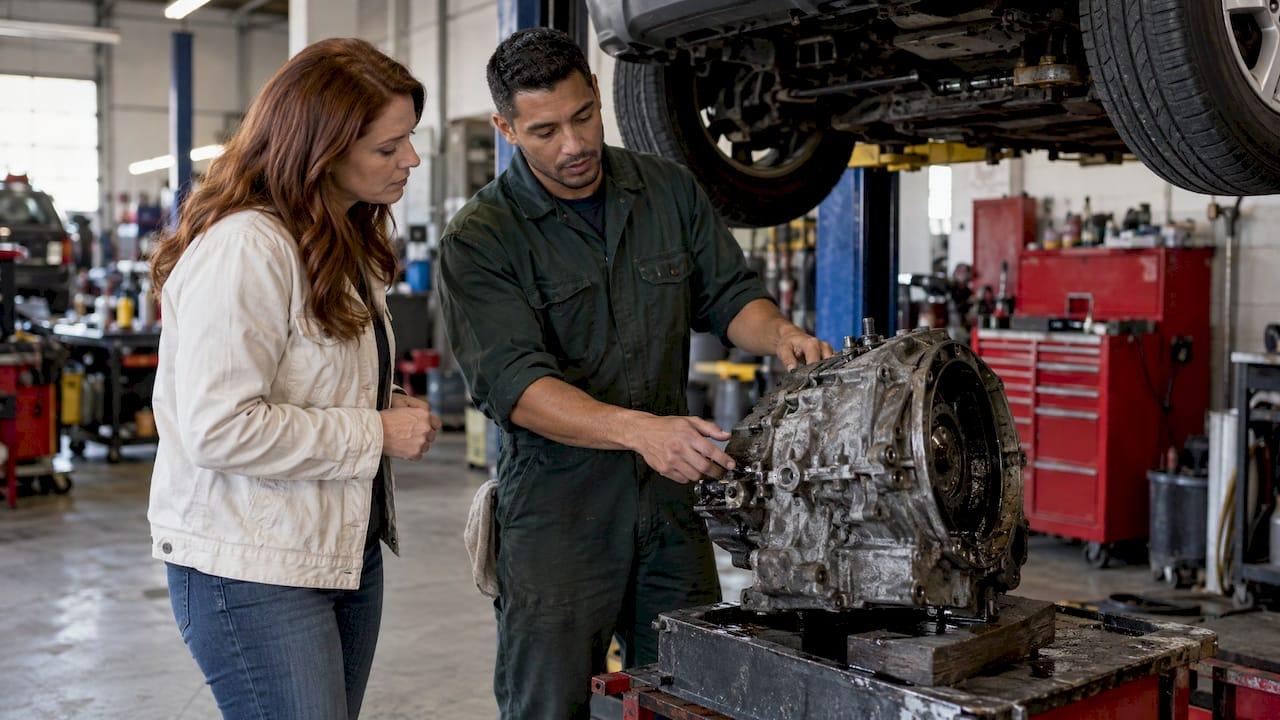
An unexpected car repair is rarely a small event. According to the Federal Reserve figures summarized by Quartz, 30% of U.S. adults had to pay for a big vehicle repair or replacement in the past 12 months. The way to take the shock out is to do two things: make the right call in the first hour, and put a plan in place before the next bill arrives. For many owners, that plan is an extended warranty, which is why we built Elite, Advanced and Essential coverage at RPM Warranty.
This guide walks you through both halves. First, how to tell whether a problem is urgent. Then what common repairs cost, why premium and late-model vehicles can be especially expensive, and how to choose coverage that fits your car and your budget.
TL;DR
- Brakes, steering, overheating and a flashing check-engine light do not wait. Get the car to a safe place and stop driving it.
- Engine and transmission work is where bills run into the thousands: AAA puts a full automatic transmission replacement at $2,500 to $6,000.
- A savings habit of roughly $66 a month, based on AAA's $800 annual maintenance estimate, covers small surprises but rarely a major mechanical failure.
- An extended warranty is an optional contract that covers mechanical and electrical parts after the factory warranty ends. Read what is covered, the deductible and the length before you sign.
- We offer Elite, Advanced and Essential plans for cars, plus Full Throttle for motorcycles, with a free quote based on your year, make and model.
Table of Contents
- First, decide whether the car is safe to drive
- What common unexpected repairs cost
- Why premium and late-model vehicles cost more to fix
- Prevention: how to make surprises smaller
- Paying for a repair you did not plan for
- How an extended warranty helps
- Get a quote for your car
- Our perspective
- FAQ
- Sources
First, decide whether the car is safe to drive
Before you think about money, think about safety. A repair that makes the car unsafe is a different decision from one that can be scheduled for next week.
The Federal Trade Commission's Auto Repair Basics guide suggests using your senses before you call anyone. It describes what to look for:
- Puddles under the car. Yellowish-green, pastel blue or fluorescent orange fluid points to antifreeze and an overheating risk. Dark brown or black oily fluid suggests an engine oil leak. Red oily spots suggest transmission or power-steering fluid.
- Noises. Squeals can indicate a worn belt, and screeching can indicate brake wear.
- Smells. The guide lists burned toast as a sign of an electrical short, rotten eggs as a catalytic converter issue, and a persistent gasoline smell after a failed start as a fuel-system leak that needs immediate attention.
- Braking changes. Schedule a diagnosis if the car pulls when you brake, the pedal sinks or the brake light is on.
Lights and symptoms that mean stop
AAA advises stopping and getting help if the check-engine, temperature or oil-pressure light comes on or flashes, because continuing to drive can cause costly or irreversible engine damage. For a red temperature light, turn the car off, get out and call for assistance, and do not open the hood if you suspect overheating. The same guidance says thick white smoke from the tailpipe usually means the engine is dangerously overheated, and the car should be towed. Clear, odorless drips from the air conditioner are normal condensation.
A solid check-engine light is less of an emergency than a flashing one. AAA Oregon/Idaho says a solid light means addressing the issue as soon as possible, while a flashing light usually needs immediate attention. If the car is losing power, shaking or giving off a strange odor, pull over as soon as it is safe.
If the car stops on the road
If you can still drive a short distance, AAA recommends getting to a safe spot such as a parking lot. If the car is coasting to a stop, guide it to the far-right shoulder, as far off the road as you can on level ground, and turn on the emergency flashers. Exit on the side away from traffic if possible, then call for road service from a safe location.
Roadside assistance is the part of a breakdown people forget to plan for. Our plans include roadside assistance and rental reimbursement, so a breakdown does not also leave you stranded without a way to get to work.
Safety, damage prevention or convenience
When a shop hands you a list, sort each item into one of three buckets: safety, damage prevention or convenience. If a shop says the car is unsafe to drive, ask which exact component failed, what could happen and whether it needs a tow. A clear answer is a good sign. Always get the estimate in writing, and for a large job, a second estimate is worth the time.
What common unexpected repairs cost
The numbers below come from published budgeting guides. They are national ranges, so your own quote will depend on your vehicle, your region and the shop's labor rate.
| Repair | Typical cost | Source |
|---|---|---|
| Car battery | $75 to $200 plus labor | AAA |
| Alternator replacement | $500 to $1,000 | AAA |
| Timing belt service | $400 to $1,000 | AAA |
| Automatic transmission replacement | $2,500 to $6,000 | AAA |
| Catalytic converter | $2,164 to $2,483 | Experian |
| Engine replacement | $4,000 to $10,000 | Experian |
Experian puts the average cost of a car repair at $838, and AAA's budgeting guide notes that a failed timing belt can cause significant engine damage on top of the belt itself. That pattern matters: the big numbers are often a small problem that was left to grow. A leak, a rough idle or a noise you keep meaning to look at is cheaper to fix early.
If you want a sense of the top end, Autoblog's 2025 ranking put EV batteries first at an average of $12,500 to repair, with engine and cylinder fixes averaging $7,000.

Why premium and late-model vehicles cost more to fix
Parts, labor and complexity all rise with the badge. The more electronics, air-sprung suspension, turbocharging and hybrid hardware a vehicle has, the more there is that can fail after the factory warranty ends, and the more a diagnosis costs before a single part is replaced. Here is how that plays out across the makes owners ask us about most. These are the systems to know about and ask a technician about at service time, not a prediction for any individual car.
Range Rover
Range Rover models are known for their comfort, and much of that comes from a sophisticated suspension that can be height-adjustable with air springs, plus extensive electronic controls. Those systems are what owners should keep an eye on as the miles add up. A change in ride height after parking, a warning message on the dash or a compressor that runs more than usual are all worth a diagnosis. Cooling and electrical systems on a large, heavy vehicle also work hard.
BMW
BMW's appeal is the driving experience: turbocharged engines, precise steering and a lot of driver-assistance technology. Owners should pay attention to oil level, cooling-system condition and any leaks around the engine, which are the same early warnings the FTC guide describes. Electronic modules and sensors are another area where a repair bill can grow quickly, because diagnosis often takes more time than the part.
Mercedes-Benz
Mercedes-Benz models pair comfort-focused suspension with dense electronics: infotainment, camera systems, adaptive features and multi-speed automatic transmissions. When an air suspension warning light comes on or a transmission shifts harshly, it is worth getting it checked promptly. AAA's cost guide puts full automatic transmission replacement at $2,500 to $6,000 before you account for the premium of a luxury vehicle.
Porsche
Porsche owners buy for performance, and performance parts tend to wear in step with how hard the car is driven. Brakes, cooling components and the cooling system's hoses and pipes deserve attention at every service. An engine that runs hot or a coolant smell is the same warning the FTC guide describes, and AAA is clear that overheating means you stop driving.
Ford
Ford's trucks and SUVs are often used for towing and hauling, which puts extra load on transmissions and cooling systems. The company's own owner's manual says that following its maintenance schedule helps protect against major repair expenses from neglect, and that skipping scheduled maintenance can affect warranty coverage on the parts involved. It recommends monthly checks of engine oil, lights, tires and washer fluid, and six-month checks of battery connections, coolant and warning lamps. Keep your receipts with the vehicle.
Honda
Honda has a reputation for reliability, and well-maintained examples often run for years. That reputation is exactly why many owners keep their Hondas well beyond the factory warranty, and the longer you keep a car, the more the question shifts from whether something will need repair to when. Regular oil changes and fluid checks according to the owner's manual are the foundation, and coverage that starts when the factory warranty ends keeps the budget steady on a high-mileage Accord, Civic or CR-V.
We also publish pages for Volkswagen owners, Hummer owners and Lotus owners, and a page for Ducati riders.
Prevention: how to make surprises smaller
Very few expensive repairs come with no warning. Keep a short routine:
- Follow the maintenance schedule in your owner's manual. Ford's manual, for example, calls for oil changes according to the oil-life monitor, never beyond one year or 10,000 miles for normal use, and tire rotation at every oil change.
- Check fluids and tires monthly. Oil, coolant and washer fluid take a few minutes.
- Do not postpone small repairs. A leak, a belt squeal or a rough idle is cheaper now than after it has damaged something else.
- Keep records. Receipts show that the car has been maintained, which matters if you ever make a warranty claim.
Paying for a repair you did not plan for
Build a repair fund
A car repair fund is a savings account used only for car costs. Chime suggests starting from AAA's $800 annual maintenance estimate and dividing it by 12, which is about $66 a month, and treating $50 to $100 a month as a practical starting point. That covers a battery, brakes or tires. It takes a long time to build up to the price of an engine or transmission job, which is why people pair a fund with coverage.
The Consumer Financial Protection Bureau sets no single dollar target for an emergency fund. The right size depends on the surprise bills your household has had before, according to the Quartz summary of its guide. If you have owned an older or higher-end vehicle, size your fund to those bills.
If you do not have the cash
Kelley Blue Book lists several routes: get competing quotes, repair in stages if it is safe to do so, ask about shop payment plans while watching the interest rate, check local assistance through a church or United Way chapter, or ask your bank about a personal loan. It also warns that an unpaid bill can lead to a mechanic's lien on your vehicle, so do not let an invoice sit.
How an extended warranty helps
The CFPB explains the difference plainly. A manufacturer's warranty covers defects or failures for a set time or mileage and comes with the car. An extended warranty is optional, and it covers mechanical and electrical components that the factory warranty does not once it has expired. Routine maintenance such as oil changes and tire replacement is typically not included.
That is the point of the product: it turns an unpredictable, four-figure repair into a known deductible. For the cars discussed above, where a single suspension, transmission or electronics repair can be expensive, that predictability is the value.
Two kinds of coverage
AAA describes two coverage types. Named-component plans cover only the parts on a list, often in bronze, silver and gold tiers. Exclusionary plans cover most components and list what is left out. Even the best warranty excludes pre-existing conditions and routine maintenance. AAA also says the average yearly extended-warranty plan ranges from $600 to over $3,500, depending on vehicle age, mileage, coverage level, provider and plan length, and that a deductible may be charged per visit or per individual repair.

What to check before you sign
The CFPB tells buyers to review these points in any contract:
- Cost. The price is negotiable, and you can ask for a written quote.
- Length. How many months or miles, and when it starts.
- What is covered and what is not. Look for your engine, transmission, cooling, electrical and high-tech parts by name.
- Overlap. Whether the manufacturer's warranty still covers the same parts, so you do not pay twice.
- How you use the vehicle. Commuting, towing and weekend driving can all matter.
You also have the right to cancel an add-on product like this at any time, per the CFPB.
How our plans are built
We offer three tiers for cars: Elite, Advanced and Essential, with different coverage levels to fit different budgets. Coverage can include the engine, transmission, cooling system, electrical system, steering, suspension, hybrid systems and high-tech electronics, along with roadside assistance and rental reimbursement. Our process has four steps: consultation, plan selection, customization and final agreement. Plans are customized to your vehicle's year, make and model, and repairs are performed by ASE-certified mechanics nationwide. We design our plans around clear terms with no hidden fees, and our claims process is built for quick approvals, typically 24 to 48 hours.
Get a quote for your car
If you drive a Range Rover, BMW, Mercedes, Porsche, Ford, Honda or another make, the fastest way to see what coverage looks like for your vehicle is a free quote. Tell us your year, make and model, compare Elite, Advanced and Essential on the protection plans page, and choose the level that fits your budget. Riders can look at Full Throttle motorcycle coverage.
Bring the questions from the checklist above. Which parts are covered, what is the deductible and when does coverage start? Our terms are written to answer them plainly, and our team can walk you through each one.
Our perspective
Most of the owners we talk to are not surprised that a car can break. They are surprised by the size and the timing of the bill. A repair that arrives the week before rent is due is a different problem from the same repair on a planned budget.
That is why we think of coverage as budgeting, not as a bet on a breakdown. The cars people love most, the ones with air suspension, turbocharged engines, adaptive electronics and hybrid systems, are the ones where a single repair can reach into the thousands. Knowing what you will pay before the car goes into the shop changes how the whole situation feels.
We built Elite, Advanced and Essential so that an owner can match coverage to the vehicle and to the budget, and we keep the process to four steps: consultation, plan selection, customization and agreement. Add ASE-certified mechanics nationwide, roadside assistance and rental reimbursement, and the stress of a breakdown has fewer pieces to it.
Keep your maintenance records, build a small repair fund, and get coverage in place while the car is running well. That is the order we would follow ourselves.
Kenneth
FAQ
What is the most expensive thing to repair on a car?
Engines and transmissions are usually the most expensive. Experian lists engine replacement at $4,000 to $10,000, and AAA puts a full automatic transmission replacement at $2,500 to $6,000. On electric vehicles, the battery can cost far more, averaging $12,500 to repair according to Autoblog.
Can I keep driving with the check-engine light on?
It depends on the light. A solid light means addressing the issue as soon as possible, while a flashing light usually needs immediate attention, according to AAA. If the car is losing power, shaking or smelling strange, pull over when it is safe and call for help.
How much should I save each month for car repairs?
A common starting point is about $66 a month, which is AAA's $800 annual maintenance estimate divided by 12. Any amount from $50 to $100 a month helps. A larger fund or a warranty plan is how you prepare for engine or transmission costs.
Does an extended warranty cover routine maintenance?
No. The CFPB notes that extended warranties typically exclude routine maintenance such as oil changes and tire replacement, and AAA adds that pre-existing conditions are excluded as well. They cover mechanical and electrical failures listed in the contract, so read the covered-components list for your vehicle before you sign.
Can I get a quote for my specific car?
Yes. We build quotes from your vehicle's year, make and model, and you can compare Elite, Advanced and Essential before choosing. Motorcycle owners can look at Full Throttle.
Sources
- Quartz: How to build an emergency fund, summarizing the CFPB guide
- FTC: Auto Repair Basics
- AAA: 6 Signs You Need to Pull Your Car Over
- AAA Oregon/Idaho: The Check Engine Light
- AAA: My Car Won't Start, Now What?
- AAA: How Much Should You Budget for Car Repairs?
- Experian: How to Budget for Car Maintenance and Repairs
- Autoblog: 10 Most Expensive Car Parts to Fix
- Ford owner's manual: Scheduled Maintenance
- Chime: Average Cost for Car Maintenance
- Kelley Blue Book: Auto Repair Pricing and Cost Estimates
- CFPB: Manufacturer's warranty vs. extended warranty
- AAA: What Is an Extended Car Warranty?