
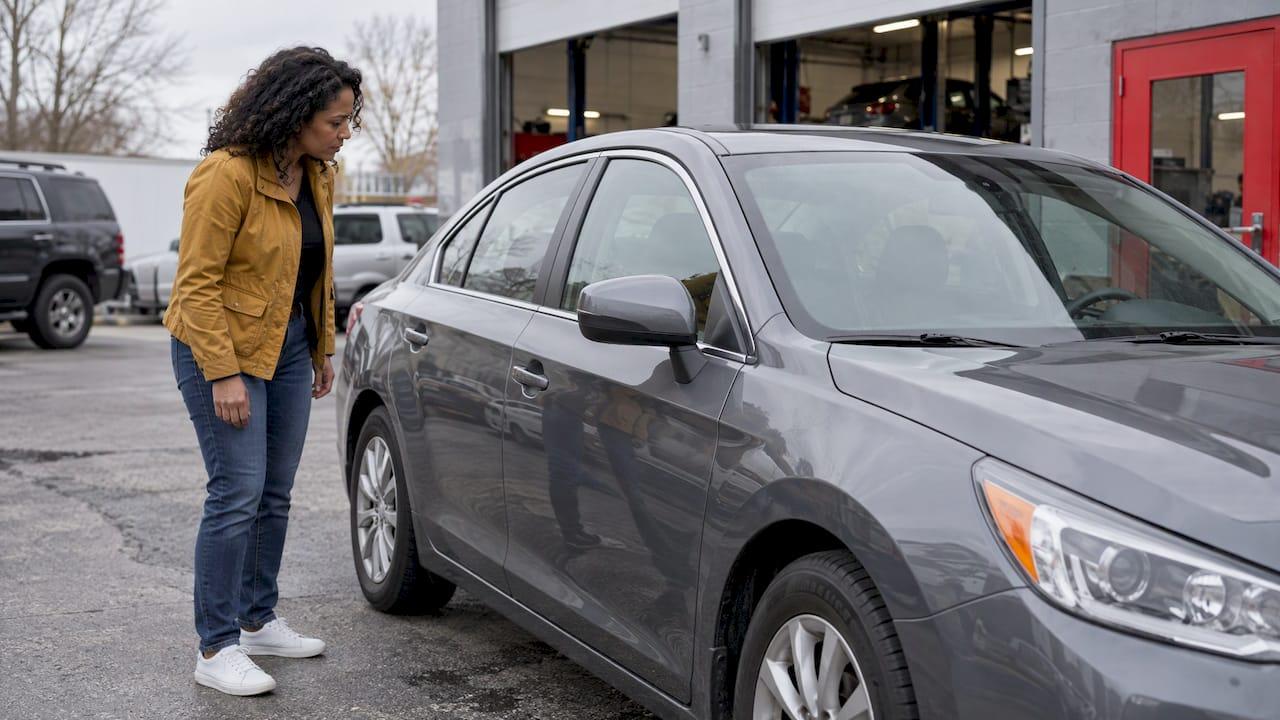
A good used car inspection has four parts: the paperwork, a slow walkaround, a real test drive, and a mechanic's inspection on a lift. Skip any one and you are guessing. Once you drive off, the repair bill is yours unless the car is covered by a warranty or service contract, which is why we pair every used purchase with a plan to cover what an inspection cannot see. This checklist takes you through each part in order, then covers what to look at on higher-end cars such as a Range Rover, BMW, Mercedes, Porsche, Ford or Honda.
TL;DR
- Run the VIN (vehicle identification number) through a history report and get the service records before you travel to see the car.
- Inspect in daylight on a dry day, on level ground, with the engine cold. Check panels, tires, fluids, electronics and smells.
- Drive for at least 30 minutes on city streets and a highway, and listen with the radio off.
- Pay for an independent mechanic's inspection. Consumer Reports puts a thorough one at roughly $100 to $150, a small share of the price of almost any car.
- Luxury cars have costly systems (air suspension, turbos, infotainment). Check each one on purpose, and plan coverage for after the sale.
Table of Contents
- Before you see the car: history and paperwork
- The walkaround: body, glass and tires
- Under the hood and under the car
- Inside the car: smells, switches and screens
- The test drive: at least 30 minutes
- The independent mechanic's inspection
- High-end cars: what to check on specific makes
- Why a clean inspection still isn't the end of the story
- Coverage for the car after you buy it
- Our perspective
- FAQ
- Sources
Before you see the car: history and paperwork
The best inspection starts at your desk. Ask the seller for the VIN, the 17-character code stamped on the dashboard and the driver's door jamb, and run it before you spend a Saturday driving across town.
What a history report shows
A vehicle history report pulls together records tied to the VIN. Kelley Blue Book lists what these reports can include: major accidents, mileage rollback, service history, multiple owners, flood or hail damage, lease, taxi or police use, total loss, salvage or rebuilt titles, lemon branding and airbag deployment. The same article cautions that a report is a snapshot in time. It can miss recent damage, minor unreported fender benders, the quality of a repair and general wear. Treat it as a filter that removes bad cars, not as proof a car is good.
The Ohio Attorney General's used car checklist adds free steps: use the VIN to look up the most recent odometer reading at vehiclehistory.gov, check for flood damage through the National Insurance Crime Bureau, and research open safety recalls at nhtsa.gov/recalls. A recall is a defect the manufacturer must fix at no charge, so an open one is a talking point, not a dealbreaker.

Service records
A history report often misses work done at independent shops, so ask for the paper file. Consumer Reports advises asking for copies of service records and receipts for replaced parts, then comparing them with the manufacturer's maintenance schedule for that make and model. Receipts usually show the odometer reading, which helps confirm the mileage is real. Be wary if the owner says maintenance was done but cannot produce receipts, or if the car changed hands several times in a few years.
When you read the file, look for:
- Regular oil changes at sensible intervals.
- Big-ticket items such as transmission service, coolant service, brakes and tires, with dates and mileage that make sense in sequence.
- The same repair showing up again and again, which points to a problem nobody has solved.
- Work that was "recommended" on an invoice but never marked as performed.
Questions to ask the seller
Before you go, ask how long they have owned it, why they are selling, whether anything on the car is not working, and whether it has ever been in an accident. Consumer Reports also suggests asking about key features such as transmission type, safety equipment and audio system, whether or not they are in the ad. Vague or evasive answers tell you something before you touch the car.
The walkaround: body, glass and tires
Set up the inspection properly. Consumer Reports recommends a dry, sunny day with the car parked on level ground and not driven for at least an hour, so you see how it starts cold. Bring thin gloves, paper towels or a rag, and a flashlight. NerdWallet adds a notebook, a camera to compare cars, and a small magnet.
Paint and panels
Stand back and look down each side. Gaps between panels should be even, and the paint color and sheen should match everywhere. Mismatched shades, overspray on rubber trim or ripples in the reflection suggest a repaint after a collision. Look for rust at the wheel arches, rocker panels and under the doors.
The magnet trick is simple: NerdWallet notes that a magnet should stick to every steel panel, and a spot where it does not can mean body filler. Test lower doors and fenders. Many modern hoods and some body panels are aluminum, so a magnet that does not stick there is not alarming. On those cars, rely on gap and paint checks instead.
Glass and lights
Check the windshield for chips and cracks, and confirm every headlight, taillight, turn signal and brake light works. Foggy or yellowed headlight lenses and moisture inside a lamp are worth noting, since replacements on newer cars with LED or adaptive units can be expensive.
Stance and tires
Push down hard on each corner of the car. It should rebound once and settle. Edmunds says to check that the car sits level on flat pavement, since a high or low corner can point to a suspension problem. Tires should wear evenly across the tread, and all four should be the same brand. Mismatched tires and uneven wear can point to suspension or steering trouble, or to an owner who skimped on maintenance. Check the DOT date code on the sidewall too: rubber ages even when the tread looks deep.
Under the hood and under the car
Do this with the engine off and cool. Look for wet spots, cracked hoses, frayed belts, and corrosion on the battery terminals.

Oil, coolant and other fluids
Pull the dipstick and wipe it on a clean white rag or paper towel. NerdWallet's list of warning signs includes water droplets, a gray or foamy look, shiny metal particles, or oil that is dark brown or black and gooey. Edmunds says foamy or gray oil can mean coolant is mixing with the oil, a possible sign of a blown head gasket or cracked block. Check that power steering, brake, coolant and transmission fluids are not below the minimum marks.
For an automatic transmission, Edmunds says to check the dipstick with the engine running and warm. Popular Mechanics' longer checklist says dark fluid or metallic particles point to worn parts. Many newer cars have sealed transmissions with no dipstick, which is one more reason to bring in a mechanic with a lift.
Underneath
Shine your flashlight under the car. You are looking for drips, damp spots on the engine and transmission, and rust on the frame. Popular Mechanics points out that gouges along the underbody pinch welds can show the car sat on a frame-straightening machine. A mechanic can go further: Consumer Reports says to ask for a lift inspection, because kinked structural parts, big dents in the floor pan or fuel tank, frame welding and fresh undercoating can indicate past accident repair.
Inside the car: smells, switches and screens
Open the door and breathe in. Consumer Reports says to smell for mildew that could signal flood or water damage, and lift the floor mats to check for damp carpet or silt. A heavy air-freshener smell deserves the same suspicion.
Then work through the cabin:
- Sit in every seat and adjust it through its full range.
- Turn on every switch and knob: windows, mirrors, locks, wipers, sunroof, heated seats, steering wheel controls.
- Run the heater and A/C. Car and Driver's guidance is that the A/C should blow cold within about a minute and the heater hot within about 30 seconds. Water dripping under the car with the A/C on is normal.
- Test the infotainment screen, backup camera, parking sensors and navigation. Dead pixels, lag and a screen that will not pair with your phone are all worth recording.
- Look at the warning lights when you start the car. Every light should come on briefly and then go out.
Car and Driver's advice is blunt: even if you cannot tell a dipstick from a battery cable, hit every button and turn every knob. If the owner will not let you open the sunroof and gives no reason, move on.
If you are looking at a used EV or hybrid, have the battery health checked. Consumer Reports notes that how to do this varies widely by manufacturer, so find out the method for that model before you visit.
The test drive: at least 30 minutes
The test drive is where you find what a static look cannot. Consumer Reports recommends planning your own route with city streets and highway, driving at least 30 minutes, and including a quick acceleration from a stop, a rolling merge into freeway traffic, a hill to test transmission downshifts, and both soft and hard braking in a deserted space. Car and Driver says no test drive should be under 20 minutes and you should sit parked with the engine running for at least five minutes first.
What to feel and hear
- Starting and idling: The engine should start promptly and idle smoothly, with no warning lights.
- Shifting: NerdWallet's checklist says there should be no clunk when you put an automatic into drive and no vibration at highway speeds.
- Brakes: The car should stop in a straight line with no grinding, squealing or pulsing in the pedal.
- Steering: It should feel smooth, respond promptly and return to center. The car should track straight without constant corrections.
- Noise: Turn the radio off and close the windows to listen for engine, wind and tire noise, as Consumer Reports suggests. Squeaks, rattles and clunks over bumps often come from worn suspension parts.
- Maneuvering: Try parallel parking and a K-turn to judge turning radius and visibility. If you can, drive after dark to judge the headlights and instrument lighting.
Afterward, look under the car again. Consumer Reports advises checking for oily leaks after the drive and watching for exhaust smoke, abnormal vibration and burning-fluid smells while driving.
The independent mechanic's inspection
Your own checklist screens out the obvious problems. A pre-purchase inspection (PPI) by a mechanic catches what is hidden. Edmunds explains the value: the web has plenty of information about every model, but at the point of purchase you need to know about this particular car, including what is right with it as well as what is wrong.
How to arrange it
Choose a shop that does diagnostics routinely, not one the seller recommends. Consumer Reports notes the Car Care Council certifies diagnostic shops and AAA members can use the organization's recommended facilities. A private seller should agree to let you take the car for an hour. A seller who refuses an independent inspection is telling you something. The Ohio Attorney General's checklist also tells buyers to have an independent mechanic of their own choosing inspect the car.
What it should cover
Ask for the engine, transmission, brakes, suspension and steering, cooling system, a lift inspection of the underbody, and an OBD-II scan. OBD-II is the diagnostic port on every car sold in the US since 1996, and a scan can show stored and pending fault codes. Popular Mechanics suggests using a scan tool on 1996-and-newer vehicles to record fault codes. Ask for the findings in writing so you can use them in price negotiation.
What it costs
Consumer Reports says a pre-purchase inspection checking the expensive parts is worth $100 to $150, and puts a thorough diagnosis at around $120 in its lemon-avoidance guide. NerdWallet says a professional inspection costs several hundred dollars, with a comprehensive history report around $30 to $45. Prices run higher at specialist shops for luxury and performance brands, so ask for a quote first. On a $20,000 car, even a $300 inspection is 1.5% of the price, and one found problem usually pays for it.
High-end cars: what to check on specific makes
The general checklist applies to every car. Premium vehicles add complex systems that are expensive to fix, so spend your inspection time there. The notes below are inspection pointers by system, not a verdict on any model. Always confirm details for the exact year and trim with a technician who knows the brand.
Range Rover
Many Range Rovers come with air suspension, which lets the vehicle raise and lower itself. During the walkaround, check that the car sits level after it has been parked for a while, and at the test drive, cycle the height settings and watch for warning messages on the dash. Look under the vehicle for oil seepage and at the tires for uneven wear. Check that the large touchscreen, 4x4 terrain settings and every camera work. Ask for records of the air suspension and any cooling-system work.
BMW
BMW's turbocharged engines are central to the driving experience, so oil condition and leak checks matter. Look carefully around the valve cover and oil filter housing for seepage, and confirm oil changes on schedule. Test the iDrive controller and screen, every driver-assist feature and the adaptive dampers if fitted. At the scan, ask the mechanic to read pending codes in all modules, not only the engine.
Mercedes-Benz
Mercedes cabins are packed with electronics: multiple screens, memory seats, ambient lighting, driver-assistance cameras and radar. Test every one, including the parking sensors and 360-degree cameras. If the car has air suspension, cycle through it as with a Range Rover. Check that the dash shows no service or warning messages, and look for dealer service history, since software updates and recalls are recorded there.
Porsche
Porsches are often driven hard, so ask how the car was used. Look for even tire wear, check brake rotors and pads for lipping and wear, and listen for clutch or gearbox noise on a manual or PDK (Porsche's dual-clutch automatic). Records matter more here than almost anywhere: a thick file of specialist service invoices tells a better story than low mileage with no paperwork. Cold-start behavior and any smoke on startup should be checked, so arrive before the engine has been run.
Ford
Ford's trucks and SUVs, such as the F-150, Explorer and Bronco, are often used for towing and off-road driving. Check the hitch for wear, look at the frame and underbody for rust and scrapes, and test four-wheel drive if fitted. On turbocharged EcoBoost engines, confirm the oil service history. Test the SYNC screen, power tailgate and driver-assist features. On the test drive, pay attention to transmission shift quality under load.
Honda
Hondas have a reputation for dependability, so the inspection is mostly about proving the maintenance was done. Check records for regular fluid services, especially transmission fluid, and look for even tire wear. On the test drive, listen for CVT (continuously variable transmission) behavior such as shuddering or whining, and check that the A/C blows cold. Hybrid models need the battery and cooling checked by a technician.
Other makes and EVs
The same logic applies to Audi, Volkswagen, Lexus, Tesla and exotic brands: find the high-cost systems (turbo, adaptive suspension, screens, driver assistance, battery), test each one, and get a technician who knows the brand to scan and lift the car.
Why a clean inspection still isn't the end of the story
An inspection tells you the condition of the car on the day you looked at it. It cannot tell you what will fail in month 14. Once the car is yours, repair bills for a transmission, turbo, air suspension or infotainment module can reach thousands of dollars, and no checklist changes that. That is the gap an extended warranty is built for, and it is a better decision when you make it while the inspection report is fresh in your hands.
The inspection also helps you pick the right level of coverage. If your mechanic notes a car's engine and transmission are in excellent shape but the electronics are complex, you know where you most want protection.
Coverage for the car after you buy it
RPM Warranty sells extended vehicle warranty plans in three tiers, Elite, Advanced and Essential, so you can match coverage to your car and budget. Plans cover components such as the engine, transmission, cooling system, electrical systems, steering, suspension, hybrid systems and high-tech electronics, and include roadside assistance and rental reimbursement. Service runs nationwide through ASE-certified mechanics, and you can get a free quote online or by phone based on your vehicle's year, make and model.
See the Elite, Advanced and Essential plans to compare coverage. If you are shopping for a specific brand, we have pages for Audi, Volkswagen, Tesla and McLaren. Motorcycle buyers can look at the Full Throttle plan.
Our perspective
Most buyers treat the inspection and the warranty as two separate decisions. We see them as one. The inspection tells you what you are buying today. The coverage decides what happens when something wears out tomorrow.
The best moment to think about protection is before you sign for the car, when you still have the full inspection report and know which systems worry you. A buyer who has just seen a worn suspension bushing or a screen that lags knows exactly which components they want covered.
That is why our process is four steps: a consultation, plan selection, customization and a final agreement. Our plans are built to be straightforward, with clearly outlined terms and no hidden fees, so you can see what is covered before you commit. When a claim does come up, our goal is a streamlined process with approvals in 24 to 48 hours, and repairs through ASE-certified mechanics nationwide.
Do the checklist. Pay for the mechanic. Then protect the car you chose.
Kenneth
FAQ
What should I check before buying a used car?
Start with the VIN history report and the service records, then do a daylight walkaround of the body, tires, fluids and interior. Drive it for at least 30 minutes, and finish with an independent mechanic's inspection. The sections above give the full order and what to look for at each step.
How much does a used car inspection cost?
Consumer Reports says a professional pre-purchase inspection is worth $100 to $150, while NerdWallet says several hundred dollars is typical for some inspections. Luxury and performance brands usually cost more because they need specialist knowledge, so get a quote before booking.
Can I inspect a used car myself without being a mechanic?
Yes, for the visible parts. You can check paint, tires, fluids, smells, switches and how the car drives, and the checklist above is written for that. Pair it with a mechanic's lift inspection and an OBD-II scan for the parts you cannot reach.
What are signs a used car has been in a flood or crash?
A mildew smell and damp carpet under the mats point to water damage. Uneven panel gaps, mismatched paint, a magnet that will not stick to steel panels, and gouged pinch welds under the car point to collision repair. A history report and the National Insurance Crime Bureau flood check can back up what you see.
Should I get an extended warranty on a used car?
A used car is out of its factory coverage or close to it, so repair costs fall on you. An extended plan covers major components after the sale. You can compare RPM Warranty plans and get a free quote based on your car's year, make and model.
Sources
- How to Inspect a Used Car to Avoid Costly Repairs, Consumer Reports
- How to Buy a Used Car: CR's Expert Step-by-Step Guide, Consumer Reports
- How to Test-Drive a New or Used Car, Consumer Reports
- Avoid Buying a Lemon When Shopping for a Car, SUV, or Truck, Consumer Reports
- Inspect That Used Car Before Buying, Edmunds
- What to Look for When Buying a Used Car, NerdWallet
- Vehicle History Report: Everything You Need to Know, Kelley Blue Book
- Used Car Buyer Checklist, Ohio Attorney General
- How to Buy a Used Car Without Getting Burned, Popular Mechanics
- How to Buy a Used Car Even If You Know Nothing About Cars, Car and Driver