

TL;DR:
- A vehicle service contract is an optional agreement covering certain repairs after the warranty expires, classified as a service agreement rather than insurance. These contracts include powertrain and bumper-to-bumper tiers, with coverage for core mechanical parts or nearly everything except specified exclusions. They are regulated by state laws offering cooling-off periods and require careful review of claims processes, coverage details, and cancellation terms.
A vehicle service contract is a separate, optional paid agreement that covers the cost of specific vehicle repairs after the manufacturer's warranty expires. These contracts are legally classified as service agreements, not insurance policies or factory warranties, and every term is governed strictly by what the contract document states. That distinction matters because it affects your rights, your cancellation options, and how claims get paid. For owners of vehicles like BMW, Mercedes-Benz, Range Rover, Porsche, Honda, and Ford, repair bills after the factory coverage ends can reach thousands of dollars. Understanding how these agreements work before you sign one is the most effective way to protect your wallet.
What do vehicle service contracts actually cover?
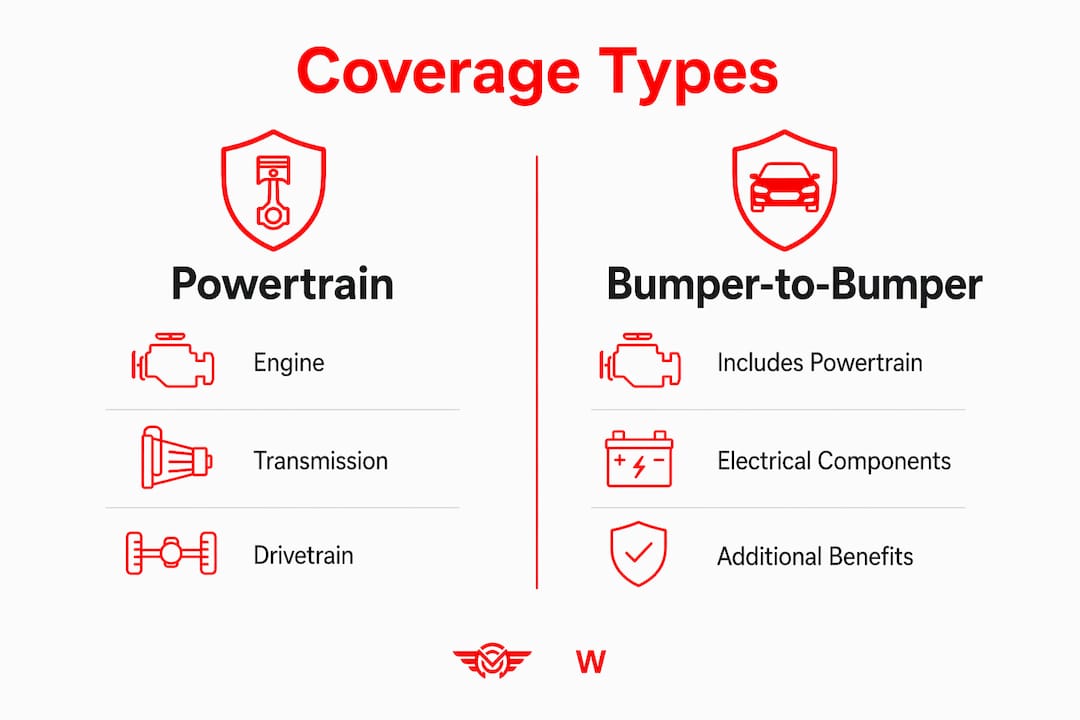
Coverage under a vehicle service contract falls into two broad tiers: powertrain and bumper-to-bumper. Knowing the difference prevents the most common and costly misunderstanding buyers make.
Powertrain coverage
Powertrain plans cover the core mechanical systems that move the vehicle. That typically includes the engine block, pistons, crankshaft, transmission gears, drive axles, and transfer case. A BMW 5 Series owner dealing with a transmission failure or a Ford F-150 owner facing an engine bearing failure would find powertrain coverage directly relevant. These plans carry lower premiums but leave a large portion of the vehicle unprotected.

Bumper-to-bumper coverage
Bumper-to-bumper plans, sometimes called exclusionary plans, cover nearly every mechanical and electrical component except a defined list of exclusions. A Mercedes-Benz GLE owner benefits from this tier because the vehicle carries complex air suspension systems, advanced driver-assistance electronics, and multi-zone climate controls. Repairs to those systems outside the factory warranty period can easily exceed $3,000 per incident.
Regardless of tier, most contracts exclude the following:
- Routine maintenance items: oil changes, brake pads, filters, and tire rotations
- Wear-and-tear parts: wiper blades, belts, and brake rotors
- Cosmetic damage: upholstery, paint, glass, and trim
- Tires and wheels
- Pre-existing conditions known before the contract start date
Pro Tip: Ask the provider for a written list of covered components, not just a list of exclusions. Covered-component lists are shorter and easier to verify than exclusion lists that run several pages.
Many contracts also include additional benefits beyond repair coverage. Roadside assistance, rental car reimbursement, and trip interruption protection are common add-ons. For a Porsche Cayenne owner stranded on a highway, 24/7 roadside assistance is not a minor perk. It is a practical necessity.
Vehicle service contracts differ significantly from prepaid maintenance plans. A prepaid maintenance plan covers scheduled servicing like oil changes and tire rotations. A vehicle service contract covers mechanical failures. Confusing the two leads owners to believe they have repair protection when they only have a service schedule.
How are vehicle service contracts regulated?
Vehicle service contracts are regulated at the state level, not by federal warranty law. That means your rights depend heavily on where you live and what your state requires providers to disclose.
Most U.S. states require a cooling-off period for these agreements. During that window, you can cancel the contract and receive a full refund if no claims have been filed. Cooling-off periods generally run 10–20 days, though some states like Florida extend that window to up to 2 months. That protection gives you time to review the contract carefully after purchase rather than under sales pressure.
State regulations also typically require providers to disclose the following:
- The complete claims process, including who to contact and what documentation is required
- Any administrative fees deducted from refunds upon cancellation
- Whether the contract is transferable to a new owner if you sell the vehicle
- The name of the administrator and any third-party underwriter backing the contract
| Regulatory element | What to look for |
|---|---|
| Cooling-off period | Confirm the exact number of days and whether claims void the refund |
| Cancellation refund | Check if a pro-rated or flat administrative fee applies |
| Transferability | Verify if coverage transfers to a new owner and at what cost |
| Administrator identity | Confirm who processes claims and who backs the contract financially |
| Disclosure requirements | Confirm all exclusions are listed in plain language |
Reading the full contract before the cooling-off period expires is not optional. Providers are not required to summarize terms verbally in a way that is legally binding. The written document is the only version that counts.
What factors matter most when comparing protection plans?
Choosing between auto warranty options requires evaluating several factors that go well beyond the monthly premium. Price is the least reliable indicator of value.
Claims approval rate and speed
Claims approval rate and speed are the most critical quality indicators when evaluating any provider. A contract with a low premium but a pattern of delayed or denied legitimate claims delivers no real protection. Before purchasing, research the provider's claims history through consumer review platforms and state insurance department complaint databases.
Coverage transparency
The contract must list covered components explicitly. Vague language like "all mechanical parts" creates disputes at the repair shop. A Range Rover owner dealing with an air suspension compressor failure needs the contract to name that component specifically. If the contract relies on exclusion-only language, read every exclusion carefully and assume anything not mentioned is not covered.
Deductible structure
Extended vehicle service contracts typically range from $900 to $2,400 per year depending on vehicle make, model, age, and coverage level. Older vehicles and higher coverage tiers sit at the top of that range. A higher deductible lowers your annual premium but increases what you pay out of pocket when a repair occurs.
The structure of the deductible matters as much as the amount. A per-visit deductible requires one payment per repair visit regardless of how many components are replaced. A per-component deductible charges you separately for each part repaired during the same visit. If a Honda Pilot needs a water pump, thermostat, and radiator hose replaced in one appointment, a per-component deductible multiplies your cost by three.
Pro Tip: Always choose a per-visit deductible structure when given the option. The premium difference rarely justifies the financial exposure of per-component billing.
Payment method: direct-pay vs. reimbursement
Direct-pay contracts have the administrator pay the repair shop directly. Reimbursement contracts require you to pay the shop upfront and then submit documentation to get repaid. For a Mercedes-Benz S-Class repair that costs $4,000, the difference between paying nothing out of pocket versus fronting the full amount is significant. Direct-pay arrangements reduce immediate financial strain and simplify the claims experience.
Cancellation terms
Confirm the cancellation policy before signing. Most contracts allow cancellation after the cooling-off period but apply a pro-rated refund minus an administrative fee. Some contracts are non-cancelable after a set date. If you sell the vehicle or pay it off early, you want the option to cancel and recover unused premium.
How does the claims process work in practice?
Using a vehicle service contract correctly requires preparation before a breakdown occurs, not after.
-
Follow the manufacturer's maintenance schedule. Most contracts require documented proof that you kept up with scheduled maintenance. A Porsche 911 owner who skips oil changes risks having an engine claim denied on the grounds of owner neglect. Save every receipt from every service visit.
-
Contact the administrator before authorizing repairs. Most contracts require pre-authorization. Taking the vehicle to a shop and approving repairs without calling the administrator first is the fastest way to have a claim denied. The administrator will assign a claim number and often send an inspector to verify the failure.
-
Choose an authorized repair facility. Some contracts restrict repairs to a network of approved shops. Others allow any licensed repair facility. Confirm this before you need a repair. A BMW owner in a city with no in-network dealers needs to know whether an independent European specialist qualifies.
-
Document everything. Keep copies of the repair order, the technician's diagnosis, and all parts invoices. If the claim involves a dispute, documentation is your only leverage.
-
Understand how payment flows. With a direct-pay contract, the shop bills the administrator and you pay only your deductible. With a reimbursement contract, you pay the full repair bill and submit for repayment. Confirm the expected reimbursement timeline in writing before the repair begins.
-
Use roadside assistance when eligible. If your contract includes roadside assistance, use it for towing rather than paying out of pocket. Towing a Range Rover Sport from a highway to a dealership can cost $300 or more without coverage.
Keeping a dedicated folder, physical or digital, with your contract documents, maintenance records, and claim correspondence makes every step faster and less stressful.
Key Takeaways
A vehicle service contract's true value comes from claims reliability and contract transparency, not from the lowest premium on the market.
| Point | Details |
|---|---|
| Legal classification | Vehicle service contracts are service agreements, not insurance or factory warranties. |
| Coverage tiers | Powertrain plans cover core mechanics; bumper-to-bumper plans cover nearly everything except listed exclusions. |
| State regulation | Cooling-off periods of 10–20 days (up to 2 months in Florida) give owners time to cancel with a full refund. |
| Deductible structure | Per-visit deductibles cost less per claim than per-component deductibles when multiple parts fail at once. |
| Claims process | Pre-authorization and documented maintenance records are required to avoid denied claims. |
What I've learned after years of watching owners get this wrong
Most vehicle owners evaluate a service contract the same way they evaluate a cell phone plan. They look at the monthly cost and stop there. That approach consistently leads to disappointment.
The contract details that actually determine your experience are buried in the middle pages. What is the claims pre-authorization process? Who is the administrator, and are they financially backed by a reputable underwriter? Is the deductible per-visit or per-component? Does the contract pay the shop directly, or do you front the money and wait weeks for reimbursement? Those questions separate a contract that works from one that looks good on paper.
I've also seen owners assume that a vehicle service contract functions like insurance. It does not. If a covered part fails and you did not follow the manufacturer's maintenance schedule, the administrator can deny the claim entirely. For a BMW M5 or a Range Rover Autobiography, that maintenance schedule is not optional. It is the foundation of your coverage.
The providers worth trusting are transparent about their exclusions, clear about their claims process, and willing to put their approval rates in writing. If a provider deflects those questions, that tells you everything you need to know before you sign.
— Kenneth
Rpmwarranty offers coverage built around contract clarity
Vehicle owners who have read this far know what to look for. Rpmwarranty delivers exactly that: transparent contract terms, multiple coverage tiers, and a claims process designed to pay the shop rather than make you wait.
Rpmwarranty offers three coverage tiers, Elite, Advanced, and Essential, covering engines, transmissions, cooling systems, electrical systems, and high-tech components. Every plan includes 24/7 roadside assistance and is trusted by dealers nationwide. The process is straightforward: consultation, plan selection, customization, and final agreement. Get a free quote today and see which plan fits your vehicle's year, make, and model. If you have questions before committing, the Rpmwarranty FAQ covers the most common concerns in plain language.
FAQ
What is a vehicle service contract?
A vehicle service contract is an optional paid agreement that covers the cost of specific mechanical repairs after the manufacturer's warranty expires. It is legally classified as a service agreement, not insurance or a factory warranty.
How much does a vehicle service contract cost per year?
Extended vehicle service contracts typically range from $900 to $2,400 per year, depending on the vehicle's make, model, age, and the level of coverage selected.
What is the difference between powertrain and bumper-to-bumper coverage?
Powertrain coverage protects the engine, transmission, and drivetrain components. Bumper-to-bumper coverage extends to nearly all mechanical and electrical systems, with only a defined list of exclusions.
Can I cancel a vehicle service contract after I buy it?
Most states require a cooling-off period of 10–20 days during which you can cancel for a full refund. After that window, cancellation typically results in a pro-rated refund minus an administrative fee.
What is the difference between a direct-pay and a reimbursement contract?
A direct-pay contract has the administrator pay the repair shop directly, so you only owe your deductible. A reimbursement contract requires you to pay the full repair bill upfront and then submit documentation to get repaid.