
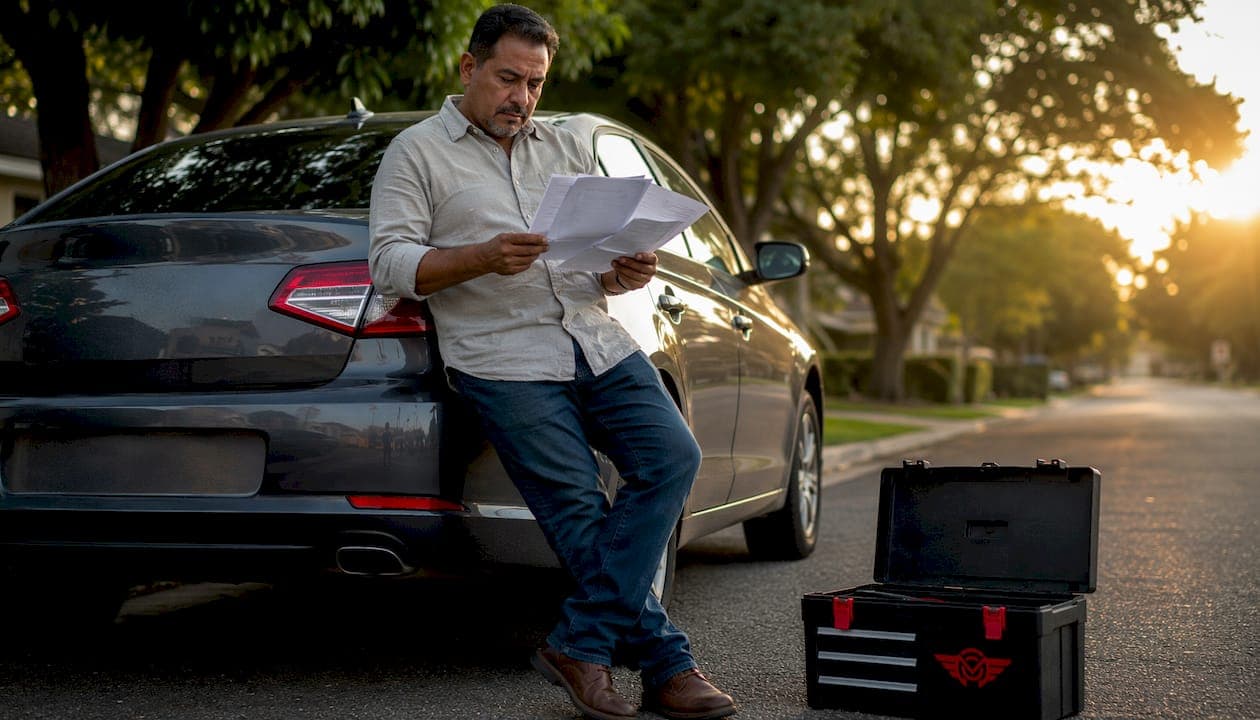
TL;DR:
- Maintaining thorough records and following the manufacturer’s upkeep schedule are essential to protect warranty coverage. Federal law allows use of any qualified repair shop as long as proper documentation proves compliance, reducing claim rejection risks. Proper documentation and understanding legal protections are key to ensuring warranty claims are honored for high-end vehicles.
Warranty is a legally binding promise that a vehicle's manufacturer will repair or replace defective components within a defined period. Maintenance is the routine care required to keep that vehicle running safely and reliably. These two concepts are distinct, but they are deeply connected. Neglect one, and you risk losing the protection of the other. For owners of high-end vehicles like BMW, Mercedes-Benz, Range Rover, Porsche, and Honda, understanding how warranty and maintenance interact is one of the most valuable things you can do to protect your investment.
How does warranty and maintenance work together?
Warranty coverage and routine maintenance operate on different legal and practical tracks, but each depends on the other. A factory warranty covers defects in materials or workmanship. It does not cover wear items like brake pads, tires, or filters. Maintenance keeps the vehicle in the condition required to make warranty claims valid.

The Magnuson-Moss Warranty Act is the federal law that governs product warranties in the United States. It prohibits manufacturers from voiding a warranty solely because you had maintenance performed by an independent shop or used aftermarket parts. That protection matters enormously for BMW and Mercedes-Benz owners who prefer independent European specialists over dealership service departments.
Neglect is a legitimate cause for denying warranty claims. This means skipping oil changes, ignoring coolant flushes, or running a Range Rover's transfer case dry can give a manufacturer solid legal ground to reject your claim. Following the manufacturer's maintenance schedule is not optional if you want warranty protection to hold.
Common maintenance tasks that preserve warranty validity include:
- Engine oil and filter changes at manufacturer-specified intervals
- Transmission fluid service for vehicles like the BMW 8-speed ZF automatic
- Coolant system flushes, especially critical in Porsche Cayenne and Mercedes-Benz GLE models
- Brake fluid replacement, which absorbs moisture over time and affects system performance
- Air filter and cabin filter replacements per schedule
Pro Tip: Keep every receipt from every service visit, even for minor items like wiper blades. A complete paper trail signals to any warranty administrator that you take vehicle care seriously.
What are the differences between factory and extended warranties?
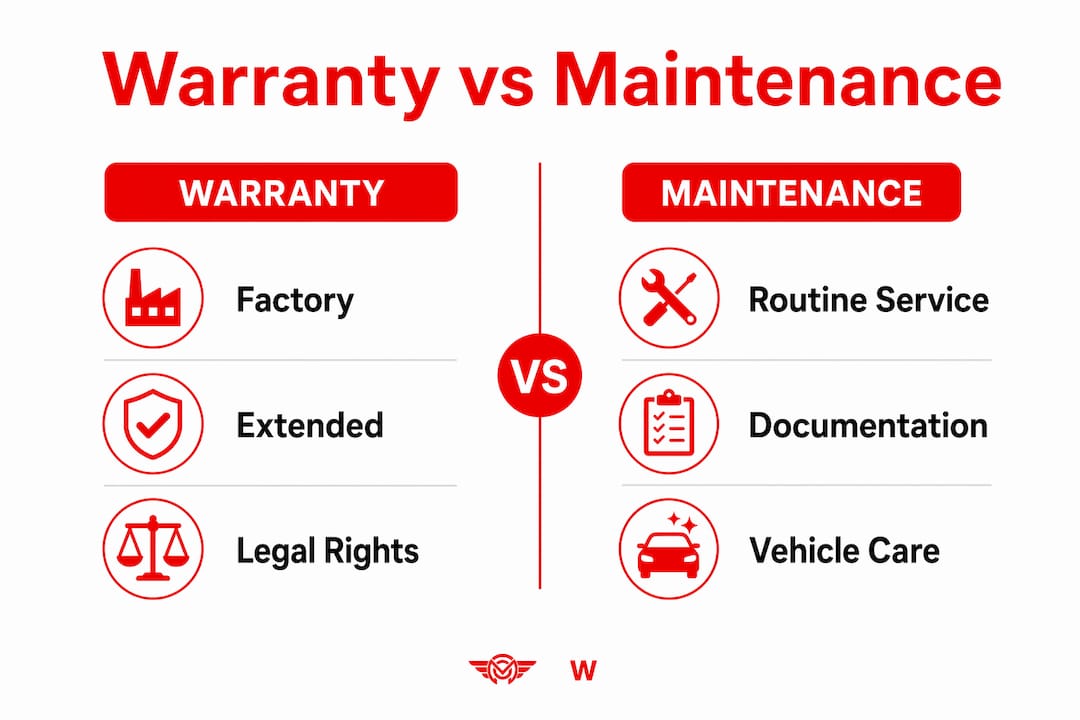
Factory warranties and extended service contracts are not the same thing legally or practically. Understanding the difference protects you from surprises when you file a claim.
Factory warranty basics
A factory warranty is a federally regulated promise from the manufacturer. Under the Magnuson-Moss Warranty Act, manufacturers must clearly disclose warranty terms and cannot impose conditions that unfairly restrict your rights. Porsche's factory warranty, for example, covers four years or 50,000 miles with no deductible. BMW's factory coverage runs four years or 50,000 miles as well, with complimentary maintenance included in the first three years.
Extended warranty service contracts
An extended warranty is a private service contract, not a federally protected warranty. Lack of maintenance records is one of the primary reasons extended warranty claims are denied. Private contracts often include stricter documentation requirements than factory warranties, and administrators have more latitude to reject claims when records are incomplete.
The table below compares the two coverage types across key evaluation criteria:
| Criteria | Factory warranty | Extended service contract |
|---|---|---|
| Legal protection | Magnuson-Moss Warranty Act | Private contract law |
| Maintenance requirement | Follow manufacturer schedule | Often requires documented proof |
| Claim denial risk | Lower with proper documentation | Higher without complete records |
| Coverage scope | Manufacturing defects | Varies by plan tier |
| Transferability | Often transferable to new owner | Depends on contract terms |
Common reasons extended warranty claims are denied include:
- Missing oil change receipts or service records
- Modifications that contributed to the failure
- Using the vehicle for commercial purposes when the contract prohibits it
- Waiting too long to report a known issue
For owners of high-end vehicles like a Porsche 911 or Range Rover Sport, evaluating warranty options before the factory coverage expires is a financial decision worth taking seriously. Repair costs on these vehicles can reach thousands of dollars for a single component failure.
What are best practices for documentation and warranty claims?
Documentation is the single most powerful tool you have in a warranty dispute. A well-kept maintenance log makes a claim far harder to reject.
Dealerships automatically log services in manufacturer databases, creating an official audit trail. Independent shops do not. If you service your BMW or Honda at an independent shop, you must replicate that audit trail yourself. That means keeping physical and digital copies of every invoice, repair order, and inspection report.
A master log with dates, mileage, service descriptions, and repair order numbers provides a transparent timeline that significantly strengthens warranty and lemon law claims. Think of it as building a legal case file for your vehicle before you ever need it.
Steps to take when a warranty claim is denied
- Request the denial in writing. Verbal denials are not sufficient. Get the specific reason documented.
- Review your warranty contract or factory warranty booklet against the stated reason for denial.
- Gather all maintenance records, receipts, and service invoices that contradict the denial reason.
- Contact the manufacturer's customer relations department directly, not just the dealership service advisor.
- File a complaint with the Better Business Bureau or your state's attorney general office if the denial appears unjustified.
- Consult an attorney if the claim involves significant costs. The Magnuson-Moss Warranty Act allows consumers to sue for damages and recover attorney fees in valid warranty disputes.
Pro Tip: Photograph your vehicle's odometer and condition at every service visit. A timestamped photo library creates visual evidence that complements your paper records and is surprisingly effective in disputes.
Federal guidance confirms that maintenance can be performed anywhere as long as it follows the manufacturer's schedule and is properly documented. You are not required to use a dealership. But if you choose an independent shop, the documentation burden falls entirely on you.
How dealership records affect claim outcomes
Dealership service records carry weight in warranty disputes because they are logged in the manufacturer's own database. A Mercedes-Benz dealer can pull your vehicle's complete service history instantly. An independent shop's records exist only on paper you provide. This is not a reason to avoid independent shops entirely. It is a reason to be meticulous about collecting and organizing every document they produce.
Repeated, prompt repair attempts combined with detailed documentation establish the legitimacy of warranty claims. If a recurring issue appears in your Range Rover's air suspension, document every visit, every symptom description, and every technician note. That pattern of evidence is what turns a disputed claim into an approved one.
How do modifications and use circumstances affect coverage?
Modifications and non-standard vehicle use are the two most common legitimate grounds for warranty denial. Knowing where the legal lines fall protects you from losing coverage unnecessarily.
Federal law forbids voiding an entire warranty because of unrelated aftermarket parts or independent repairs. A manufacturer cannot deny your BMW's engine warranty claim because you installed an aftermarket stereo. The modification must have caused or contributed to the specific failure being claimed.
Modifications and uses that commonly void specific warranty claims include:
- Engine tuning or ECU remapping that increases power output beyond factory specifications, which directly affects powertrain warranty claims
- Suspension lift kits on vehicles like the Ford F-150 or Range Rover that alter geometry and stress components beyond design limits
- Aftermarket supercharger or turbo installations on Porsche or BMW engines
- Using a Honda Pilot or Ford Explorer for commercial rideshare service when the warranty contract prohibits commercial use
- Off-road use that exceeds the vehicle's rated capability, particularly relevant for modified Mercedes-Benz G-Class owners
- Towing loads that exceed the manufacturer's specified maximum rating
The key legal principle is causation. A modification voids coverage only for the component it affects, not the entire vehicle. If your aftermarket exhaust did not cause your transmission to fail, the transmission claim remains valid.
Maintenance adjustments become necessary when vehicle use is non-standard. A BMW M3 used on track days requires more frequent brake fluid changes, tire inspections, and coolant checks than the standard schedule assumes. Documenting these additional service intervals shows that you adapted your maintenance to match actual use conditions, which supports rather than undermines warranty claims.
Key Takeaways
Combining diligent maintenance with thorough documentation is the most effective strategy for protecting vehicle warranty coverage and reducing long-term repair costs.
| Point | Details |
|---|---|
| Maintenance preserves warranty | Skipping scheduled service gives manufacturers legitimate grounds to deny claims. |
| Independent shops are legal | Federal law protects your right to use any qualified shop, provided you document every service. |
| Records win disputes | A master log with dates, mileage, and repair order numbers is your strongest claim defense. |
| Modifications affect specific components | A modification voids coverage only for parts it directly affects, not the entire vehicle warranty. |
| Extended contracts need more proof | Private service contracts require stricter documentation than factory warranties to approve claims. |
What I've learned about protecting high-end vehicles through warranty strategy
Owners of vehicles like the Porsche Cayenne, BMW 5 Series, and Range Rover Defender tend to fall into one of two camps. The first group treats the warranty booklet as background noise and services the car wherever is convenient. The second group treats the warranty as a financial instrument and manages it accordingly. The second group almost always comes out ahead.
The insight that changed how I think about this: dealerships create automatic service records while independent shops put the documentation burden entirely on you. That is not a reason to avoid independent shops. A good independent BMW or Mercedes specialist often does better work at lower cost. But you have to run your own record-keeping system with the same discipline a dealership applies automatically.
The other thing most owners miss is the difference between a factory warranty dispute and an extended service contract dispute. Factory warranties carry federal legal backing. Extended contracts are private agreements, and the administrator's incentive is to find a reason to deny. Proactively maintaining thorough records is not paranoia. It is the only practical defense against a denial that cites missing documentation.
My honest recommendation: treat your maintenance log like a financial document. Store it digitally, back it up, and update it within 48 hours of every service visit. If you ever face a denied claim on a $4,000 BMW transfer case or a $6,000 Range Rover air suspension compressor, that log is the difference between a paid claim and an out-of-pocket repair.
— Kenneth
Rpmwarranty: extended coverage built for serious vehicle owners
Vehicle owners who drive BMW, Porsche, Tesla, or Range Rover know that a single major repair can cost more than a year of warranty premiums. Rpmwarranty offers extended warranty plans designed specifically for this reality, with coverage tiers that include engines, transmissions, cooling systems, electrical components, and high-tech parts.
Rpmwarranty's process is straightforward: consultation, plan selection, customization, and final agreement. Dealers nationwide trust the platform, and coverage works at licensed repair facilities across the country. Whether your factory warranty is expiring or you want a free extended warranty quote before your coverage lapses, Rpmwarranty makes it easy to find a plan that fits your vehicle and budget. Porsche owners can explore Porsche-specific coverage options built around the unique repair costs of that platform.
FAQ
Does routine maintenance void my factory warranty?
Routine maintenance does not void your factory warranty. The Magnuson-Moss Warranty Act prohibits manufacturers from voiding coverage solely because you used an independent shop or aftermarket parts, provided the work follows the manufacturer's schedule and is documented.
What is the most common reason extended warranty claims are denied?
Missing or incomplete maintenance records are the leading cause of extended warranty claim denials. Private service contracts require documented proof that the vehicle was serviced according to schedule before approving claims.
Can I use any repair shop and keep my warranty valid?
Federal law allows you to use any qualified repair facility without losing factory warranty coverage. The requirement is that you document every service with dated receipts, invoices, and repair order numbers that match the manufacturer's maintenance schedule.
Do vehicle modifications void my entire warranty?
Modifications void coverage only for the specific components they affect, not the entire vehicle warranty. A manufacturer must prove that the modification caused the failure before denying a claim for that component.
How do I file a warranty claim if my dealer denies it?
Request the denial in writing, gather all maintenance records, and contact the manufacturer's customer relations department directly. If the denial remains unjustified, the Magnuson-Moss Warranty Act gives you the right to pursue informal dispute resolution or file a lawsuit and recover attorney fees.