

TL;DR:
- A covered component list details vehicle parts that an extended warranty will pay to repair or replace. Many plans exclude items like seals, gaskets, and wear-and-tear parts, which can lead to unexpected out-of-pocket costs. Checking the exact component names and related damage clauses before signing helps prevent denial of claims.
A covered component list is the detailed inventory of vehicle parts that an extended warranty contract will pay to repair or replace. Every vehicle owner considering extended coverage needs to understand this list before signing anything. Without reading it carefully, you can end up paying for a warranty that leaves your most expensive repairs uncovered. This is especially true for owners of complex vehicles like BMW, Mercedes, Range Rover, and Porsche, where repair bills for a single system can run into thousands of dollars.
What is covered component list: inclusions and exclusions explained
A covered component list defines exactly which parts qualify for a warranty repair claim. Stated-component warranties cover only the parts explicitly named on that list, and nothing else. If a part is not named, the warranty will not pay for it, even if it sits directly next to a covered part in the same system.
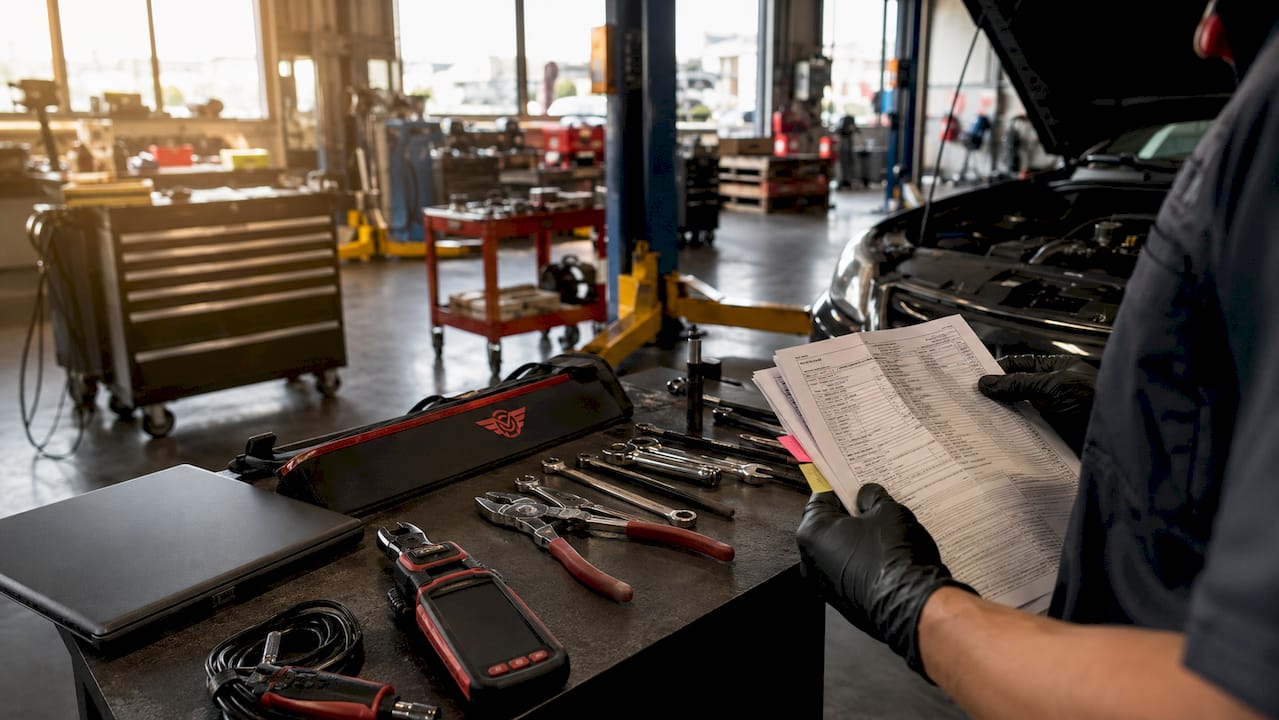
The alternative is an exclusionary warranty. Exclusionary contracts cover almost everything on the vehicle except parts explicitly listed as excluded. This structure resembles a factory bumper-to-bumper warranty and generally provides broader protection. The tradeoff is cost. Exclusionary plans are more expensive because they cover more ground.
Most vehicle owners shopping for extended coverage focus on the covered components explanation in the brochure. The brochure typically highlights major systems like the engine, transmission, cooling system, and electrical components. What it does not always highlight are the specific parts within those systems that are actually named on the list.
Pro Tip: Read the actual contract document, not the marketing summary. The summary describes systems. The contract names specific parts. Those two documents can tell very different stories.
Common parts excluded from most warranty plans
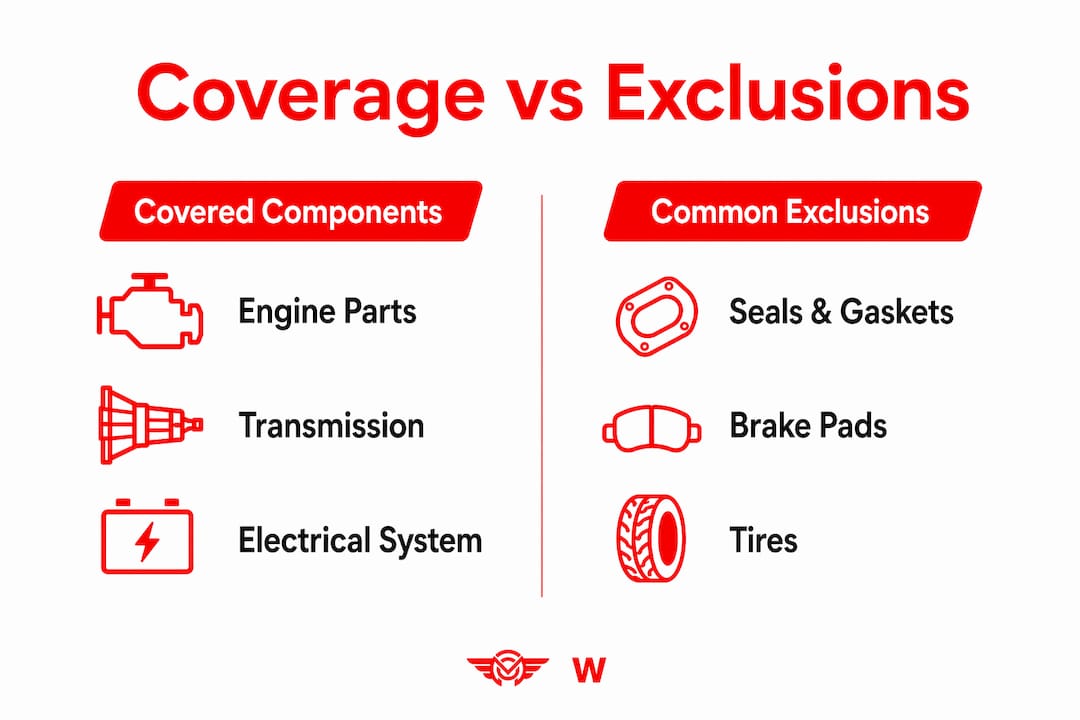
Wear-and-tear items and cosmetic components are excluded from virtually every extended warranty plan, including exclusionary ones. Knowing this list before you buy prevents surprises at the repair shop.
Parts routinely excluded from coverage include:
- Brake pads and rotors
- Clutch discs and pressure plates
- Wiper blades and filters
- Paint, trim, and upholstery
- Tires and wheels
- Belts and hoses (in many stated-component plans)
- Seals and gaskets
Seals and gaskets deserve special attention because their exclusion surprises most buyers. These small components fail regularly on high-mileage vehicles, and their failure often causes damage to covered parts. A leaking valve cover gasket on a BMW 3 Series or a failing rear main seal on a Mercedes E-Class can lead to oil contamination and engine damage. If the gasket is excluded, the warranty may deny the entire related claim.
How does component list granularity affect claim approvals?
Granularity is the level of detail used to name parts on the covered component list. A plan that lists "steering system" as covered sounds reassuring. A plan that lists only "power steering pump" as covered is a very different product.
A plan covering the power steering pump but not the power steering pressure hose creates a real coverage gap inside the same system. The hose and pump work together. When the hose fails, the pump can fail too. But if only the pump is named on the list, the warranty pays for the pump and denies the hose. You pay out of pocket for the hose and potentially for the labor to diagnose both parts separately.
This scenario plays out regularly with luxury vehicles. A Range Rover Sport's air suspension system contains compressors, air struts, height sensors, and control modules. A stated-component plan might name the compressor but not the air struts. A BMW 5 Series has a complex variable valve timing system with multiple solenoids, actuators, and sensors. If only the main VANOS solenoid is named, the adjacent actuator is not covered.
The table below shows how granularity differences create real-world coverage gaps:
| System | Broad listing (what you hope is covered) | Specific listing (what the contract actually names) | Gap created |
|---|---|---|---|
| Power steering | Steering system | Power steering pump | Hose, rack, and fluid lines excluded |
| Engine timing | Engine components | Timing chain | Tensioners, guides, and solenoids excluded |
| Air suspension | Suspension system | Air compressor | Air struts and height sensors excluded |
| Transmission | Transmission | Torque converter | Valve body, solenoids, and sensors excluded |
| Cooling | Cooling system | Water pump | Thermostat housing, coolant hoses excluded |
Pro Tip: When reviewing a warranty contract, create a two-column checklist. Column one lists the parts most likely to fail on your specific vehicle make and model. Column two checks whether each part is named by its exact component name in the contract. If a part is missing from column two, assume it is not covered.
Claims disputes often hinge on component granularity within the same vehicle system. This is not a rare edge case. It is one of the most common reasons warranty claims get denied. Knowing this before you buy puts you in a much stronger position.
Why does contract language around related damage matter?
The covered component list tells you what parts are included. The related damage clause tells you what happens when a non-covered part causes a covered part to fail. These two sections of the contract work together, and ignoring either one leads to denied claims.
Downstream and cascading damage clauses determine whether connected failures qualify for warranty repairs. The typical language reads something like: "This warranty does not cover damage caused by or resulting from a non-covered part." That single sentence can void an otherwise valid claim.
Here is a concrete example. A Honda Accord's timing belt is a wear item and is excluded from most plans. If the timing belt snaps and bends the engine valves, the valves are covered parts on most plans. But the "caused by" clause means the warranty can deny the valve repair because the root cause was a non-covered part. The same logic applies to a Ford F-150 with a failed oil cooler seal. The seal is excluded. The engine damage from oil starvation that follows may also be denied under related damage language.
Common denial scenarios driven by contract language include:
- Engine damage caused by a failed excluded gasket or seal
- Transmission damage caused by a failed excluded solenoid or sensor
- Electrical damage caused by excluded wiring harness failures
- Cooling system damage caused by an excluded hose or clamp failure
- Suspension damage caused by excluded bushings or control arm hardware
Claim denials often arise because related damage wording limits coverage beyond what the component list suggests. The practical solution is to read the exclusion section and the related damage section together. Match each excluded part against the covered parts it could damage if it fails. That exercise reveals your real exposure before you need to file a claim.
How to evaluate extended warranties for luxury vehicles
Luxury vehicles require a more careful warranty evaluation than mainstream models. A Mercedes GLE, BMW X5, Range Rover Defender, or Porsche Cayenne contains systems that simply do not exist on a standard sedan. Component list granularity and exclusions are particularly significant for owners of these vehicles because repair costs per component are dramatically higher.
Follow these steps when evaluating any extended warranty for a luxury or high-end vehicle:
-
List your vehicle's known failure points. Every make and model has documented common failures. BMW N54 engines are known for high-pressure fuel pump issues. Range Rover air suspension compressors fail regularly. Mercedes 7G-Tronic transmissions have documented conductor plate failures. Start with these known weak points.
-
Match each failure point to the contract's exact component names. Do not accept system-level descriptions. Find the specific part name in the contract. If it is not there by name, assume it is excluded.
-
Check seals, gaskets, and hoses separately. These parts are excluded on most plans but cause the most cascading damage when they fail. Understand exactly what happens to your claim if one of these fails first.
-
Read the related damage clause word for word. Ask the warranty provider directly: "If an excluded part fails and damages a covered part, does the warranty pay for the covered part?" Get the answer in writing.
-
Compare the exclusionary option against the stated-component option. For a Porsche 911 or BMW M3 with complex electronics and performance systems, an exclusionary plan often provides better value despite the higher cost. The math changes when repair bills regularly exceed $3,000 per incident.
-
Ask about high-tech and electronic components specifically. Vehicles like the Mercedes S-Class and BMW 7 Series have advanced driver assistance systems, air ride suspension, and proprietary electronics. Confirm whether sensors, control modules, and actuators for these systems are named on the coverage list.
Luxury vehicle systems require careful warranty coverage evaluation because a single uncovered component in a complex system can cascade into a five-figure repair bill. The time you spend reading the contract before purchase is the most valuable time in the entire warranty process.
Key Takeaways
A covered component list is the single most important document in any extended warranty contract, and reading it at the part level rather than the system level is the only way to know what you are actually buying.
| Point | Details |
|---|---|
| Stated vs. exclusionary plans | Stated-component plans cover only named parts; exclusionary plans cover everything except listed exclusions. |
| Granularity determines real coverage | A plan listing "steering system" differs sharply from one naming only "power steering pump." |
| Seals and gaskets are almost always excluded | These small parts cause cascading damage to covered components, which can trigger claim denials. |
| Related damage clauses limit payouts | Damage caused by a non-covered part is often denied even when the damaged part is on the coverage list. |
| Luxury vehicles need deeper scrutiny | BMW, Mercedes, Range Rover, and Porsche owners should match known failure points to exact contract language before buying. |
What I've learned from reading hundreds of warranty contracts
Reading warranty contracts for luxury vehicles has taught me one consistent lesson: the marketing summary and the actual contract are two different documents. The summary sells you on the system. The contract covers the part. Those two levels of detail rarely match.
The most common mistake I see buyers make is assuming that because "engine" is listed as a covered system, every engine component is covered. That assumption leads to real financial pain. A BMW owner who assumes the VANOS system is fully covered because "engine" appears on the list may find that only the main solenoid is named, leaving actuators and timing chain guides as out-of-pocket expenses.
The second mistake is ignoring the related damage clause entirely. Most buyers never read it. That clause is where warranty providers have the most contractual flexibility to deny claims, and it is the section that most directly affects your real-world experience when something breaks.
My practical advice is this: before you sign any extended warranty, write down the three most expensive and most likely repairs for your specific vehicle. Then find each of those parts by exact name in the contract. If you cannot find them, ask the provider to point to them. If the provider cannot point to them, that is your answer. A good warranty provider will welcome that question. A provider who deflects it is telling you something important.
The coverage list details in any plan are worth an hour of your time before you commit. That hour can save you thousands.
— Kenneth
Rpmwarranty's protection plans for luxury and mainstream vehicles
Rpmwarranty offers extended warranty plans built around clear component coverage for vehicles ranging from Honda and Ford to BMW, Mercedes, Range Rover, and Porsche. The Elite, Advanced, and Essential plan tiers give vehicle owners options that match both their budget and their vehicle's specific repair risk profile.
Every plan through Rpmwarranty includes a detailed breakdown of covered components so you know exactly what is named before you sign. Owners of high-end vehicles can request a free consultation to walk through the coverage list details for their specific make, model, and year. Rpmwarranty's team can also clarify how related damage language works within each plan, which is the question most buyers forget to ask. Get a free warranty quote and compare plans side by side before making a decision.
FAQ
What is a covered component list in an extended warranty?
A covered component list is the specific inventory of vehicle parts that an extended warranty contract will pay to repair or replace. Parts not named on this list are not covered, regardless of which system they belong to.
What parts are typically excluded from extended warranty coverage?
Brake pads, rotors, clutch discs, seals, gaskets, belts, hoses, tires, and cosmetic components like paint and upholstery are excluded from most extended warranty plans. These exclusions apply to both stated-component and exclusionary contracts.
How does a stated-component warranty differ from an exclusionary warranty?
A stated-component warranty covers only the parts explicitly named in the contract. An exclusionary warranty covers everything on the vehicle except the parts listed as excluded, which generally provides broader protection at a higher price.
Can a warranty deny a claim for a covered part?
Yes. If the covered part failed because of a non-covered part, the related damage clause in the contract can allow the warranty provider to deny the entire claim. Reading this clause before purchase is critical.
Are seals and gaskets covered under extended warranties?
Seals and gaskets are excluded from most extended warranty plans, including many exclusionary contracts. Their failure frequently causes damage to covered parts, which can result in denied claims under related damage language.