

TL;DR:
- Car warranties cover specific vehicle components damaged by defects or mechanical failures. Routine maintenance, wear-and-tear items, and collision damage are excluded from coverage. Properly understanding your warranty and maintaining records helps prevent surprises and unnecessary expenses.
A car warranty is a contract that promises repair or replacement of specific vehicle components if they fail due to manufacturing defects or mechanical breakdowns. Understanding what is covered in a car warranty separates car owners who get repairs paid for from those who pay out of pocket for bills that should have been covered. Factory warranties, also called manufacturer's limited warranties, protect systems like the engine, transmission, and electrical components. They do not cover routine maintenance or normal wear. This guide breaks down exactly what your warranty does and does not cover, how different warranty types compare, and what to watch for when choosing extended protection.
What parts and systems does a car warranty cover?
A factory warranty covers the components most likely to fail due to a defect in materials or workmanship. That definition matters because it draws a clear line between what the manufacturer stands behind and what you pay for yourself.
Engine and drivetrain components
Engine coverage typically includes internal parts like pistons, the crankshaft, timing gears, camshafts, and connecting rods. On a BMW 5 Series or Mercedes-Benz E-Class, these components are precision-engineered and expensive to replace. A single crankshaft replacement on a BMW can cost several thousand dollars. Warranty coverage on these parts is one of the most financially significant protections a car owner can have.
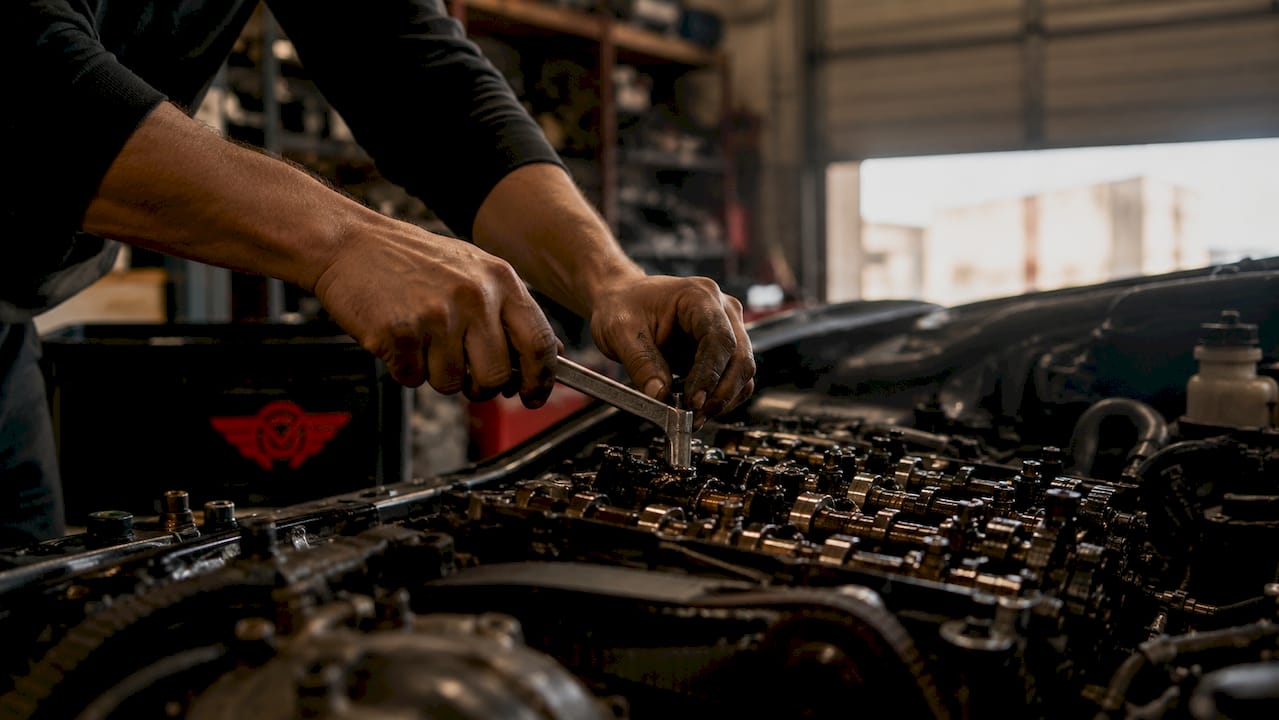
Transmission coverage applies to both automatic and manual gearboxes, including internal gears, clutch packs in automatic units, and the torque converter. Drivetrain parts such as driveshafts, CV joints, and axles are also typically included. On all-wheel-drive vehicles like a Range Rover Sport or Porsche Cayenne, the drivetrain is complex and costly to repair, making this coverage especially valuable.
Electrical systems and modern technology
Electrical system coverage includes the alternator, starter motor, and computer control modules. Modern vehicles like the Ford F-150 and Honda Accord carry dozens of electronic control units managing everything from fuel injection to stability control. Infotainment and electrical systems are statistically among the most likely vehicle systems to fail. Many car owners assume warranties only cover mechanical parts, but comprehensive plans protect these tech-heavy systems too.
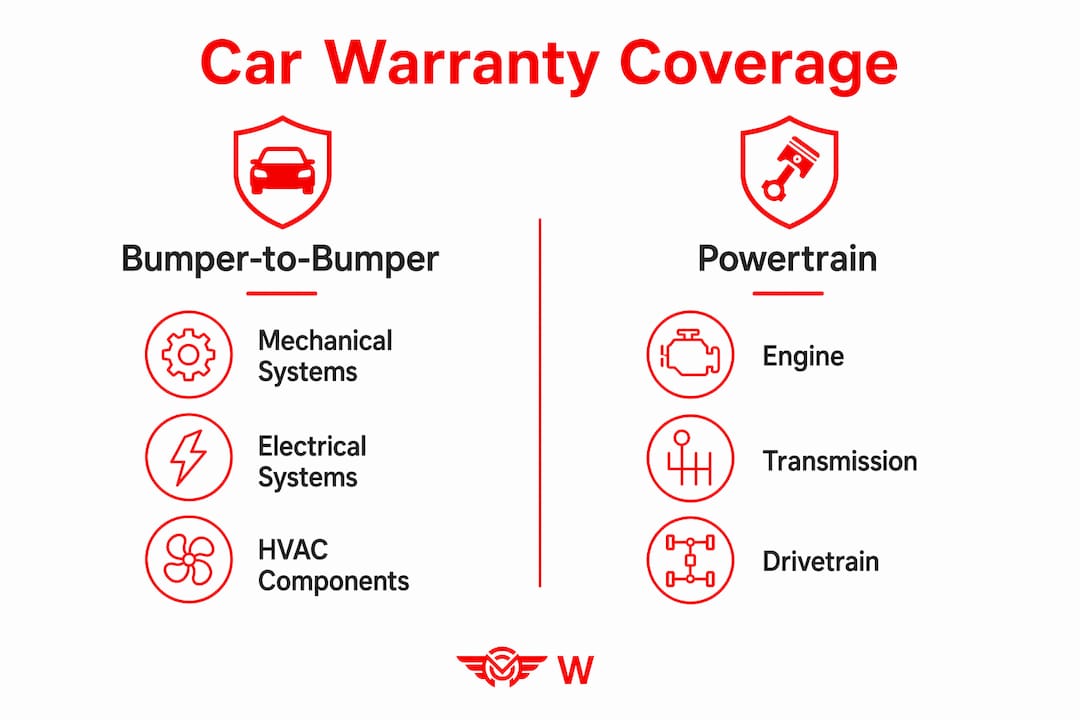
HVAC systems, including the compressor, evaporator, and blower motor, are covered under most bumper-to-bumper warranties. Infotainment systems, backup cameras, and driver-assist modules on vehicles like the Mercedes-Benz GLE or Range Rover Velar often fall under this coverage as well.
Bumper-to-bumper vs. powertrain coverage
The bumper-to-bumper warranty offers the most comprehensive protection, covering nearly all mechanical and electrical systems. The powertrain warranty focuses on "heavy" components like the engine and transmission, with significantly more exclusions. Bumper-to-bumper warranties cover nearly everything except tires, wiper blades, and sometimes the 12-volt battery. Powertrain warranties cover major engine internals, the transmission, and differentials, but typically exclude starters and alternators.
Pro Tip: If you drive a high-tech vehicle like a Porsche Panamera or BMW 7 Series, prioritize bumper-to-bumper coverage. The electrical and infotainment systems on these vehicles are expensive to repair and fail more often than most owners expect.
What is excluded from car warranty coverage?
Exclusions define the real limits of your protection. Warranties and service contracts almost universally exclude routine maintenance and wear-and-tear items. Knowing these exclusions before you need a repair prevents frustration and financial surprises.
Common exclusions you will encounter
-
Routine maintenance services. Oil changes, tire rotations, fluid top-offs, and spark plug replacements are your responsibility as the owner. No factory or extended warranty covers these services.
-
Wear-and-tear items. Brake pads, brake rotors, tires, wiper blades, and light bulbs wear out through normal use. Routine maintenance and wear items are excluded from both factory and extended warranties without exception.
-
Accident and collision damage. A warranty is not insurance. If you damage your Honda CR-V in a parking lot or your Ford Explorer takes a hit on the highway, that repair goes through your auto insurance policy, not your warranty.
-
Neglect and improper maintenance. If you skip oil changes and your engine seizes, the manufacturer will deny your claim. The warranty assumes you follow the maintenance schedule in your owner's manual.
-
Cosmetic damage. Scratches, dents, interior stains, and faded paint are not covered. These are appearance issues, not mechanical failures.
-
Aftermarket modifications. Installing a lift kit on your Range Rover Defender or adding a performance tune to your BMW M3 can void coverage on the systems those modifications affect. The manufacturer does not cover failures caused by parts or changes they did not install.
Why exclusions exist
Exclusions exist because warranties cover defects, not the natural cost of ownership. A manufacturer guarantees their work. They do not guarantee that brake pads will last forever or that you will change your oil on schedule. Understanding this distinction helps you budget correctly. Warranty coverage handles unexpected mechanical failures. Maintenance costs are predictable and belong in your regular budget.
Pro Tip: Keep every service receipt from every oil change, tire rotation, and scheduled maintenance visit. If a manufacturer or extended warranty provider challenges your claim, those receipts prove you maintained the vehicle properly.
How do different types of car warranties vary in coverage and cost?
Car warranty coverage details change significantly depending on the type of warranty you hold. Factory warranties, extended service contracts, and powertrain-only plans each protect different systems at different price points.
Factory warranty types at a glance
| Warranty type | What it covers | Typical exclusions |
|---|---|---|
| Bumper-to-bumper | Nearly all mechanical and electrical systems | Tires, wiper blades, 12-volt battery, wear items |
| Powertrain | Engine internals, transmission, drivetrain | Electrical systems, starters, alternators, HVAC |
| Drivetrain | Driveshafts, axles, differentials | Engine, transmission, electrical, HVAC |
| Extended service contract | Varies by plan tier; can mirror bumper-to-bumper | Depends on contract; read carefully |
Factory bumper-to-bumper warranties on vehicles like the Honda Accord or Ford Mustang typically run three years or 36,000 miles. Powertrain warranties often extend to five years or 60,000 miles. Luxury brands like Porsche and BMW offer their own certified coverage terms that vary by model year.
Extended warranties and service contracts
Extended warranties are legally classified as service contracts, not warranties, under federal law. That distinction matters. Extended warranties are service contracts, and if the contract administrator goes out of business, the dealer or manufacturer may not be obligated to honor the agreement. This risk is real and has left car owners unprotected when smaller warranty administrators have folded.
Costs for extended vehicle service contracts range from several hundred to several thousand dollars, depending on the vehicle's make, model, age, and the level of coverage selected. A plan for a used Range Rover or BMW X5 will cost more than one for a Honda Civic because the repair costs for luxury components are higher.
- Review the contract's covered components list, not just the marketing summary.
- Confirm whether the plan uses a stated-component model (lists what is covered) or an exclusionary model (lists what is not covered). Exclusionary plans typically offer broader protection.
- Check whether the plan requires repairs at specific shops or allows any licensed facility.
- Verify that the coverage start date does not overlap with your existing factory warranty.
Comparing extended warranty contracts against your current factory coverage prevents paying twice for the same protection. If your factory bumper-to-bumper runs through 36,000 miles, an extended plan that starts at 12,000 miles wastes money on overlap.
What practical factors should car owners consider when choosing a warranty?
Choosing the right warranty requires matching coverage to your vehicle's specific risk profile. A three-year-old Mercedes-Benz C-Class with 40,000 miles carries different risks than a new Ford Bronco still under factory coverage.
Key factors to evaluate before you commit
-
Vehicle age and mileage. Older vehicles with higher mileage are more likely to need repairs, but they also cost more to insure under extended plans. Calculate whether the plan cost is justified by the vehicle's repair history and reliability data.
-
High-failure systems. Modern vehicle components like infotainment and electrical modules have higher failure rates. Prioritize plans that explicitly cover these systems, especially on vehicles like the BMW iDrive-equipped 5 Series or Range Rover's Pivi Pro infotainment platform.
-
Maintenance obligations. Failing to follow the manufacturer's maintenance schedule can void your warranty. Set calendar reminders for every service interval and document every visit.
-
Coverage start dates. Confirm when your factory warranty expires and when the extended plan begins. Overlap means you pay for protection you already have.
-
Provider reliability. Extended warranty providers vary widely in financial stability and claims handling. A plan from a provider backed by a licensed insurer carries less risk than one from an unrated administrator.
-
Repair network. Some plans restrict repairs to a specific dealer network. Others allow any ASE-certified shop. Flexibility matters if you travel frequently or live in a rural area.
Pro Tip: Before purchasing an extended plan for a luxury vehicle like a Porsche Macan or BMW X3, request a sample contract and read the covered components list line by line. Marketing language like "comprehensive coverage" means nothing if the contract excludes the systems most likely to fail on that specific model.
The cost-benefit calculation is straightforward. Add up the likely repair costs for the vehicle's most failure-prone systems over the plan period. Compare that estimate to the plan's total cost plus deductible. If the numbers are close, the peace of mind alone often justifies the purchase.
Key Takeaways
A car warranty covers specific defects and mechanical failures, not routine maintenance or wear, and the type of warranty you hold determines exactly which systems are protected.
| Point | Details |
|---|---|
| Bumper-to-bumper beats powertrain | Bumper-to-bumper coverage protects electrical, HVAC, and tech systems that powertrain plans exclude. |
| Exclusions are universal | Oil changes, brake pads, tires, and collision damage are excluded from every factory and extended warranty. |
| Extended plans carry legal risk | Service contracts are not warranties under federal law; provider insolvency can leave you unprotected. |
| Maintenance records protect claims | Documented service history prevents manufacturers from denying claims due to alleged neglect. |
| Match coverage to vehicle risk | High-tech vehicles like BMW and Range Rover need plans that explicitly cover electrical and infotainment systems. |
What most car owners get wrong about warranty coverage
The single biggest mistake I see car owners make is buying a warranty based on the name rather than the contract. "Comprehensive" and "full coverage" are marketing terms. The only thing that matters is the covered components list inside the actual contract.
I have seen owners of BMW 5 Series and Range Rover Sport vehicles assume their extended plans covered infotainment failures, only to discover those systems were carved out in the fine print. Infotainment repairs on a Range Rover Pivi Pro system can run well over $2,000. That is not a surprise you want at the service counter.
The second mistake is ignoring maintenance obligations. A warranty is a two-way agreement. The manufacturer covers defects. You cover upkeep. Miss two oil changes on your Honda Pilot or Ford Explorer, and a manufacturer has legitimate grounds to deny an engine claim. The maintenance schedule in your owner's manual is not a suggestion. It is a condition of your coverage.
My honest recommendation is this: if your vehicle is approaching the end of its factory bumper-to-bumper coverage, start researching extended plans before the factory warranty expires. Waiting until after expiration limits your options and often raises the cost. Evaluate providers by their claims process, contract language, and financial backing. A cheap plan from an unreliable administrator is worse than no plan at all.
— Kenneth
Rpmwarranty offers extended coverage when your factory warranty ends
When your factory warranty expires, repair costs become your full responsibility. A single transmission replacement on a BMW or Range Rover can cost more than a year of extended warranty premiums.
Rpmwarranty provides extended vehicle warranty plans trusted by dealers nationwide, covering engines, transmissions, cooling systems, electrical systems, and high-tech components. Plans are available for a wide range of vehicles, including higher-end makes like BMW, Mercedes-Benz, Porsche, Ford, and Honda. Rpmwarranty offers three plan tiers, Elite, Advanced, and Essential, so you can match coverage to your budget and vehicle. You can get a free quote based on your vehicle's year, make, and model in minutes.
FAQ
What does a car warranty typically cover?
A car warranty covers repairs to components that fail due to manufacturing defects, including the engine, transmission, drivetrain, and electrical systems. Bumper-to-bumper warranties extend that coverage to nearly all mechanical and electrical systems except tires, wiper blades, and wear items.
What is not covered under a car warranty?
Routine maintenance like oil changes, wear items like brake pads and tires, collision damage, and cosmetic issues are excluded from all factory and extended warranties. Aftermarket modifications can also void coverage on the systems they affect.
How does a bumper-to-bumper warranty differ from a powertrain warranty?
A bumper-to-bumper warranty covers nearly all vehicle systems including electrical and HVAC, while a powertrain warranty covers only the engine, transmission, and drivetrain. Powertrain plans exclude starters, alternators, and most electronic components.
Are extended warranties worth buying for used cars?
Extended warranties can be worth the cost for used vehicles approaching or past their factory coverage limits, especially for high-repair-cost brands like BMW, Range Rover, and Porsche. The key is reading the contract carefully and confirming the provider is financially backed by a licensed insurer.
Can skipping oil changes void my car warranty?
Failing to follow the manufacturer's recommended maintenance schedule can void your warranty on the systems affected by that neglect. Keep all service records to protect your claims.