

Many vehicle owners assume advanced warranty plans either cover everything or barely anything at all. The truth lies somewhere in between, and understanding exactly what these plans protect can save you thousands in unexpected repair bills. Advanced warranty plans extend coverage beyond your manufacturer's original terms, safeguarding critical components like engines, transmissions, and electrical systems. This guide breaks down what's typically included, what's not, and how to choose protection that matches your vehicle's needs and your budget. Whether you're driving a luxury sedan or a dependable daily commuter, knowing the details helps you make confident decisions about protecting your investment.
Table of Contents
- Key Takeaways
- Understanding the components covered by advanced warranty plans
- Variations and extras in advanced warranty coverage plans
- Exclusions and limitations to watch for in advanced warranty plans
- How to choose the right advanced warranty plan for your vehicle
- Explore advanced warranty plans designed for your vehicle
- Frequently asked questions
Key Takeaways
| Point | Details |
|---|---|
| Coverage scope varies | Advanced warranty plans extend beyond factory coverage to protect engines, transmissions, drivetrain, electrical systems, and other major components, though exact protections depend on the plan. |
| Powertrain versus comprehensive | Powertrain plans focus on engine, transmission, and drivetrain, while comprehensive plans cover additional areas such as fuel systems, brakes, suspension, steering, and sometimes high tech features. |
| Read the fine print | Exclusions, limits, and caps prevent surprises in repair costs. |
| Plan extras vary | Some plans include rental car reimbursement and other benefits. |
| Luxury needs specialized coverage | Luxury or premium vehicles may require tailored coverage to protect specialized parts and advanced systems. |
Understanding the components covered by advanced warranty plans
Advanced warranty plans pick up where factory coverage ends, protecting you from expensive mechanical failures that inevitably occur as vehicles age. Unlike basic manufacturer warranties that typically last three to five years, advanced protection plans can extend coverage for significantly longer periods or higher mileage thresholds. The distinction matters because repair costs for modern vehicles have skyrocketed, with computerized systems and specialized parts driving bills into thousands of dollars for single failures.
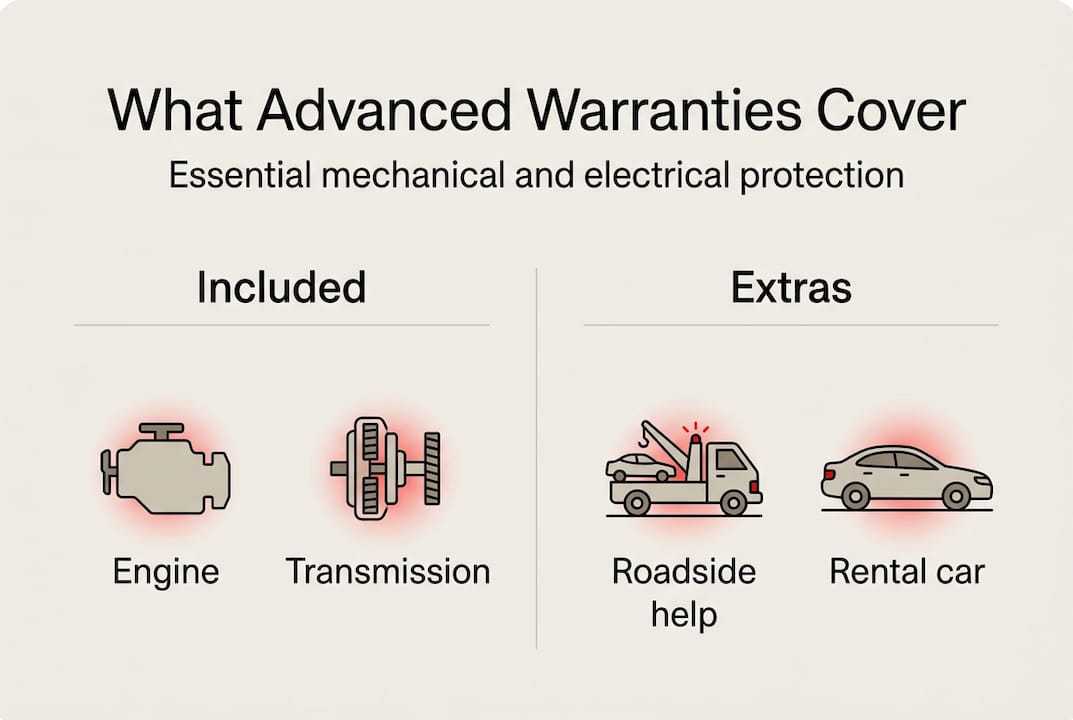
Core covered components typically include your engine, transmission, and drivetrain. These are the heart of your vehicle's operation, and failures in any of these systems can sideline your car for weeks while draining your savings. Engine coverage protects internal components like pistons, crankshafts, and cylinder heads. Transmission coverage handles the complex system that transfers power from your engine to your wheels, whether automatic or manual. Drivetrain coverage extends to axles, drive shafts, and differential components that keep your wheels turning smoothly.
Electrical systems represent another major coverage area in advanced plans. Modern vehicles rely on intricate electrical networks controlling everything from power windows to advanced driver assistance systems. Coverage typically includes alternators, starters, wiring harnesses, and electronic control modules. Given that a single electronic control unit can cost over $1,000 to replace, this protection provides substantial value. Heating and cooling systems also fall under most advanced plans, covering air conditioning compressors, heaters, and related components that keep your cabin comfortable year round.

The difference between powertrain coverage and comprehensive bumper-to-bumper protection is significant. Powertrain plans focus exclusively on engine, transmission, and drivetrain components, offering lower premiums but narrower protection. Comprehensive plans cast a wider net, covering fuel systems, brake components beyond pads, suspension elements, and steering mechanisms. Some advanced plans even protect high-tech features like navigation systems, backup cameras, and touchscreen interfaces that have become standard in newer vehicles.
Mechanical breakdowns from normal wear and electronic failures from component defects both qualify for coverage under most advanced plans. This dual protection addresses the reality that modern vehicles combine traditional mechanical systems with sophisticated electronics. A fuel injection system failure or a malfunctioning sensor can trigger the same expensive repair bills as a worn transmission bearing.
Pro Tip: Luxury vehicles often require specialized coverage due to premium parts and advanced technology. Standard plans may not adequately protect high-end components, so verify your plan specifically addresses your vehicle's unique features before purchasing.
Variations and extras in advanced warranty coverage plans
Advanced warranty plans come in multiple tiers, allowing you to balance protection level against monthly or annual costs. Understanding these variations helps you avoid paying for coverage you don't need while ensuring critical components stay protected. The three main categories include powertrain-only plans, mid-level stated component coverage, and comprehensive exclusionary coverage that protects nearly everything except specifically listed items.
| Plan Type | Typical Coverage | Price Range | Best For |
|---|---|---|---|
| Powertrain | Engine, transmission, drivetrain | $800-$1,500 | Newer vehicles, budget-conscious owners |
| Stated Component | Powertrain plus specific systems (electrical, cooling, fuel) | $1,200-$2,500 | Mid-age vehicles with moderate mileage |
| Comprehensive | Everything except listed exclusions | $2,000-$4,000 | Older vehicles, luxury models, high-tech features |
Common add-ons significantly enhance your protection beyond mechanical coverage. Roadside assistance ranks among the most popular extras, providing towing services, jump starts, flat tire changes, and lockout assistance. This benefit proves invaluable when breakdowns occur far from home or during inconvenient hours. Rental car reimbursement covers the cost of a temporary vehicle while yours undergoes covered repairs, preventing disruptions to your work commute or family obligations. Trip interruption coverage goes further, reimbursing lodging and meal expenses if a breakdown strands you more than 100 miles from home.
Customizable plans let you add or exclude specific coverage areas to control costs. If you recently replaced your air conditioning system, you might exclude climate control coverage for the next few years. Conversely, if your vehicle's electrical system has shown signs of age, boosting that coverage makes financial sense. This flexibility ensures you're not paying for redundant protection while maintaining robust coverage where your vehicle needs it most.
Mileage and vehicle age dramatically affect coverage eligibility and duration. Most providers set maximum mileage limits for enrollment, typically ranging from 80,000 to 150,000 miles depending on plan type. Vehicle age limits usually cap at 10 to 15 years for initial enrollment. Once enrolled, coverage continues for the term length you select, whether that's 12 months, 36 months, or longer periods. Higher mileage vehicles and older models typically face higher premiums due to increased failure risk.
Vehicle owners consistently report that roadside assistance and rental car reimbursement deliver the most practical value among extras. While mechanical coverage handles major repairs, these services address the immediate inconvenience of breakdowns. The peace of mind knowing you won't be stranded or without transportation during repairs often justifies the modest additional cost. For detailed information about what different plans include, the RPM FAQ provides comprehensive answers to common coverage questions.
Exclusions and limitations to watch for in advanced warranty plans
Understanding what's not covered prevents frustration when filing claims and helps you budget for routine maintenance costs. Warranty plans typically exclude wear items and damage from specific causes, creating boundaries around what qualifies as a covered mechanical failure versus expected vehicle upkeep. These exclusions exist because warranties protect against unexpected breakdowns, not predictable maintenance needs.
Commonly excluded items include brake pads and rotors, tires, batteries, wiper blades, light bulbs, and filters. These components wear down through normal use and require periodic replacement as part of vehicle ownership. Oil changes, fluid flushes, tune-ups, and alignment services also fall outside warranty coverage. While these exclusions might seem limiting, they keep premium costs reasonable by focusing protection on expensive, unpredictable failures rather than routine service items.
Damage caused by accidents, environmental factors, or neglect automatically voids coverage for affected components. If you ignore a check engine light for months and subsequent damage occurs, your claim may be denied. Environmental damage from flooding, hail, or extreme temperatures typically isn't covered. Modifications to your vehicle, particularly performance upgrades that stress components beyond factory specifications, can also void related coverage. Racing, commercial use, or operation as a rental vehicle generally disqualifies coverage entirely.
Coverage limits on claim frequency, total payout amounts, and pre-existing conditions require careful attention. Some plans cap the number of claims per year or set maximum reimbursement amounts per claim or per contract term. Pre-existing conditions, meaning problems that existed before you purchased coverage, are never covered. This is why many providers require vehicle inspections or service history documentation before issuing policies, especially for older vehicles or those with high mileage.
Red flags to check in warranty terms and conditions:
- Vague language about what constitutes a covered failure versus normal wear
- Extremely low deductibles paired with high premiums, suggesting limited actual coverage
- Requirements to use only specific repair facilities with limited geographic availability
- Clauses allowing the provider to determine whether repair or replacement is necessary
- Fine print excluding coverage for vehicles used for ride-sharing or delivery services
- Mandatory arbitration clauses that limit your legal recourse for claim disputes
Pro Tip: Maintain detailed service records and follow your manufacturer's recommended maintenance schedule religiously. Providers can deny claims if you can't prove proper vehicle care, and a $50 oil change receipt might save you from losing coverage on a $3,000 engine repair.
How to choose the right advanced warranty plan for your vehicle
Selecting the optimal advanced warranty plan requires analyzing your specific situation rather than choosing the cheapest or most comprehensive option. A methodical approach ensures your coverage matches your vehicle's vulnerabilities and your financial priorities. Follow these steps to make an informed decision:
-
Assess your vehicle's current condition, focusing on age, mileage, and maintenance history. Vehicles approaching 60,000 to 80,000 miles often experience their first major component failures, making this an ideal time to secure coverage. Check when your manufacturer warranty expires and whether any extended factory coverage remains active to avoid paying for duplicate protection.
-
Research common failure points for your specific make and model. Online forums, repair databases, and mechanic insights reveal which systems typically fail first. If your vehicle's transmission has a reputation for problems, prioritize plans with robust powertrain coverage. Volkswagen owners might focus on electrical system protection, while Audi drivers often need comprehensive coverage for advanced technology features.
-
Calculate your repair cost tolerance by reviewing your emergency fund and monthly budget. If a $2,000 unexpected repair would create financial hardship, comprehensive coverage makes sense. If you can comfortably absorb occasional repair costs, a basic powertrain plan might suffice. Consider your vehicle's value too; paying $3,000 annually to protect a car worth $8,000 rarely makes financial sense.
-
Compare coverage details against your vehicle's likely needs, paying special attention to deductible amounts and claim processes. A $100 deductible costs more monthly but reduces out-of-pocket expenses per repair. Higher deductibles lower premiums but require more cash when problems arise. Understand whether you can choose any certified mechanic or must use approved facilities, as this affects convenience and potentially repair quality.
-
Evaluate additional benefits beyond mechanical coverage. Roadside assistance value depends on your driving patterns; daily commuters benefit more than occasional drivers. Rental car reimbursement matters if you lack alternative transportation. Trip interruption coverage is essential if you frequently drive long distances for work or family visits.
-
Request free quotes from multiple providers to compare pricing and coverage options. Reputable companies offer transparent quotes without high-pressure sales tactics. Ask specific questions about exclusions, claim approval rates, and customer service availability. Read independent reviews focusing on claim experiences rather than just pricing feedback.
-
Verify the provider's reputation and financial stability. Check Better Business Bureau ratings, state insurance department records, and consumer complaint databases. A cheap plan from an unstable company becomes worthless if they deny legitimate claims or go out of business mid-contract. Tailoring coverage to your vehicle's specifics maximizes value while controlling costs.
Working with established providers who specialize in vehicle protection ensures you're dealing with companies that understand automotive coverage nuances. Local providers may offer personalized service, while national companies provide broader repair facility networks. Balance these factors based on whether you primarily drive locally or travel extensively.
Explore advanced warranty plans designed for your vehicle
Protecting your vehicle investment doesn't require guesswork or settling for generic coverage that might not fit your needs. RPM Warranty specializes in customizable protection plans tailored to your specific vehicle make, model, and driving patterns. Whether you're driving a reliable sedan approaching higher mileage or a luxury vehicle with sophisticated electronics, the right coverage plan shields you from unexpected repair costs while providing peace of mind.
Explore comprehensive options that match your budget and coverage priorities. From essential powertrain protection to extensive bumper-to-bumper plans, you'll find solutions designed around real-world vehicle ownership challenges. Nationwide dealer acceptance means you're never limited to specific repair shops, and transparent pricing eliminates surprise fees or hidden exclusions. Take the first step by requesting free, no-obligation quotes that show exactly what protection costs for your vehicle. Discover how the right extended vehicle warranty transforms vehicle ownership from stressful to secure.
Frequently asked questions
Are advanced warranty plans worth it for older vehicles?
Advanced warranties deliver significant value for older vehicles because repair frequency and costs increase substantially after 80,000 miles or eight years of age. The key is ensuring the plan cost remains proportional to your vehicle's value and expected repair expenses. Calculate potential savings by researching common failures for your specific model and comparing those repair costs against annual premium expenses.
Do advanced warranty plans cover roadside assistance?
Roadside assistance is frequently included as a standard benefit or available as an affordable add-on in most advanced plans. Services typically include towing to the nearest approved repair facility, battery jump starts, flat tire changes, fuel delivery, and lockout assistance. Coverage limits vary by provider, with some offering unlimited towing distance while others cap reimbursement at specific dollar amounts per incident.
What is typically excluded from advanced warranty coverage?
Common exclusions include wear items like brake pads, rotors, tires, batteries, and wiper blades that require regular replacement through normal use. Cosmetic damage, glass repair, body work, and interior wear never qualify for coverage. Damage resulting from accidents, environmental factors, lack of maintenance, or vehicle modifications also falls outside warranty protection. Routine maintenance services including oil changes, filter replacements, and fluid flushes remain your responsibility.
How do I file a claim under an advanced warranty plan?
Contact your warranty provider immediately when a covered component fails, before authorizing any repair work. Provide your policy number, vehicle identification number, current mileage, and a description of the problem. The provider will direct you to an approved repair facility or authorize your chosen mechanic to proceed. The repair shop then coordinates directly with the warranty company to verify coverage, obtain approval, and arrange payment, leaving you responsible only for your deductible amount.
Recommended
- Extended Vehicle Auto Motorcyle Warranty | Trusted By All Dealers Nationwide
- Extended Vehicle Auto Motorcyle Warranty | Trusted By All Dealers Nationwide
- Best Audi Extended Vehicle Auto Motorcyle Warranty | Trusted By All Dealers Nationwide
- Best Volkswagen Extended Vehicle Auto Motorcyle Warranty | Trusted By All Dealers Nationwide