

TL;DR:
- Electrical system coverage protects vehicle electrical components from failure due to wear, breakdown, or sudden damage, unlike standard auto insurance which covers external damages. It typically includes parts like alternators, control modules, and wiring harnesses, but excludes aftermarket modifications, batteries, and non-factory wiring. Choosing the right plan depends on vehicle age, complexity, and risk factors, with many luxury vehicle owners benefiting from comprehensive warranties and insurance endorsements to mitigate expensive repair costs.
Electrical system coverage is a protection plan that pays for the repair or replacement of your vehicle's electrical components when they fail due to wear, breakdown, or sudden damage. This is not the same as standard auto insurance, which only covers damage from accidents or external events like fire and theft. For owners of vehicles like BMW, Mercedes-Benz, Range Rover, and Porsche, where electrical systems control everything from adaptive suspension to infotainment, this distinction matters enormously. Understanding what electrical system coverage includes, what it excludes, and how it works puts you in control of one of the most expensive repair categories in modern vehicle ownership.
What is electrical system coverage for vehicles?
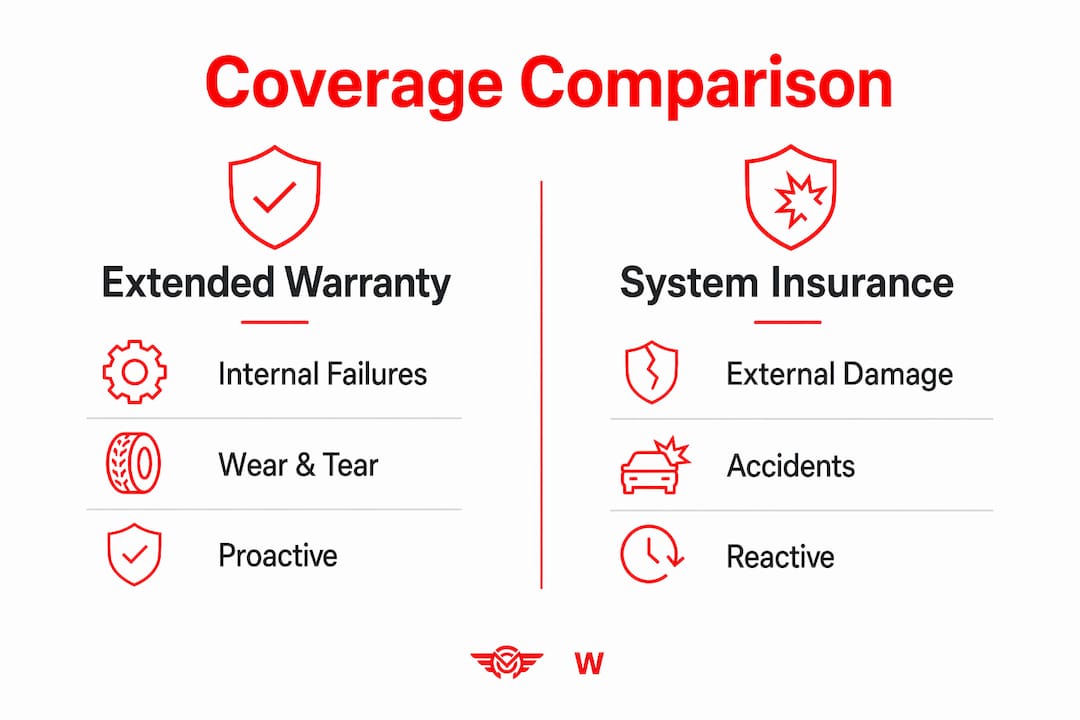
Electrical system coverage is a warranty or insurance product that protects the electrical components built into your vehicle against failure, breakdown, or sudden damage. The industry uses two distinct product types to deliver this protection: extended vehicle warranties, which cover internal failures caused by normal use and wear, and systems breakdown insurance, which covers sudden electrical failures triggered by external events like power surges or electrical fires.

For vehicle owners, this coverage typically applies to components like the body control module, alternator, starter motor, power window regulators, electronic climate control systems, and the wiring harnesses that connect them. In a BMW 7 Series or Mercedes-Benz S-Class, those wiring harnesses alone can cost thousands of dollars to replace. Coverage for electrical systems exists precisely because these repairs are expensive and increasingly common as vehicles grow more electronically complex.
The coverage you get depends entirely on the plan type you choose. A vehicle extended warranty from a provider like Rpmwarranty covers electrical failures that result from normal use over time. A separate electrical system insurance endorsement covers sudden, accidental electrical damage. Most vehicle owners benefit from understanding both, especially if they drive a high-end model where a single electrical repair can exceed $2,000.
What components are typically covered under electrical system coverage?
Coverage for electrical systems varies by plan, but most extended vehicle warranties include a defined list of electrical components. Knowing what is and is not on that list prevents surprises at the repair shop.
Commonly covered electrical components include:
- Alternators and voltage regulators
- Starter motors and ignition systems
- Power window and door lock motors
- Electronic climate control modules
- Body control modules and instrument clusters
- Factory-installed wiring harnesses and connectors
- Fuel injection control modules
- Anti-lock braking system (ABS) control units
- Sensors tied to the powertrain and emissions systems
Common exclusions across most plans include:
- Aftermarket audio systems and custom speaker installations
- Alarm systems not installed by the manufacturer
- Vehicle batteries (considered a wear item)
- External wiring not part of the factory build
- Low-voltage specialty wiring in custom configurations
The exclusion list matters most for owners who modify their vehicles. A Ford F-150 owner who installs an aftermarket lift kit with custom lighting wiring may find that those modifications create exclusions that extend beyond just the added parts. Legacy wiring and modifications are underwriting flags that can lead to claim denials, even for unrelated factory components.
For luxury vehicles, the stakes are higher. A Range Rover Sport's Terrain Response system relies on a network of sensors and electronic control units. A Porsche Cayenne's adaptive air suspension is electronically managed. These are factory components that a quality extended warranty plan should cover. Always read the covered components list before signing any agreement.
Pro Tip: Ask your warranty provider for the full written list of covered electrical components before you commit. If a provider cannot produce a specific list, treat that as a red flag.
How do electrical system warranties differ from electrical system insurance?
The primary confusion in this space comes down to one distinction: warranties cover internal failures, and insurance covers external damage. These are fundamentally different products, and confusing them leads to uncovered repair bills.
| Feature | Extended Vehicle Warranty | Electrical System Insurance |
|---|---|---|
| What triggers coverage | Internal failure from wear and use | Sudden external event (fire, surge, accident) |
| Typical cost | Varies by plan and vehicle | Around $50 annually for endorsements |
| Deductible | Varies by plan | Typically around $500 per event |
| Coverage limit | Depends on plan tier | Up to $100,000 per event in some policies |
| Example scenario | Alternator fails after 80,000 miles | Electrical fire caused by a lightning strike |
| Best for | High-mileage or aging vehicles | Vehicles in storm-prone or high-risk areas |
Systems breakdown coverage protects against internal failures like electrical arcing, unlike standard policies that only cover external perils such as fire and theft. Standard auto insurance covers sudden external damage. It offers zero repair assistance for electrical systems failing due to normal wear and tear, leaving you fully responsible for those costs.
For owners of luxury vehicles, both products may be worth carrying. A Mercedes-Benz GLE owner faces potential repair costs from both categories: a failing COMAND infotainment module (wear and tear) and storm-related electrical damage (external event). An extended warranty handles the first scenario. Insurance handles the second.
Pro Tip: Check whether your current auto insurance policy includes a systems breakdown endorsement. Many drivers pay for coverage they already have, or assume they have coverage they do not.
What are common causes of electrical system failure in luxury vehicles?
Electrical failures in vehicles follow predictable patterns. Knowing the causes helps you assess your own risk level and choose coverage before a failure happens.
-
Aging wiring and insulation breakdown. Wiring insulation degrades over time, especially in vehicles exposed to extreme heat or cold. A Honda Accord with 120,000 miles may develop intermittent electrical faults simply because the insulation on factory wiring has cracked and is causing shorts. This is the most common cause of electrical failure in older vehicles.
-
Electrical arcing and short circuits. Arcing occurs when electricity jumps between conductors it should not contact. In a Range Rover with its complex air suspension electronics, a single arc can damage multiple control modules simultaneously. Electrical arcing and shorts are among the most expensive failure types because the damage spreads before it is detected.
-
Power surges from faulty alternators. An alternator that begins overcharging sends excess voltage through the entire electrical system. In a BMW 5 Series, this can damage the DME (Digital Motor Electronics) module, the instrument cluster, and multiple sensors in a single event. Replacing a BMW DME module alone can cost $1,500 or more.
-
Unpermitted or amateur modifications. Aftermarket installations done without proper electrical knowledge create weak points in the factory system. A Porsche 911 owner who has a non-certified shop install a custom audio system may introduce ground loops, improper fusing, and wiring that degrades the factory harness over time. Unpermitted modifications are a leading cause of claim denials.
-
Water intrusion and corrosion. Water finds its way into electrical connectors through worn seals, damaged weatherstripping, or flood exposure. A Ford Explorer with a leaking sunroof drain can develop corrosion in the body control module over months before the owner notices any symptoms. By the time the module fails, the corrosion has often spread to nearby connectors.
-
Software and control module failures. Modern vehicles like the Mercedes-Benz E-Class run dozens of software-controlled modules. These modules can fail due to firmware corruption, manufacturing defects, or voltage irregularities. Software-related electrical failures are increasingly common and often require dealer-level diagnostics to identify.
How to evaluate and select the right electrical system coverage plan
Choosing the right coverage starts with an honest assessment of your vehicle and your financial risk tolerance. The wrong plan costs you money in premiums. No plan at all can cost you far more in repairs.
Start with your vehicle's profile:
- Make and model complexity: A Porsche Panamera has more electronic systems than a Honda Civic. More complexity means higher repair costs and a stronger case for coverage.
- Age and mileage: Vehicles over five years old or with more than 60,000 miles face higher electrical failure rates. Coverage becomes more valuable as the manufacturer's warranty expires.
- Modification history: Any aftermarket work should be disclosed to your warranty provider. Undisclosed modifications can void coverage entirely.
Evaluate the plan terms carefully:
- Coverage limits: Confirm the maximum payout per repair and per year. A plan with a $1,500 cap per repair is inadequate for a BMW or Mercedes-Benz owner.
- Deductibles: Lower deductibles mean higher premiums but less out-of-pocket cost per claim. Match the deductible to what you can comfortably pay in an emergency.
- Repair vs. replacement terms: Some plans cover repair only and will not pay for full component replacement. For electronic control modules, repair is rarely an option. Confirm that replacement is covered.
- Exclusion clauses: Read every exclusion. Insurance claim approvals often depend on whether electrical repairs were permitted and inspected, with violations risking coverage denial.
Practical steps to avoid coverage pitfalls:
- Get the covered components list in writing before signing.
- Ask whether the plan covers diagnostic labor, not just parts.
- Confirm whether you can use any licensed repair shop or only a network shop.
- Check the claims process: how long does reimbursement take, and who pays the shop directly?
Rpmwarranty offers tiered vehicle protection plans at the Elite, Advanced, and Essential levels, each with different electrical component coverage. For owners of high-end vehicles, the Elite plan covers the broadest range of electrical components, including sensors, control modules, and factory-installed electronics.
Pro Tip: If you are buying a used luxury vehicle, request the full service history and look for any electrical repairs. A BMW or Range Rover with a history of electrical work may already have compromised components that a warranty provider will exclude.
Key takeaways
Electrical system coverage is the single most important protection category for owners of modern luxury vehicles, where one control module failure can exceed the cost of a full year of coverage premiums.
| Point | Details |
|---|---|
| Two distinct product types | Extended warranties cover wear-and-tear failures; insurance covers sudden external electrical damage. |
| Luxury vehicles carry higher risk | BMW, Mercedes-Benz, Porsche, and Range Rover electrical repairs regularly exceed $1,500 per incident. |
| Exclusions determine real value | Aftermarket modifications, batteries, and external wiring are excluded from most plans. |
| Modifications create coverage gaps | Unpermitted electrical work can void coverage on unrelated factory components. |
| Plan terms require close review | Confirm replacement coverage, diagnostic labor, and shop network rules before signing. |
Why I think most vehicle owners underestimate electrical coverage
I have spent years reviewing vehicle protection plans and talking with owners after they receive a repair bill they did not expect. The pattern is consistent: the driver assumed their auto insurance covered the repair, or they assumed the manufacturer's warranty was still active, or they simply never thought about it until the check engine light turned into a $2,400 estimate.
The vehicles where this gap hurts most are the ones owners are most proud of. A Range Rover Sport owner does not expect to pay $1,800 to replace a transfer case control module. A Porsche Cayenne owner does not anticipate a $2,100 bill for an air suspension control unit. These are not unusual repairs. They are predictable outcomes of complex electrical systems aging past their manufacturer warranty period.
The misunderstanding I see most often is the assumption that insurance covers wear and tear. It does not. Standard auto insurance covers accidents and external events. It does not pay for an alternator that fails at 90,000 miles or a body control module that corrupts its own firmware. That gap is exactly what an extended warranty fills.
My honest advice: if your vehicle is more than three years old and out of its manufacturer warranty, get coverage for electrical systems before you need it. The math is straightforward. One covered repair on a BMW or Mercedes-Benz typically pays for multiple years of extended warranty premiums. Waiting until something fails means you are already paying out of pocket.
I also recommend reviewing your coverage annually. Vehicles change as they age, and a plan that was adequate at 50,000 miles may have exclusions that matter more at 100,000 miles. Treat your warranty review the same way you treat your oil change schedule: put it on the calendar and do not skip it.
— Kenneth
Protect your vehicle's electrical system with Rpmwarranty
Modern vehicles carry more electrical complexity than ever before, and repair costs reflect that reality. Rpmwarranty's extended vehicle warranty plans are built to cover that complexity, with electrical system protection included across multiple plan tiers.

Rpmwarranty covers electrical components including control modules, sensors, factory wiring, and electronic systems across a wide range of vehicle makes and models. The Elite plan is designed specifically for owners of high-end vehicles who need the broadest protection available. Whether you drive a BMW, Mercedes-Benz, Ford, Honda, or Porsche, Rpmwarranty has a plan matched to your vehicle's profile. Get your free warranty quote today and find out exactly what your vehicle's electrical system coverage would cost. You can also browse the full protection plan options to compare coverage tiers side by side.
FAQ
What does electrical system coverage include for vehicles?
Electrical system coverage typically includes alternators, starter motors, body control modules, power window motors, electronic climate control units, and factory wiring harnesses. Aftermarket components, batteries, and external wiring are almost always excluded.
How does electrical coverage work when I need a repair?
You bring your vehicle to a licensed repair shop, the shop diagnoses the failure, and your warranty provider approves and pays for covered repairs directly or reimburses you after the fact. The specific process depends on your plan's terms.
Is electrical system insurance the same as an extended warranty?
No. Electrical system insurance covers sudden damage from external events like fires or power surges. An extended warranty covers internal failures caused by normal use and aging components. Both serve different purposes.
Do luxury vehicles need more electrical system coverage?
Yes. Vehicles like BMW, Porsche, Mercedes-Benz, and Range Rover carry significantly more electronic systems than standard vehicles. A single control module replacement on these models can cost $1,500 or more, making coverage far more cost-effective than paying out of pocket.
Can aftermarket modifications affect my electrical system coverage?
Yes. Unpermitted modifications and aftermarket electrical work can lead to claim denials, even for unrelated factory components. Always disclose modifications to your warranty provider before purchasing a plan.