

TL;DR:
- Transmission coverage protects costly transmission components from mechanical failure under specific warranty terms, crucial for luxury vehicle owners. Its real value depends on clear coverage of labor, shipping, and fluids, not just the duration or parts list, with many plans excluding essential costs. Evaluating these details before purchase ensures proper protection and prevents unexpected out-of-pocket expenses during repair claims.
Transmission coverage is a warranty that protects the mechanical components of your vehicle's transmission system against failure, covering the cost of repair or replacement under specified terms. For owners of vehicles like BMW, Mercedes-Benz, Range Rover, and Porsche, where transmission repair bills can reach several thousand dollars, this protection is not optional. It is the difference between a manageable service visit and a financial shock. Understanding transmission coverage means knowing exactly what your warranty covers, what it excludes, and how the fine print determines your real out-of-pocket exposure when something goes wrong. Factory powertrain warranties, as documented by Kelley Blue Book, and extended service contracts from providers like Rpmwarranty each approach this coverage differently.
What is transmission coverage and what does it actually protect?

Transmission coverage is the portion of a vehicle warranty that pays for the repair or replacement of transmission components when they fail due to mechanical defect. The industry term for the broader protection that includes this coverage is a powertrain warranty, which covers the engine, transmission, and drivetrain as a connected system. Knowing both terms matters because dealers and warranty providers use them interchangeably, and the scope of protection can differ significantly between contracts.
Factory powertrain warranties typically cover the transmission for 5 years or 60,000 miles, with some manufacturers extending that to 10 years or 100,000 miles. That extended range reflects the confidence premium brands place in their drivetrains, but it also signals how expensive those drivetrains are to repair when they do fail.
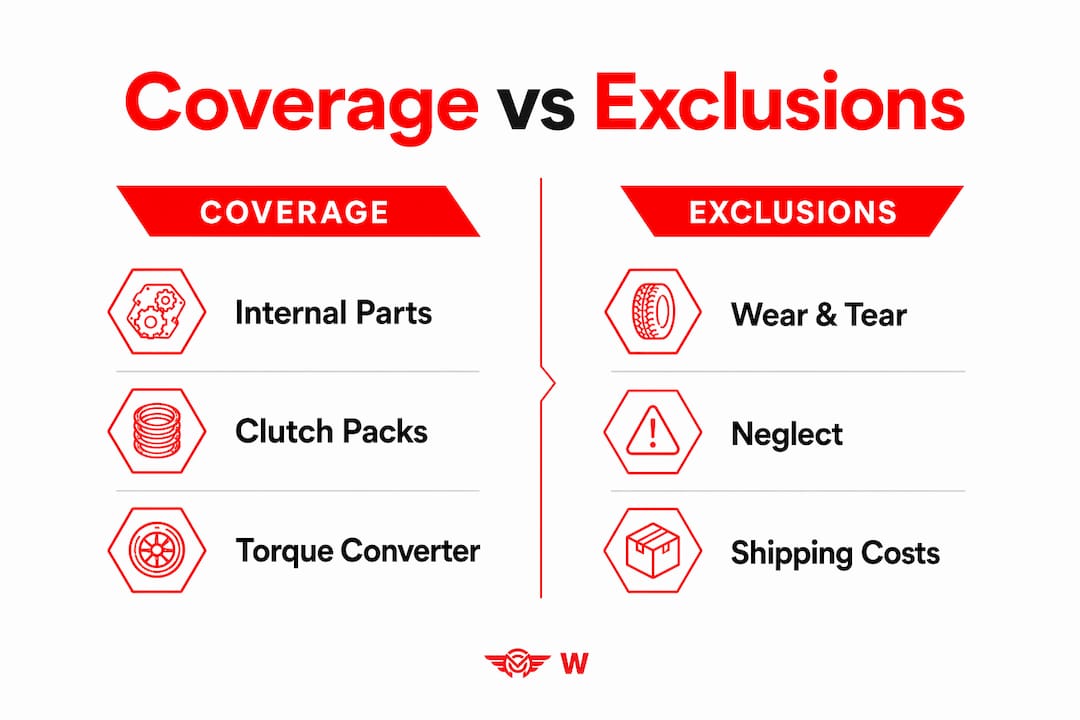
The components most commonly protected under transmission coverage include internal gears, clutch packs, torque converters, valve bodies, modulators, and the transmission case itself. These are the parts most likely to fail due to normal mechanical stress over time. What the coverage does not protect is equally important: damage caused by neglect, abuse, improper fluid maintenance, or modifications falls outside the scope of virtually every factory and extended warranty on the market.
Pro Tip: Keep every transmission fluid service record. Warranty providers routinely deny claims on vehicles where maintenance logs cannot confirm proper upkeep, particularly on high-mileage BMWs and Mercedes-Benz models with complex multi-speed automatic transmissions.
What does transmission coverage include and exclude?
The components listed in a warranty contract tell only part of the story. The real value of transmission coverage depends on what costs the warranty actually pays when you file a claim.
What is typically included:
- Internal mechanical parts: gears, clutch packs, bands, modulators, valve bodies, torque converters
- The transmission case and housing on most factory and premium extended warranties
- Labor costs for removal and reinstallation, though often subject to hourly rate caps
- Fluid replacement in select extended warranty plans
- Shipping costs for replacement units in some contracts, though this is far less common than most buyers assume
What is commonly excluded:
- Damage from neglect, abuse, or lack of scheduled maintenance
- Wear items like seals and gaskets in some base-level plans
- Hydraulic fluid replacement in many standard contracts
- Shipping costs for heavy transmission units, which can run into hundreds of dollars
- Labor costs that exceed the warranty's reimbursement cap per hour
Transmission warranties often exclude wear from neglect or abuse, and owners must maintain vehicles properly to keep coverage valid. For a Range Rover Sport or a Porsche Cayenne with an eight-speed automatic transmission, that maintenance requirement is not a formality. It is a condition that directly determines whether a $4,000 repair gets covered or denied.
Labor is where many owners discover the gap between what they expected and what they receive. Labor reimbursement rates and caps significantly impact out-of-pocket costs for transmission repair claims. One provider may reimburse $75 per hour with no cap, while another limits total labor reimbursement to a fixed dollar amount that falls well short of actual shop rates in major metro areas. A dealer charging $175 per hour for a BMW transmission job will leave you paying the difference if your warranty only covers $75 per hour.
Pro Tip: Before signing any extended warranty contract, ask the provider to state in writing the exact labor reimbursement rate and whether a dollar cap applies. This single question separates genuinely protective plans from ones that look good on paper.
How do powertrain and bumper-to-bumper warranties compare?
Understanding transmission coverage requires placing it within the broader warranty structure that governs your vehicle. Two warranty types define most of what factory coverage provides: the powertrain warranty and the bumper-to-bumper warranty.
The powertrain warranty covers the engine, transmission, and drivetrain components, forming the foundation of mechanical protection from engine to axle. The bumper-to-bumper warranty covers a wider range of systems, including electrical components, air conditioning, infotainment, and suspension, but it typically expires sooner. Most manufacturers offer bumper-to-bumper coverage for 3 years or 36,000 miles, while the powertrain warranty extends further.
| Warranty type | Typical duration | What it covers | Transmission included? |
|---|---|---|---|
| Bumper-to-bumper | 3 years / 36,000 miles | Most vehicle systems | Yes |
| Powertrain | 5 to 10 years / 60,000 to 100,000 miles | Engine, transmission, drivetrain | Yes |
| Extended service contract | Varies by plan | Depends on tier selected | Depends on plan |
The practical implication is clear: once the bumper-to-bumper warranty expires, the powertrain warranty becomes your primary protection for the most expensive mechanical components. For a Honda Accord or Ford F-150 owner at 40,000 miles, the bumper-to-bumper coverage is gone, but the powertrain warranty still applies. For a Mercedes-Benz C-Class owner at 80,000 miles, both factory warranties have typically expired, which is exactly when an extended service contract covering the transmission becomes most valuable.
Pro Tip: Check your vehicle's exact warranty expiration by VIN through the manufacturer's website before purchasing any extended plan. Buying coverage that overlaps with active factory protection wastes money.
What are the critical pitfalls in transmission warranty coverage?
The headline terms of a transmission warranty, such as duration and covered parts, rarely tell you what the coverage is actually worth. The details that determine real value are buried in the contract language, and most buyers never read them until they file a claim.
Shipping costs are a hidden exposure. Shipping costs for heavy transmission units are often excluded but can be a substantial unexpected expense. A remanufactured transmission for a Range Rover or a BMW 7 Series is a heavy, specialized unit. Freight charges for shipping it to a repair facility can add hundreds of dollars to a claim that you assumed was fully covered.
Fluid replacement is frequently overlooked. Fluid replacement coverage is generally overlooked but reduces another out-of-pocket cost during a warranty claim. Transmission fluid is not cheap, particularly for vehicles requiring proprietary fluid specifications like those used in ZF eight-speed transmissions found in BMW, Porsche, and Land Rover vehicles. A warranty that covers fluid replacement saves you $100 to $300 per claim.
Installation requirements vary and affect your options. Professional installation requirements vary across warranty providers. Some contracts require installation at a certified facility, limiting where you can take your vehicle. Others offer flexibility, which gives you more control over shop selection and total repair cost.
Technical support access changes the claims experience. Access to a real transmission technician for technical support improves claim resolution speed. General call centers delay diagnosis and prolong repairs. When your Ford Expedition or Honda Pilot is sitting in a shop and the warranty provider's representative cannot answer technical questions, the repair timeline extends and your rental car costs increase.
The cumulative effect of these gaps is significant. A warranty that covers parts but excludes labor above $75 per hour, excludes shipping, excludes fluid, and requires certified installation can leave you paying $800 to $1,500 out of pocket on a claim you believed was fully covered.
How to evaluate transmission coverage when buying a warranty
Choosing the right transmission coverage requires asking specific questions before you commit, not after a failure occurs. The process is straightforward if you know what to look for.
-
Ask for the labor reimbursement rate and cap in writing. The single most important number in any transmission warranty is the hourly labor rate the provider will pay. Confirm whether a total dollar cap applies per claim.
-
Confirm whether shipping is covered. Ask directly: "If a replacement transmission unit needs to be shipped to the repair facility, does the warranty cover that cost?" A yes or no answer is all you need.
-
Check fluid replacement terms. Transmission fluid replacement during a covered repair should be included. If it is not, factor that cost into your comparison.
-
Review installation requirements. Understand whether the warranty requires a certified shop and whether your preferred mechanic qualifies. For owners of BMW or Mercedes-Benz vehicles, dealer labor rates are significantly higher than independent specialists.
-
Ask about technical support access. Find out whether the provider offers direct access to transmission specialists during the claims process or routes all calls through a general customer service team.
-
Compare coverage tiers, not just price. A warranty's true value depends more on coverage clarity for labor, shipping, and parts than on its length alone. A three-year plan with full labor, shipping, and fluid coverage often protects you better than a five-year plan with multiple exclusions.
Pro Tip: Request a sample contract before purchasing any extended warranty. Any provider unwilling to share the actual contract language before you pay is a provider worth avoiding.
| Evaluation factor | What to confirm |
|---|---|
| Labor coverage | Hourly rate and whether a dollar cap applies |
| Shipping | Whether freight costs for replacement units are included |
| Fluid replacement | Whether transmission fluid is covered during a claim |
| Installation flexibility | Whether non-certified shops qualify for claims |
| Technical support | Whether transmission specialists are accessible during claims |
Key takeaways
Transmission coverage protects the most expensive mechanical system in your vehicle, but its real value depends entirely on what the contract says about labor, shipping, fluids, and installation terms.
| Point | Details |
|---|---|
| Core definition | Transmission coverage pays for repair or replacement of transmission components under specified warranty terms. |
| Labor is the biggest variable | Reimbursement rate caps can leave owners paying hundreds out of pocket even on covered repairs. |
| Shipping and fluids matter | Excluding these costs from coverage adds real expense to claims most owners do not anticipate. |
| Powertrain vs. bumper-to-bumper | Powertrain warranties last longer but cover fewer systems; transmission is included in both. |
| Evaluate before you buy | Ask for labor rates, shipping terms, and a sample contract before committing to any extended plan. |
Why the fine print matters more than the headline coverage
I have reviewed a lot of warranty contracts over the years, and the pattern I see most often is this: buyers focus on the duration and the parts list, then feel blindsided when a claim comes back with a large out-of-pocket balance. The gap is almost always in labor, shipping, or fluid costs that the contract quietly excludes.
The vehicles where this bites hardest are the ones people spend the most money on. A BMW 5 Series or a Mercedes-Benz GLE with a sophisticated nine-speed automatic transmission is not a cheap repair. When the valve body fails at 85,000 miles and the dealer quotes $3,200 for the job, a warranty that covers parts but caps labor at $75 per hour against a $185 shop rate covers less than half the actual bill. That is not a hypothetical. That is a scenario I have seen play out repeatedly.
What experienced buyers do differently is treat the warranty evaluation like a contract negotiation, not a purchase decision. They read the exclusions section before the coverage section. They ask about shipping before they ask about duration. They confirm whether the provider has actual transmission technicians on staff or routes claims through a general call center. These questions feel tedious until the moment you need to file a claim, at which point they feel like the most important questions you ever asked.
My recommendation is simple: do not let a low monthly premium distract you from the total cost exposure the contract leaves in place. A plan from Rpmwarranty that explicitly covers labor, parts, and additional repair costs gives you something a cheaper plan with vague exclusions cannot. Real protection means knowing the number before the repair, not after.
— Kenneth
Protect your transmission with the right extended coverage
Rpmwarranty offers extended protection plans designed to cover transmission components, labor, and more across a wide range of vehicle makes and models. Whether you drive a Ford, Honda, BMW, or Range Rover, the right plan eliminates the guesswork that comes with out-of-pocket repair costs after your factory warranty expires. Rpmwarranty's Elite, Advanced, and Essential tiers give you options that match your vehicle's age, mileage, and budget. The process starts with a free quote and a consultation that walks you through exactly what each plan covers before you commit. Visit Rpmwarranty to compare plans and get a quote tailored to your vehicle.
FAQ
What is transmission coverage in a vehicle warranty?
Transmission coverage is the portion of a vehicle warranty that pays for the repair or replacement of transmission components when they fail due to mechanical defect. It can be part of a factory powertrain warranty or an extended service contract purchased separately.
Does auto insurance cover transmission repair?
Transmission repairs are generally not covered by auto insurance unless the damage was caused by a specific insured event like a collision or flood. Mechanical failure is excluded from standard auto insurance policies, which is why a separate warranty or extended service contract is necessary.
What does a powertrain warranty cover beyond the transmission?
A powertrain warranty covers the engine, transmission, and drivetrain components including axles and driveshafts, forming protection from engine to axle. It does not cover electrical systems, air conditioning, or infotainment, which fall under bumper-to-bumper coverage.
How long does factory transmission coverage last?
Factory powertrain warranties typically cover the transmission for 5 years or 60,000 miles, though some manufacturers extend that to 10 years or 100,000 miles. Once factory coverage expires, an extended service contract is the only way to maintain protection against transmission failure costs.
What should I look for when comparing transmission warranty plans?
The most important factors are the labor reimbursement rate and cap, whether shipping costs for replacement units are covered, and whether fluid replacement is included. A warranty's true value depends on coverage clarity for these cost components more than on the length of the contract alone.