

TL;DR:
- Most vehicle warranties cover only specific electrical components during the factory warranty period, typically three years. Extended warranties vary widely, often excluding common parts like batteries and fuses and capping payouts at $2,500, leaving owners at risk for costly repairs. Proper maintenance documentation, manufacturer-approved service, and knowledge of coverage terms are essential to maximizing electrical warranty benefits.
Most vehicle owners assume their warranty covers everything under the hood. That assumption gets expensive fast. The question of whether do warranties cover electrical systems has no single yes or no answer. It depends entirely on the type of warranty, the specific components involved, and whether you have met the coverage conditions outlined in your contract. Electrical repairs on modern vehicles, especially luxury models like BMW, Mercedes-Benz, and Range Rover, can run into thousands of dollars. Knowing exactly where your protection starts and stops is one of the smartest financial moves you can make as a car owner.
Table of Contents
- Key takeaways
- Do warranties cover electrical systems in your vehicle?
- What electrical components are typically covered
- Costs, caps, and what you might actually owe
- What can void your electrical warranty coverage
- How to use your electrical warranty coverage effectively
- My honest take on vehicle electrical warranties
- Protect your vehicle with coverage that actually covers electrical
- FAQ
Key takeaways
| Point | Details |
|---|---|
| Not all warranties cover electrical | Factory warranties cover most electrical components, but extended plans vary widely in scope. |
| Exclusions matter significantly | Batteries, fuses, and lightbulbs are almost universally excluded from electrical warranty coverage. |
| Coverage caps can hurt you | Many plans cap electrical payouts at $1,500 to $2,500, which rarely covers major system repairs. |
| Maintenance protects your claim | Undocumented or DIY repairs can void your electrical warranty coverage without warning. |
| Extended plans fill the gap | After factory coverage ends, a quality extended warranty is your best defense against costly electrical failures. |
Do warranties cover electrical systems in your vehicle?
The short answer is: it depends on which warranty you have. Factory warranties cover electrical systems, infotainment, and sensors for roughly three years. That covers a wide range of factory-installed electronic components, from the instrument cluster in your Mercedes-Benz C-Class to the driver assistance sensors in a BMW 5 Series. After that window closes, your coverage situation changes dramatically depending on what you have purchased.
Extended warranties present a much more complicated picture. Some provide broad electrical coverage that mirrors the original factory plan. Others take a stated-components approach, listing only what is covered rather than what is excluded. The difference matters because electrical warranty policies that use inclusion lists can leave major components like the alternator or body control module completely unprotected.
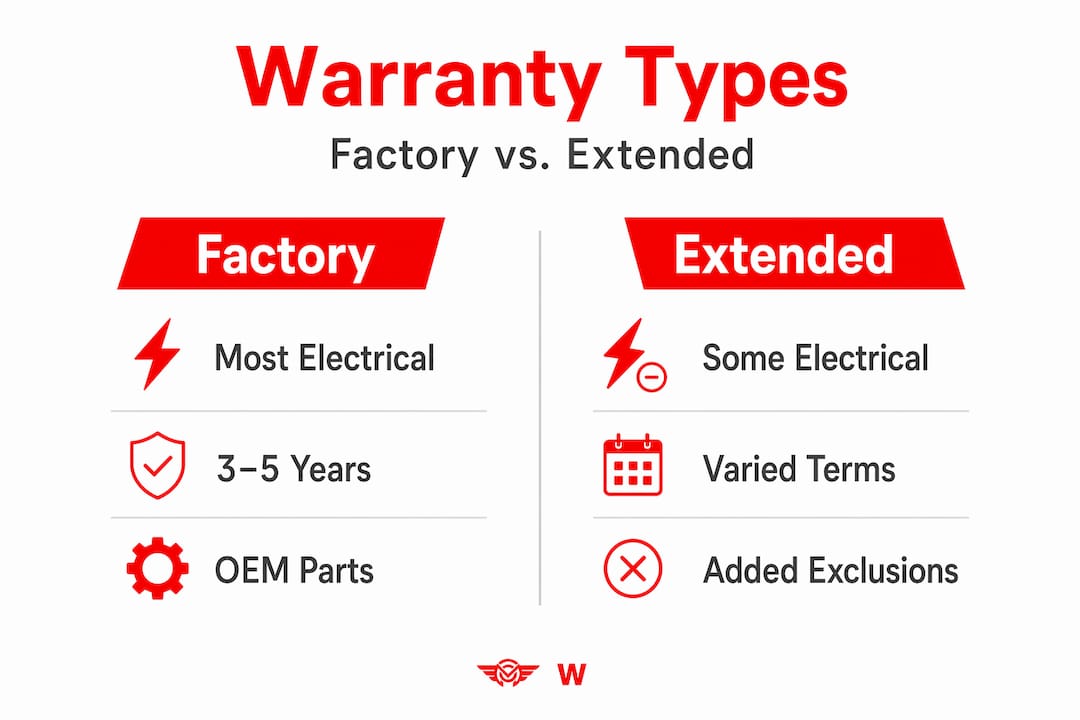
Understanding the factory vs. extended warranty distinction is not optional if you own a vehicle with a sophisticated electrical architecture. A Range Rover Sport, for example, carries one of the most complex electrical systems in the SUV segment. Its terrain response system, electronic air suspension controls, and multiple CAN bus networks all represent potential failure points that an inadequate extended warranty will not touch.
Builder warranties and home warranty service contracts serve distinctly different roles. The two warranty types are often confused because both use the word "warranty," but one covers construction defects and the other covers wear and aging failures. Vehicle owners researching electrical warranty coverage need to stay focused on automotive warranty language rather than conflating it with home warranty structures.
What electrical components are typically covered
Here is where most warranty holders get caught off guard. The list of covered components sounds thorough until you read the fine print on exclusions.
Components commonly covered under electrical warranties:
- Interior wiring and harnesses
- Alternators and voltage regulators
- Body control modules and electronic control units
- Infotainment systems and display screens
- Power window and door lock motors
- Sensors tied to emissions and engine management
Components almost universally excluded:
- Batteries and battery cables
- Fuses and circuit breakers
- Standard lightbulbs and LED assemblies
- Custom or aftermarket wiring
- Components damaged by water intrusion or accidents
Warranties cover wiring, panels, and sensors but routinely draw the line at expendable parts and anything altered from factory spec. This is a critical distinction for owners of vehicles like the Porsche Cayenne or BMW iX, where the infotainment system is deeply integrated with the navigation, audio, and driver assistance platforms. If your touchscreen fails due to a factory defect, a good warranty covers it. If it fails because of a software update you ran without authorization, coverage becomes a much harder argument to win.
Conditional coverage adds another layer of complexity. Many plans require that you follow the manufacturer's recommended maintenance schedule to keep electrical coverage valid. Miss a scheduled inspection on your Ford F-150's electrical system, and your warranty administrator has grounds to challenge your claim.
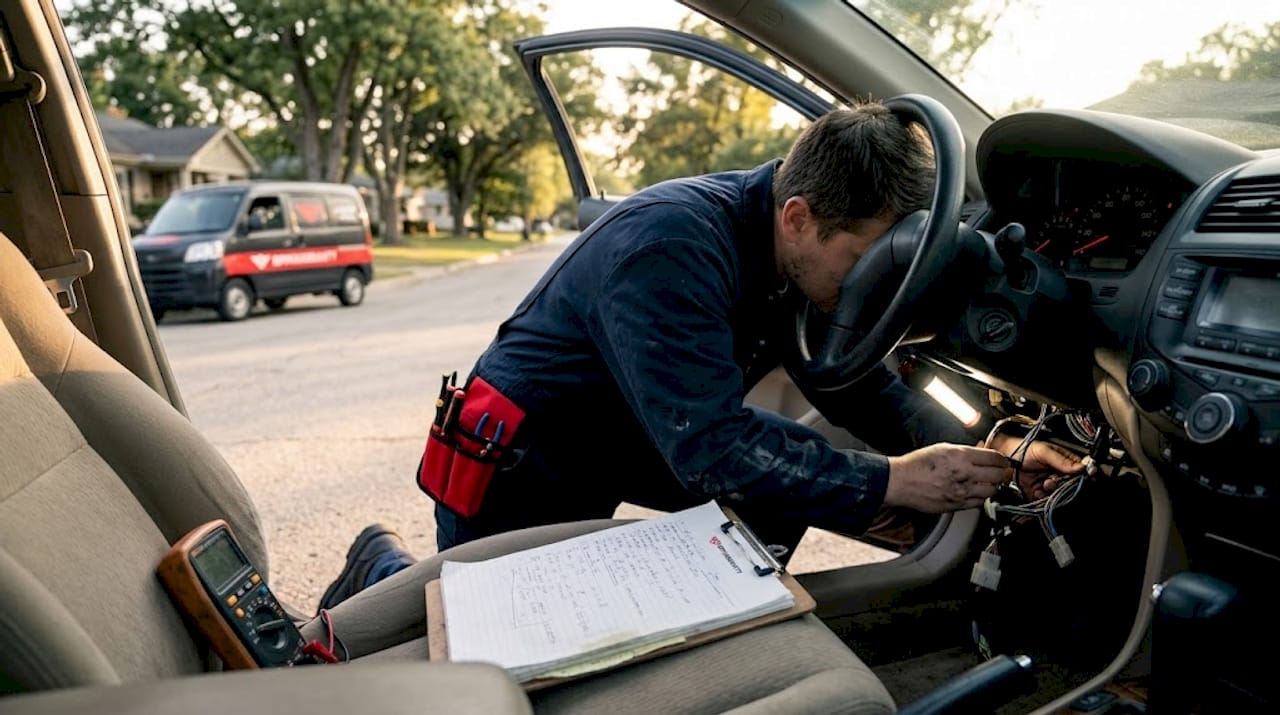
Pro Tip: Keep a dedicated folder, physical or digital, for every maintenance receipt, inspection record, and service note tied to your vehicle. One missing document can turn a covered repair into a full out-of-pocket expense.
The extended warranty coverage question becomes especially pointed for hybrid and electric vehicles, where the electrical system is not a supporting system but the primary one. Tesla, BMW i-series, and Mercedes EQ models all carry electrical architectures where a single module failure can generate a repair bill well above what a basic coverage plan will pay.
Costs, caps, and what you might actually owe
This is the section of the article that most warranty marketing materials hope you never read. Understanding the real financial math behind warranty coverage for electrical systems changes how you evaluate plans.
Service call fees range from $60 to $150 per visit, and that charge applies even when the repair itself is fully covered. For minor electrical issues, paying the service fee plus your deductible can cost more than the repair would have if you had just paid out of pocket. That is not a hypothetical. It happens regularly with small jobs like sensor replacements or minor wiring fixes.
The larger problem is coverage caps. Payout caps on electrical repairs often sit between $1,500 and $2,500, which sounds reasonable until you face a real repair bill on a modern vehicle. Here is how the math actually looks:
| Electrical Repair Scenario | Estimated Repair Cost | Typical Warranty Cap | Potential Out-of-Pocket |
|---|---|---|---|
| BMW 5 Series body control module | $2,800 | $2,500 | $300+ plus service fee |
| Mercedes-Benz infotainment unit replacement | $4,500 | $2,500 | $2,000+ |
| Range Rover air suspension control module | $3,200 | $2,500 | $700+ |
| Ford F-150 alternator and wiring harness | $1,400 | $2,500 | $0 (fully covered) |
| Porsche Cayenne ECU replacement | $5,800 | $2,500 | $3,300+ |
The pattern is clear. For lower-cost repairs, a warranty earns its value quickly. For the major electrical failures common in luxury and high-tech vehicles, a plan with a $2,500 cap leaves you absorbing the most painful portion of the bill.
Pro Tip: When comparing extended warranty plans, ask specifically about per-claim caps versus annual caps. A plan with a $2,500 per-claim limit looks very different from one with a $2,500 annual limit when you face multiple electrical failures in the same year.
You should also look at car electrical repair costs before selecting your plan. Knowing typical price ranges for your specific make and model gives you the data to evaluate whether a plan's coverage cap is genuinely protective or merely theoretical. A warranty that never pays more than what the job actually costs is not much of a warranty at all.
What can void your electrical warranty coverage
This is where warranty claims go to die. The conditions that invalidate electrical warranty coverage are well-documented, but most vehicle owners do not read the contract closely enough to spot them until it is too late.
Common reasons electrical warranty claims get denied:
- DIY repairs or modifications to any covered electrical component
- Use of non-OEM replacement parts that affect connected systems
- Failure to follow the manufacturer's scheduled maintenance program
- Damage resulting from an accident, flood, or other external event
- Evidence of neglect, such as ignoring dashboard warning lights for extended periods
Warranties exclude damage from misuse, neglect, or natural events and require documented maintenance for valid claims. That language appears in almost every warranty contract, and administrators enforce it. A vehicle that shows a pattern of deferred maintenance will face skepticism on any claim, especially for an electrical failure where the root cause can be difficult to pinpoint.
The new versus resale distinction matters here too. Builder warranties on new constructions cover electrical defects for roughly two years, while resale warranty contracts focus on wear and failure rather than original workmanship. For vehicles, this maps onto factory coverage versus used vehicle extended warranties. A used Mercedes-Benz GLE purchased from a private seller with no remaining factory warranty carries very different protection than the same model purchased certified pre-owned from a dealer.
Understanding what voids your coverage is not pessimism. It is the most practical form of warranty literacy you can develop as a vehicle owner. A claim that gets denied does not refund your premium.
What voids a car warranty includes more scenarios than most owners anticipate. The most avoidable one is also the most common: letting an uncertified mechanic touch a covered component. Even a well-intentioned repair at a local shop rather than an authorized service center can give a warranty administrator the grounds to challenge your claim.
How to use your electrical warranty coverage effectively
Knowing you have coverage is not the same as knowing how to use it. These steps help you get the most out of whatever electrical system warranty policies you have in place.
-
Read the specific electrical coverage language in your contract. Do not rely on a salesperson's summary. Find the section that lists covered components and read the exclusions list with equal care. If your vehicle has a unique system, like the 48-volt mild hybrid setup in the Mercedes-Benz E-Class, verify that it is explicitly covered.
-
Establish a maintenance log from day one. Every oil change, inspection, and software update should be documented with the date, mileage, and service provider. Warranty claims often hinge on documented maintenance, and administrators will request these records before approving anything significant.
-
Always use authorized or approved service providers. For BMW, that means a BMW-certified service center or an approved independent shop on your warranty provider's list. For Ford, it means using a dealer or an ASE-certified technician. Using an unauthorized shop for a covered repair is one of the fastest ways to lose your claim.
-
Call your warranty provider before authorizing any electrical repair. This step is mandatory under most plans. Getting pre-authorization protects you and ensures the repair shop knows the billing process. Skipping this step can result in full denial, even for a covered component.
-
Budget for service fees regardless of coverage. Even a fully covered repair will cost you the per-visit fee. Service fees can sometimes exceed small repair costs when the job is minor, so factor that into your decision to file a claim at all.
-
Evaluate your coverage when purchasing a used or resale vehicle. If the factory warranty has expired, purchasing an extended warranty at the point of sale is significantly easier than applying after you have owned the vehicle. Pre-purchase inspections give you and the warranty provider a clean baseline.
The essential vehicle protection features your warranty should include go beyond just electrical components. Look for plans that bundle roadside assistance, rental car coverage, and trip interruption benefits alongside the electrical and mechanical protections. That combination reflects real-world ownership rather than just repair shop scenarios.
My honest take on vehicle electrical warranties
I have spent years reviewing warranty contracts, talking to shop owners, and watching vehicle owners navigate claim denials they never saw coming. Here is what I have actually learned, not the brochure version.
Most vehicle owners underestimate how much the electrical architecture of modern cars has changed the warranty math. A 2010 Honda Accord has maybe a dozen electronic modules. A 2024 BMW 7 Series has well over 100. The complexity is not academic. More modules mean more failure points, longer diagnostic times, and higher labor costs that quickly overwhelm coverage caps.
The owners who come out ahead financially are not the ones with the most expensive plans. They are the ones who read their contracts, maintain their vehicles meticulously, and treat warranty coverage as one layer in a broader financial strategy rather than a guaranteed safety net. I have seen drivers with $3,000 per year extended warranties get a major claim denied because of one undocumented oil change. I have also seen drivers with modest coverage avoid thousands in out-of-pocket costs because they kept immaculate service records.
My honest advice: if you drive a luxury or high-tech vehicle, be skeptical of any extended plan with a per-claim electrical cap under $3,000. Vehicles like the Range Rover, Porsche Panamera, or Mercedes-Benz S-Class have electrical systems that simply cost more to repair than budget coverage can absorb. A plan that sounds affordable but caps out at $1,500 per electrical claim is not protecting you where the real risk sits.
Treat your extended warranty selection the way a smart buyer treats any major purchase. Compare the specifics, not the headlines.
— Kenneth
Protect your vehicle with coverage that actually covers electrical
When factory coverage ends, the financial exposure on a modern vehicle grows fast. Electrical failures are among the most expensive repairs in the industry, and they hit without warning.

Rpmwarranty offers extended protection plans built specifically to cover the components that matter most, including electrical systems, sensors, infotainment, and high-tech modules. Whether you drive a BMW, Mercedes-Benz, Ford, or a high-performance Volkswagen, there is a plan structured around your vehicle's actual risk profile. The Volkswagen extended warranty covers electrical system failures that the factory plan leaves behind after expiration. You can also explore the full protection plan options to compare coverage tiers and find the right fit for your budget and vehicle. Getting a free warranty quote takes minutes and shows you exactly what you would be protected against before you commit to anything.
FAQ
Do warranties cover electrical systems in cars?
Most factory warranties cover vehicle electrical systems and factory-installed electronic components for roughly three years. Extended warranties vary widely, so you must read the contract carefully to confirm electrical coverage.
What electrical parts are excluded from warranty coverage?
Batteries, fuses, standard lightbulbs, and custom or aftermarket wiring are almost universally excluded from electrical warranty coverage. Damage caused by accidents, flooding, or neglect is also typically excluded.
Can poor maintenance void my electrical warranty?
Yes. Manufacturers require proof of professional maintenance to keep warranty claims valid. Undocumented service or unauthorized repairs can give your warranty provider grounds to deny an electrical claim.
How much will I pay out of pocket even with electrical warranty coverage?
Service fees range from $60 to $150 per visit, and many plans cap electrical payouts at $1,500 to $2,500. For major repairs on luxury vehicles, you may still owe thousands even with active coverage.
Is an extended warranty worth it for vehicle electrical systems?
For vehicles with complex electrical architectures like BMW, Range Rover, or Mercedes-Benz, extended warranty coverage provides strong value after the factory plan expires. Choose a plan with high per-claim caps and explicit coverage for electronic modules and sensors.