
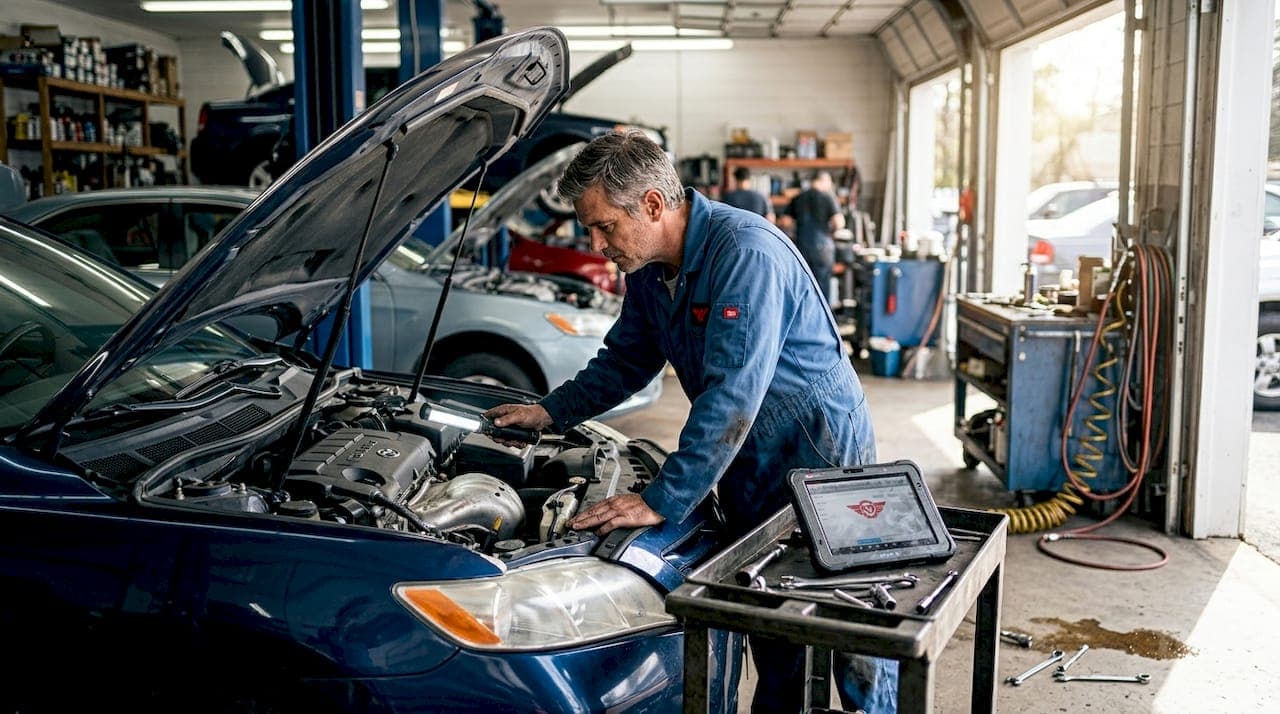
When your factory warranty expires, the financial exposure can be significant. Annual repair costs for vehicles seven years and older can run $1,200 to $2,000 per year, and that number climbs fast if a major system fails. Choosing the wrong extended warranty, or worse, choosing none at all, leaves you one breakdown away from a serious financial hit. But picking the right plan is harder than it sounds. Coverage gaps, confusing fine print, and high claim denial rates make the process stressful. This article gives you a clear, feature-by-feature checklist so you can evaluate any extended warranty with confidence.
Table of Contents
- How to evaluate vehicle protection features
- Must-have coverage: Engine, transmission, and electrical
- Additional essential features: Roadside, rental car, and trip interruption
- Comparing warranty plans: What sets the best apart
- The uncomfortable truth about vehicle protection: Expert wisdom
- Unlock comprehensive protection with RPM Warranty
- Frequently asked questions
Key Takeaways
| Point | Details |
|---|---|
| Core coverage is key | Engine, transmission, and electrical coverage should be the foundation of any plan. |
| Extras add big value | Roadside, rental car, and trip interruption features can save money and headaches. |
| Claims process matters | Quick claims with maintenance records and short waiting periods reduce denial risk. |
| Choose reliable providers | Dealer-backed warranties and transparent claim policies outperform most third-party options. |
| Most buyers never use | Over half of extended warranty owners never file a claim, so review your real risk before buying. |
How to evaluate vehicle protection features
Not all extended warranties are created equal. Some cover hundreds of parts. Others cover just enough to look good on paper but leave you paying out of pocket when something major breaks. Knowing how to evaluate protection features before you sign anything is the single most important step you can take as a vehicle owner.
Start with coverage scope. A strong plan should cover the systems most likely to fail, not just the ones cheapest to fix. When reviewing any plan, look for these core criteria:
- Which specific parts and systems are listed as covered
- Whether coverage is "stated component" (only listed parts) or "exclusionary" (everything except what's listed)
- What the waiting period is before coverage activates
- Whether the provider requires maintenance records to process claims
- The provider's financial stability and payout history
That last point matters more than most buyers realize. Claim denial rates run between 20 and 22 percent when maintenance records are missing, and providers typically process valid claims within 48 hours when documentation is in order. Keep every oil change receipt and service record in a dedicated folder.
When comparing providers, look at their reputation, not just their price. A cheap plan from an unstable company is worthless when you need it most. Read the auto warranty basics before committing to anything, and cross-reference key warranty features to make sure nothing critical is missing from your shortlist.
Also check the warranty plan options available to you based on your vehicle's year, make, and model. Coverage availability varies, and some plans offer better terms when purchased while your factory warranty is still active.
Pro Tip: Buying an extended warranty while your vehicle is still under the manufacturer's original coverage often gets you better pricing and fewer exclusions. Providers view in-warranty vehicles as lower risk, and that works in your favor.
Must-have coverage: Engine, transmission, and electrical
Now that you know how to evaluate protection, let's break down the features that matter most. Three systems drive the majority of costly claims: the engine, the transmission, and the electrical system. If your plan does not cover all three thoroughly, you have a coverage gap worth worrying about.
Here is why these three matter so much. Engine repairs average $3,500 to $6,000, and transmission work runs $4,000 to $6,000. Engine problems account for 29 percent of all extended warranty claims, while electrical issues make up another 25 percent. Together, those two categories alone represent more than half of all claims filed.
Let's put that in perspective. A single engine replacement can cost more than three full years of warranty premiums. A transmission rebuild on a late-model vehicle can wipe out an entire emergency fund in one repair visit. These are not rare edge cases. They are the most common reasons people file claims.
When reviewing your plan for these systems, watch for these red flags:
- Vague language like "engine components" without a specific parts list
- Exclusions for "wear and tear" that could apply to almost anything
- Transmission coverage that excludes the torque converter or valve body
- Electrical coverage that stops at basic wiring and ignores sensors or control modules
The fine print is where coverage gaps hide. A plan that advertises "full engine coverage" but excludes seals, gaskets, or the cylinder head is not full coverage at all. Always ask for the actual contract, not just the marketing summary.
For deeper context on why post-warranty protection matters so much for these systems, and to understand how to read the fine print with confidence, the coverage transparency guide breaks it down in plain language. Knowing what to look for before you sign protects you from unpleasant surprises later.
Additional essential features: Roadside, rental car, and trip interruption
Beyond core coverage, extras often make the difference in your day-to-day experience. A breakdown is stressful enough without also worrying about how you will get home, how you will get to work, or what happens if your car dies three states away from home.
Here are the three add-on features worth prioritizing:
- Roadside assistance. This covers towing, flat tire changes, battery jump-starts, and lockout service. Without it, a single tow can cost $75 to $200 depending on distance. Plans that bundle roadside assistance reduce out-of-pocket emergency expenses significantly.
- Rental car reimbursement. When a major repair takes three to five days, you still need to get to work. Rental car coverage typically reimburses $30 to $50 per day, which offsets most of the cost. Without it, a week-long repair could add $200 to $350 in rental fees on top of your deductible.
- Trip interruption coverage. If your vehicle breaks down more than 100 miles from home, this benefit covers hotel stays and meals while your car is being repaired. It is a small feature that can save hundreds of dollars during an already stressful situation.
"Extended warranty plans typically cost between $1,500 and $4,000 total, or $70 to $180 per month, yet 55% of buyers never file a single claim." — Consumer Reports
That statistic is worth sitting with. If you are in the majority who never claims, these add-on features become the primary value you actually use. Roadside assistance alone can justify the plan cost for high-mileage drivers.
Pro Tip: Always check the daily and per-incident limits on rental and roadside benefits. Budget-tier plans often include these features but cap them so low they barely cover real costs. Read the warranty feature tips for a full breakdown, and check the extended warranty FAQ if you have specific questions about what's typically included.
Comparing warranty plans: What sets the best apart
With all features covered, let's see how plans stack up head to head. The market generally breaks into three tiers: basic, mid-range, and premium. Here is how they compare across the features that matter most.

| Feature | Basic plan | Mid-range plan | Premium plan |
|---|---|---|---|
| Engine coverage | Partial | Full | Full |
| Transmission coverage | Partial | Full | Full |
| Electrical systems | Limited | Moderate | Full |
| Roadside assistance | No | Yes | Yes |
| Rental car reimbursement | No | Limited | Full |
| Trip interruption | No | No | Yes |
| Waiting period | 30 days | 30 days | 30 days |
| Claim process | Manual | Streamlined | Streamlined |
| Transferable | Sometimes | Yes | Yes |
Dealer-backed Certified Pre-Owned (CPO) plans tend to offer cleaner claim processes and stronger manufacturer support than many third-party vendors. However, they are typically only available at the point of vehicle purchase and are limited to specific makes.
Third-party plans offer more flexibility. You can buy them at any time, for almost any vehicle, and customize coverage to your budget. The trade-off is that quality varies widely. Some third-party providers have strong payout records, while others are known for finding reasons to deny claims.
Here is the uncomfortable math: providers profit 60 percent or more on these contracts because most buyers never claim. That does not make extended warranties bad, but it does mean you should choose based on the specific risks your vehicle carries, not just fear of a big repair bill. Use the choosing warranty by year guide to match coverage to your vehicle's actual risk profile.
The uncomfortable truth about vehicle protection: Expert wisdom
Here is where theory meets reality. We sell extended warranties, so you might expect us to tell you everyone needs one. But that is not honest advice.
Consumer Reports warns that many extended warranties are overpriced relative to their payout value, and experts often recommend buying a reliable vehicle and maintaining it well over purchasing a vehicle service contract. That is real advice worth hearing.
The truth is, extended warranties make the most sense for specific situations: high-mileage vehicles approaching the end of factory coverage, vehicles with known reliability issues, or owners who cannot absorb a $4,000 repair bill without serious financial strain. If you drive a well-maintained, historically reliable vehicle and have a solid emergency fund, self-insuring by setting aside $100 per month may serve you better than a premium plan.
That said, for many vehicle owners, the peace of mind is real and the math does work out. The key is matching the right plan to your actual risk, not buying the most expensive option available. Explore the protection plans with that mindset, and you will make a smarter decision.
Unlock comprehensive protection with RPM Warranty
If you have worked through this checklist and decided that extended coverage makes sense for your situation, RPM Warranty is built around exactly the features discussed here. Plans cover engines, transmissions, electrical systems, cooling, and high-tech components, with roadside assistance and rental car benefits included at the right tiers.
RPM Warranty offers Elite, Advanced, and Essential plans tailored to different budgets and vehicle types, with a streamlined four-step process that gets you covered without the confusion. You can compare protection plans side by side to see exactly what each tier includes, or skip straight to a free quote based on your vehicle's year, make, and model. No pressure, just clear options.
Frequently asked questions
What are the most important features in an extended vehicle warranty?
The most critical features include coverage for engine, transmission, and electrical systems, plus roadside assistance and rental car reimbursement. Engine and electrical claims alone account for over 54 percent of all warranty claims filed.
How do waiting periods and maintenance records affect warranty claims?
Most providers require a 30-day and 1,000-mile waiting period before coverage activates. Missing maintenance records can push claim denial rates as high as 20 to 22 percent, so keep every service receipt.
Are dealer-backed (CPO) warranties better than third-party plans?
Certified Pre-Owned warranties generally offer cleaner claim processes and stronger manufacturer backing than third-party plans, though CPO coverage is only available at the time of vehicle purchase.
Do most extended warranty users actually use their plans?
55 percent of buyers never file a claim, and some end up paying more in total premiums than they would have spent on repairs out of pocket.
What's a smart alternative to buying an extended warranty?
For owners of reliable, well-maintained vehicles with a solid emergency fund, self-insuring through savings is often the most cost-effective approach, especially if you buy coverage while still under factory warranty for the best terms.