

Most car owners assume their warranty covers everything until the repair bill arrives and the claim gets denied. Denied claims due to unclear terms and missing maintenance records are among the leading causes of warranty frustration across the country. The phrase "bumper-to-bumper" sounds reassuring, but it rarely means what you think it means. This article breaks down what warranty transparency actually looks like, the traps that catch even careful owners off guard, and the practical steps you can take to choose coverage that genuinely protects you.
Table of Contents
- Understanding automotive warranty transparency
- Common pitfalls and edge cases: What catches car owners off guard
- Comparing transparent vs opaque warranty contracts
- How to spot and demand true transparency from warranty providers
- Putting transparency into action: Peace of mind for your car
- Get transparent protection for your vehicle
- Frequently asked questions
Key Takeaways
| Point | Details |
|---|---|
| Transparency prevents surprises | Clear warranty contracts ensure you know exactly what’s covered and help avoid hidden costs or denied claims. |
| Know the pitfalls | Denied claims often result from unclear exclusions or missing maintenance records—read the fine print carefully. |
| Demand clarity from providers | Genuine transparency means visible sample contracts, explicit exclusions, and flexible deductibles from reputable providers. |
| Use transparency to choose protection | Applying transparency benchmarks lets you confidently select or skip extended coverage based on your vehicle and risk profile. |
Understanding automotive warranty transparency
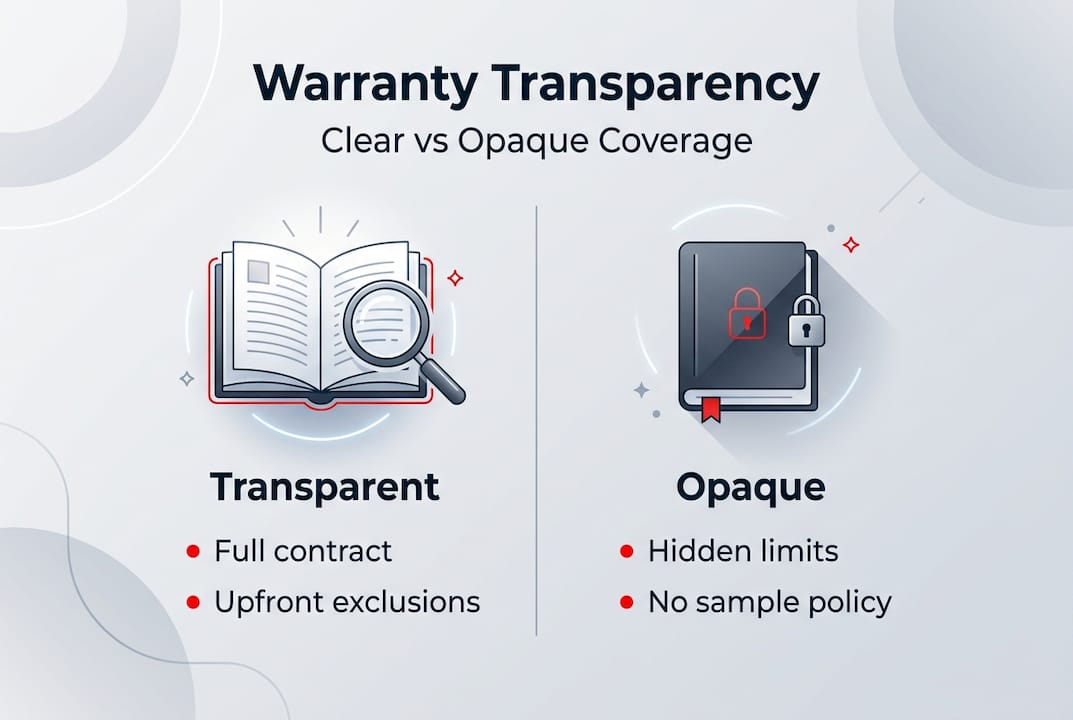
Transparency in a warranty contract is not just a buzzword. It means you can read the full contract before you sign, understand exactly what is covered and what is not, and know precisely how to file a claim without surprises. Warranty transparency means clarity and accessibility in the contract, ensuring no hidden traps buried in fine print.
A truly transparent provider gives you access to sample contracts online, spells out every exclusion in plain language, and walks you through the claims process before you commit. If a provider hesitates to share a sample contract or uses vague terms like "major components," that is a red flag worth taking seriously.
Here is what a transparent warranty contract should include:
- Full coverage list: Every covered part or system named explicitly, not just described in general terms
- Clear exclusion list: A specific list of what is not covered, including wear-and-tear items and cosmetic parts
- Deductible structure: Exact dollar amounts, whether per visit or per repair, stated upfront
- Claims process: Step-by-step instructions for filing, including who to call and what documentation you need
- Cancellation and refund policy: Terms for canceling the contract and any applicable fees
"A warranty is only as good as the clarity behind it. If you cannot understand what is covered before you sign, you cannot trust what will be paid when you need it most."
Understanding the auto warranties basics is the first step toward making a confident decision. Once you know the structure, you can also evaluate warranty features for peace of mind that go beyond just parts coverage.
Common pitfalls and edge cases: What catches car owners off guard
Even attentive car owners get caught by contract language they did not fully read. The most common traps are not always obvious, and some are deliberately buried in the fine print.
Denied claims often stem from missing maintenance records, modifications, and manufacturer loopholes. Here are the scenarios that trip up owners most often:
- Missing maintenance records: If you cannot prove you changed your oil on schedule, a provider can deny an engine claim. Keep every receipt, even for DIY oil changes.
- Aftermarket parts and modifications: Installing a lift kit, performance exhaust, or non-OEM parts can void coverage on related systems. Some contracts void the entire warranty.
- Telematics and GPS data: Some modern contracts use vehicle data to check driving behavior. Aggressive driving patterns or high-mileage road trips can be used against you.
- Pre-existing conditions: Any issue present before the contract start date is typically excluded. A pre-purchase inspection is essential to document your vehicle's condition.
- Ambiguous "consequential damage" clauses: If a covered part fails and damages a non-covered part, some contracts will not pay for the secondary damage.
Pro Tip: Before signing any extended warranty, get a full vehicle inspection and keep a copy of the report. This creates a clear baseline that protects you from pre-existing condition disputes later.
A surprising number of owners skip the advanced warranty coverage guide and only discover coverage gaps after a claim is denied. If you are unsure whether your vehicle even needs extended coverage, reviewing do you need an extended warranty can help you decide before you spend a dollar.
Statistic: Consumer complaints about warranty denials consistently rank among the top automotive grievances filed with the FTC each year, with fine print and maintenance record disputes cited most frequently.
Comparing transparent vs opaque warranty contracts
The difference between a transparent and an opaque warranty contract is not always visible from the marketing materials. Both may use the same confident language. The gap shows up when you read the actual document.

FTC and Consumer Reports urge buyers to read fine print carefully; providers market "bumper-to-bumper," but critics warn about loopholes that leave owners exposed.
| Feature | Transparent contract | Opaque contract |
|---|---|---|
| Sample contract access | Available online before purchase | Only provided after payment |
| Coverage list | Explicit parts and systems named | Vague categories like "major components" |
| Exclusion list | Specific and complete | Buried or incomplete |
| Deductible structure | Clear dollar amount stated upfront | Variable or unclear |
| Repair shop options | Any ASE-certified shop nationwide | Limited to provider network only |
| Claims process | Step-by-step, written instructions | Verbal only or hard to find |
| Cancellation policy | Clear terms and refund timeline | Vague or penalizing |
The repair shop flexibility point matters more than most owners realize. If your contract locks you into a single repair network, you lose negotiating power and convenience. A transparent provider lets you choose any ASE-certified shop nationwide, which is a significant practical advantage.
When choosing warranty by vehicle year, the contract structure matters as much as the price. Older vehicles with higher mileage need especially clear exclusion lists because more components are at risk. If your factory coverage has already expired, understanding warranty after factory coverage helps you bridge the gap without overpaying.
"Transparency is not a premium feature. It is the baseline standard every warranty buyer should demand before signing anything."
How to spot and demand true transparency from warranty providers
Knowing what transparency looks like is one thing. Knowing how to find it and insist on it is another. Here is a practical checklist you can use when evaluating any extended warranty provider.
- Request the full sample contract: Any reputable provider will share this before you pay. If they refuse, walk away.
- Check the BBB rating: Look for an A or A+ rating and read recent complaint resolutions, not just the score.
- Verify ASE-certified repair networks: Confirm the provider works with shops in your area and nationwide, not just a regional list.
- Read the exclusion list twice: Look for phrases like "unless caused by" or "subject to approval" as signals of potential loopholes.
- Ask about deductible options: Flexible deductibles (per visit vs. per repair) signal a provider that respects your budget.
- Confirm the claims hotline hours: 24/7 availability matters when your car breaks down on a Sunday night.
Top transparency scorers provide full contracts, flexible deductibles, and nationwide options, making them especially valuable for older or high-mileage vehicles.
Pro Tip: If you drive a highly reliable model like a Toyota Camry or Honda Civic with under 80,000 miles, self-insuring by setting aside a monthly repair fund may be smarter than buying extended coverage. Save the warranty investment for higher-risk vehicles or those approaching 100,000 miles.
| Transparency benchmark | What to look for | Red flag |
|---|---|---|
| Contract access | Online before purchase | Only after payment |
| Exclusion clarity | Named parts excluded | "Exclusions may apply" |
| Repair flexibility | Any ASE shop | Provider network only |
| Deductible options | Multiple tiers available | Single fixed amount |
| BBB rating | A or A+ | Unrated or below B |
If you own an electric vehicle, the coverage landscape is different. Reviewing electric vehicle warranty advice before buying any plan is essential. For owners whose factory coverage is expiring, knowing how to renew your auto warranty without losing continuity is equally important. The warranty protection guide covers both scenarios in detail.
Putting transparency into action: Peace of mind for your car
Transparency is not just a nice-to-have quality. It is the mechanism that turns a confusing contract into real, usable protection. When you know exactly what is covered, you can budget confidently, choose the right repair shop, and file claims without anxiety.
Prioritizing providers with clear contracts is the path to confident protection and minimized risk for car owners. Here is how to put everything you have learned into a practical action plan:
- Audit your current coverage: Know exactly when your factory warranty expires and what it covers today.
- List your vehicle's risk factors: Age, mileage, reliability history, and upcoming high-cost components like the transmission or turbo.
- Request sample contracts from at least three providers: Compare exclusion lists side by side, not just price.
- Verify repair network access: Confirm shops in your area are included before you commit.
- Check the claims process in writing: Make sure you understand every step before you sign.
- Ask about roadside assistance: This feature adds real value and signals a provider that thinks about the full ownership experience.
| Action step | Why it matters | Outcome |
|---|---|---|
| Audit current coverage | Avoid duplicate or gap coverage | Smarter spending |
| Compare exclusion lists | Spot hidden traps early | Fewer denied claims |
| Verify repair network | Ensure local shop access | Faster repairs |
| Confirm claims process | Know what to do when it counts | Less stress |
| Check roadside assistance | Full protection on the road | Complete peace of mind |
The goal is simple: no surprises when your car needs a repair. A trusted extended warranty provider makes that possible by putting everything in writing and standing behind it.
Get transparent protection for your vehicle
You now know what warranty transparency looks like, where opaque contracts fail car owners, and exactly what to demand before signing. The next step is finding a provider that actually delivers on those standards.
RPMWarranty offers clear, written contracts with no hidden exclusions, flexible deductible options, and nationwide coverage at any ASE-certified repair shop. Whether you drive a domestic sedan or are exploring Volkswagen warranty options, there is a plan built around your vehicle's specific needs. You can request a free warranty quote in minutes or browse the full range of protection plans to compare coverage tiers side by side. Transparent coverage is not a luxury. It is what every car owner deserves.
Frequently asked questions
What documents should I review to ensure warranty transparency?
Always review the full contract, exclusion lists, and sample policy documents before signing. FTC and Consumer Reports stress reviewing fine print carefully to avoid unexpected denials.
How can I tell if a claim will be denied due to maintenance records?
Keep all service and maintenance receipts from day one, because missing maintenance records are one of the most common reasons warranty claims get denied.
Are factory warranties usually more transparent than third-party extended warranties?
Factory warranties often have clearer baseline terms, but top transparency scorers among third-party providers match or exceed factory clarity with full contracts and explicit exclusions.
Is it possible to self-insure instead of buying an extended warranty?
Yes, for reliable low-mileage vehicles it can make financial sense. Self-insuring reliable models works well for lower-risk cars, while extended warranties are better suited for older or higher-mileage vehicles.
What peace-of-mind features should I look for in a transparent warranty?
Prioritize flexible deductibles, nationwide repair shop access, accessible written contracts, and a complete exclusion list. Benchmark providers show that these features consistently separate trustworthy plans from problematic ones.