
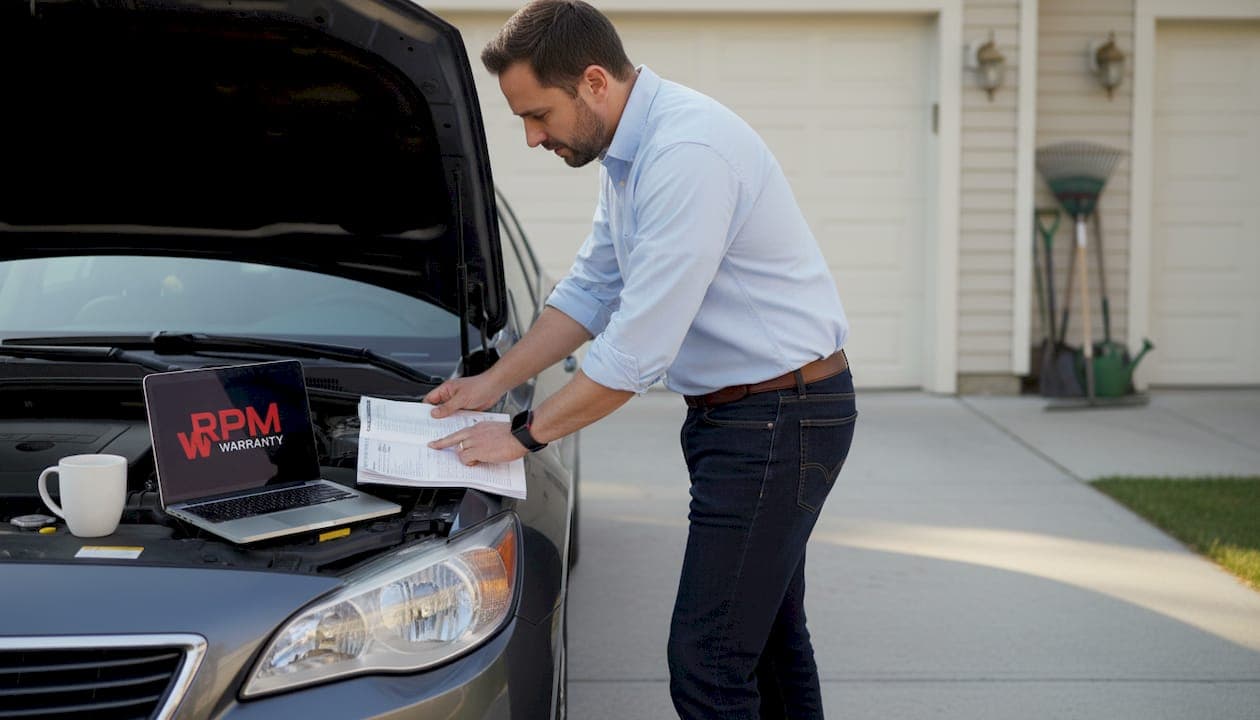
Your factory warranty expires right when your car becomes most vulnerable to expensive failures. The average repair bill jumps to over $1,200 annually once manufacturer coverage ends, with transmission and engine repairs costing thousands. Most factory warranties last just 3 to 5 years or 36,000 to 60,000 miles, yet vehicles stay on the road for 12 to 13 years on average. This guide explains how extended warranties bridge that costly gap, who benefits most from post-factory coverage, and what to watch for in warranty terms and exclusions.
Table of Contents
- Key Takeaways
- How repair costs increase after factory warranty expires
- Benefits and limitations of extended warranties after factory coverage
- Choosing the right extended warranty and who benefits most
- Protect your investment with trusted extended vehicle warranties
- Frequently asked questions about extended warranties after factory coverage
Key Takeaways
| Point | Details |
|---|---|
| Factory warranty gap | Once factory coverage ends, owners face rising repair bills as components age and failures become more likely. |
| Major repair costs | Transmission and engine failures can run into thousands, driving up out of pocket expenses. |
| Warranty can save money | Extended warranties can save thousands when major repairs occur, potentially exceeding the total premium cost. |
| Read terms carefully | Terms often include exclusions and waiting periods that limit coverage, so review carefully. |
How repair costs increase after factory warranty expires
Factory warranties typically protect new vehicles for 3 to 5 years or 36,000 to 60,000 miles, whichever comes first. Once that coverage ends, you're responsible for every repair bill. The financial impact hits hard because average annual repair costs exceed $1,200 once factory protection disappears, and major component failures can devastate your budget in a single visit to the repair shop.
Cars remain on the road for 12 to 13 years on average in 2026, creating a massive coverage gap between when factory warranties expire and when most owners finally replace their vehicles. During those unprotected years, you face the highest risk of expensive failures as components age and wear accelerates.
Common expensive repairs after factory warranty ends:
- Transmission replacement or rebuild averaging $4,700
- Engine replacement or major overhaul averaging $7,600
- Cooling system failures including radiator and water pump repairs
- Electrical system diagnostics and repairs for modern computerized vehicles
- High tech component replacements for infotainment and driver assistance systems
Even routine diagnostic work adds up quickly. The average check engine light repair costs $415, and most vehicles trigger this warning multiple times over their lifespan. When you multiply that by the 7 to 10 years you'll own the car after factory coverage expires, the cumulative cost becomes substantial.
| Repair type | Average cost | Likelihood after 60k miles |
|---|---|---|
| Transmission | $4,700 | Moderate to high |
| Engine major | $7,600 | Low to moderate |
| Check engine diagnostics | $415 | Very high |
| Cooling system | $800 | High |
| Electrical system | $1,200 | Moderate |
These costs explain why many vehicle owners consider extended warranties essential protection. A single major repair can exceed what you'd pay for several years of warranty coverage, making the math compelling for risk averse drivers. Understanding these signs you need extended warranty vehicle protection helps you make informed decisions before expensive failures occur.
"The gap between factory warranty expiration and vehicle replacement creates the highest financial risk period for owners, when major component failures become increasingly likely but protection has disappeared."
This financial vulnerability drives the extended warranty market, as owners seek to transfer repair risk back to warranty providers during the years when their vehicles need protection most.
Benefits and limitations of extended warranties after factory coverage
Extended warranties deliver real savings when major repairs strike. If your transmission fails and costs $4,700 to replace, but your warranty only cost $2,000, you've saved $2,700 on that single repair. The protection becomes even more valuable if multiple covered failures occur during the warranty period, potentially saving you thousands compared to paying out of pocket.

Typical extended warranty costs range from $1,000 to $3,000 depending on coverage level, vehicle type, and contract length. Premium plans covering more components and offering longer terms cost more, while basic powertrain only coverage stays at the lower end of that range. You'll find manufacturer backed programs generally price higher than third party options, but they often provide smoother claims processing and broader repair shop networks.
However, extended warranties can cost more in premiums than many owners ever recoup in claims. Insurance works by pooling risk, meaning warranty companies collect more in premiums than they pay out in repairs across all customers. Some owners will benefit significantly, while others pay for coverage they never use.
Common exclusions that limit warranty value:
- Normal wear and tear items like brake pads, tires, and wiper blades
- Routine maintenance including oil changes, filter replacements, and fluid flushes
- Modifications or aftermarket parts that void coverage
- Pre existing damage or conditions present before warranty purchase
- Damage from accidents, abuse, or improper vehicle use
Most warranties also require approved repair shops and impose waiting periods before coverage activates. You might face a 30 to 90 day waiting period or 1,000 mile requirement before you can file claims, preventing immediate use after purchase. Repair shop restrictions mean you can't always use your trusted independent mechanic, potentially forcing you to dealerships or network facilities that may charge higher labor rates.
Pro Tip: Read the entire warranty contract before purchasing, paying special attention to the exclusions section and approved repair facility requirements. These details determine whether your warranty will actually cover the repairs you're most likely to need.
| Coverage level | Typical cost | Components covered | Best for |
|---|---|---|---|
| Powertrain only | $1,000 to $1,500 | Engine, transmission, drivetrain | Budget conscious owners of reliable vehicles |
| Mid tier | $1,500 to $2,500 | Powertrain plus cooling, electrical, fuel systems | Balanced protection for most drivers |
| Comprehensive | $2,500 to $3,500 | Nearly all components except wear items | High mileage drivers keeping vehicles long term |
The value equation shifts based on your vehicle's reliability record and your personal risk tolerance. Owners of vehicles with strong reliability ratings might find extended warranties unnecessary, while those driving models known for expensive failures could see warranties as essential protection. Understanding these must have car warranty features peace of mind elements helps you evaluate whether coverage matches your needs.
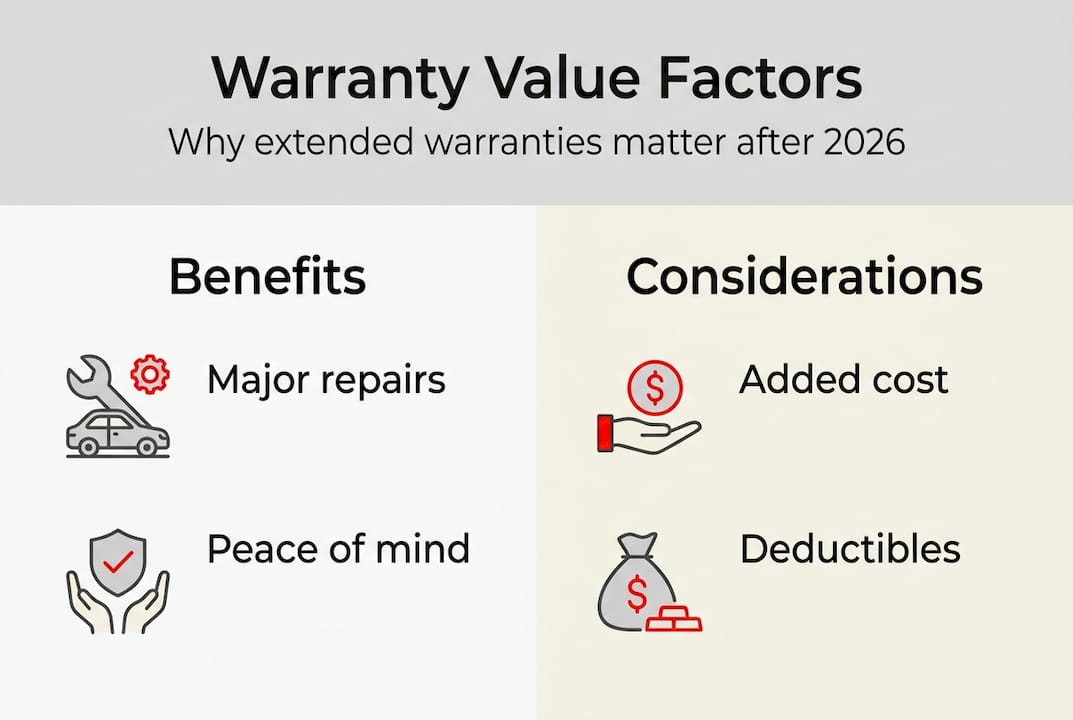
Deductibles also impact your out of pocket costs. Some warranties charge $50 to $200 per repair visit, while others offer zero deductible coverage at higher premium costs. Calculate whether paying more upfront for zero deductible coverage makes sense based on how often you expect to use the warranty.
Choosing the right extended warranty and who benefits most
Extended warranties deliver maximum value for owners planning to keep their vehicles longer than 5 years and drive high annual mileage. If you commute 15,000 to 20,000 miles yearly and intend to keep your car until it reaches 150,000 miles or more, warranty protection becomes increasingly valuable as components age and failure risk climbs.
Conversely, warranties make little sense if you trade vehicles every 3 to 4 years or maintain a dedicated repair fund. Owners who self insure by setting aside $100 to $150 monthly for future repairs often come out ahead financially, especially if they drive reliable vehicles with low failure rates. You keep the money you don't spend on repairs, unlike warranty premiums that disappear whether you file claims or not.
Manufacturer backed warranties offer advantages over third party coverage in claims handling and repair network access. Factory programs integrate seamlessly with dealership service departments, reducing claim denial rates and authorization delays. Third party warranties sometimes create friction with repair shops unfamiliar with their processes, potentially leaving you stuck between the warranty company and the mechanic.
Timing your extended warranty purchase strategically:
- Buy while factory coverage remains active for best pricing and terms
- Avoid waiting until after factory warranty expires when costs increase
- Purchase before high mileage when pre existing condition exclusions tighten
- Compare manufacturer and third party options during factory coverage overlap period
Buying extended coverage before factory warranty ends typically saves 15% to 25% compared to waiting until you're unprotected. Warranty companies view vehicles still under factory coverage as lower risk, passing those savings to buyers through reduced premiums. Once your factory warranty expires, you'll face higher costs and potentially more restrictive terms.
Vehicle reliability projections should guide your decision. Research your specific make and model's repair history using reliability databases and owner forums. Models with documented transmission problems, electrical gremlins, or cooling system failures justify warranty coverage more than vehicles with stellar reliability records. Choosing car warranty by year smarter protection strategies help match coverage to your vehicle's specific risk profile.
Pro Tip: Calculate your break even point by dividing the warranty cost by the average annual repair cost for your vehicle model. If the warranty pays for itself within 2 to 3 years through avoided repairs, it likely offers good value for your situation.
Ideal candidates keep vehicles 5 plus years with high annual mileage, particularly if they drive models known for expensive component failures after 60,000 miles. These owners face the highest repair risk and longest exposure period, making warranty protection most cost effective.
Electric vehicle owners face unique warranty considerations as battery and electric motor coverage becomes critical. Traditional powertrain warranties designed for internal combustion engines may not adequately protect EV specific components. Understanding electric vehicle warranty coverage extended worth it nuances ensures you get appropriate protection for your vehicle's technology.
Your personal financial situation also matters. If a $5,000 unexpected repair would create serious financial hardship, warranty coverage provides valuable peace of mind even if the pure math suggests self insuring. The insurance value of transferring catastrophic repair risk may justify the premium cost for budget conscious owners who can't absorb major repair bills.
Protect your investment with trusted extended vehicle warranties
When factory coverage ends, your vehicle needs protection from the expensive repairs that become increasingly likely as mileage climbs. RPM Warranty offers extended vehicle auto motorcycle warranty plans designed specifically for owners seeking reliable coverage after manufacturer warranties expire. Our nationwide network ensures you'll find approved repair facilities wherever you drive, and our flexible plans accommodate various budgets and coverage needs.
Whether you drive a Honda requiring best extended warranty for Honda specific coverage or need a customized plan for your vehicle's unique requirements, our expert team guides you through options that match your driving habits and financial goals. Get free extended warranty quotes today to compare coverage levels and find protection that makes sense for your situation. We simplify the process with transparent terms, straightforward claims handling, and support from consultation through claim resolution.
Frequently asked questions about extended warranties after factory coverage
What repairs are usually covered by an extended warranty after factory coverage?
Most extended warranties cover major mechanical and electrical components including engines, transmissions, drive axles, cooling systems, fuel systems, electrical systems, and increasingly high tech components like infotainment and driver assistance systems. Coverage excludes normal wear items like brake pads, tires, batteries, and routine maintenance. Comprehensive plans offer broader protection than basic powertrain only coverage, so review the specific components list in your contract.
Can I buy an extended warranty after my factory warranty expires?
Yes, but you'll pay significantly more and face stricter terms than buying while factory coverage remains active. Many warranty companies require pre purchase inspections for vehicles beyond factory warranty, and they may exclude pre existing conditions discovered during inspection. Costs typically increase 15% to 25% compared to purchasing before factory coverage ends, and some providers won't cover vehicles beyond certain age or mileage thresholds.
How does manufacturer backed warranty differ from third party coverage?
Manufacturer backed warranties integrate directly with dealership service departments, typically resulting in faster claim approvals and fewer disputes. Factory programs often cost more but provide smoother experiences when filing claims. Third party warranties may offer lower premiums but sometimes create friction with repair shops unfamiliar with their authorization processes, and claim denial rates can run higher than manufacturer programs.
Is it better to self insure or buy an extended warranty?
Self insuring works best if you can comfortably absorb a $5,000 to $8,000 unexpected repair without financial hardship and you drive a reliable vehicle with low failure rates. Extended warranties make more sense for high mileage drivers keeping vehicles long term, those driving models with documented reliability issues, or owners who need budget predictability and can't handle major repair bills. Calculate your specific break even point based on your vehicle's repair history.
When should I consider canceling my extended warranty?
Cancel if you decide to trade or sell your vehicle sooner than planned, as most warranties offer prorated refunds for unused coverage. Also consider canceling if your vehicle proves exceptionally reliable and you've paid premiums for several years without filing claims, especially if you've built sufficient repair reserves. Review your contract's cancellation terms and refund calculation method before making the decision, as some warranties impose cancellation fees that reduce your refund.