

TL;DR:
- Consultation with an expert before purchasing vehicle warranties helps owners understand coverage, exclusions, and negotiate better terms. Skipping this step often leads to buying plans that do not cover key components or contain costly hidden exclusions, especially for luxury cars. Conducting post-delivery consultations improves decision-making, reduces pressure, and ensures coverage matches actual repair risks.
Consultation in vehicle warranty selection is the process of working with a knowledgeable advisor before committing to any extended coverage plan, and it directly determines whether you pay too much, cover too little, or get caught off guard by exclusions. Vehicle owners who skip this step, especially those driving BMW, Mercedes-Benz, Porsche, or Range Rover, routinely sign contracts they do not fully understand. The role of consultation in warranty selection goes beyond paperwork review. It gives you negotiating leverage, exposes hidden exclusions, and maps your actual risk to the coverage you are buying. This article breaks down exactly when to consult, what to ask, and how to use that knowledge to protect your vehicle and your wallet.
The role of consultation in warranty selection: why it matters most
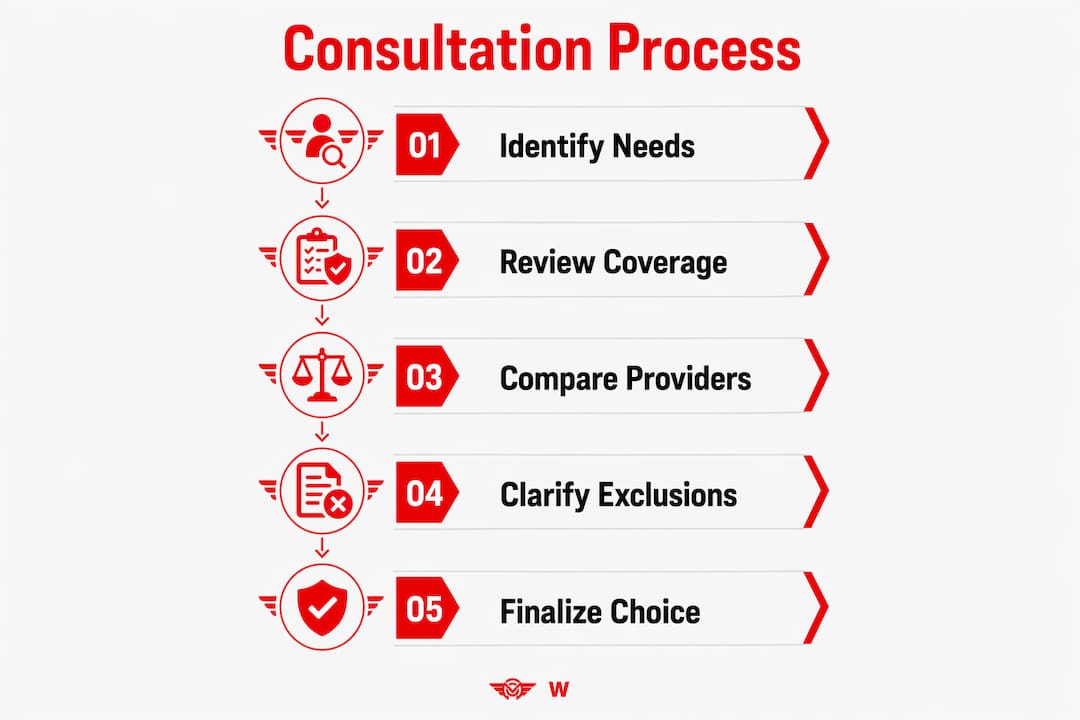
Consultation in the warranty selection process is defined as a structured review of your vehicle's coverage needs, contract terms, and provider options conducted with an expert before you sign anything. This is not the same as reading a brochure or watching a dealer presentation. A genuine consultation challenges the terms in front of you, compares them against alternatives, and identifies the gaps that could cost you thousands.

The importance of warranty consultation becomes clearest when you consider what you are actually buying. Extended warranties are not simple products. They are legal contracts with specific language about what is covered, what is excluded, which repair shops you can use, and how claims are processed. Without expert guidance, most vehicle owners focus on the monthly cost and ignore the conditions that determine whether a claim gets paid.
For owners of higher-end vehicles, the stakes are higher. A transmission repair on a Porsche Cayenne or a BMW 7 Series can exceed $8,000. An electrical system failure on a Mercedes-Benz S-Class is rarely a simple fix. Consultation ensures the plan you select actually covers the components most likely to fail on your specific vehicle, not just the cheapest parts to replace.
Typical extended warranty costs range from $1,300 to over $4,000 depending on vehicle age, model, coverage level, and purchase timing. That range is wide enough to mean the difference between a plan that fits your budget and one that drains it, which is exactly why consultation before committing is not optional for informed buyers.
When to consult during the warranty buying process
Timing your consultation correctly is one of the most underrated factors in getting good warranty coverage at a fair price. Most vehicle owners encounter warranty offers for the first time inside the dealership's Finance and Insurance office, commonly called the F&I office, at the moment of signing. That environment is designed to move quickly, and the pressure to decide on the spot is real.
Signing-day F&I is widely recognized as the highest-pressure and often least favorable moment to purchase an extended warranty. This matters because pressure reduces your ability to compare, question, or negotiate. You are already mentally committed to the vehicle purchase, your attention is split across multiple documents, and the dealer's first offer is rarely their best.
The smarter approach is to delay the warranty decision entirely and consult after delivery. Here is what that process looks like in practice:
- Decline at signing. Tell the F&I manager you want time to review warranty options separately. This is your legal right, and no dealer can force you to buy coverage at the point of sale.
- Request a written quote. Ask for the exact plan name, coverage terms, deductible amount, and total cost in writing before you leave the dealership.
- Book a post-delivery consultation. Services like CarRealTalk offer a 30-minute structured consultation after delivery that includes red flag identification, negotiation language, and a written summary report within 24 hours.
- Compare against third-party providers. Use the dealer's written quote as a benchmark when reviewing plans from independent warranty companies.
- Return with a counter-offer. Dealers frequently accept lower prices when buyers return with competing quotes and specific objections.
Post-delivery consultations typically cost $50 to $200 more than pre-signing quotes from dealers, but they offer significantly better negotiating leverage and far less pressure. That small price difference is almost always recovered through better terms or a lower total contract price.
Pro Tip: Before any warranty consultation, write down the three most expensive repairs your vehicle model is known for. For a BMW 5 Series, that list includes the cooling system, high-pressure fuel pump, and electronic components. Bringing this list to your consultation forces the advisor to map coverage directly to your actual risk.
How consultation clarifies warranty coverage details and exclusions
The single most common source of warranty disappointment is exclusions. Vehicle owners assume their plan covers everything mechanical, only to discover at the repair shop that the failed component falls under a category the contract explicitly excludes. Consultation prevents this by walking you through the contract's exclusion list before you sign.
Most vehicle service contracts are exclusionary by design, meaning they cover components included under the manufacturer's original warranty but explicitly list what is not covered. Routine maintenance items like oil changes, tire rotations, and brake pads are almost universally excluded. So are wear items such as belts, hoses, and wiper blades. This is the industry standard, and understanding it changes how you evaluate any plan.
For owners of luxury vehicles, the exclusion list deserves even closer attention. A Range Rover Sport owner, for example, needs to know whether the air suspension system is covered, since that repair alone can run $2,500 or more. A Mercedes-Benz GLE owner should confirm whether the AIRMATIC suspension and the Multicontour seat electronics are included or excluded. A consultation forces these specific questions to the surface before money changes hands.
The table below shows how covered and excluded items typically break down across standard vehicle service contracts:
| Coverage category | Typically covered | Typically excluded |
|---|---|---|
| Powertrain components | Engine, transmission, drive axles | Wear items, seals from neglect |
| Electrical systems | Alternator, starter, wiring harnesses | Infotainment screens (varies by plan) |
| Cooling system | Water pump, radiator, thermostat | Hoses, belts, coolant flushes |
| Suspension | Struts, control arms (varies) | Shocks from normal wear, tires |
| Luxury-specific tech | Navigation hardware (select plans) | Software updates, cosmetic trim |
A consultation also reviews the exclusionary warranty language in your specific contract, not just the general category. Two plans that both claim to cover "electrical systems" can have dramatically different definitions of what that includes. One plan may cover the alternator and starter only. Another may extend to the body control module and the instrument cluster. You cannot know the difference without reading the contract with someone who understands what the language actually means.
Pro Tip: Ask your consultant to read the "what is not covered" section aloud with you, line by line. This exercise takes about 15 minutes and consistently surfaces three to five exclusions that buyers would otherwise miss entirely.
How consultation helps you compare warranty providers and coverage options
Not all warranty plans come from the same source, and the source matters more than most buyers realize. Manufacturer warranties, dealership-sold service contracts, and third-party extended warranty providers each operate under different rules, use different repair networks, and carry different financial backing. Consultation is the tool that makes these differences visible and comparable.
Third-party warranty plans often permit repairs at any certified shop, while manufacturer-backed plans typically require you to return to a franchised dealership. For a Honda Accord owner in a rural area, that distinction determines whether a breakdown means a local repair or a 60-mile tow. For a Porsche Panamera owner who prefers a specific independent specialist, it determines whether that shop can even touch the car under warranty.
Here is a breakdown of what consultation reveals when comparing provider types:
Manufacturer and dealership warranties:
- Repairs must be performed at authorized dealerships
- Labor rates are set by the manufacturer, which can be higher than independent shops
- Coverage terms align closely with the original factory warranty structure
- Transferability to a new owner varies by contract
Third-party extended warranty providers:
- Repair shop flexibility is broader, often including any ASE-certified facility
- Coverage tiers vary widely, from powertrain-only to near-bumper-to-bumper plans
- Pricing is generally more negotiable than dealership contracts
- Financial strength of the provider matters, since claims are paid by the company, not a manufacturer
The dealer warranty vs manufacturer warranty distinction is one that consultation makes concrete. A dealer-sold service contract is not the same as a manufacturer-backed warranty, even when sold at the same dealership. Consultation clarifies who is actually backing the contract and what happens if that company faces financial difficulty.
When you sit down with a warranty consultant, these are the questions that produce the most useful answers:
- Which repair shops are authorized under this plan, and is my preferred shop included?
- What is the pre-authorization process, and how long does approval typically take?
- Does the plan transfer to a new owner if I sell the vehicle?
- What is the deductible per visit, and does it apply per repair or per visit?
- How are disputes handled if a claim is denied?
Bringing specific warranty questions to a consultation transforms a passive review into an active negotiation. Advisors who cannot answer these questions clearly are a signal to look elsewhere.
How consultation prepares you to use your warranty after purchase
Buying the right warranty is only half the equation. Using it correctly determines whether you actually receive the coverage you paid for. Consultation that ends at the point of sale leaves vehicle owners unprepared for the claim process, which has specific procedural requirements that, if missed, can result in a denied claim.
AAA's guidance on extended warranties identifies the repair workflow as a critical area where owners make costly procedural mistakes. The most common error is authorizing repairs before the warranty company approves them. Once a repair shop begins work without pre-authorization, the warranty provider is no longer obligated to pay. Consultation teaches you this rule before you ever need it.
The standard warranty claim process, as outlined through expert consultation, follows these steps:
- Identify the problem. When a warning light appears or a mechanical issue develops, do not ignore it. Document the symptom with a date and description.
- Contact your warranty provider first. Call the claims number on your contract before taking the vehicle anywhere. Get a case number.
- Choose an authorized repair shop. Confirm the shop is covered under your plan before dropping off the vehicle.
- Inform the shop about your warranty. Tell the service advisor immediately that you have a service contract and provide the provider's contact information.
- Wait for diagnosis and pre-authorization. The shop submits a diagnosis to the warranty company. Work cannot begin until the provider approves the repair and the cost.
- Pay only your deductible. Once approved, you pay the deductible amount specified in your contract. The warranty company pays the rest directly to the shop.
- Keep all documentation. Retain repair orders, receipts, and authorization numbers for every claim.
Pre-authorization and deductible clarity are two areas where consultation delivers the most practical value post-purchase. Owners who understand this process before a breakdown occurs handle claims faster, avoid out-of-pocket surprises, and rarely face denials due to procedural errors.
Tailoring your coverage to your driving habits and vehicle type also becomes clearer through consultation. A Ford F-150 owner who tows regularly faces different mechanical risks than a Honda Civic commuter. Consultation maps those risks to the right plan tier before the first repair is ever needed.
Key takeaways
Consultation is the single most effective tool for vehicle owners to avoid overpaying, under-covering, and misusing their extended warranty plans.
| Point | Details |
|---|---|
| Timing changes outcomes | Consulting after delivery reduces pressure and improves negotiation leverage over dealer quotes. |
| Exclusions define real coverage | Consultation reviews the "not covered" list line by line, preventing surprise denials at the repair shop. |
| Provider type affects repair access | Third-party plans often allow any certified shop; manufacturer plans restrict you to dealerships. |
| Pre-authorization is non-negotiable | Repairs started without warranty company approval are almost never reimbursed, regardless of coverage. |
| Luxury vehicles need specific review | BMW, Mercedes-Benz, Porsche, and Range Rover owners must confirm coverage for their most expensive components by name. |
What I've learned from watching owners skip the consultation step
I have spent years watching vehicle owners make the same mistake: they treat warranty selection as an afterthought rather than a decision that deserves the same attention as the vehicle purchase itself. The pattern is consistent. A buyer spends weeks researching a BMW X5 or a Mercedes-Benz GLE, negotiates hard on the purchase price, then signs a warranty contract in the F&I office in under ten minutes without reading a word of it.
The misconception I encounter most often is that all extended warranties are basically the same. They are not. Two plans with identical monthly payments can have coverage lists that differ by 40 components. One covers the turbocharger on a Porsche Macan. The other explicitly excludes it. That difference is invisible until the turbo fails and the claim is denied.
What consultation actually does, beyond the contract review, is build a specific kind of confidence. Not the vague reassurance that you are "covered," but the concrete knowledge that your Range Rover's air suspension is on the covered components list, that your deductible is $100 per visit rather than per repair, and that your preferred independent shop is authorized under the plan. That specificity is what peace of mind actually looks like in practice.
My honest advice: treat the warranty consultation as a required step, not an optional upgrade. The signs you need extended coverage are often visible before the factory warranty expires. Catching them early, with expert guidance, is always cheaper than reacting after the fact. The consultation does not cost you money. Skipping it does.
— Kenneth
Protect your vehicle with Rpmwarranty's expert consultation
Rpmwarranty builds its entire process around the consultation step, because the company understands that coverage decisions made without expert input rarely hold up when it matters most. Whether you drive a BMW, Mercedes-Benz, Lexus, or Ford, Rpmwarranty's advisors review your vehicle's specific risk profile, walk through coverage tiers, and match you to a plan that fits your budget and driving habits.
The Elite, Advanced, and Essential plans cover engines, transmissions, cooling systems, electrical components, and high-tech parts, with nationwide coverage and straightforward claims processing. For owners of luxury vehicles seeking extended protection, Rpmwarranty offers the kind of tailored, transparent consultation that turns a confusing purchase into a confident one. Get your free quote today and start with a conversation, not a contract.
FAQ
What is the role of consultation in warranty selection?
Consultation in warranty selection is the process of reviewing coverage options, exclusions, and contract terms with an expert before purchasing a plan. It helps vehicle owners avoid costly mistakes, compare providers, and select coverage that matches their actual repair risk.
When is the best time to consult about an extended warranty?
The best time to consult is after vehicle delivery rather than at the dealership signing table. Post-delivery consultations offer more negotiating leverage and less pressure, even if the final price is slightly higher.
What questions should I ask during a warranty consultation?
Ask which repair shops are authorized, what the pre-authorization process involves, what the deductible covers, and which components are explicitly excluded. These key warranty questions reveal the real value of any plan before you commit.
Why do luxury vehicle owners need specialized warranty consultation?
Vehicles like BMW, Porsche, and Range Rover carry repair costs that far exceed average vehicles, and their most expensive components, such as air suspension and advanced electronics, are frequently excluded from standard plans. Consultation confirms coverage for these specific items by name.
What happens if I skip pre-authorization during a warranty claim?
Repairs completed without prior approval from the warranty provider are almost never reimbursed. AAA's warranty guidance confirms that pre-authorization is a required procedural step, and skipping it voids the claim regardless of whether the repair itself is covered.