
TL;DR:
- Proper maintenance and regular inspections are key to extending high-mileage vehicle lifespan.
- Focus on timely oil changes, fluid checks, and replacing critical parts like the timing belt.
- A combination of disciplined upkeep and tailored protection plans helps avoid costly repairs.
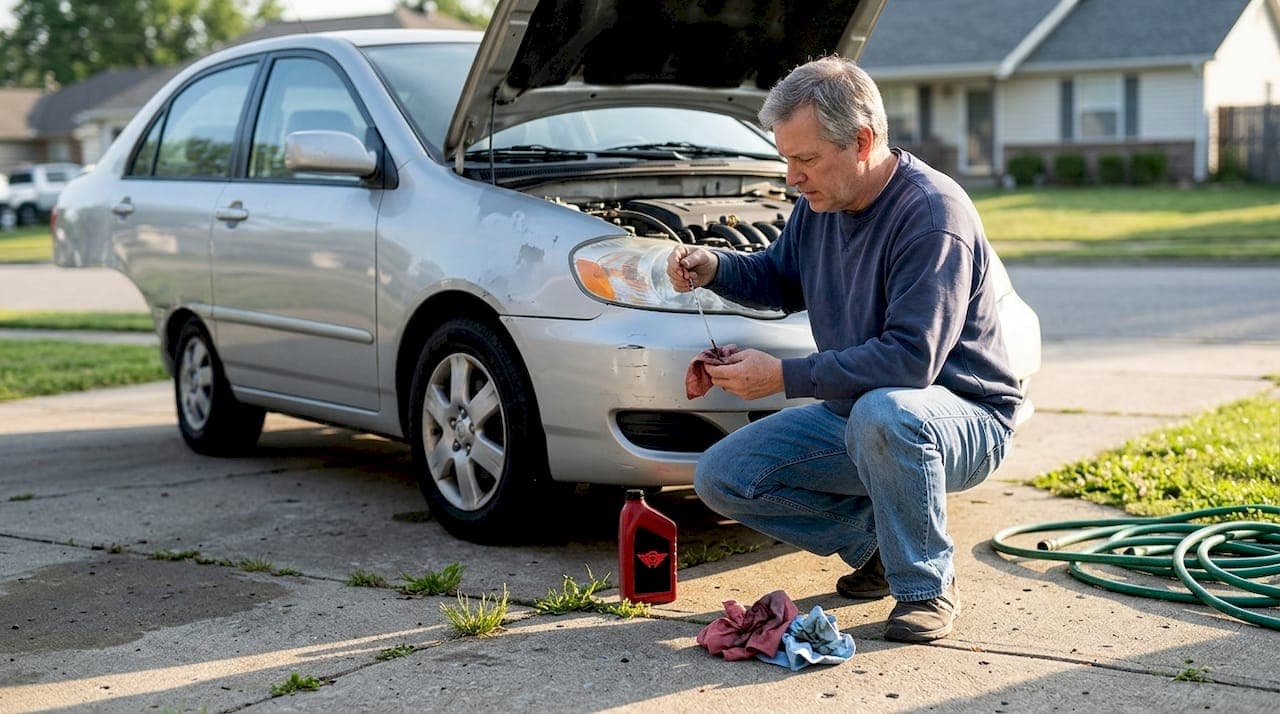
Keeping a high-mileage car on the road is equal parts discipline and strategy. Whether you're driving a Toyota Camry with 180,000 miles or a Ford F-150 pushing 220,000, the anxiety is the same: what breaks next, and what will it cost? Repair bills on aging vehicles can climb fast, especially when owners skip preventive steps or get blindsided by failures they never saw coming. The good news is that with the right checks, a focused maintenance routine, and smart financial planning, your car can keep going strong well past the 100,000-mile mark. This guide gives you exactly that.
Table of Contents
- Assessing your high-mileage vehicle: What to check first
- Maintenance essentials: Oil, fluids, and critical parts replacement
- Prevention strategies: Monitoring, upgrades, and avoiding costly repairs
- Extended warranties and alternatives: Should you buy or self-fund?
- The uncomfortable truth about high-mileage car protection
- Protect your high-mileage vehicle with a tailored plan
- Frequently asked questions
Key Takeaways
| Point | Details |
|---|---|
| Frequent checks matter | Monthly fluid and battery checks and regular oil changes help prevent major breakdowns. |
| Invest in proactive parts replacement | Replacing items like timing belts and water pumps on schedule can save thousands in repair bills. |
| Extended warranties aren’t always best | Many owners pay more for warranties than they receive, so self-funding repairs is often smarter. |
| Budget for repairs after 100K | Set aside 8-15% of your car’s original value annually for repairs once past 100,000 miles. |
Assessing your high-mileage vehicle: What to check first
To protect your investment, you first need to know what shape it's in. Start with these essential checks.
High-mileage vehicles hide problems in plain sight. A slow oil leak on a 150,000-mile Honda Accord might seem minor until it causes engine damage. A worn suspension bushing on a Chevy Silverado at 120,000 miles can quietly destroy your tires and steering. The baseline inspection isn't glamorous, but it's the foundation everything else rests on.
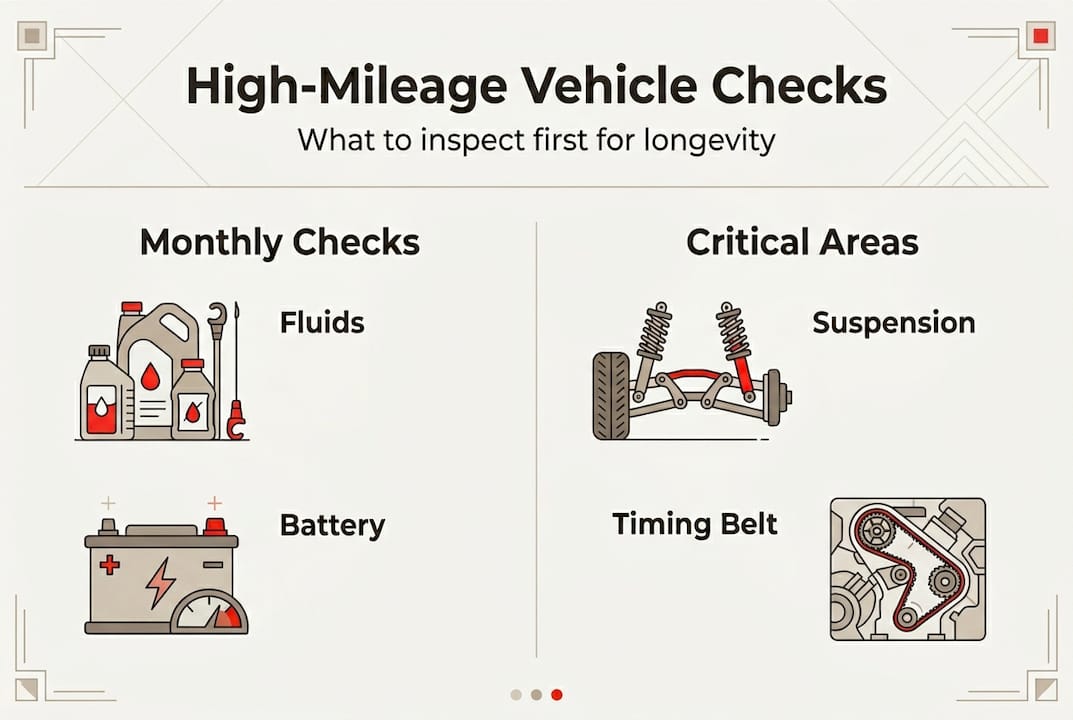
Start with fluids. Fluid checks for brake, power steering, and coolant should happen monthly, and tire rotation every 5,000 miles keeps wear even and extends tire life. Check your oil level every week. If you're losing more than a quart between changes, that's a red flag worth investigating before it becomes an engine replacement.
Pro Tip: Mark your fluid reservoirs with a small piece of tape at the current level. Check weekly. Any drop is immediately visible without squinting at tiny lines.
Your battery is another easy miss. A battery load test every 15,000 miles catches a failing battery before it leaves you stranded. Batteries in high-mileage vehicles often show no warning signs until they simply stop working.
| Component | Check frequency | Warning signs |
|---|---|---|
| Engine oil | Weekly | Dark color, low level, burning smell |
| Brake fluid | Monthly | Spongy pedal, discoloration |
| Coolant | Monthly | Rust color, low level |
| Battery | Every 15,000 miles | Slow cranking, dim lights |
| Tires | Every 5,000 miles | Uneven wear, vibration |
For suspension, inspecting shocks, struts, and bushings around 100,000 to 150,000 miles is standard practice, with a full suspension refresh budgeted between $1,200 and $2,800. Vehicles like the Dodge Ram or Jeep Grand Cherokee are particularly prone to worn control arm bushings and sway bar links at high mileage. Ignoring these leads to handling issues and accelerated tire wear. If you notice signs your car needs a warranty during these checks, it's worth acting on that instinct sooner rather than later.
For a deeper walkthrough of what to inspect, the high-mileage maintenance guide covers vehicle-specific details worth bookmarking.
Maintenance essentials: Oil, fluids, and critical parts replacement
Once you know where your vehicle stands, stick to a focused maintenance schedule to avoid costly failures.
High-mileage engines develop seal wear and increased oil consumption over time. A 200,000-mile Subaru Outback, for example, is notorious for head gasket issues and elevated oil consumption. Using the right oil matters. High-mileage synthetic oil should be changed every 3,000 to 5,000 miles regardless of what the manufacturer originally recommended, because it conditions aging seals and reduces consumption. Standard oil intervals were designed for newer engines, not ones with 150,000 miles of wear.
Here's a practical maintenance order of priority:
- Change oil and filter every 3,000 to 5,000 miles using high-mileage synthetic blend
- Check oil consumption weekly between changes
- Flush coolant every 30,000 miles to prevent corrosion buildup
- Replace transmission fluid every 30,000 to 60,000 miles
- Swap out spark plugs every 30,000 miles on older engines
- Replace timing belt or chain every 60,000 to 100,000 miles
- Replace water pump at the same interval as the timing belt
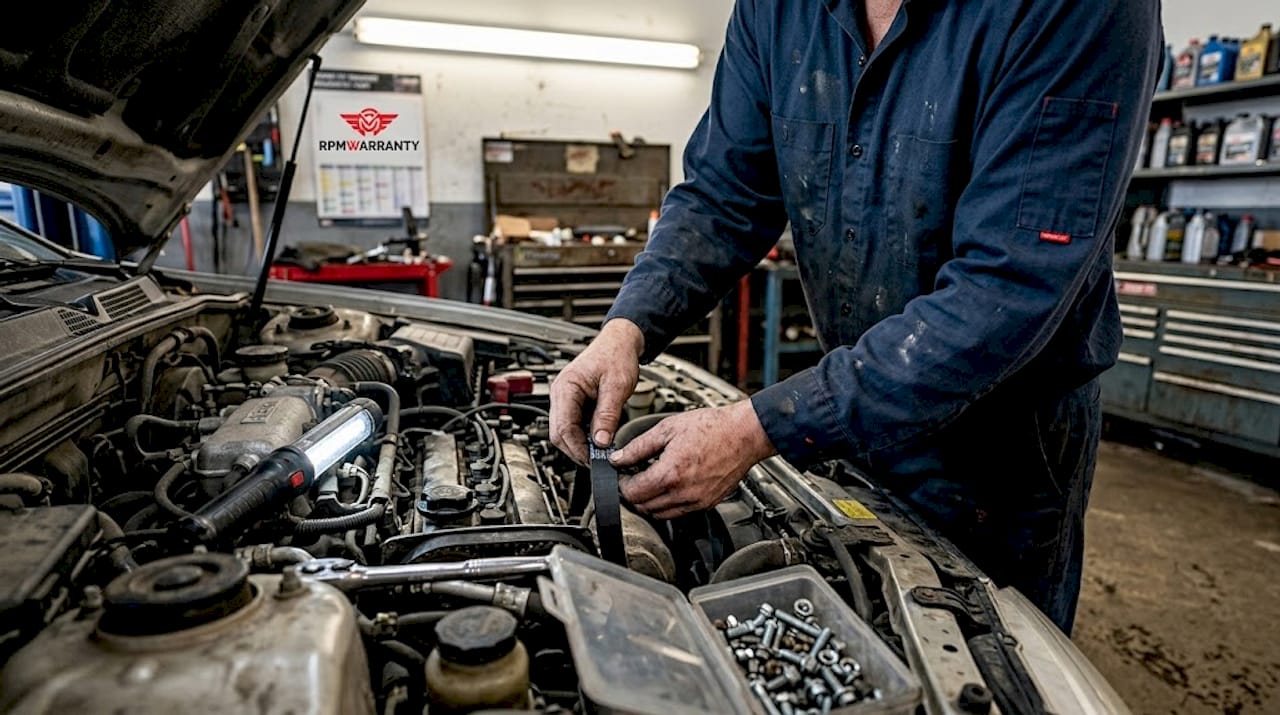
The timing belt is the big one. Replacing the timing belt and water pump every 60,000 to 100,000 miles is non-negotiable if you want to avoid catastrophic engine failure costing $4,000 or more. Vehicles like the Honda CR-V, Mitsubishi Eclipse, and Toyota 4Runner all use timing belts that, if they snap, destroy the engine entirely. The water pump is almost always replaced at the same time because labor costs overlap.
| Service | DIY friendly | Estimated cost (shop) |
|---|---|---|
| Oil change | Yes | $60 to $120 |
| Coolant flush | Yes | $100 to $150 |
| Spark plugs | Yes | $100 to $250 |
| Timing belt + water pump | No | $500 to $1,000 |
| Transmission fluid flush | Sometimes | $150 to $300 |
Pro Tip: Handle fluid changes yourself to save money, but leave timing belt and transmission work to a certified mechanic. Mistakes on either can cost far more than the labor saved.
"Keeping receipts and building a documented service history isn't just good practice. It adds real resale value and helps any mechanic quickly diagnose issues."
If you're thinking about protecting your vehicle after warranty ends, a clean service history also strengthens your case when filing claims. For oil selection, best high-mileage synthetic oil options vary by engine type, so matching the right formula to your car matters.
Prevention strategies: Monitoring, upgrades, and avoiding costly repairs
With the basics covered, proactive strategies make a dramatic difference in what you'll pay and how long your car lasts.
The most expensive repairs on high-mileage vehicles are almost always ones that could have been caught early. A small coolant leak on a 160,000-mile BMW 3 Series can escalate to a cracked head gasket in weeks. A worn CV axle boot on a Honda Pilot at 130,000 miles, if caught early, costs $150 to fix. Left alone, it destroys the joint and runs $600 or more.
Here's what proactive monitoring looks like in practice:
- Check under the car weekly for fluid spots on the driveway
- Watch for oil consumption above one quart per 1,000 miles
- Listen for new noises: clunks, squeals, and grinding all mean something
- Notice any changes in handling, pulling, or vibration
- Track fuel economy drops, which often signal engine or tire issues
Pro Tip: Start a simple repair fund. Set aside a fixed amount monthly, even $50 to $100, specifically for vehicle repairs. When something goes wrong, you're ready instead of scrambling.
Suspension upgrades at 100,000 miles or beyond are worth considering, not just replacing worn parts but upgrading to higher-quality components. Vehicles like the Ford Explorer and Chevrolet Tahoe benefit significantly from upgraded shocks and struts at high mileage, improving both safety and ride quality.
Well-maintained fleets regularly push past 200,000 miles, and post-100,000-mile annual repair budgets typically run 8 to 15 percent of the vehicle's original price. For a $40,000 truck, that's $3,200 to $6,000 per year. That number sounds high, but it's still far less than a new car payment.
"Prevention doesn't just save money. It keeps you in control of when and how much you spend, rather than letting your car decide for you."
Addressing leaks and monitoring weekly, combined with high-mileage oils and proactive fluid management, consistently outperforms reactive repair strategies. Understanding key warranty features for older vehicles can also help you fill the gaps that maintenance alone can't cover.
Extended warranties and alternatives: Should you buy or self-fund?
Aging vehicles bring tough choices. Should you pay for a warranty, or is your money better spent elsewhere?
Extended warranties for high-mileage vehicles have expanded significantly. Some providers, including Endurance, now offer coverage up to unlimited miles or 250,000 to 300,000 miles, with average costs around $1,000 per year. That sounds reassuring, but the reality is more complicated.
Consumer Reports surveys consistently show that most extended warranty owners pay more in premiums than they ever receive in covered repairs. That doesn't mean warranties are always a bad deal. It means you need to be selective.
| Option | Pros | Cons |
|---|---|---|
| Extended warranty | Predictable costs, peace of mind, covered repairs | Often costs more than claims received, exclusions |
| Self-funded repair account | Full control, no exclusions, money stays yours | Requires discipline, large repairs can exceed savings |
| Hybrid approach | Balance of coverage and savings | Requires careful plan selection |
Here's a quick breakdown of who benefits most from each path:
- Extended warranty: Best for owners who can't absorb a sudden $3,000 to $5,000 repair bill and drive vehicles with known reliability issues
- Self-funding: Best for owners of reliable makes like Toyota or Honda with strong maintenance records
- Hybrid approach: Best for owners of vehicles like Audi, BMW, or Land Rover where repair costs are unpredictable and expensive
For more context on what to look for, warranty pros and cons are worth reviewing before committing to any plan. Understanding car warranty choices by year also helps you match coverage to your vehicle's actual risk profile.
The uncomfortable truth about high-mileage car protection
With practical options covered, here's an honest take on what truly works for high-mileage vehicle owners.
The extended warranty industry is built, at least partly, on fear. Fear of the unexpected $4,000 repair. Fear of being stranded. That fear is real, but it often leads people to buy coverage they don't fully use or understand. Most extended warranty holders we've seen never come close to using the full value of their plan.
What actually works? Consistency. A 200,000-mile Toyota Tacoma doesn't get there because of a warranty. It gets there because the owner changed the oil on schedule, caught leaks early, replaced the timing belt on time, and paid attention to what the car was telling them. The maintenance routine is the real protection plan.
That said, financial reality matters. Not everyone can absorb a sudden $5,000 repair. For those owners, a well-chosen warranty from a reputable provider fills a genuine gap. The key word is well-chosen. Read the exclusions. Know what's covered. Don't buy based on a sales call alone.
The best protection strategy combines a strong maintenance routine, an honest repair budget, and coverage that fits your actual risk. Understanding the risks of skipping warranty coverage is part of making that call with clear eyes, not panic.
Protect your high-mileage vehicle with a tailored plan
You've done the hard work of understanding what your vehicle needs. Now it's worth exploring coverage options built specifically for drivers like you.
RPM Warranty offers protection plan options designed for high-mileage vehicles, with flexible tiers that match your car's age, condition, and your budget. Whether you need comprehensive engine and transmission coverage or targeted protection for specific systems, the plans are built to be transparent and straightforward. Getting a free quote takes minutes, and the process is designed to help you make an informed decision rather than a rushed one. Learn more about RPM Warranty and find the plan that keeps your car on the road without the guesswork.
Frequently asked questions
How often should I change oil in a high-mileage car?
Change high-mileage synthetic oil every 3,000 to 5,000 miles, regardless of the manufacturer's standard interval. This frequent oil change schedule conditions aging seals and reduces consumption in worn engines.
What is the average repair cost for common high-mileage maintenance?
Major services like a timing belt and water pump replacement can cost $4,000 or more if skipped. The timing belt replacement interval is every 60,000 to 100,000 miles, and missing it risks total engine failure.
Does an extended warranty make sense for older cars?
It depends on your financial situation and vehicle reliability. Consumer Reports surveys show most owners pay more in premiums than they receive in claims, so a dedicated repair fund can be a smarter alternative for reliable makes.
What's the highest mileage I can expect with good maintenance?
With consistent, proactive maintenance, many vehicles reach 200,000 to 300,000 miles or beyond. Reliable makes like Toyota and Honda regularly hit these milestones when owners stay on top of fluids, timing components, and suspension.