

TL;DR:
- Warranty service contracts cover repairs after factory warranties expire, not insurance or manufacturer warranties.
- Costs range from $500 to $4,000, with coverage varying from powertrain to full exclusionary plans.
- They are most beneficial for high-mileage, complex, or older vehicles, but require careful reading of exclusions.
A major engine repair can run $4,000 or more out of pocket, and that bill lands hardest when your factory warranty has already expired. Most drivers know that feeling of dread when a warning light comes on and they have no coverage left. Yet warranty service contracts, which can fill that gap, remain one of the most misunderstood products in the automotive world. Some people confuse them with insurance. Others assume they are the same as a manufacturer warranty. This guide breaks down exactly what a warranty service contract is, how it works, what it costs, and how to decide if one is right for your situation.
Table of Contents
- What is a warranty service contract?
- How do warranty service contracts work?
- How much do warranty service contracts cost—and are they worth it?
- Pros, cons, and pitfalls: Is a warranty service contract right for you?
- Our take: The uncomfortable truth about warranty service contracts
- Get coverage and peace of mind with a tailored warranty contract
- Frequently asked questions
Key Takeaways
| Point | Details |
|---|---|
| Covers repairs after warranty | A warranty service contract pays for certain repairs after your manufacturer's warranty runs out. |
| Not insurance | Vehicle service contracts are regulated differently and have specific requirements for coverage. |
| Consider your needs | They're most valuable for high-mileage or aging vehicles where repair costs are unpredictable. |
| Read the fine print | Many denials and disappointments come from not understanding exclusions and contract terms. |
What is a warranty service contract?
A warranty service contract is a separate agreement you purchase to cover certain repairs after your original factory warranty expires. You may also hear it called a vehicle service contract or extended warranty, though technically those terms are not identical. As FTC consumer advice explains, a warranty service contract covers certain repairs after your manufacturer's warranty expires and is purchased separately.
Here is where a lot of confusion starts. A manufacturer warranty comes with your vehicle at no extra cost and is backed by the automaker. A warranty service contract is a product you buy from a dealer, a third-party provider, or sometimes directly from the automaker. It is also not the same as car insurance. Insurance covers accidents, theft, and liability. A service contract covers mechanical breakdowns and component failures.
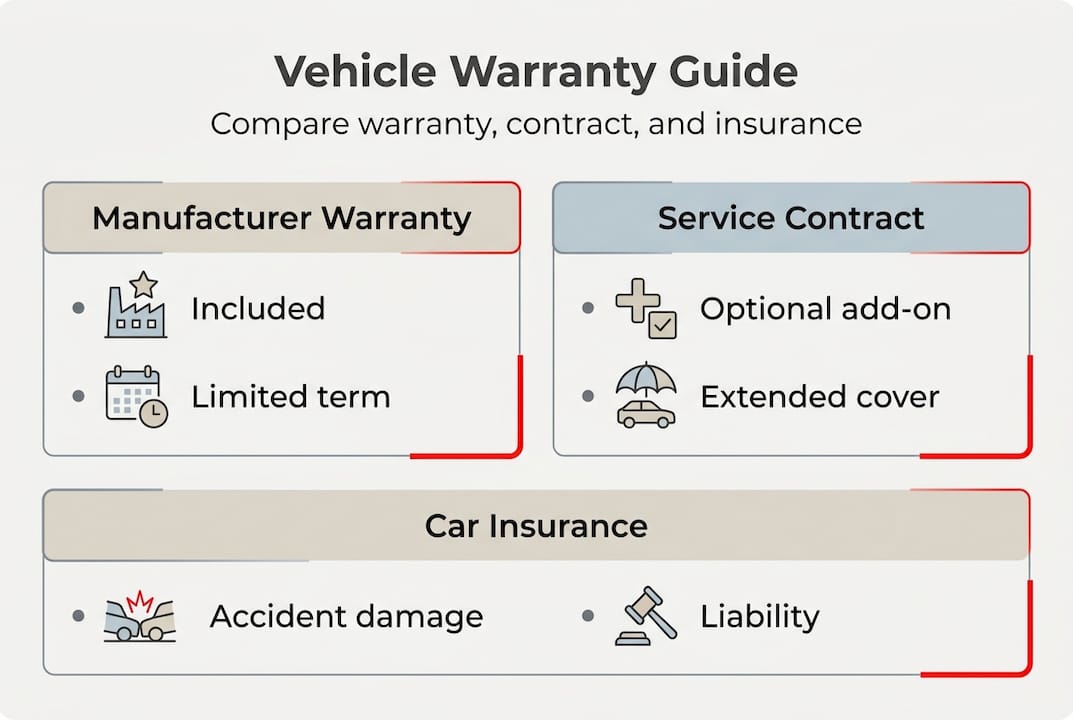
Key differences at a glance:
| Feature | Manufacturer warranty | Warranty service contract | Car insurance |
|---|---|---|---|
| Included with car? | Yes | No, purchased separately | No, required by law |
| Covers breakdowns? | Yes | Yes | No |
| Covers accidents? | No | No | Yes |
| Who backs it? | Automaker | Dealer, third party, or automaker | Insurance company |
| When does it apply? | During factory coverage | After factory coverage | Anytime |
You can purchase a service contract at the time you buy the vehicle, later during ownership, or before your factory warranty runs out. Buying earlier often locks in a lower price and avoids waiting periods.
Some common misconceptions are worth addressing directly:
- All repairs are covered: False. Every contract has exclusions, and pre-existing conditions are almost never covered.
- You must use the dealer's shop: Not always. Many contracts allow any licensed repair facility.
- It is the same as a warranty: Legally, it is not. Warranties are implied or express promises from the manufacturer. Service contracts are separate agreements governed by contract law.
- You have to buy it right away: You usually have a window to purchase one, though waiting can raise the price.
For answers to common questions, check out our warranty FAQs or browse available vehicle protection plans to see what coverage looks like in practice.
How do warranty service contracts work?
With a working definition in hand, let's look under the hood at how these contracts actually work from coverage to claims.
Coverage generally falls into two broad types. A powertrain contract covers your engine, transmission, and drivetrain. These are the most expensive components to repair, so powertrain plans offer a baseline of protection. An exclusionary contract, sometimes called bumper-to-bumper, covers almost everything except a specific list of excluded parts. Exclusionary plans cost more but offer far broader protection.
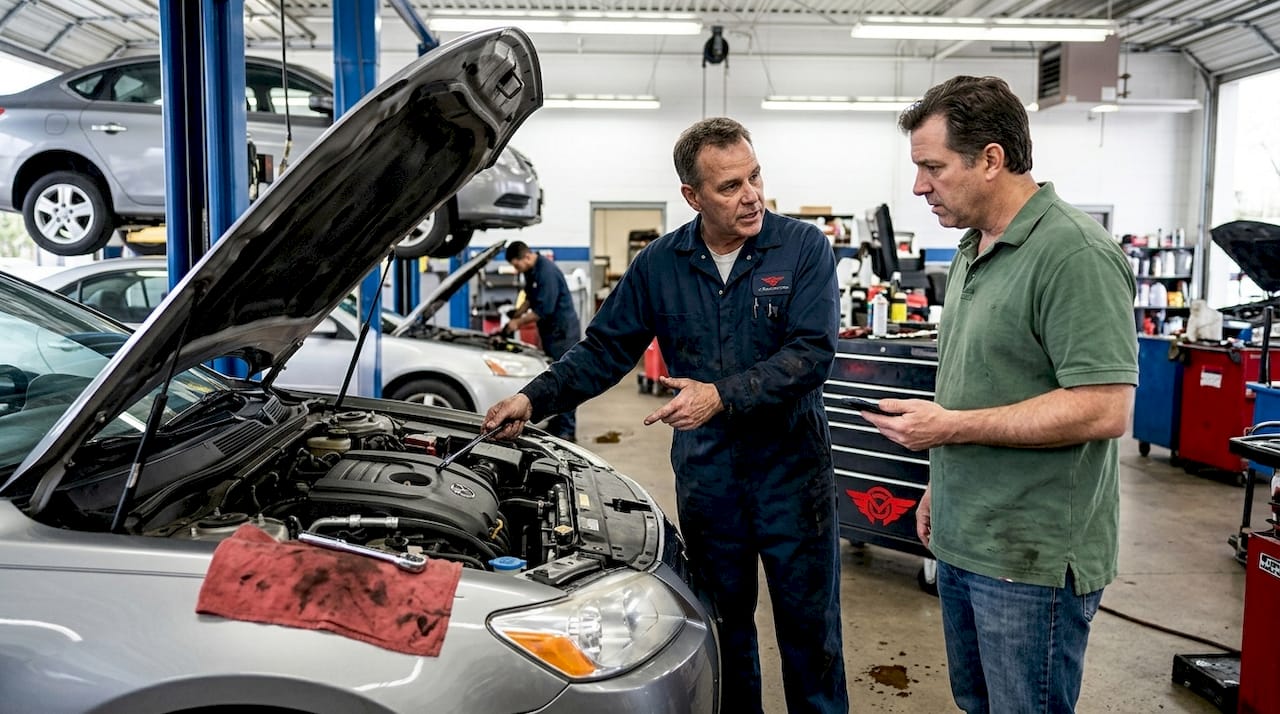
As the CA Insurance Guide notes, plans range from powertrain to exclusionary coverage and require proof of maintenance and pre-approval before repairs are made.
How a typical claim works:
- Your vehicle breaks down or shows a fault.
- You take it to an approved repair shop.
- The shop diagnoses the problem and contacts the service contract provider.
- The provider reviews the claim and approves or denies coverage.
- Approved repairs are completed, and the provider pays the shop directly.
- You pay only your deductible, which is usually $50 to $200.
One thing many buyers miss is the maintenance obligation. You are expected to keep up with oil changes, fluid checks, and other routine services. If you cannot show proof of maintenance, the provider may deny your claim. Keep your receipts.
Coverage comparison by plan type:
| Plan type | Engine | Transmission | Electrical | A/C | Wear items |
|---|---|---|---|---|---|
| Powertrain | Yes | Yes | No | No | No |
| Mid-level | Yes | Yes | Partial | Yes | No |
| Exclusionary | Yes | Yes | Yes | Yes | Sometimes |
Pro Tip: Before signing, ask the provider for a sample contract. Read the exclusions list carefully. That list tells you more about the real value of the plan than any sales pitch will.
For a deeper look at how coverage works, our auto warranties guide walks through the basics, and our piece on warranty transparency covers what to watch for in the fine print.
How much do warranty service contracts cost—and are they worth it?
Understanding the mechanics is important, but the big decision often comes down to cost and potential value.
Prices vary widely. According to industry payout and denial rates, contracts cost $500 to $4,000 or roughly $70 to $180 per month, the average payout on a used claim is $4,127, and the industry denial rate sits at 22.4%. That last number matters. Nearly one in four claims gets denied.
What drives the price up or down?
- Vehicle age and mileage: Older, higher-mileage vehicles cost more to cover.
- Make and model: Luxury brands and vehicles with complex electronics carry higher premiums.
- Coverage level: Exclusionary plans cost more than powertrain-only.
- Deductible amount: A higher deductible lowers your monthly cost.
- Payment structure: You can often pay a lump sum or spread it monthly.
Now for the honest math. Out-of-warranty repairs can average $1,200 to $2,500 per year on older vehicles, and major engine or transmission work can run $3,500 to $6,000. If you drive a vehicle that is six or more years old, one major repair event can easily cost more than the entire price of a service contract.
That said, self-insuring, which means setting aside money each month into a dedicated repair fund, is a legitimate strategy for owners of reliable vehicles with strong maintenance histories. If your car has a strong reliability track record and you are disciplined about saving, you may come out ahead without a contract.
Pro Tip: Use the warranty cost by year breakdown to see how contract pricing shifts as vehicles age. The sweet spot for buying is often before the factory warranty ends.
If you are unsure whether your situation calls for coverage, our article on signs you need warranty lays out the clearest indicators.
Pros, cons, and pitfalls: Is a warranty service contract right for you?
The numbers matter, but deciding if a contract is right for you means weighing pros and cons in the context of your life and your vehicle.
Advantages:
- Predictable monthly cost instead of surprise repair bills
- Coverage for major systems that can cost thousands to fix
- Roadside assistance often included
- Peace of mind, especially for high-mileage or complex vehicles
- Provider pays the shop directly, so you are not fronting large sums
Disadvantages:
- Upfront or ongoing cost even if you never file a claim
- Denial risk: the 22% denial rate is real, and FTC warnings flag high-pressure sales tactics as a red flag
- Exclusions can be extensive and are easy to overlook
- Some contracts have repair shop restrictions
- According to a CarShield review, 41% of disputes involve exclusion-related denials
Who benefits most?
Owners of vehicles that are five or more years old, drivers who put high mileage on their cars, people who cannot absorb a $3,000 to $5,000 repair without financial stress, and anyone who plans to keep their vehicle for several more years. If you drive a newer, highly reliable model and have a healthy savings buffer, the math may favor self-insuring.
The biggest mistakes buyers make are skipping the exclusions list, falling for high-pressure dealer upsells at closing, and not comparing multiple providers. Always read what is NOT covered before you sign.
Pro Tip: Check our guide on warranty must-haves to build a checklist before you shop. And review our notes on understanding exclusions so you know exactly what questions to ask.
Our take: The uncomfortable truth about warranty service contracts
Having worked with vehicle owners across a wide range of situations, we have seen one pattern repeat itself: buyers overestimate what their contract covers and underestimate how much the exclusions list matters. The product is not the problem. The problem is that most people sign without reading.
A warranty service contract is genuinely valuable for high-mileage vehicles, complex modern cars loaded with electronics, and owners who would struggle financially with a sudden $4,000 repair. For those people, the monthly cost buys real protection and real peace of mind.
But for owners of reliable, well-maintained vehicles who are disciplined savers, self-insuring often wins on pure math. The key is being honest about which category you fall into.
Our advice: treat the contract shopping process like buying any financial product. Read the full agreement, compare at least two or three providers, and prioritize real-world contract transparency over a low monthly payment. The best contract is the one you actually understand before you need to use it.
Get coverage and peace of mind with a tailored warranty contract
If you have read this far, you already know more about warranty service contracts than most vehicle owners do. That knowledge is your best tool for making a smart decision.
At RPM Warranty, we offer protection plan options built around your specific vehicle, mileage, and budget. Our plans are transparent, our terms are clear, and our coverage is accepted at repair facilities nationwide. Whether you want Elite, Advanced, or Essential coverage, we make it easy to compare and choose. Have questions before you commit? Our warranty questions answered page is a great place to start. Get your free quote today and drive with confidence.
Frequently asked questions
Are warranty service contracts the same as manufacturer warranties?
No, service contracts are optional add-ons purchased separately to cover repairs after your factory warranty expires. Manufacturer warranties come included with the vehicle at no extra cost.
What repairs are typically covered by a warranty service contract?
Depending on the plan, coverage may include major systems like engine, transmission, electrical, and air conditioning. Always check the agreement for specifics, since coverage varies by contract and exclusions apply.
How do I file a claim with a service contract provider?
You must get pre-approval before repairs begin, show proof of vehicle maintenance, and the provider usually pays the repair shop directly after you pay your deductible.
Is buying a vehicle service contract worth it?
It depends on your car's age, reliability, and repair budget. About 62% utilize contracts within three years of purchase, but a 22% denial rate means reading the fine print before you buy is essential.
Recommended
- Must-have car warranty features for peace of mind
- Extended Vehicle Auto Motorcyle Warranty | Trusted By All Dealers Nationwide
- Extended Vehicle Auto Motorcyle Warranty | Trusted By All Dealers Nationwide
- Automotive warranty transparency: Clear coverage guide
- Suzuki Vitara në Shitje: Udhëzues Blerje & Çmime në Shqipëri | CarPulse Albania