

TL;DR:
- Modern vehicles rely on complex electronic systems vulnerable to voltage surges and transient events that can cause costly damage. Protective devices like TVS diodes and gas discharge tubes, combined with proper system design and maintenance, are essential to prevent electronic failures. Following industry standards such as ISO 16750-2 ensures these protection measures can withstand multiple surge events throughout a vehicle's lifespan.
Electrical system protection in vehicles is defined as the active defense of onboard electronics against voltage surges, transient spikes, and load dump events that can permanently destroy sensitive components. Modern cars carry more computing power than ever before. A BMW 7 Series runs over 100 electronic control units (ECUs). A Mercedes S-Class manages everything from adaptive suspension to facial recognition through interconnected electronic modules. A Porsche Cayenne's engine management system alone depends on dozens of sensors and microprocessors operating within precise voltage tolerances. When those tolerances are violated, the damage is immediate, expensive, and often irreversible. Understanding why cars need electrical system protection starts with recognizing that today's vehicles are not just machines. They are rolling networks of electronics that fail catastrophically when exposed to electrical hazards most owners never see coming.
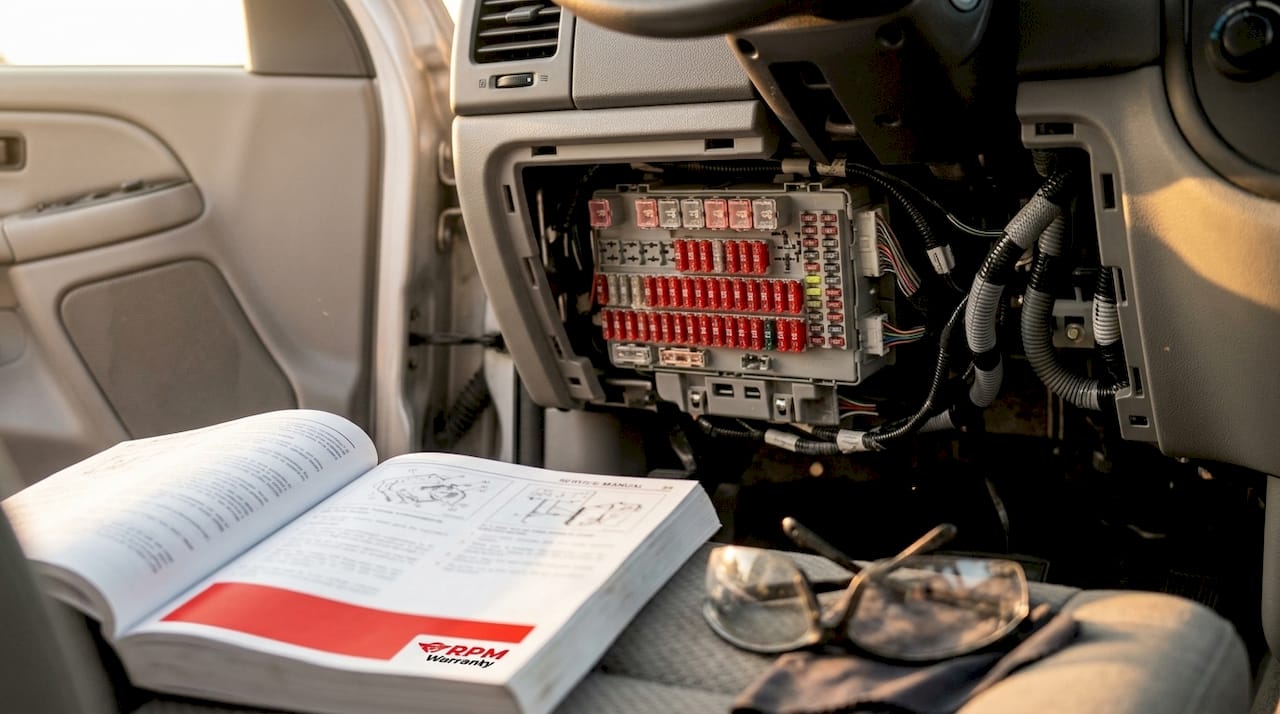
Why cars need electrical system protection
The electrical threats inside a vehicle are not theoretical. They occur during normal driving, routine maintenance, and even jump-starts. The most destructive of these is the load dump event, which happens when a charged battery is suddenly disconnected from the alternator while the alternator is still generating power. The result is a voltage spike that can reach up to 101V in a standard 12V system, with surge durations from 40 ms to 400 ms. That duration matters enormously. A brief spike might pass harmlessly, but a surge lasting nearly half a second delivers enough energy to cause thermal breakdown in semiconductor components throughout the vehicle.
The ECU is the most vulnerable target. In a Range Rover Sport or a BMW M5, the ECU controls fuel injection timing, transmission shifts, traction control, and emissions compliance. A single unprotected load dump event can fry the ECU entirely, with replacement costs running from $1,500 to over $3,000 for luxury vehicles before labor is added. The damage does not always announce itself immediately either. Partial degradation from repeated low-level surges can cause intermittent faults, ghost warning lights, and sensor failures that take weeks to diagnose.
Beyond load dumps, vehicles face transient voltage spikes from alternator faults, inductive switching from relays and solenoids, and even nearby lightning strikes. These transients are shorter in duration but can exceed normal operating voltages by a factor of five or more. Ford F-150 trucks with their advanced Pro Power Onboard systems, Honda Accord hybrids with regenerative braking electronics, and Porsche Taycan EVs with high-voltage architectures all carry electronics that are acutely sensitive to these events.
Pro Tip: If your dashboard shows multiple unrelated warning lights after a jump-start or battery replacement, a load dump event may have already damaged your ECU or body control module. Get a full diagnostic scan before assuming the warnings are minor.
The importance of car electrical safety becomes clearest when you look at repair invoices. Electrical faults are among the most expensive vehicle repairs precisely because the damage is rarely confined to one component. A surge that enters through the alternator circuit can propagate through the CAN bus network and damage multiple modules simultaneously.
What protection devices actually do inside your car
The automotive industry addresses these threats through a layered set of protection devices, each designed to intercept harmful energy before it reaches sensitive electronics. The primary device is the Transient Voltage Suppressor (TVS) diode. TVS diodes respond in picoseconds and clamp voltage spikes to a safe level by absorbing the excess energy themselves. They are placed directly at the input of ECUs and other sensitive modules, acting as the last line of defense against surges that have already passed through other protection layers.
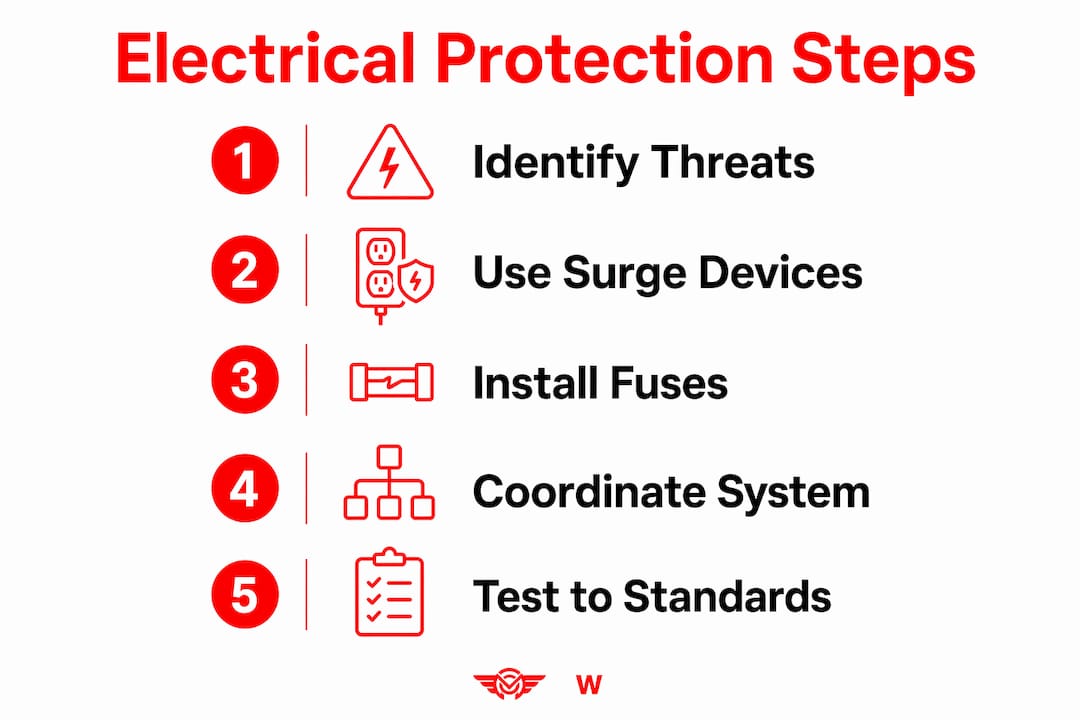
Gas Discharge Tubes (GDTs) work differently. When a transient overvoltage occurs, a GDT switches to a plasma arc that diverts the surge energy away from the circuit, then recovers to its insulating state once the event passes. GDTs are placed in parallel with power and signal lines, making them particularly effective against lightning-induced surges and high-energy switching transients. They handle larger energy loads than TVS diodes but respond slightly slower, which is why the two devices are often used together.
Using a combination of surge devices like GDTs and TVS diodes tailored to specific transient characteristics improves system robustness more than relying on a single device type. This stacking approach is standard practice in the electrical architectures of Mercedes E-Class and BMW 5 Series vehicles, where multiple protection layers are coordinated across the entire vehicle network.
Fuses complete the protection picture by interrupting current flow when a circuit is overloaded. However, fuses protect against sustained overcurrent, not fast transients. That distinction is critical. A fuse will not save your ECU from a load dump spike because the spike is over before the fuse can respond. Fuses and TVS diodes serve different functions and must both be present for complete protection.
| Device | Response Speed | Primary Threat Addressed | Placement |
|---|---|---|---|
| TVS Diode | Picoseconds | Load dump, fast transients | At ECU input, signal lines |
| Gas Discharge Tube (GDT) | Microseconds | Lightning, switching surges | Parallel to power/signal lines |
| Fuse | Milliseconds | Sustained overcurrent, short circuits | Near power source in circuit |
| DC-DC Converter | Continuous | Bus voltage mismatch | Between voltage buses |
Pro Tip: Protection must be treated as a system design problem. Placement and coordination of devices across the vehicle's electrical layout determine whether protection actually works. A TVS diode installed at the wrong point in the circuit provides almost no benefit.
Residual voltage stress is a real concern even when primary protection devices are in place. After partial suppression of a surge, remaining transient voltages can still exceed the tolerance limits of downstream components. This is why protection at the ECU level itself remains necessary, even when upstream devices are functioning correctly.
What automotive standards define for electrical protection
The automotive industry does not leave electrical protection to guesswork. Two standards define the testing requirements that protection devices and vehicle electrical systems must meet before a car reaches production.
ISO 16750-2 is the current benchmark for load dump protection. It requires that protection devices endure 10 repeated pulses during testing, reflecting the reality that vehicles experience multiple surge events over their service life. This multi-pulse requirement is a significant upgrade over the legacy ISO 7637-2 standard, which tested only single pulse endurance. A device that survives one surge may fail on the third or fourth, and ISO 16750-2 catches that weakness before the vehicle ships.
| Standard | Pulse Count | Voltage Range | Key Focus |
|---|---|---|---|
| ISO 16750-2 | 10 pulses | Up to 101V (12V systems) | Repeated thermal stress endurance |
| ISO 7637-2 | 1 pulse | Varies by test level | Single transient survival |
ISO 7637-2 remains relevant for characterizing the shape and amplitude of individual transient pulses, including those from inductive switching and alternator faults. Engineers use it to define the exact waveform that protection devices must handle. ISO 16750-2 then determines whether those devices can handle that waveform repeatedly over time. Together, they form the testing framework that governs what protects a car's electrical system at the design level.
For luxury vehicle buyers, these standards matter directly. BMW, Mercedes, Porsche, and Range Rover all certify their electrical architectures against ISO 16750-2, which is part of why their electronics tend to be more resilient than those in lower-specification vehicles. However, that factory protection only covers the original electrical design. Aftermarket modifications that bypass or ignore these standards introduce new vulnerabilities into an otherwise well-protected system.
How to protect your car's electrical system in practice
Understanding the threats and the technology is useful. Knowing what you can actually do as a car owner is more useful. The benefits of electrical protection in vehicles are only realized when protection measures are correctly implemented, and several common mistakes undo that protection entirely.
The most frequent source of owner-introduced electrical damage is improper fuse sizing. Fuse placement near the power source and use of automotive-rated components are the two non-negotiable requirements for any aftermarket electrical addition. A fuse installed six feet from the battery, rather than within 18 inches of it, leaves the entire wire run between the battery and the fuse unprotected. That unprotected wire can arc and start a fire before the fuse ever blows.
Modern vehicles, particularly Ford F-150s with Pro Power Onboard, BMW X5s with 48V mild hybrid systems, and Mercedes GLE models with advanced driver assistance electronics, carry both 12V and 48V accessory networks. Unrated devices connected to the wrong bus can be destroyed instantly. Before adding any aftermarket accessory, confirm which voltage bus you are connecting to and verify that every component in the circuit is rated for that voltage.
Here are the practical steps every car owner should follow when adding electrical accessories or maintaining their vehicle's electrical system:
- Place fuses within 18 inches of the power source, not at the accessory end of the wire run.
- Use only automotive-rated DC-DC converters when connecting devices across different voltage buses.
- Check automotive-grade wiring specifications before adding aftermarket lighting, audio systems, or charging accessories.
- Verify that aftermarket fuses and connectors, such as those used with self-tapping fuse taps, are rated for automotive environments, not consumer electronics.
- Ground all accessories to a dedicated chassis ground point, not to a body panel or random bolt.
- Never splice into existing wiring harnesses without confirming the circuit's amperage rating and purpose.
Signs that your vehicle's electrical system may already be compromised include intermittent warning lights, modules that reset unexpectedly, accessories that work inconsistently, and battery drain that cannot be explained by a simple parasitic draw test. These symptoms often indicate partial damage from a surge event rather than a complete component failure.
Pro Tip: After any battery replacement or jump-start on a BMW, Mercedes, or Range Rover, have the battery registered to the vehicle's battery management system using a dealer-level diagnostic tool. Skipping this step causes the alternator to charge at the wrong rate, which increases the risk of load dump events and premature electrical component failure.
A vehicle protection checklist that covers electrical system maintenance alongside mechanical items gives you a structured way to catch problems before they become expensive repairs. Electrical issues rarely appear without warning signs, and catching them early is almost always cheaper than replacing a damaged ECU or wiring harness.
Key takeaways
Cars need electrical system protection because voltage surges, load dump events, and transient spikes can permanently destroy ECUs and connected modules, with repair costs that routinely exceed the value of the protection measures themselves.
| Point | Details |
|---|---|
| Load dump is the primary threat | Surges up to 101V lasting 400 ms can cause thermal breakdown in ECUs and wiring. |
| TVS diodes and GDTs work together | Stacking protection devices by response speed and energy capacity covers the full range of electrical threats. |
| ISO 16750-2 sets the standard | Devices must survive 10 repeated pulses, not just one, to meet current automotive certification requirements. |
| Aftermarket wiring introduces risk | Incorrect fuse placement, wrong bus connections, and non-automotive-rated components are leading causes of owner-introduced electrical damage. |
| Early symptoms signal damage | Intermittent warning lights and unexplained battery drain often indicate partial surge damage before full component failure. |
What I've learned about electrical protection after years of watching owners get burned
I have reviewed hundreds of warranty claims and repair invoices over the years, and electrical system failures follow a pattern that frustrates me every time I see it. The damage was preventable. Not in a vague, theoretical sense. Preventable in the specific sense that a $15 TVS diode or a correctly placed fuse would have stopped a $2,800 ECU replacement.
The conventional wisdom says that modern cars are built to handle electrical stress. That is true for the original factory design. What it misses is that the factory design assumes you are not going to add a 1,200-watt amplifier, a set of LED light bars, and a dashcam all wired through the same circuit. The moment you start modifying a vehicle's electrical system without understanding the protection architecture, you are introducing vulnerabilities that the original engineers never accounted for.
Luxury vehicles make this worse, not better. A BMW 5 Series or a Porsche Panamera has more ECUs, more interconnected modules, and more CAN bus traffic than a base-spec economy car. That complexity means a single surge event has more potential targets and more pathways to propagate damage. The importance of vehicle component protection scales directly with the sophistication of the vehicle's electronics.
The insight I keep coming back to is this: electrical protection is not a product you buy once. It is a discipline you maintain. Every modification, every battery swap, every new accessory is an opportunity to either reinforce or undermine the protection your vehicle already has. Treat it that way, and you will avoid the repair bills that catch most owners completely off guard.
— Kenneth
Protect your vehicle investment with the right coverage
Electrical system protection starts with good engineering and smart maintenance, but even well-protected vehicles can face unexpected failures. When an ECU fails, a wiring harness shorts, or a control module needs replacement, repair costs can reach thousands of dollars with no warning.

Rpmwarranty offers extended vehicle warranty plans that cover electrical system repairs alongside engines, transmissions, and high-tech components. Whether you drive a BMW, Mercedes, Ford, Honda, Range Rover, or Porsche, there is a plan matched to your vehicle's specific needs and your budget. Explore extended warranty coverage options and get a free quote today. If you own a BMW specifically, Rpmwarranty's BMW warranty plans are built around the electrical complexity those vehicles carry. Do not wait for a repair bill to find out what you are not covered for.
FAQ
What causes electrical system damage in cars?
Load dump events, transient voltage spikes from alternator faults, and inductive switching from relays are the primary causes. Surges can reach up to 101V in 12V systems and last long enough to cause permanent thermal damage to ECUs and wiring.
What protects a car's electrical system from surges?
TVS diodes, Gas Discharge Tubes, and correctly sized fuses work together to intercept and absorb harmful voltage events. TVS diodes respond in picoseconds at the ECU level, while GDTs handle higher-energy surges on power and signal lines.
Do automotive standards require electrical protection testing?
ISO 16750-2 requires protection devices to survive 10 repeated load dump pulses, ensuring they can handle multiple surge events over a vehicle's service life. This standard replaced the single-pulse testing of ISO 7637-2 for load dump certification.
Can aftermarket accessories damage my car's electrical system?
Incorrect fuse sizing, wrong bus voltage connections, and non-automotive-rated components are leading causes of owner-introduced electrical damage. Always verify voltage bus ratings and place fuses within 18 inches of the power source for any aftermarket addition.
Does an extended warranty cover electrical system repairs?
Many extended warranty plans, including those offered by Rpmwarranty, cover electrical system components such as ECUs, wiring harnesses, and control modules. Check your specific plan details, as coverage varies by tier and the warranty coverage for electrical systems can differ significantly between providers.