

TL;DR:
- Modern vehicle maintenance habits should be based on current data and expert advice, as outdated practices can lead to costly repairs. Regularly monitoring and servicing fluids, batteries, brakes, belts, and hoses according to manufacturer guidelines can prevent emergencies and extend vehicle lifespan. Pairing proactive upkeep with trusted repair shops or DIY skills, along with appropriate coverage, provides optimal protection for your car and wallet.
Older advice about caring for your car costs more than most people realize. The 3,000-mile oil change, the one-size-fits-all tune-up schedule, the dealership-or-nothing mindset — these ideas made sense decades ago, but modern vehicles and synthetic lubricants have changed the rules entirely. What you don't update in your maintenance routine, you pay for in premature repairs and unexpected breakdowns. The tips below are grounded in current data, expert sources, and real-world repair cost trends so you can stop guessing and start making decisions that actually protect your car and your wallet.
Table of Contents
- Rethinking oil changes and fluids: What really matters
- Essential battery and brake checks: Avoiding surprise failures
- Belts, hoses, and cooling: Catching the hidden troublemakers
- Prevent costly repairs: Why proactive service pays off
- Choosing a shop (or DIY): Trust, savings, and quality%3A-trust%2C-savings%2C-and-quality)
- Our experience: What most car owners get wrong — and how to outsmart repairs
- Protect your investment with smarter coverage
- Frequently asked questions
Key Takeaways
| Point | Details |
|---|---|
| Follow updated schedules | Stick to your owner's manual and condition-based alerts for fluid changes. |
| Inspect crucial systems | Check batteries, brakes, belts, and hoses routinely to catch failures early. |
| Proactive service saves money | Regular maintenance is much cheaper than surprise breakdown repairs. |
| Trustworthy shops matter | Choose independent or AAA-approved mechanics for better value and personalized service. |
| Pair maintenance with warranty | Smart maintenance plus warranty coverage offers the highest level of protection and peace of mind. |
Rethinking oil changes and fluids: What really matters
For years, the 3,000-mile oil change was gospel. Stickers on windshields reinforced it. Quick-lube chains built entire business models around it. But for most drivers today, that rule is simply outdated and expensive.
Modern vehicles using full synthetic oil can safely go 5,000 to 10,000 miles between oil changes, and some manufacturer guidelines even push that window to 12,000 miles depending on your driving conditions. Sticking to the old 3,000-mile interval when your manual says otherwise means you're spending $80 to $100 several unnecessary times per year. That adds up fast.
What actually matters when managing engine fluids:
- Check your owner's manual first. Every vehicle has a specific recommendation based on its engine design, and it beats any generic rule.
- Monitor your oil life monitor (OLM) if your car has one. These sensors measure actual oil degradation, not just mileage, and give you a far more accurate read.
- Coolant flushes belong on your radar every 30,000 miles or 3 years, whichever comes first. Old coolant becomes acidic and can corrode your radiator and water pump from the inside.
- Transmission fluid, brake fluid, and power steering fluid all have their own intervals. Lumping them under one generic schedule is where many drivers go wrong.
Pro Tip: If you want to be more strategic about cutting repair costs over time, start by printing out a simple maintenance checklist from your vehicle's manual and marking every fluid interval. It takes 15 minutes and removes all the guesswork.
DIY oil changes are also worth considering. If you're comfortable with basic tools, handling oil changes yourself saves between $300 and $400 per year compared to shop prices. The key is using the correct oil viscosity for your engine, draining it completely, and torquing the drain plug to spec so you don't crack the oil pan.
Essential battery and brake checks: Avoiding surprise failures
Car batteries are quiet until they're not. One cold morning, you turn the key and nothing happens. That failure rarely comes out of nowhere, but most drivers don't check their battery until it's too late. The average battery lasts 3 to 5 years, which means annual testing is your best insurance against an unexpected breakdown, especially once your battery hits its third year.
How to stay ahead of battery and brake problems:
- Test your battery health once a year. Most auto parts stores will test it for free. If it's showing a weakened charge or voltage drop, replace it before winter. Cold temperatures reduce battery capacity significantly, and a marginal battery in November is likely a dead battery in January.
- Clean battery terminals every 3 months. White or blue-green corrosion builds up on the terminal connections and can cause starting problems even with a healthy battery. A wire brush and a mix of baking soda and water clears it in minutes.
- Inspect brakes every 6 to 12 months or every 12,000 miles. Brake pads wear unevenly depending on driving habits, load, and terrain. A quick visual check during a tire rotation costs nothing extra.
- Flush brake fluid every 2 to 3 years. Brake fluid is hygroscopic, meaning it absorbs moisture from the air over time. Excess moisture lowers the fluid's boiling point and can cause spongy pedal feel or, in extreme cases, brake fade under heavy use.
- Listen for warning signs. Squealing under light braking usually means your wear indicators are making contact with the rotor. Grinding is worse — it means metal on metal and potentially damaged rotors.
"Most brake problems that require expensive rotor replacement could have been prevented by catching worn pads one inspection earlier." Waiting on brake service doesn't save money; it multiplies the cost.
Your vehicle protection checklist should always include both battery and brake tasks. They're two of the most common causes of roadside breakdowns and two of the easiest to prevent with a simple schedule.
Belts, hoses, and cooling: Catching the hidden troublemakers
Here's what trips up even conscientious car owners: you can be on top of your oil and brakes and still get stranded because a coolant hose gave out at 70 mph. Belts and hoses are made of rubber, and rubber ages. Heat, ozone, and time all degrade it from the inside out long before you see obvious cracking on the surface.
What to look for and when:
- Inspect belts and hoses every 6 months. Run your thumb along the length of each hose and feel for soft spots, swelling, or hardness. Check belts for fraying, cracking along the edge, or glazing on the surface.
- Check belts and hoses for cracks while you're at it during each coolant flush. The two inspections pair naturally since you're already working near the engine's cooling circuit.
- A serpentine belt failure can disable your alternator, power steering, and water pump simultaneously. Replacing it proactively costs $80 to $150. Replacing it after it snaps, plus the tow, plus any damage to adjacent components, can run $400 or more.
- Cooling system failures are one of the top causes of roadside breakdowns nationally. Overheating can warp cylinder heads, which turns a $20 hose replacement into a $1,500 to $2,500 repair.
Pro Tip: Take photos of your belts and hoses every 6 months and compare them over time. Visual change is often subtle, but side-by-side photos from 12 months apart make deterioration obvious before it becomes critical. Check maintenance best practices for a more structured visual inspection guide.
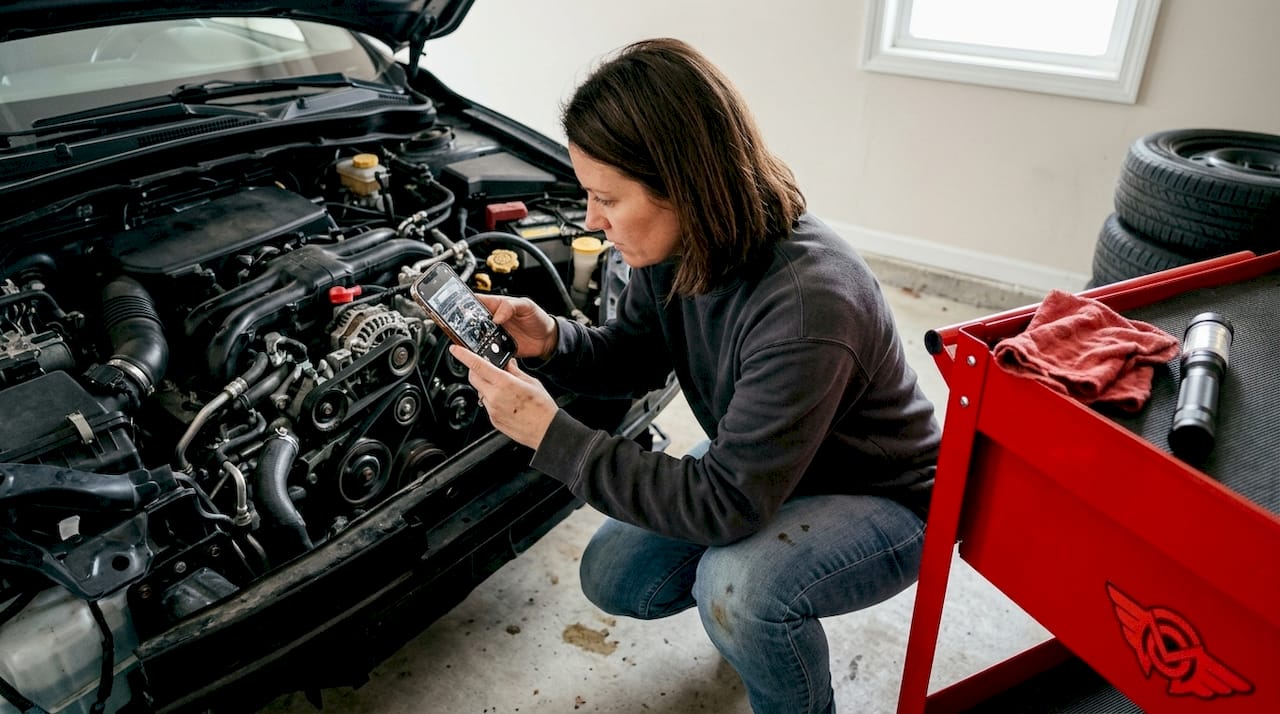
When it comes to saving on repairs, the cooling system is one of the highest-return areas to monitor. The parts are inexpensive. The consequences of ignoring them are not.
Prevent costly repairs: Why proactive service pays off
The financial case for preventive maintenance has never been stronger, and the 2025 data makes it impossible to ignore. Check engine repairs averaged $554 in 2025, a 33% jump driven largely by the aging national fleet and the rising complexity of modern vehicle systems. That single repair bill wipes out years of savings from skipped maintenance.
The math is straightforward. Compare what proactive maintenance costs versus what deferred maintenance costs:
| Service | Proactive cost | If deferred, typical repair cost |
|---|---|---|
| Oil change (synthetic) | $50 to $80 | Engine bearing damage: $1,200+ |
| Coolant flush | $80 to $120 | Radiator or head gasket: $800 to $2,500 |
| Brake pad replacement | $150 to $250 | Rotor + caliper replacement: $500 to $900 |
| Serpentine belt | $80 to $150 | Belt failure + tow + repairs: $400 to $700 |
| Battery replacement | $100 to $200 | Roadside call + alternator risk: $300 to $600 |
The pattern is consistent. Every deferred item multiplies in cost, often by a factor of 4 to 10. Drivers who stay on schedule with routine maintenance savings spend far less over a vehicle's lifetime than those who react only to failures.
There's also the longevity argument. Proactive maintenance extends a car's useful life to 200,000 miles and beyond. A vehicle worth $12,000 today that lasts another 8 years instead of 4 is effectively worth an extra $6,000 in avoided replacement costs. That's not a small number. For high-mileage maintenance strategies specifically, the return on preventive investment gets even more significant as components age.
Choosing a shop (or DIY): Trust, savings, and quality
With your maintenance plan in place, the next question is execution. Who does the work and how you build that relationship matters more than most drivers recognize.
How to find a shop you can trust:
- Look for ASE-certified technicians. ASE (Automotive Service Excellence) certification means a mechanic has passed standardized knowledge tests. It's not a guarantee, but it's a meaningful baseline.
- Check for AAA-approved shops. Independent shops with this designation have met AAA's standards for equipment, training, and customer service. They often provide better value on routine work than dealerships, which carry higher overhead.
- Ask upfront about warranties on labor. A shop that stands behind its work for 12 months or 12,000 miles is telling you something about their confidence in quality.
- Interview the shop before committing. Ask how they handle unexpected findings during a service. A trustworthy shop communicates before acting. One that calls you with a list of "urgent" add-ons every visit without explanation is a red flag.
- Build a long-term relationship. A mechanic who knows your car's history can spot anomalies faster and prioritize repairs more accurately. Loyalty also tends to translate into better service and honest communication over time.
Pro Tip: Check out maintenance package value options at your preferred shop. Many independent garages offer bundled service packages that lower the per-visit cost significantly when you commit to regular intervals.
For the DIY crowd, saving $300 to $400 annually on oil changes alone is achievable. The critical discipline is following torque specifications for every fastener, particularly the drain plug and filter housing. A slightly over-tightened drain plug today becomes a stripped oil pan thread next time, turning a $7 gasket into a $200 tap-and-repair job.
Our experience: What most car owners get wrong — and how to outsmart repairs
After years of working in and around the automotive industry, the single most consistent mistake we see isn't skipping oil changes. It's following advice that was right 20 years ago but no longer applies to modern vehicles.
Drivers inherit maintenance habits from their parents and older mechanics, and those habits stick. The 3,000-mile change. The "check it at every fill-up" instinct for things like transmission fluid that are actually sealed systems. The dealer-first assumption for every repair. These behaviors feel responsible, but they're often expensive and unnecessary by today's standards.
The smarter approach involves two underused resources: your owner's manual and your car's onboard monitoring systems. Most vehicles built after 2010 have oil life monitors, tire pressure sensors, and diagnostic systems that flag issues before they become breakdowns. Learning to read and respond to those signals is worth more than any generic checklist.
What we've also seen is that the drivers who get the most from their vehicles aren't just more disciplined. They're more relational. They have a mechanic they trust, they ask questions, and they keep records. A simple maintenance log, either in a notebook or a free app, tells a shop technician more about your car in 30 seconds than a visual inspection alone.
The auto repair coverage benefits conversation is inseparable from the maintenance conversation. Proactive care reduces risk, but it doesn't eliminate it. Engines fail. Transmissions slip. Sensors malfunction. The owners who feel genuinely protected are the ones who pair good maintenance habits with financial coverage for the problems they can't prevent.
That combination — knowledge plus coverage — is what actually keeps repair bills from becoming financial emergencies.
Protect your investment with smarter coverage
Even the most disciplined maintenance routine can't prevent every mechanical problem. Components wear out. Manufacturer defects surface late. High-tech systems fail without warning. Smart upkeep dramatically lowers your risk, but it doesn't eliminate it entirely.
That's where an extended auto warranty fills the gap. At RPM Warranty, we offer tailored coverage plans — Elite, Advanced, and Essential — designed to protect your engine, transmission, cooling system, electrical components, and more, well beyond your manufacturer's original warranty window. Whether you drive a high-mileage daily commuter or a newer vehicle you want to keep long-term, you can get a free warranty quote based on your specific year, make, and model. Pair proactive maintenance with the right coverage, and you'll have real peace of mind every mile.
Frequently asked questions
How often should I really change my car's oil in 2026?
Most vehicles using synthetic oil need changes every 7,500 to 10,000 miles, not every 3,000 miles. Always confirm with your owner's manual since intervals vary by engine type and driving conditions.
How long should a car battery last and when should it be checked?
Car batteries typically last 3 to 5 years, and you should test battery health annually once your battery reaches age three, especially before winter weather sets in.
Are independent repair shops really better than dealerships for maintenance?
AAA-approved or independent shops generally offer better value and more transparent communication for routine maintenance than dealerships, which carry higher overhead costs.
What is one preventive maintenance habit that saves the most money?
Scheduling regular inspections and fixing small issues immediately prevents them from escalating. Proactive maintenance can extend your car's life to 200,000 miles or more, which is the highest-return investment you can make.
What is the cost advantage of preventive maintenance over repairs?
Preventive service costs a fraction of typical emergency repair bills. Check engine repairs averaged $554 in 2025, up 33%, making routine upkeep one of the smartest financial decisions any vehicle owner can make.