
TL;DR:
- Consistent vehicle maintenance and DIY tasks can prevent costly repairs and extend parts lifespan.
- Comparing quotes and sourcing aftermarket parts help cut repair costs significantly.
- Proper pre-purchase inspections and leveraging warranties protect against unexpected expenses.
Car repair bills have a way of arriving at the worst possible moment. One week everything is fine, and the next you're staring at an estimate for $1,800 worth of work you didn't plan for. The good news is that most of those costs aren't inevitable. With a few deliberate habits, you can dramatically cut what you spend keeping your vehicle on the road. This guide walks you through practical, evidence-backed strategies covering maintenance, smart shopping, inspections, and warranty coverage so you can stop dreading that check engine light.
Table of Contents
- Understand your vehicle's maintenance essentials
- Be smart with parts and your repair shop choices
- Avoid costly surprises: Pre-purchase and routine inspections
- Leverage warranties and coverage to cap repair costs
- A smarter approach to saving on car repairs: What most miss
- Protect your car and your wallet with the right warranty
- Frequently asked questions
Key Takeaways
| Point | Details |
|---|---|
| Preventive maintenance is key | Following your car’s service schedule avoids expensive breakdowns. |
| Shop smart for repairs | Comparing shops and considering your own parts dramatically lowers costs. |
| Inspections catch problems early | Investing in routine and pre-purchase checks prevents costly surprises. |
| Warranties offer extra protection | A good extended warranty can reduce out-of-pocket expenses on major repairs. |
Understand your vehicle's maintenance essentials
Consistent maintenance is the single most powerful thing you can do to avoid massive repair bills. It sounds obvious, but most car owners skip or delay services until something breaks. That's when cheap becomes expensive.
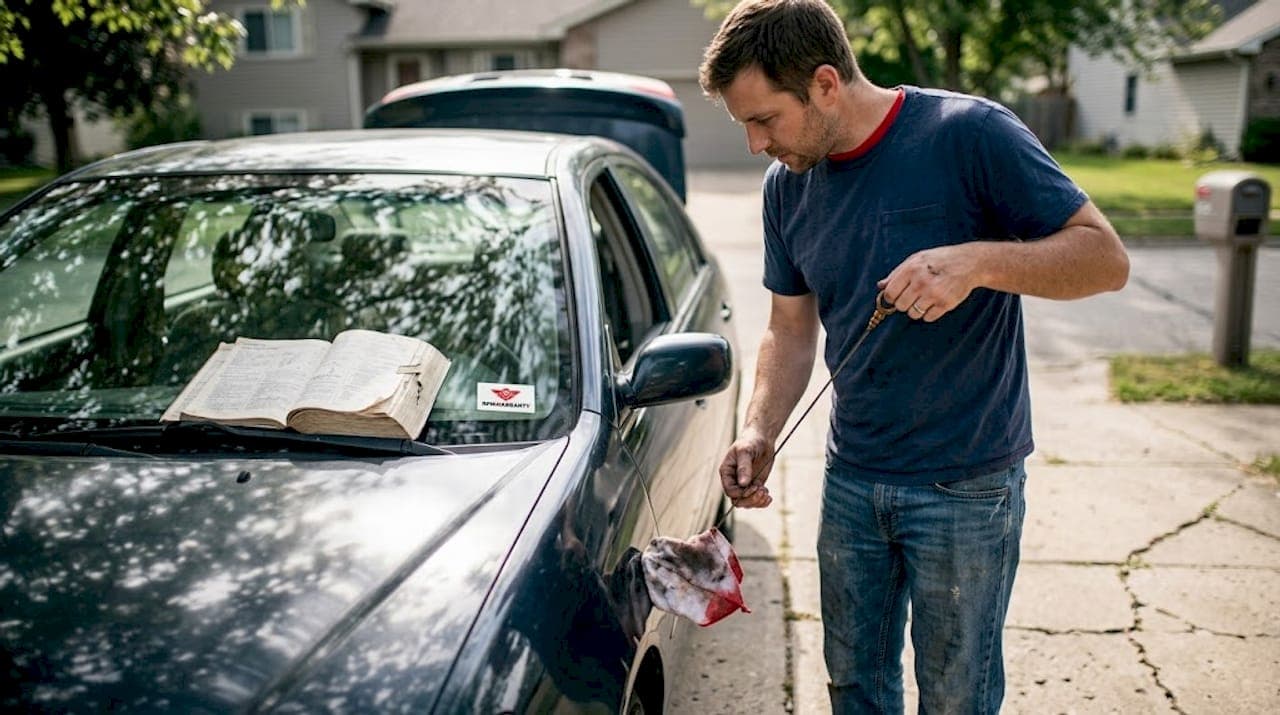
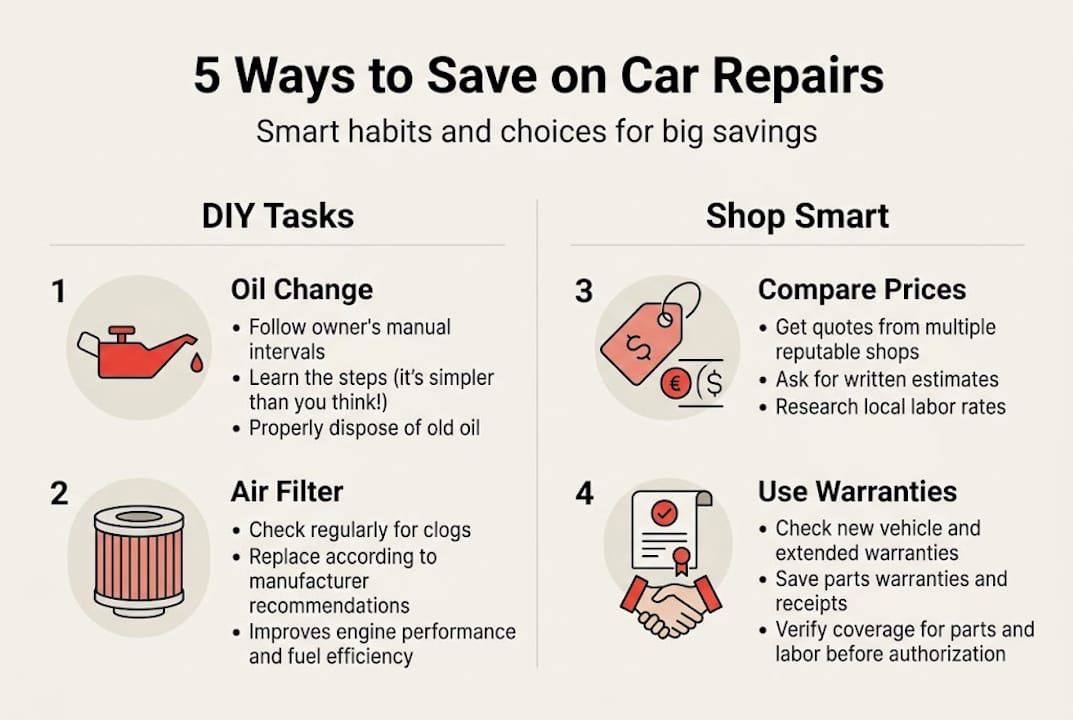
Following the maintenance schedule prevents costly repairs and opens up real DIY opportunities for tasks you can handle yourself. You don't need to be a mechanic to replace your cabin air filter, swap out windshield wipers, or top off fluids. These jobs take 15 to 30 minutes and cost a fraction of what a shop charges.
Here are some basic maintenance tasks worth handling yourself:
- Air filter replacement: $15 to $30 in parts, versus $50 to $80 at a shop
- Wiper blade swap: Under $20 in parts, straightforward to install
- Fluid top-offs: Coolant, washer fluid, and power steering fluid are easy to check and refill
- Tire pressure checks: Free, takes two minutes, and improves fuel economy
| Maintenance task | Average DIY cost | Average shop cost | Savings potential |
|---|---|---|---|
| Air filter | $20 | $60 | $40 |
| Wiper blades | $18 | $45 | $27 |
| Cabin filter | $15 | $50 | $35 |
| Oil change | $30 | $75 | $45 |
| Transmission fluid | $25 | $120 | $95 |
One area where owners consistently lose money is the transmission. A full transmission replacement costs thousands of dollars, but a routine fluid service costs a fraction of that and extends the life of the component significantly. Think of transmission fluid changes as insurance you actually use.
Pro Tip: Set phone reminders tied to your odometer milestones. When you hit 5,000-mile intervals, check your manufacturer's guide and knock out any due services before they become emergencies.
Skipping even small services creates a chain reaction. A dirty air filter strains your engine. Low coolant leads to overheating. Old brake fluid reduces stopping power. Understanding essential warranty features also helps you recognize which repairs your coverage handles, so you're not paying twice. And if you've ever wondered whether extended protection is worth it, reviewing common warranty myths can clear up a lot of confusion fast.
Be smart with parts and your repair shop choices
Routine care is crucial, but smart shopping makes a big difference when a repair is needed. Where you take your car and which parts you use can shift your final bill by hundreds of dollars.
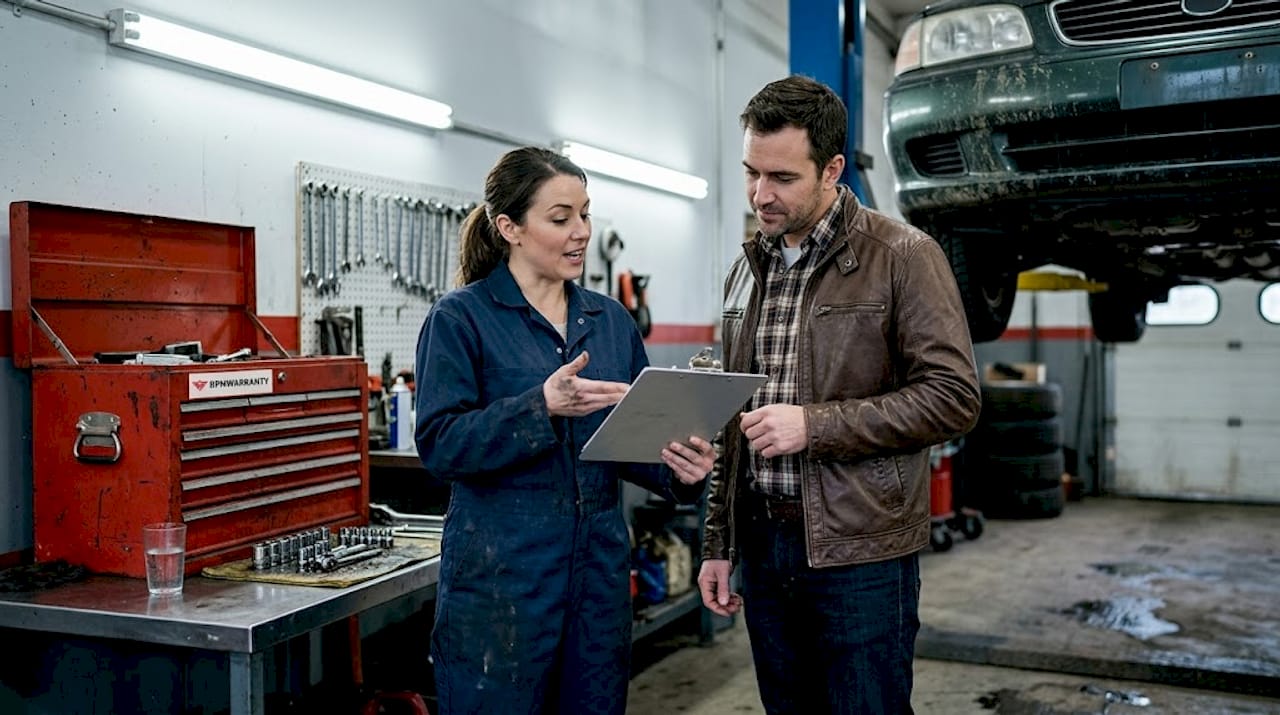
Dealer service departments and independent shops each have a place in your strategy. Dealers are your best option for warranty work or recalls because they have access to manufacturer-specific parts and certified technicians. For routine service, however, multiple quotes matter and independent shops routinely come in 20 to 40 percent cheaper.
| Repair type | Dealer cost | Independent shop cost | Best choice |
|---|---|---|---|
| Warranty/recall work | Covered | Not applicable | Dealer |
| Oil change | $80 to $120 | $40 to $70 | Independent |
| Brake replacement | $350 to $500 | $200 to $350 | Independent |
| Engine repair | $1,500+ | $1,000 to $1,400 | Get both quotes |
Another major lever is parts sourcing. Buying aftermarket parts can cost 30 to 50 percent less than OEM (original equipment manufacturer) parts, and for many components the quality difference is minimal. Used parts from reputable salvage yards work well for body panels, mirrors, and trim.
Here's how to approach any repair negotiation effectively:
- Get written estimates from at least three shops before committing.
- Ask each shop to itemize parts and labor separately.
- Research the part cost online before your appointment.
- Ask if you can supply your own parts, since many shops allow this.
- Ask about any current promotions, package deals, or loyalty discounts.
The make and model of your car matters too. Reliable brands need fewer repairs, luxury vehicles cost significantly more to fix, and electric vehicles (EVs) tend to have lower maintenance needs overall, though higher depreciation.
Pro Tip: Build a relationship with one trusted local mechanic. When they know you, they're more likely to call out only what's necessary, give honest timelines, and occasionally waive small diagnostic fees. Loyalty works both ways.
If you're considering extended protection on your next vehicle, understanding the value of third-party warranties can help you compare options wisely. It's also worth reviewing vehicle protection features to know exactly what each plan covers before you sign.
Avoid costly surprises: Pre-purchase and routine inspections
Beyond where and how you fix your car, preventing big trouble starts before problems ever show up. This is especially true when buying a used vehicle, which is where the biggest financial surprises tend to hide.
Most used car buyers rely on a test drive and a visual look. That's not enough. A proper pre-purchase inspection is performed by a trusted independent mechanic and covers the engine, transmission, suspension, brakes, and electrical systems. Pre-purchase inspections costing $100 to $150 can reveal hidden problems that would cost thousands to fix after you've already signed the paperwork.
Here's how to get one done properly:
- Find a trusted independent mechanic near the seller's location.
- Ask the seller to allow the inspection before purchase. Walk away if they refuse.
- Request a written report covering all systems the mechanic evaluates.
- Use any findings to negotiate the price or walk away from a bad deal.
- Factor repair estimates into your total budget, not just the purchase price.
Before buying any used vehicle, ask yourself: would I rather spend $125 on an inspection now, or risk spending $3,000 on a surprise engine repair six months from now? The inspection almost always costs less than the first unexpected bill you'd face on a car with hidden issues.
For ongoing ownership, routine self-checks between service appointments catch small issues early. Get into the habit of checking these regularly:
- Tire tread and pressure: Worn tires increase blowout risk and reduce fuel efficiency
- Brake feel: Soft pedals or squealing indicate worn pads
- Fluid levels: Engine oil, coolant, and brake fluid should stay within normal range
- Lights: Headlights, brake lights, and turn signals all need periodic testing
- Battery terminals: Corrosion causes starting problems that are easy to prevent
If you're new to vehicle ownership, the auto warranty basics guide is a great starting point for understanding what protection applies to your situation. Before agreeing to any coverage, also take time to review tips on reading service contracts so you know what you're agreeing to.
Leverage warranties and coverage to cap repair costs
Finally, even the most careful car owners sometimes need an extra layer of cost protection. A solid warranty acts like a financial ceiling on your repair exposure, which matters more as your vehicle ages and factory coverage expires.
Understanding what a warranty covers is just as important as having one. Most standard and extended warranties cover engine components, transmission, drivetrain, cooling systems, and electrical systems. Common exclusions include wear items like brake pads, tires, and wiper blades, as well as damage caused by neglect or improper maintenance.
When shopping for an extended warranty, look for these key features:
- Transferability: Can you pass the coverage to a new owner if you sell?
- Roadside assistance: Should be included at no extra cost
- Rental car coverage: Keeps you mobile while repairs are completed
- Nationwide acceptance: Coverage should work at any licensed repair facility
- Transparent deductible structure: Know exactly what you'll owe per visit
Using your warranty correctly also takes a little strategy. Dealers are best for warranty work, but always verify your coverage details before authorizing repairs to avoid being pushed toward upsells or services the warranty doesn't cover.
Pro Tip: Always read the fine print of your service contract before a shop starts any work. If your warranty requires pre-authorization, skipping that step can result in a denied claim and a full out-of-pocket bill.
Knowing signs you need an extended warranty helps you time your purchase wisely, since waiting too long means higher premiums or coverage gaps. You should also understand auto warranty deductible tips to make sure your plan is structured to give you maximum value on each claim.
A smarter approach to saving on car repairs: What most miss
After years of helping vehicle owners navigate repair costs, we've noticed a clear pattern. The car owners who consistently spend the least aren't just hunting for the cheapest quote. They're thinking systematically.
Chasing the lowest price on a single repair is often a trap. A cheap shop with no accountability, unclear warranties on parts, or poor communication will cost you more over time through repeat visits and poor workmanship.
The real advantage comes from habits most people overlook: keeping a physical or digital log of every service and repair, building a genuine relationship with one mechanic, and choosing a vehicle known for reliability rather than one loaded with features that cost a fortune to fix. Choosing the right car warranty by year of your vehicle also means you're not over-buying or under-protecting.
The real winners don't just pay less for repairs. They systematically avoid them.
Record-keeping alone can save you money. When you have a full service history, mechanics can't bill you for work that was already done. You can also negotiate better when selling, and you'll catch patterns that signal a larger problem before it becomes a breakdown.
Protect your car and your wallet with the right warranty
All the maintenance habits and smart shopping strategies in this article add up to real savings. But sometimes the unexpected still happens, and that's exactly where the right extended warranty fills the gap.
At RPM Warranty, we offer tailored plans designed to match your vehicle, your budget, and your driving habits. Whether you need basic powertrain protection or full coverage for high-tech components, our vehicle protection plan options give you the flexibility to choose what fits. Get a free quote today and see how straightforward protecting your car can be. Because the best repair bill is the one you never have to pay.
Frequently asked questions
What are the cheapest ways to reduce car repair costs?
The cheapest approach is to follow your maintenance schedule consistently and handle simple DIY tasks like filter swaps, fluid checks, and wiper replacements yourself. Choosing a reliable independent mechanic for routine work also keeps costs significantly lower than defaulting to a dealer.
Do extended warranties save you money on car repairs?
For major component failures, extended warranties often prevent four-figure out-of-pocket bills, making them especially valuable as a vehicle ages past the factory coverage window. Always verify your coverage details before repairs begin to avoid surprises.
How do I know if my mechanic is overcharging me?
Get written, itemized estimates from at least three shops before approving any repair, and check current parts prices online before your appointment. Multiple quotes are essential because pricing for the same job can vary by 30 to 50 percent between shops.
Is it cheaper to buy parts yourself for car repairs?
Yes, sourcing your own aftermarket or used parts can cut component costs by 30 to 50 percent compared to what shops charge for OEM parts. Just confirm compatibility with your vehicle's year, make, and model, and check whether using non-OEM parts affects any active warranty coverage.