
TL;DR:
- Maintaining your vehicle with regular inspections and timely repairs significantly reduces unexpected car repair bills.
- Leveraging DIY skills, sourcing affordable parts, and choosing independent mechanics can maximize savings and extend your vehicle's life.
- Pairing proper maintenance with suitable warranties offers comprehensive protection against costly breakdowns and repairs.
Unexpected car repair bills hit hard, and they hit often. Annual repair costs average $1,452 for drivers who travel 15,000 miles per year, and that number climbs fast on older vehicles with more miles and more wear. Whether you drive a high-mileage sedan or a decade-old SUV, the strategies in this guide walk you through every practical step to keep those costs down. From basic maintenance habits to sourcing your own parts, finding the right mechanic, and choosing an extended warranty that actually pays off, you'll leave with a real action plan.
Table of Contents
- Understand your car's maintenance essentials
- Master simple DIY maintenance and repairs
- Shop smart: Get the best value from independent mechanics
- Be smart about parts: Buy, source, and negotiate
- Evaluate extended warranties and protection plans
- Our take: Prevention trumps repair—what most owners overlook
- Get the coverage and support you need for lower car repair bills
- Frequently asked questions
Key Takeaways
| Point | Details |
|---|---|
| Preventive care saves money | Sticking with scheduled maintenance avoids major, costly repairs down the road. |
| Shop smart for repairs | Choosing reputable independent mechanics and sourcing quality parts brings significant savings. |
| DIY basic maintenance | Handling small jobs yourself can shrink repair bills and increase your car’s longevity. |
| Evaluate warranties wisely | Extended warranties are worth considering for high-mileage or risky vehicles, but compare providers and coverage. |
| Long-term mindset pays off | Proactive, informed decisions in maintenance and repairs massively cut lifetime vehicle costs. |
Understand your car's maintenance essentials
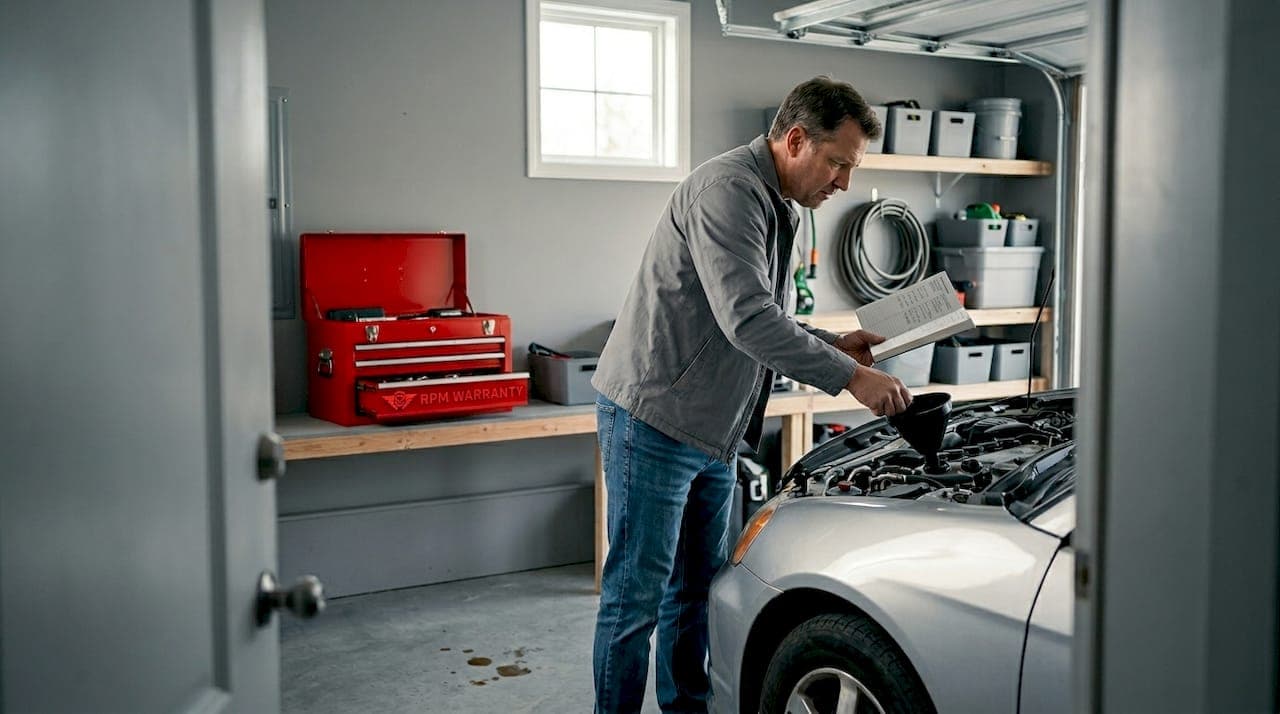
Basic maintenance is the most powerful cost-cutting tool you own. Every time you skip an oil change or ignore a dashboard warning, you're borrowing against a repair bill you'll pay later, with interest.
The fleet average vehicle age is now 12.8 years, which means most vehicles on the road are past their factory warranty and deep into the zone where small neglected issues turn into expensive failures. Following a consistent maintenance schedule is your best defense.
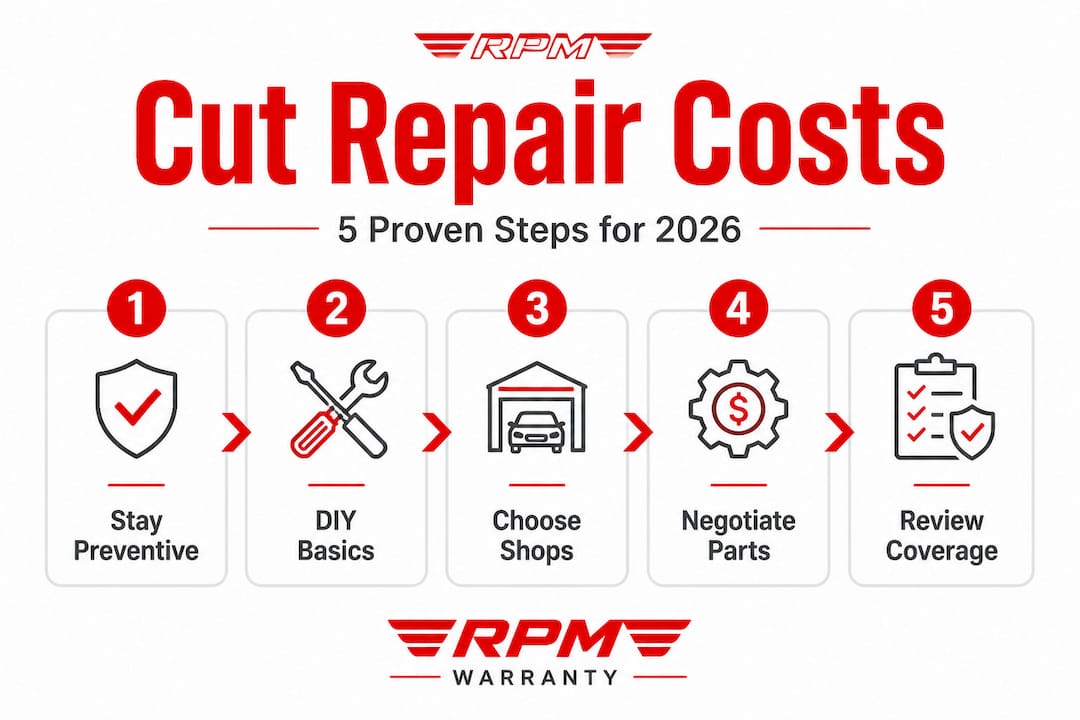
Here's what the recommended schedule looks like for most vehicles:
| Service | Interval | Average Cost | Cost if Neglected |
|---|---|---|---|
| Oil change | Every 5,000–7,500 miles | $50–$100 | Engine damage: $3,000+ |
| Tire rotation | Every 5,000–8,000 miles | $20–$50 | Premature wear: $600–$1,200 |
| Air filter check | Every 7,500 miles | $20–$40 | Reduced fuel economy |
| Brake inspection | Every 12,000–15,000 miles | $80–$150 | Rotor damage: $400–$800 |
Following these intervals as your automaker recommends protects you from the compounding failure effect, where one neglected part damages the components around it.
Here's what to check consistently, regardless of mileage:
- Engine oil: Low or dirty oil causes metal-on-metal friction and eventually seizes your engine.
- Brake fluid: Contaminated fluid reduces stopping power and corrodes brake lines.
- Coolant level: Running low causes overheating, which can warp the cylinder head.
- Tire pressure: Even a few pounds under can cause uneven wear, reducing tire life by thousands of miles.
- Battery terminals: Corrosion causes start failures, often blamed on dead batteries.
Statistic: Drivers who stay current on preventive maintenance spend, on average, far less annually than those who wait for breakdowns. One skipped oil change can cascade into a failed engine, turning a $75 service into a $4,000 repair.
Pro Tip: Set recurring calendar reminders on your phone for each maintenance interval. Tie them to specific mileage by checking your odometer at every fill-up. This takes about 10 seconds and removes the "I forgot" problem completely.
If you want a broader view of how to save on car repairs beyond basic maintenance, the habits below layer on top of these fundamentals. You can also use a vehicle protection checklist to make sure nothing falls through the cracks.
Master simple DIY maintenance and repairs
Once you're confident in basic maintenance, you can level up your savings by tackling simple repairs yourself. Labor typically accounts for 40% to 60% of any repair bill. Reducing your reliance on the shop for minor tasks adds up quickly, especially over the life of an older vehicle.
Checking fluid levels, replacing filters, bulbs, and wipers are all tasks most vehicle owners can complete safely with minimal tools and a quick video tutorial.
Here's a side-by-side look at DIY versus shop costs for common tasks:
| Task | Shop Cost | DIY Cost | Savings |
|---|---|---|---|
| Wiper blade replacement | $30–$60 | $12–$20 | Up to $40 |
| Engine air filter | $40–$80 | $15–$25 | Up to $55 |
| Cabin air filter | $50–$100 | $15–$30 | Up to $70 |
| Headlight bulb replacement | $50–$150 | $10–$30 | Up to $120 |
| Battery replacement | $150–$250 | $100–$150 | Up to $100 |
The tools you need for these tasks are minimal. A basic socket set, a screwdriver kit, and a flashlight cover most of the jobs listed above. For around $50 in tools, you can handle dozens of repairs over several years.
Here are the DIY tasks most owners can tackle safely:
- Replacing windshield wipers
- Swapping out engine and cabin air filters
- Changing interior and exterior bulbs (most models)
- Topping off fluids (coolant, windshield washer fluid, power steering fluid)
- Replacing your battery (with the right tools to avoid resetting the computer)
- Installing new wiper blades
- Checking and inflating tires
Pro Tip: Before you replace any part yourself, search your vehicle's year, make, and model on YouTube. Most repairs have step-by-step videos specific to your exact car. Watching the full video before touching anything is the difference between a 20-minute job and a three-hour headache.
Know your limits. Brake system work, suspension components, and anything involving the engine internals or electrical system should stay with a professional. The cost of doing those wrong far exceeds the labor savings. For additional car repair cost tips and a full protection checklist, you can reference those resources alongside this guide.
Shop smart: Get the best value from independent mechanics
Not all car repairs can or should be DIY, so it's vital to know how to save money when you do need professional help. Where you take your car matters as much as what's wrong with it.
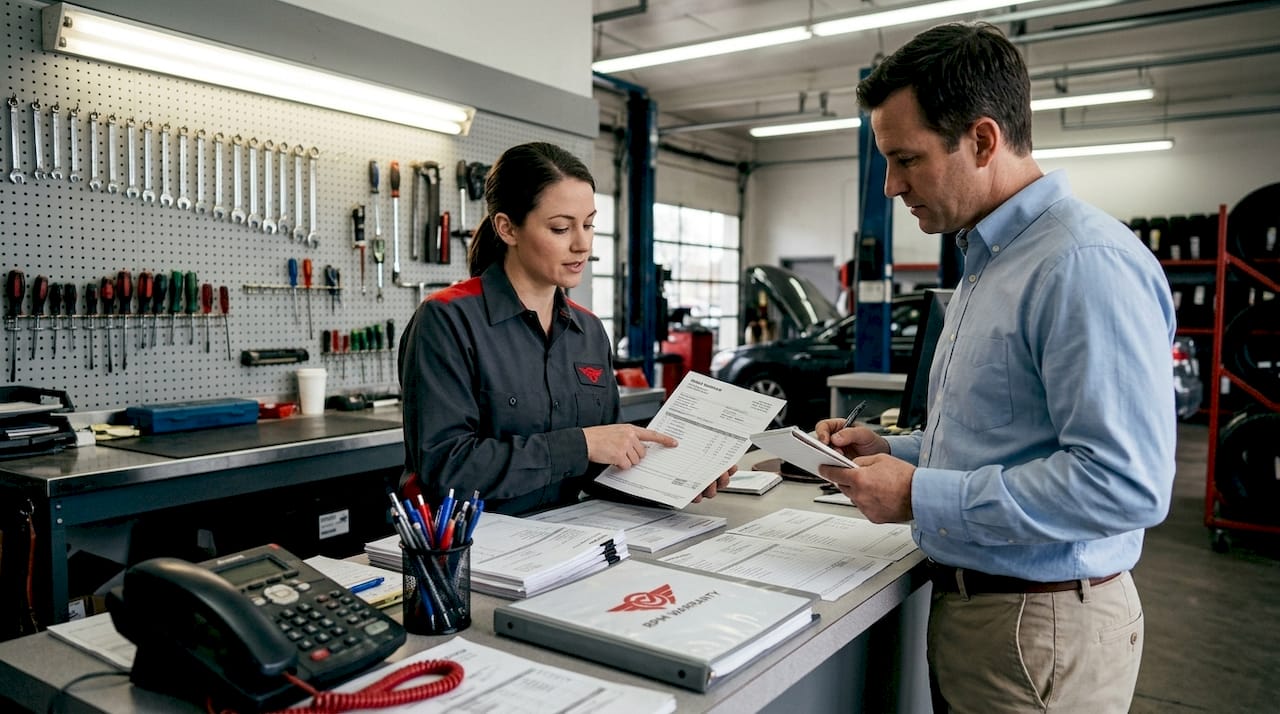
Dealerships are convenient, but they charge a premium. Labor rates at dealerships run $130 to $200 per hour in many markets. Independent mechanics typically charge $80 to $120 per hour for the same work. That gap adds up fast on multi-hour jobs.
Getting multiple quotes from independent mechanics rather than defaulting to the dealer consistently produces lower labor rates and gives you negotiating leverage. Consumer Reports ranks independent shops highest for value and customer satisfaction among all repair options.
What makes a mechanic worth trusting?
- ASE certification: The National Institute for Automotive Service Excellence certifies technicians who pass rigorous testing. Look for the blue ASE logo.
- AAA-approved shops: These locations are vetted for fair pricing, trained staff, and clean repair records. AAA members often receive additional discounts.
- Written estimates: Any trustworthy shop provides a written estimate before starting work. Never accept verbal-only quotes.
- Warranty on labor and parts: A solid shop stands behind its work with at least a 12-month, 12,000-mile labor guarantee.
"Build long-term relationships with independent mechanics. A shop that knows your vehicle's history will proactively flag issues before they become expensive, and regular customers often receive priority scheduling and informal discounts."
Negotiation is not rude. It's expected. Ask if the shop offers a discount for paying cash. Ask if the labor estimate can be reduced if you supply your own parts. Ask about current promotions. A lot of shops will work with you if you ask directly and respectfully.
Here are some proven car repair tips for getting the most out of every mechanic visit. Bring a written list of symptoms. Let the shop know you've already priced the job elsewhere. And never authorize additional work on the spot without a new written estimate.
Be smart about parts: Buy, source, and negotiate
Reducing repair costs isn't just about labor. The parts you use and how you source them can make a major difference in your final bill. Most shops mark up parts by 20% to 50% above their cost. Knowing your options lets you reduce that markup or bypass it entirely.
There are four main types of replacement parts:
- OEM (Original Equipment Manufacturer): Made by or for your car's manufacturer. Highest quality but most expensive. Best for safety-critical components like airbags and brakes.
- Aftermarket parts: Made by third-party manufacturers. Wide quality range. Brands like Bosch, Dorman, and Moog produce parts that match or exceed OEM quality at lower cost.
- Used or salvage parts: Pulled from wrecked vehicles at junkyards. Excellent for body panels, interior parts, and some mechanical components. Significant savings possible.
- Remanufactured parts: Used cores rebuilt to factory specifications. Common for alternators, starters, and brake calipers. Carries a warranty. Good middle-ground option.
Statistic: On a typical $1,000 repair, parts markup can account for $150 to $300 of the bill. Sourcing your own parts through sites like RockAuto or a local auto parts store can recover a significant portion of that cost.
Buying your own parts or negotiating prices is a legitimate strategy, and most shops will accept customer-supplied parts. The catch is that many shops won't warranty their labor if you bring your own parts. Always ask upfront before you purchase.
Pro Tip: Use your vehicle's VIN (vehicle identification number) when ordering parts online. This ensures you get the exact fit for your year, make, model, and trim level. One wrong part number wastes your time and delays the repair.
When negotiating parts costs directly with a shop, ask them to itemize parts on the estimate so you can compare prices yourself. Some shops will match what you find online if you show them the price. When you want to reduce car repair costs consistently, this parts strategy is one of the highest-leverage moves available.
Evaluate extended warranties and protection plans
The last piece of the car repair puzzle is handling the unpredictable—major repairs and breakdowns—which is where extended warranties and protection plans come in.
Not every vehicle needs an extended warranty, but for many used car owners, the math is compelling. Extended warranties for used cars cost $900 to $2,400 per year, but a single major repair—like a transmission replacement at $3,000 to $5,000—can wipe out years of premium payments in one visit.
Here's how to decide if a warranty makes sense for your situation:
| Scenario | Warranty Recommended? |
|---|---|
| Vehicle over 100,000 miles | Yes, strongly |
| Vehicle over 10 years old | Yes |
| Luxury or European brand | Yes, parts and labor are expensive |
| Reliable brand, under 80k miles | Maybe, evaluate your savings cushion |
| Strong emergency fund ($5,000+) | Optional, self-insuring is viable |
When evaluating plans, follow these steps:
- Compare third-party vs. dealer warranties. Dealer warranties are often marked up 2x to 3x over third-party coverage for the same protection.
- Read the exclusions list carefully. Look for what's not covered, not just what is. Pre-existing conditions and wear items are common exclusions.
- Verify the claims process. Good plans let you use any licensed repair facility nationwide and pay the shop directly.
- Check for maintenance requirements. Some warranties are voided if you can't document regular oil changes and service history.
- Look for roadside assistance inclusion. Towing coverage alone can offset a meaningful portion of the annual premium.
Resources like choosing a car warranty by year and must-have warranty features can guide your comparison. You can also review real coverage examples and a full auto warranty guide to see what plans actually cover in practice. If you're unsure whether you need coverage now, check the signs you need an extended warranty.
Our take: Prevention trumps repair—what most owners overlook
Here's something worth saying directly: most vehicle owners spend more money trying to recover from neglect than they ever would have spent on prevention. The math is embarrassingly lopsided.
We see it play out constantly. Someone ignores a check engine light for three months to avoid a diagnostic fee. Then ignoring that light causes a 40% drop in fuel economy and triggers a cascading failure. An O2 sensor issue turns into a destroyed catalytic converter, which runs $1,511 on average to replace. That's a $75 diagnostic fee turned into a $1,500 repair.
The deeper problem is psychological. Most people treat their car like a checking account instead of an investment. They think skipping maintenance saves money right now. It doesn't. It just delays and multiplies the expense.
A prevention-first mindset changes how you interact with your vehicle. You stop ignoring the small warning signs. You use a vehicle protection checklist to stay organized. You build a relationship with a mechanic before you need an emergency repair. And you think about warranty coverage before the breakdown, not after.
One more thing worth noting: warranties protect you from the unpredictable, but they don't replace maintenance. Most extended warranty contracts include clauses that void coverage if you can't demonstrate a proper service history. A protection plan paired with consistent maintenance is the combination that actually works. Either one alone leaves gaps.
Get the coverage and support you need for lower car repair bills
You've now got the full picture on cutting repair costs from every angle. But even the best prevention habits can't stop every breakdown. That's where having the right protection plan in place changes everything.
At RPM Warranty, our vehicle protection plans are built to cover what you can't predict: engine failures, transmission problems, electrical faults, and more. We offer Elite, Advanced, and Essential plan tiers so you can match coverage to your vehicle's needs and your budget. Whether you drive a high-mileage domestic truck or a Volkswagen extended warranty candidate, we have options designed around real-world repair costs. Take two minutes to get a free quote and see exactly what protection looks like for your year, make, and model.
Frequently asked questions
How much can I really save by following a maintenance schedule?
Sticking with the recommended schedule can prevent thousands in major repair costs over a vehicle's lifetime, with proactive owners averaging around $1,452 annually compared to far higher costs for reactive repairs.
Are extended car warranties worth it for used vehicles?
For high-mileage or older cars, warranties often pay for themselves after just one major repair, but always read the contract carefully to identify exclusions, caps, and dealer markups.
What repairs or maintenance can I do myself to save money?
Basic DIY tasks like fluid checks and replacing filters, bulbs, and wiper blades are safe for most owners and can cut your annual shop visits significantly.
How do I pick a trustworthy mechanic without overpaying?
Look for ASE-certified independent shops with AAA approval, always request written estimates, and get at least two quotes before agreeing to any repair over $200.
Is it risky to buy my own car parts for repairs?
Buying aftermarket or refurbished parts is cost-effective and safe when you verify the fit using your VIN, but always confirm with your shop whether they'll warranty the labor when you supply your own parts.