

TL;DR:
- Auto repair coverage pays for mechanical and electrical repairs after factory warranties expire.
- It offers budget predictability, peace of mind, roadside assistance, and resale value benefits.
- Coverage is most valuable for high-mileage, luxury, or technology-rich vehicles, especially with limited savings.
Your car runs fine until it doesn't. One day you're commuting normally, and the next you're staring at a repair estimate that could wipe out your savings. Engine failures, transmission breakdowns, and electronic system failures can easily cost thousands of dollars, and they almost always happen after the factory warranty expires. Auto repair coverage, commonly called an extended warranty or vehicle service contract, is designed to absorb that financial shock. This article walks you through exactly how this coverage works, its real advantages, how it stacks up against saving on your own, and how to avoid the pitfalls that catch too many car owners off guard.
Table of Contents
- What is auto repair coverage and how does it work?
- Core advantages of auto repair coverage
- Comparing coverage to self-insurance and other strategies
- Who benefits most: Situations where auto repair coverage shines
- Avoiding headaches: Navigating exclusions and claim denials
- The real story: When auto repair coverage delivers—and when it doesn't
- Ready to protect your vehicle? Explore trusted auto repair coverage options
- Frequently asked questions
Key Takeaways
| Point | Details |
|---|---|
| Protection against major expenses | Auto repair coverage can save you thousands if major breakdowns occur after your factory warranty expires. |
| Peace of mind and convenience | Fixed payments and additional perks mean less stress when facing costly repairs. |
| Best for high-risk vehicles | Older, high-mileage, or technologically advanced cars see the most value from extended coverage. |
| Read the fine print | Understanding exclusions and choosing reputable providers helps avoid claim denials. |
What is auto repair coverage and how does it work?
Auto repair coverage is a contract that pays for certain mechanical and electrical repairs on your vehicle after the manufacturer's original warranty has expired. Think of it as a continuation of protection, picking up where your factory coverage leaves off, usually after 3 years or 36,000 miles, depending on your vehicle's make.
When a covered part fails, you take your car to an authorized repair shop, pay your deductible, and the contract pays the remaining bill directly to the shop. There's no scrambling for cash or maxing out credit cards. You just handle your share and drive away.
What's typically covered?
Most plans protect high-cost components that are most likely to fail as a car ages:
- Engine components (pistons, bearings, seals)
- Transmission and drivetrain parts
- Electrical systems and onboard computers
- Cooling and fuel systems
- Air conditioning components
- Steering and suspension systems
Major components like engines and transmissions can cost $3,000 to $7,000 or more to repair, making coverage especially valuable for complex failures. Before signing any contract, spend time reading service contract details carefully so you understand exactly what you're getting.
Contracts are typically paid monthly or as a single upfront payment. Monthly plans make budgeting easier. Upfront payment sometimes earns a discount.
Coverage vs. car insurance: what's the difference?
Auto repair coverage is not car insurance. Insurance covers accidents, theft, and liability. Coverage handles mechanical and electrical breakdowns. These are two completely different products, and you likely need both.
| Coverage type | What it handles | Required by law? |
|---|---|---|
| Car insurance | Accidents, theft, liability | Yes |
| Auto repair coverage | Mechanical/electrical failures | No |
Common exclusions include routine maintenance (oil changes, brake pads, tires), cosmetic damage, and pre-existing conditions. The FTC guide on auto warranties is a solid starting point to understand your rights and what to watch for.
With the basics introduced, let's look at the major advantages that make auto repair coverage appealing.
Core advantages of auto repair coverage
The financial case for auto repair coverage is compelling when you look at real numbers. VSC buyers saved an average $2,300 net after claims over three years, with 62% using their coverage at least once and an average claim payout of $4,127. That's not pocket change.
The biggest benefits you get:
- Budget predictability. Instead of a random $4,000 surprise, you pay a fixed monthly amount. Stress drops significantly when you know your worst-case scenario.
- Peace of mind. Knowing you're protected lets you focus on driving, not worrying about what could break next.
- Roadside assistance. Many plans bundle towing, lockout service, and fuel delivery at no extra cost.
- Rental car and trip interruption. If your car is in the shop, you're not stranded without transportation or stuck paying for a hotel out of pocket.
- Resale value boost. A transferable warranty is a genuine selling point when you list your vehicle. Buyers pay more knowing they're protected too.
The pros of extended coverage consistently include peace of mind, predictable budgeting, potential savings, added perks, and a resale advantage. These aren't marketing claims. They're practical outcomes that real owners experience.
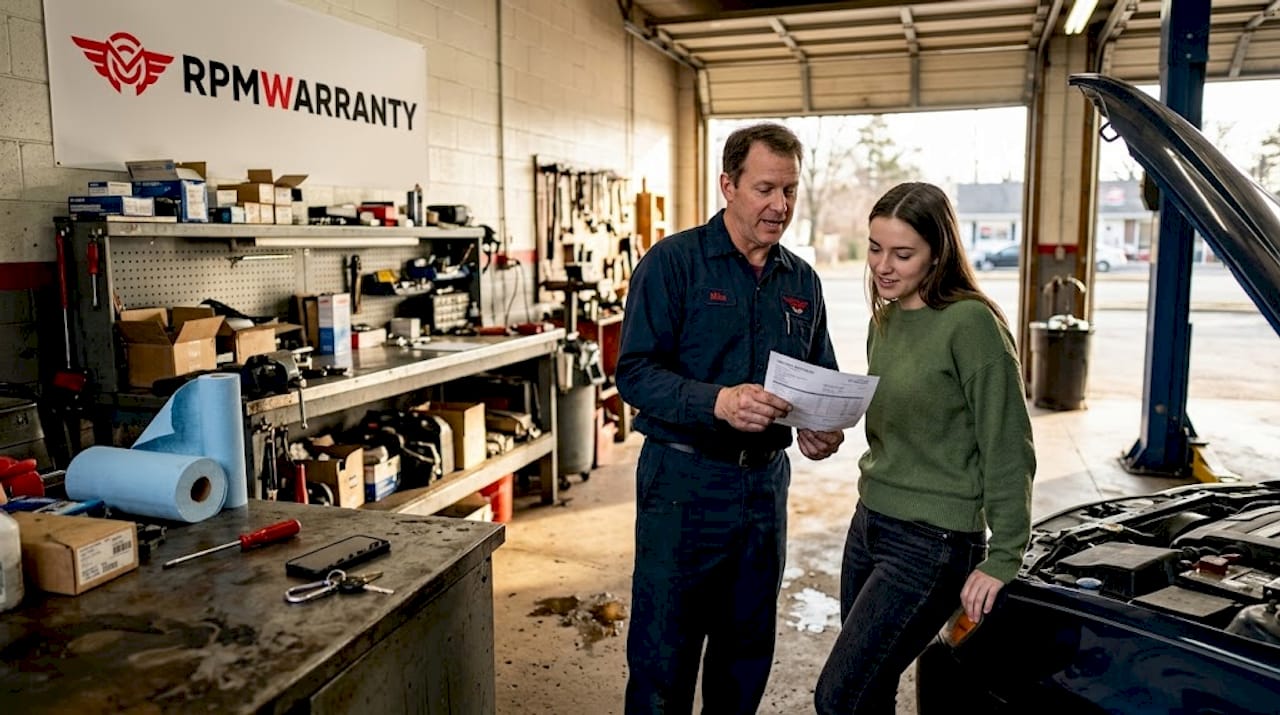
Pro Tip: When comparing plans, don't just look at the monthly price. List out every bundled perk (roadside, rental, trip interruption) and assign a dollar value to each. A plan that seems $20 more per month might actually save you $600 a year in services you'd pay for separately.
For a deeper look at how these benefits play out in real ownership, check out the warranty service contract benefits breakdown.
Understanding the benefits in general, it's important to see how these advantages compare to other approaches for covering repair costs.
Comparing coverage to self-insurance and other strategies
Self-insuring means setting aside money every month into a dedicated repair fund instead of paying for a coverage plan. It works best when your car is reliable, relatively new, and you have the discipline to build a cushion before something breaks.
Here's the honest comparison:
| Strategy | Best for | Main risk |
|---|---|---|
| Auto repair coverage | Older, high-mileage, or less reliable cars | Paying premiums for few claims |
| Self-insuring | Reliable cars with emergency savings | Major repair before fund grows |
The tricky part is timing. Owners who self-insure with a strong emergency fund can handle average yearly repair costs around $652 without issue. But that average hides the outliers. One transmission failure and you're suddenly $5,000 in the hole.
Here's a smart approach to decide which strategy fits your situation:
- Check your vehicle's reliability rating. Lower-rated brands make coverage more valuable.
- Assess your emergency fund. Less than $3,000 saved? Coverage is likely the safer bet.
- Consider how long you'll keep the car. Choosing warranty by year helps match coverage to the highest-risk period.
- Review deductible options. Understanding warranty deductibles helps you balance out-of-pocket costs.
- Look at your specific vehicle's repair history and cost trends.
"Owners who pay more in premiums than they recoup in claims are not necessarily making a bad decision. They're buying certainty. The value isn't always in the math."
That said, you need to go in with eyes open. Consumer Reports data points to a 22.4% claim denial rate across the industry, and some owners do pay more in premiums than they ever receive in repairs. Exclusions and fine print are where contracts quietly shift the terms in the provider's favor. You can also tailor your auto warranty to avoid paying for components you don't need.
Now that you see the comparison, let's highlight who benefits most from auto repair coverage in real-world scenarios.
Who benefits most: Situations where auto repair coverage shines
Not every car owner needs coverage equally. Some situations make it a clear winner.
You benefit most if:
- Your car has passed 80,000 to 100,000 miles. Failure rates climb sharply past this point, especially for seals, sensors, and cooling components.
- You drive a luxury or European brand. Premium vehicles cost significantly more to repair, with parts and labor often doubling what you'd pay for a domestic sedan.
- Your vehicle is packed with technology. Advanced driver assistance systems (ADAS), cameras, and radar sensors are expensive to diagnose and replace. Sensor repairs alone can run $500 to $2,000 per component.
- You plan to keep the car past the factory warranty. The longer you hold it, the more you're exposed to high-cost repairs.
- You have limited savings. Coverage acts as a financial safety net when a large unexpected bill could cause real hardship.
Electric vehicles deserve special mention. Battery packs, power electronics, and advanced charging systems are expensive to repair. Exploring EV warranty coverage is especially smart if you own an electric or hybrid vehicle. For Tesla owners specifically, the Tesla extended warranty options are worth exploring in detail given how specialized Tesla repairs can be.
Pro Tip: Always verify that a potential provider has experience with your vehicle's make before committing. Specialty vehicles, EVs, and luxury imports need providers who understand their specific repair ecosystems. A generic contract may exclude the exact components most likely to fail.
For broader context on long-term cost of car ownership, understanding repair trends by vehicle type helps you make a much smarter coverage decision.
Understanding the best scenarios shows the practical value, but you need to be aware of fine print and how to avoid denial headaches.
Avoiding headaches: Navigating exclusions and claim denials
The most frustrating experience in auto repair coverage isn't paying premiums. It's filing a claim and getting denied. With a 22.4% industry denial rate, knowing how to protect yourself matters.
Common exclusions to watch for:
- Routine maintenance (oil, filters, belts, brakes)
- Normal wear and tear (tires, wiper blades, clutch friction material)
- Pre-existing conditions at time of purchase
- Damage caused by neglect or lack of maintenance
- Cosmetic repairs (paint, upholstery, trim)
Here's how to review a contract before you sign:
- Read the exclusions section first, not last. That's where coverage quietly disappears.
- Ask what specific parts are listed as covered, not just the broad categories.
- Check labor rate caps. Some contracts cap reimbursement at rates below what local shops charge.
- Look for depreciation clauses that reduce payouts on older parts.
- Get every verbal promise in writing before you commit.
"A contract is only as good as what's written in it. If a provider won't clarify terms in writing, walk away."
Red flags to avoid include vague language like "covered at our discretion" and contracts from third parties with no physical address or customer service track record. Solid exclusionary car warranty insights can help you spot these problems before they cost you.
With fine print and real value clear, here's the perspective on what most articles miss about the true advantages and limitations of auto repair coverage.
The real story: When auto repair coverage delivers—and when it doesn't
Most coverage articles fall into one of two camps. They either oversell it as a must-have for every driver, or dismiss it entirely as a money-losing gimmick. Neither take is accurate.
The truth is more nuanced. Coverage is a safety net, not a guaranteed profit center. For owners with reliable cars, healthy emergency funds, and strong mechanical knowledge, self-insuring often makes more financial sense. For owners with older vehicles, high-mileage cars, or limited savings, a quality contract from a reputable provider can prevent financial disaster.
The real competitive advantage isn't in the plan itself. It's in who backs the plan. Reputable providers process claims fairly, communicate clearly, and don't rely on technicalities to deny legitimate repairs. That's what separates a good contract from a frustrating one.
For owners who've just lost their warranty after factory coverage ends, the window for action is short. Acting early often means better rates and fewer pre-existing condition exclusions.
Ready to protect your vehicle? Explore trusted auto repair coverage options
If this article has helped you see auto repair coverage more clearly, the next step is simple. You deserve protection that actually pays when something breaks, not a contract full of hidden exits for the provider.
At RPM Warranty, we've built our plans around transparency, fair claims, and real financial protection for the repairs that matter most. Whether you're covering a high-mileage sedan, a luxury vehicle, or an EV, there's a plan designed for your situation. Explore protection plans to compare coverage tiers and find the right fit. Ready to see your price? Get a free quote in minutes with no obligation required.
Frequently asked questions
What types of repairs does auto repair coverage usually include?
Most plans cover major mechanical failures like engines, transmissions, and electronics but exclude routine maintenance and wear items like oil changes, brakes, and tires.
How much can I actually save with auto repair coverage?
Average net savings reach $2,300 over three years for contract holders, though actual savings depend on how often you use coverage and the specific plan you choose.
Is it better to save for repairs instead of buying coverage?
Self-insuring with a savings fund works well for owners of reliable vehicles with strong emergency savings, but coverage is the smarter choice for high-mileage or less reliable cars.
How can I avoid denied claims with auto repair coverage?
Choose reputable providers and review exclusions carefully, and always get any verbal clarifications confirmed in writing before you sign the contract.