

TL;DR:
- Custom auto warranties can help manage rising repair costs and fill coverage gaps.
- Assess vehicle age, usage, and repair history to determine the most suitable warranty type.
- Thoroughly review, customize, and document your coverage to ensure it pays when needed.
Your transmission fails on a Tuesday morning, and the repair estimate lands at $4,200. Your manufacturer warranty expired six months ago, and the generic extended plan you bought covers almost nothing on the list. That frustration is real, and it happens to vehicle owners every day. Repair costs rising 10-20% annually make this problem worse each year, especially for drivers keeping vehicles past 12 years. The good news is that a customized auto warranty can close those gaps before they drain your savings. This guide walks you through assessing your needs, comparing coverage types, designing a tailored plan, and verifying it holds up when you need it most.
Table of Contents
- Assess your coverage needs
- Compare warranty types and options
- Design a custom warranty plan
- Check, verify, and maintain your coverage
- Why smart customization makes all the difference
- Discover trusted, tailored warranty solutions
- Frequently asked questions
Key Takeaways
| Point | Details |
|---|---|
| Prioritize your needs | Evaluate your vehicle’s age, usage, and repair risk before customizing warranty coverage. |
| Compare coverage plans | Review feature tables to select a warranty type that fits your risk profile and budget. |
| Customize for value | Fine-tune your plan with add-ons that address your unique risks, avoiding generic gaps. |
| Verify documentation | Double-check all coverage paperwork and keep records to protect against denied claims. |
| Stay proactive | Regularly review, renew, and maintain your warranty to maximize protection and peace of mind. |
Assess your coverage needs
Before you compare plans or sign anything, you need an honest picture of your situation. A warranty that works perfectly for your neighbor's two-year-old sedan may leave your eight-year-old SUV completely exposed. Understanding your personal risk profile is the foundation of smart coverage.
Start by looking at how you actually use your vehicle. High-mileage commuters face different failure risks than weekend drivers. Vehicles used for towing or hauling put extra stress on engines, transmissions, and cooling systems. Age matters too. The older the vehicle, the more likely you are to face electrical gremlins, sensor failures, and worn mechanical components that generic plans quietly exclude.
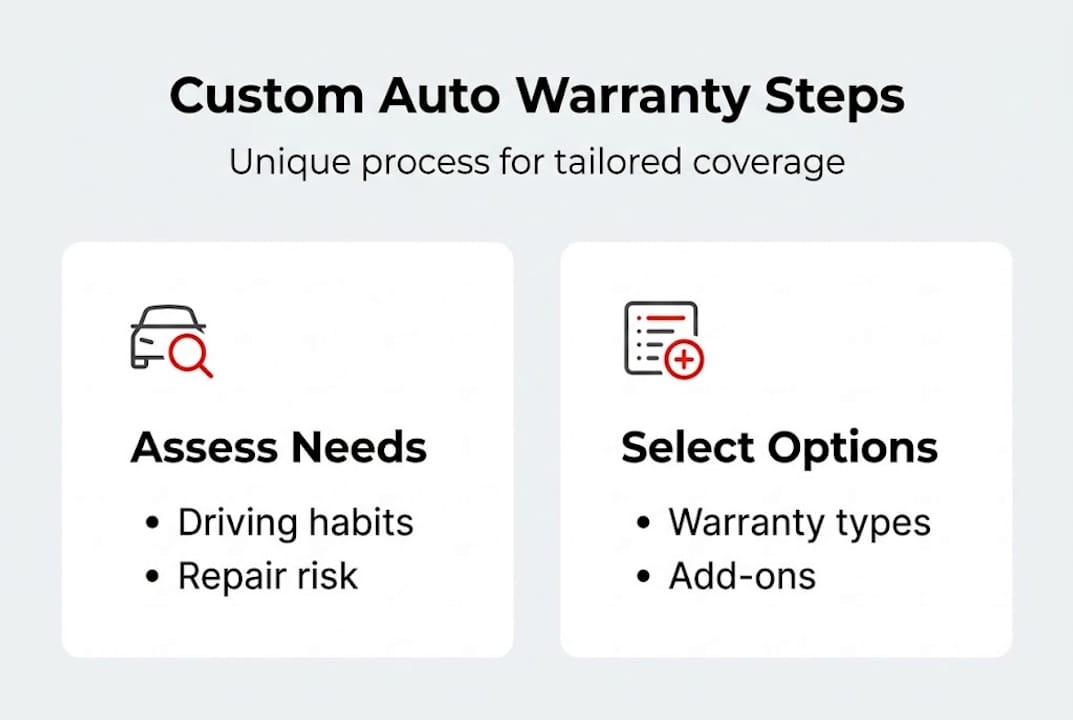
When choosing car warranty by year, the vehicle's age directly shapes which systems are most likely to fail and which coverage tiers make financial sense. Pairing that knowledge with your repair history gives you a clear target.
Key factors that shape your extended warranty needs:
- Vehicle age and mileage: Older, high-mileage vehicles carry more mechanical risk and benefit most from broader coverage.
- Driving habits: Frequent highway driving, towing, or extreme weather use accelerates wear on specific components.
- Repair history: Past failures often predict future ones. A vehicle that has had two transmission services is a candidate for powertrain coverage.
- Budget sensitivity: If an unexpected $3,000 repair would create real financial stress, a warranty is a risk management tool worth the cost.
- Manufacturer reliability ratings: Some makes and models carry well-documented weak points that targeted coverage can address directly.
Pro Tip: Pull your last three years of repair invoices and add up the total. If that number exceeds what a solid extended warranty costs, you already have your answer.
Experts recommend extended warranties for risk-averse owners and vehicles with a history of costly repairs. If you can comfortably self-insure against a $5,000 repair, you may not need one. Most people cannot.
Warning: Many extended warranties quietly exclude "wear-and-tear" items and failed electronics. Read every exclusion clause before you assume something is covered. A plan that looks broad on the surface can shrink dramatically in the fine print.
Reviewing must-have warranty features before you shop helps you build a checklist so nothing important slips through. Getting familiar with auto warranty basics also prevents you from being caught off guard by industry terminology during the selection process.
Compare warranty types and options
Once you know what you need, the next step is understanding what the market actually offers. Not all extended warranties are built the same, and the differences between coverage types are significant.
| Warranty type | What it covers | Best for | Watch out for |
|---|---|---|---|
| Powertrain | Engine, transmission, drivetrain | Older vehicles, budget plans | Leaves most systems uncovered |
| Exclusionary | Everything except listed exclusions | Newer vehicles, broad needs | Higher cost, read exclusions carefully |
| Component/stated | Only the parts listed in the contract | Specific repair risk targeting | Gaps if your failure isn't on the list |
| Wrap-around | Supplements remaining factory warranty | Near-new vehicles | Redundant if factory coverage is strong |
Exclusionary warranty coverage is generally the most protective option because it flips the coverage model. Instead of listing what is covered, it lists the few things that are not. That structure works in your favor.

Inflation and parts shortages in 2026 have changed the math on warranty value. Extended warranty research confirms that rising parts costs make broader coverage more valuable over time, particularly for vehicles with complex electronics or imported components.
Questions to ask before you commit to any plan:
- What is the deductible per visit, and is it per repair or per claim?
- How does the claims process work? Do you pay the shop and get reimbursed, or does the provider pay directly?
- Which repair facilities are authorized? Can you use your trusted local mechanic?
- Are there mileage or age caps that could disqualify your vehicle mid-contract?
- What happens if the warranty company goes out of business?
For older or high-mileage vehicles, powertrain-only plans often feel like a safety net with large holes. A third-party warranty from a reputable provider frequently offers better flexibility and pricing than dealer-sold options, with fewer restrictions on where you can get repairs done.
Exclusions and denials are common across the industry. Never assume a system is covered because it is not mentioned in the brochure. Always ask for the full contract and read every exclusion before signing.
Design a custom warranty plan
With a clear picture of coverage options, you are ready to build a plan that actually fits your vehicle and your life. Customization is not just about picking a tier. It is about shaping the details so coverage works in your favor.
Step-by-step process for customizing your auto warranty:
- Select your base coverage level. Choose between powertrain, component, or exclusionary as your foundation based on vehicle age and risk profile.
- Identify add-on coverage needs. Determine which systems your base plan leaves exposed, such as electrical, air conditioning, or advanced driver assistance technology.
- Review every exclusion clause. Mark anything vague or unclear and request written clarification before signing.
- Negotiate deductibles and limits. A lower per-visit deductible often saves money on frequent, smaller repairs. Ask if deductibles are adjustable.
- Add service perks that match your lifestyle. Roadside assistance, rental car reimbursement, and trip interruption coverage add real value for daily drivers.
- Get every customized feature confirmed in writing. Verbal promises mean nothing at the claims desk.
| Add-on feature | Best for | Typical value |
|---|---|---|
| Roadside assistance | All drivers | Towing, battery, lockout help |
| Rental car reimbursement | Daily commuters | Covers transport during repairs |
| Trip interruption coverage | Frequent travelers | Hotel and meals if stranded |
| Tech and electronics upgrade | Modern vehicles | Covers sensors, infotainment, ADAS |
| Tire and wheel protection | Urban drivers | Road hazard damage coverage |
Targeted, customized coverage delivers more value as repair costs climb, especially for owners planning to keep their vehicles long-term. Reviewing critical warranty features helps you prioritize which add-ons are worth the extra cost and which are filler.
Pro Tip: Ask the provider to send you a sample contract before you pay anything. If they hesitate or refuse, that tells you everything you need to know.
Vague contract language is one of the most common ways claims get denied. Phrases like "subject to approval" or "at our discretion" are red flags. If you cannot get clear language in the contract, walk away. Understanding auto warranty basics gives you the vocabulary to push back effectively.
Check, verify, and maintain your coverage
Signing a customized warranty plan is not the finish line. What you do after the contract is signed determines whether coverage actually pays off when something breaks.
Steps to verify and maintain your warranty coverage:
- Read the full contract once more after signing. Confirm every customized feature appears in writing exactly as discussed.
- Create a maintenance schedule and stick to it. Most warranties require documented, regular maintenance to keep coverage valid.
- Keep every receipt and service record. Oil changes, tire rotations, and inspections all count as evidence of proper care.
- Know your claims process before you need it. Save the claims phone number and understand whether you need pre-authorization before repairs begin.
- Set a calendar reminder to review your coverage annually. Your needs change as the vehicle ages, and renewal time is the moment to strengthen or adjust your plan.
"Always document maintenance and repairs. Lack of records is a top cause of denied claims."
Scams and denied claims are prevalent in the extended warranty industry. Verifying every detail and maintaining thorough documentation is your strongest defense against a bad outcome.
If a dispute arises, start by requesting a written explanation of the denial. Compare it against your contract language. Many denials are overturned when owners push back with documentation. If the provider is unresponsive, your state's insurance commissioner or consumer protection office is a useful escalation path.
Warranty renewal tips become especially relevant as your vehicle crosses the 100,000-mile mark. Renewal is also a good time to upgrade coverage tiers or add protections you skipped the first time around.
Why smart customization makes all the difference
Here is the uncomfortable truth most warranty guides skip: buying a plan is easy. Getting it to actually pay out is the hard part. Off-the-shelf plans are designed for the average vehicle and the average driver. If your situation is anything but average, a generic plan will disappoint you at the worst possible moment.
What most guides miss is that customization should go beyond just selecting components. It should factor in your service convenience, your local repair network, and your vehicle's specific inflation exposure. A luxury vehicle with expensive imported parts needs different protection than a domestic sedan.
The contrarian reality is that spending an extra two hours upfront reviewing contract language, negotiating terms, and confirming add-ons in writing will save you far more than that time is worth. Most people skip this step and pay for it later. Reviewing peace of mind features with a critical eye before you finalize anything is what separates owners who feel protected from those who feel burned.
Do not just accept what the dealer or first provider offers. Challenge vague terms. Ask for alternatives. The right plan exists. You just have to be willing to find it.
Discover trusted, tailored warranty solutions
You now have a clear framework for building coverage that actually fits your vehicle and your budget. The next step is finding a provider that makes customization straightforward rather than frustrating.
At RPM Warranty, we built our process around exactly this kind of tailored approach. You can explore protection plans across our Elite, Advanced, and Essential tiers to find the right foundation, then customize from there. If you drive a Volkswagen, our Volkswagen extended warranty options are built around that model's specific needs. Start with a free warranty quote and see exactly what coverage looks like for your year, make, and model.
Frequently asked questions
How do I know which warranty features to customize for my vehicle?
Check your vehicle's age, repair history, and known failure points to target the features that matter most. Experts recommend extended warranties specifically for risk-averse owners and vehicles with a history of high repair costs.
Are customized warranties worth the cost with rising repair prices in 2026?
Yes, tailored coverage delivers more value as repair bills grow. Repair costs rising 10-20% annually mean a well-matched plan can save you significantly more than it costs over a multi-year term.
What's the difference between exclusionary and component warranties?
Exclusionary warranties cover everything except a listed set of exceptions, giving you broader protection. Component warranties cover only the specific parts named in the contract, which can leave gaps if an unlisted part fails. Exclusions and denials are common, so knowing which model you hold matters.
How can I avoid scams or denied claims when customizing my warranty?
Review the full contract before signing, keep all maintenance records, and get every feature confirmed in writing. Scams are prevalent in this industry, so documentation and due diligence are your best protection against a denied claim.