
TL;DR:
- Average vehicle repair costs nationwide are around $838 per visit, with high-severity repairs costing thousands.
- Honda Accords typically cost about $400 annually to maintain and are highly reliable, while Ford F-150 repairs can exceed $2,000 for common high-cost issues.
- Understanding specific repair risks and costs for your vehicle helps determine if extended warranty coverage is financially sensible.
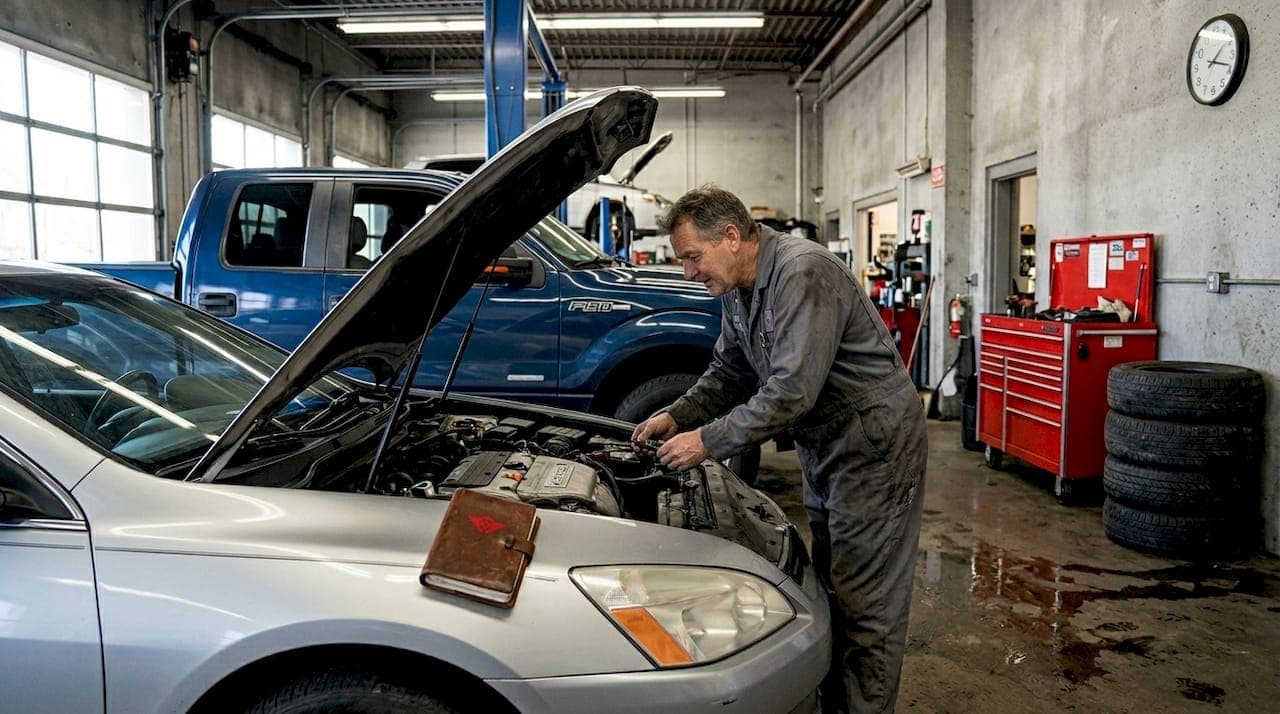
Nobody budgets for a $1,500 transmission issue or a $1,900 engine gasket repair. Yet for millions of vehicle owners, surprise repair bills are a real and recurring part of car ownership. The national average repair visit costs $838, and when you own a specific model like a Honda Accord or Ford F-150, your actual exposure can look very different from that number. Knowing what repairs typically cost for your exact vehicle is one of the smartest steps you can take before deciding whether extended warranty coverage makes financial sense. This article breaks down the real numbers, model by model.
Table of Contents
- Understanding average car repair costs
- Breakdown of common car repairs and costs
- Honda Accord: Reliability and typical repair costs
- Ford F-150: Costs, high-severity repairs, and ownership factors
- Comparing repair costs: Honda Accord vs Ford F-150 vs national averages
- Our perspective: What really matters in repair cost planning
- Protect yourself from repair surprises
- Frequently asked questions
Key Takeaways
| Point | Details |
|---|---|
| Repair costs vary widely | National averages help set expectations but your car type and age make a big difference. |
| Sedans vs trucks | Honda Accord repairs are much lower than trucks like the Ford F-150, which face higher severity bills. |
| Know major repair costs | Common repairs like brakes or transmissions can cost hundreds to thousands out-of-pocket. |
| Warranty coverage strategy | Compare your annual risk and model to see if extended coverage will actually save you money. |
Understanding average car repair costs
With the unpredictability of repairs top of mind, let's break down what you can expect across the country with data you can actually use.
The national picture is sobering but useful. The average repair visit runs $838, and for a five-year-old car, total annual repair and maintenance costs hit $1,519 when you factor in tires and routine service. That's real money. And it's trending upward, largely because modern vehicle complexity now means even simple-seeming problems require expensive diagnostics and specialized labor.
Here's a quick snapshot of what average annual ownership costs look like by vehicle type:
| Vehicle type | Avg. annual repair cost | Notes |
|---|---|---|
| Economy sedan | $400–$600 | Fewer complex systems |
| Midsize sedan | $500–$800 | Varies by brand |
| Half-ton pickup | $700–$1,100 | Higher labor and parts cost |
| Luxury vehicle | $900–$1,500+ | Specialized parts, steep labor |
What's included in these averages:
- Unscheduled repairs (unexpected breakdowns)
- Scheduled maintenance visits
- Parts and labor combined
- Tire replacement (in annual totals)
What's not included:
- Accident or collision damage
- Wear items under some warranties (brake pads, wiper blades)
- Dealer markups above standard labor rates
The main drivers pushing repair costs higher are electronic systems, advanced safety features, and a national shortage of skilled technicians. A repair that used to take one hour now often requires two because of software resets and calibration steps. If you're trying to plan ahead, understanding warranty by year can help you match protection to your vehicle's actual risk window.
Pro Tip: Use the national average of $838 per visit as your floor, not your ceiling. Most owners face at least one major repair in any given year once a vehicle passes 60,000 miles.
Breakdown of common car repairs and costs
Now that you have the big-picture averages, what do the most common repairs actually cost and which repairs are the budget killers?
Here's a comparison of the repairs most vehicle owners encounter, along with what you can expect to pay:
| Repair | Average cost range | Severity |
|---|---|---|
| Oil change | $50–$120 | Routine |
| Brake pads and rotors | $549–$629 | Moderate |
| Alternator replacement | $754–$850 | High |
| Starter replacement | $744–$837 | High |
| Fuel pump replacement | $600–$900 | High |
| Wheel alignment | $100–$175 | Moderate |
| Spark plugs | $150–$350 | Low/Moderate |
| Transmission replacement | $1,500–$7,100 | Critical |
The brake to transmission range above shows just how wide repair exposure can be. Brake jobs sting but are manageable. A transmission failure can cost more than a year's worth of car payments.
A transmission replacement sits at the financial tipping point for most car owners. At $1,500 on the low end and $7,100 at the high end, this single repair can make or break a vehicle's ownership math. For many owners, this one event alone justifies the cost of extended coverage.
How to check if your extended warranty actually covers these repairs:
- Pull out your service contract and look for the listed covered components.
- Check whether the transmission is listed explicitly or grouped under a drivetrain clause.
- Confirm your auto warranty deductibles and whether they apply per visit or per repair.
- Look at exclusion language, especially for 'wear items' and 'pre-existing conditions.'
- If unclear, use resources for reading service contracts to decode the fine print.
Modern diagnostics add a hidden layer of cost. Even before a technician touches a single part, a shop may charge $150–$200 just to identify the problem. That diagnostic fee is separate from the repair itself, and not every warranty plan covers it. Always check your warranty coverage details for this line item specifically.
Pro Tip: When getting a repair estimate, ask the shop to separate the diagnostic fee from the repair labor cost. This helps you compare estimates accurately and know what your warranty will actually reimburse.
Honda Accord: Reliability and typical repair costs
Let's zoom in on one of America's most popular and reliable cars, the Honda Accord.
The Accord has a well-earned reputation for keeping owners out of the shop. Annual repair costs average just $400, and the Accord ranks first out of 24 midsize cars for reliability according to RepairPal. That's not marketing language. It reflects real repair order data across thousands of vehicles.
Most common repair items for Honda Accord owners:
- Oxygen sensor replacement: $200–$300
- Brake pad and rotor service: $250–$400 per axle
- Timing belt or chain service: $400–$900 (model year dependent)
- AC compressor: $700–$900
- Power window regulator: $200–$350
- Catalytic converter: $1,000–$1,500 (less common but high cost when needed)
What keeps the Accord's costs low is a combination of factors. Honda engineers these cars with proven, well-understood powertrains. Parts are widely available, which drives down both cost and repair time. Labor hours are relatively low because mechanics are deeply familiar with the platform. The result is that Accord owners rarely face catastrophic repair scenarios.
Compared to the national average of $838 per repair visit, the Accord's $400 annual spend is genuinely impressive. Most Accord owners report infrequent and low-severity issues, meaning the car rarely surprises you with an emergency shop visit.
That said, no vehicle is immune to aging. Accords that hit 150,000 miles or more may face transmission issues, particularly in earlier V6 models. High-mileage Accord owners should still evaluate their risk exposure, especially if the manufacturer warranty has long expired. Exploring Honda Accord warranty options can give you cost-effective protection tailored to the model's known risk areas. For owners who want to compare across providers, looking at extended Honda warranty options is a logical next step once the vehicle clears 80,000 miles.
Ford F-150: Costs, high-severity repairs, and ownership factors
While Accords make it easier to sleep at night, trucks like the F-150 present a very different ownership math.
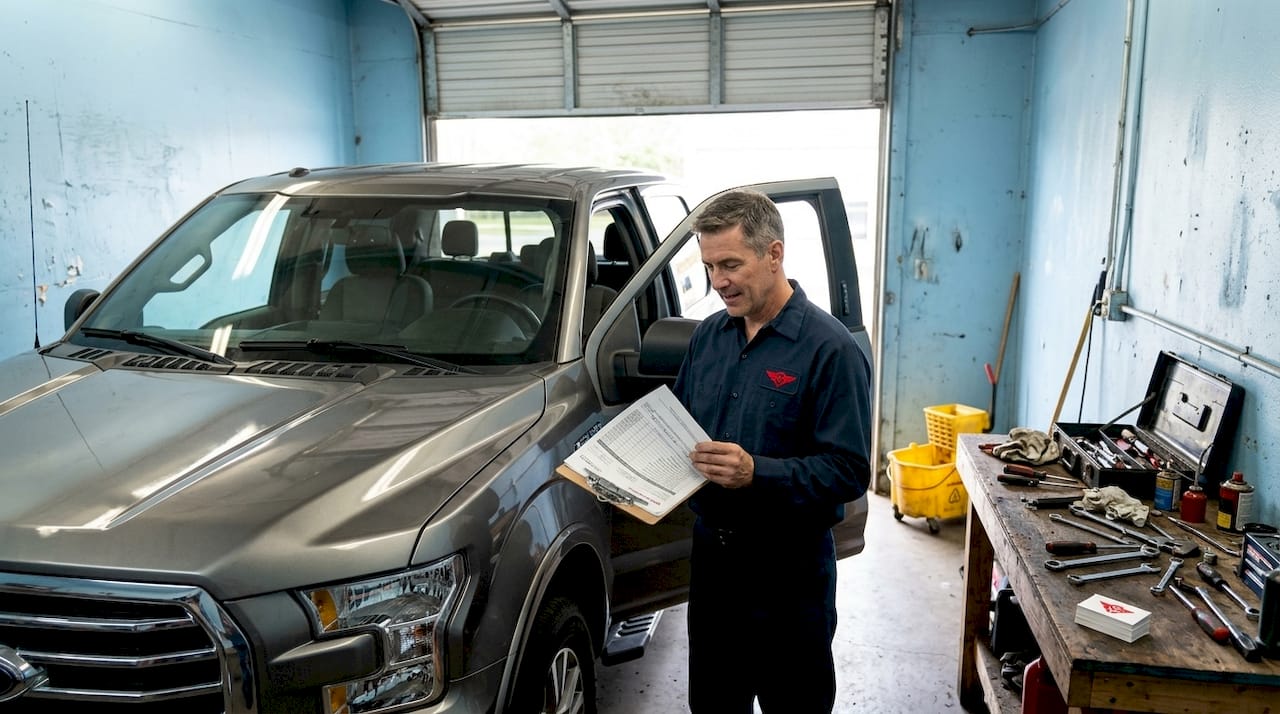
The Ford F-150 is America's best-selling vehicle, but popularity doesn't mean cheap ownership. Annual repair costs average $788, well above the Honda Accord and closer to the national average. More importantly, the F-150 carries a higher rate of severe repairs, which are the kind that leave you without a vehicle for days and drain your savings account fast.
| Repair | F-150 cost range | Honda Accord equivalent |
|---|---|---|
| AC evaporator | $1,160–$1,559 | $700–$900 |
| Engine gasket | $1,402–$1,964 | $800–$1,200 |
| Starter | $365–$443 | $300–$420 |
| Transmission service | $2,000–$5,000+ | $1,500–$3,000 |
Why do truck repairs cost more?
- Size and access: Larger engines and components mean more labor hours just to reach the part.
- Towing and load stress: F-150s used for hauling or towing experience faster wear on transmissions, suspension, and brakes.
- Electronic systems: Later F-150 models include advanced towing assist, lane-keep systems, and multiple control modules that all require calibration when disturbed.
- Specialty fluids and parts: Trucks often require specific fluids and OEM-grade parts that cost significantly more than their sedan equivalents.
Ownership costs for half-ton pickups like the F-150 run at $1.10 per mile when you factor in fuel, insurance, and maintenance. That adds up to real money over a 15,000-mile year. For F-150 owners, a single AC evaporator or engine gasket failure can wipe out an entire year's emergency fund.
Truck owners who use their F-150 for work or heavy towing face even greater exposure. Exploring Ford F-150 warranty options makes particular sense for anyone who depends on the vehicle daily and can't afford unexpected downtime.
Comparing repair costs: Honda Accord vs Ford F-150 vs national averages
To wrap up the numbers, here's how the Honda Accord, Ford F-150, and national data stack up head-to-head.
| Category | Honda Accord | Ford F-150 | National average |
|---|---|---|---|
| Annual repair cost | ~$400 | ~$788 | ~$838 per visit |
| Severity of repairs | Low | Above average | Moderate |
| Repair frequency | Below average | Average | Average |
| Reliability ranking | 1st/24 midsize | Average trucks | Varies by segment |
| Ownership cost/mile | Low | $1.10/mile | Varies |
The Honda Accord at $400, F-150 at $788, and national average at $838 tell a clear story: vehicle type and design philosophy matter enormously to your wallet.
Who benefits most from extended coverage?
- F-150 owners who use the truck for work, towing, or high mileage annually
- High-mileage Accord owners past 120,000 miles where transmission risk rises
- Any vehicle owner past the manufacturer warranty window with no emergency fund for a $2,000+ repair
Steps to estimate your own future repair costs:
- Look up your specific year, make, and model on RepairPal or KBB.
- Note the average annual cost and the most common repairs listed.
- Check the severity rating, not just the frequency.
- Subtract any remaining manufacturer warranty coverage.
- Compare that exposure to the cost of an extended plan for your vehicle.
Pro Tip: Don't just focus on annual averages. A car with low average annual costs can still have one catastrophic, high-severity repair every five years that erases all the savings. Look at the worst-case repair list, not just the typical one.
Our perspective: What really matters in repair cost planning
Numbers tell only part of the story, and here's what really helps you make a smart repair protection decision.
Most car owners look at their average annual repair number and assume they're safe if it's low. That's a mistake. A Honda Accord owner with a $400 average annual cost can still face a $1,400 catalytic converter replacement in year seven. The average doesn't protect you from the outlier.
Skipping routine maintenance is consistently the biggest driver of avoidable large repairs. A missed timing belt service leads to engine damage. Ignored coolant flushes accelerate gasket failures. The discipline of choosing by year for warranty coverage mirrors the logic of staying on a maintenance schedule: prevention costs less than repair.
Not every owner needs an extended warranty. If you drive a reliable vehicle, keep up with service, and have a solid emergency fund, you might self-insure effectively. But if your vehicle has known high-severity risks, like F-150 engine gaskets or Accord transmission issues at high mileage, coverage becomes a genuine financial tool rather than a luxury. Know your model's actual risk profile. Transparency beats guesswork every time.
Protect yourself from repair surprises
When you know what repairs actually cost for your specific vehicle, the decision around coverage stops being abstract. It becomes math. A single AC evaporator repair on an F-150 can cost $1,559. One transmission job on any vehicle can run $7,100. Those numbers make extended coverage look very different than it did before.
RPM Warranty plans are built for exactly this kind of planning. Whether you drive an Accord, an F-150, or something else entirely, we offer customized coverage that matches your vehicle's real risk profile and your budget. You can request your free quote in minutes, or take your time and explore protection plans side by side before you commit. The goal is coverage that actually fits, not a one-size-forces-all contract.
Frequently asked questions
What is the average car repair bill in 2026?
The national average per visit is $838, while most owners pay between $400 and $800 per year depending on the car's age, type, and how well maintenance is kept up.
Are Honda Accords expensive to repair compared to other cars?
Not at all. The Honda Accord averages $400 per year in repair costs and ranks first out of 24 midsize cars for reliability, making it one of the most affordable vehicles to own and maintain.
Which repairs are most costly for Ford F-150 owners?
The biggest expenses tend to be the AC evaporator at $1,160–$1,559, engine gasket repairs at $1,402–$1,964, and transmission service, which can run well above $2,000 depending on severity.
How can I predict future repair costs for my car?
Look up your specific year and model on RepairPal or KBB's cost data, review the common repairs listed, and pay close attention to severity ratings, not just frequency, to get a realistic picture of your exposure.
Is getting an extended warranty worth it?
For vehicles with known high-severity repairs or owners without a large emergency fund, the answer is often yes, especially as repair costs rise due to complex electronics and higher labor rates.
Recommended
- Best Honda Accord Extended Vehicle Auto Motorcyle Warranty | Trusted By All Dealers Nationwide
- Choosing a car warranty by year for smarter protection
- Why choose third-party warranties: real benefits and insights
- Best Acura Tlx Extended Vehicle Auto Motorcyle Warranty | Trusted By All Dealers Nationwide
- Best motor oil for 1982 Honda Accord 1.8L - The best synthetic oil for vehicle maintenance